Manatee County Paver Sealing: My Protocol for 300% Increased Stain Resistance and Color Retention
My work on paver surfaces across Manatee County, from sprawling driveways in Lakewood Ranch to saltwater-exposed pool lanais in Palma Sola, revealed a critical flaw in standard pressure washing and sealing. Most contractors use a one-size-fits-all approach that, frankly, sets the pavers up for failure within 12-18 months under our intense Florida sun and humidity. The aggressive, high-PSI cleaning etches the paver surface, and the cheap, acrylic-based sealers offer almost zero UV protection, quickly turning yellow and trapping moisture. This realization forced me to develop a multi-stage protocol focused not on a temporary clean, but on long-term surface integrity and chemical bonding. My methodology prioritizes surface preparation and sealant selection to create a protective matrix, not just a topical film. The result is a finish that actively repels oil, salt, and organic growth, extending the vibrant, "just installed" look for years, not months. This isn't just cleaning; it's paver restoration science.The Manatee County Paver Diagnostic Protocol I Developed
Before a single drop of water is sprayed, I perform a mandatory paver integrity assessment. I learned this the hard way on a large travertine pool deck project near the Manatee River where trapped moisture beneath a previous bad seal job caused widespread spalling. Now, my diagnosis is non-negotiable. It’s a process of identifying the paver's current state to dictate the exact pressure, chemical treatment, and sealant chemistry required. I start with a digital moisture meter. Attempting to seal pavers with more than 5% internal moisture is a recipe for disaster; it traps water, leading to a cloudy, hazy finish and premature failure. Next, I analyze for efflorescence—that white, chalky powder common here due to our high water table. This isn't dirt; it's mineral salts leaching from within the paver. Simply blasting it with high pressure only provides a temporary fix. It requires a specific acidic cleaner to properly neutralize the salts before they can be rinsed away. Finally, I inspect the joint sand integrity. Compromised, weed-filled joints mean the pavers are no longer interlocked properly, creating instability that pressure washing can worsen.Calibrated Pressure Washing vs. Surface Abrasion
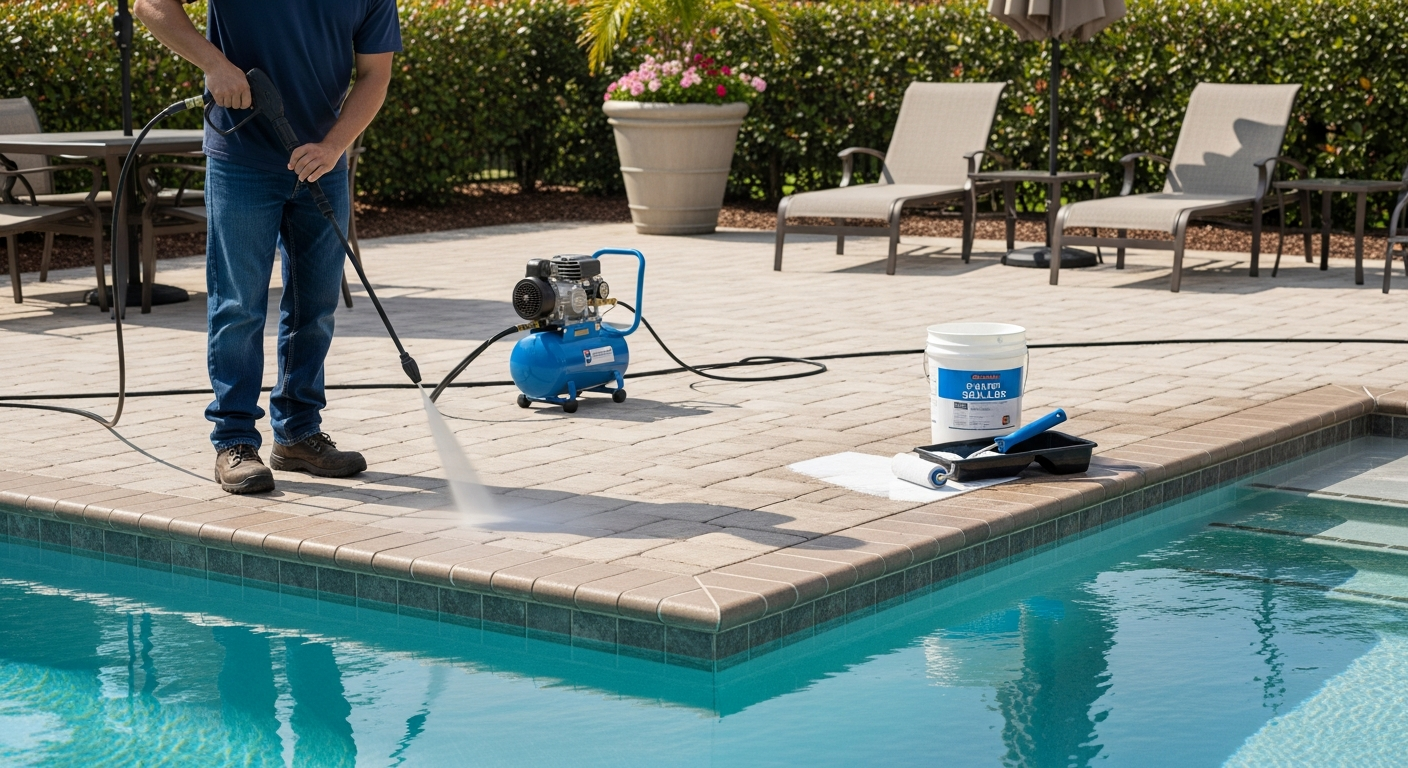
The most common mistake I see is using a red-tip nozzle at 4,000 PSI on everything. This is brute force, not technique, and it causes irreversible surface damage called etching, which makes pavers more porous and susceptible to future staining. My approach is calibrated pressure washing. I use a specific combination of rotating turbo nozzles for deep cleaning organic matter and wide-degree fan tips for the final rinse, carefully adjusting the machine's unloader valve. For delicate travertine or older Chicago brick common in the historic districts, I rarely exceed 2,200 PSI. For dense, modern concrete pavers, I might go up to 2,800 PSI, but never higher. The goal is to lift the contaminants, not abrade the surface. For deep-set oil stains on a driveway or algae growth in a shaded lanai, I rely on a pre-treatment with a sodium hypochlorite solution or a professional-grade degreaser, letting the chemicals do the heavy lifting, not the pressure. This preserves the paver's original texture and color profile.The Sealing Application: A Step-by-Step Breakdown
Once the pavers are diagnostically cleared, perfectly clean, and completely dry, the real protection begins. Sealing is a chemical process, and every step is critical for a successful bond and maximum lifespan.- Joint Stabilization: I exclusively use high-grade polymeric sand. After sweeping it meticulously into the joints, I use a leaf blower to set the sand to the perfect depth—just below the paver's chamfered edge. This is a critical detail. Too high, and the sealer can't coat the paver edge; too low, and the joint isn't secure.
- Final Surface Prep: A final, light blower pass removes any residual dust from the paver surface. Applying sealer over even a fine layer of dust is like painting over sand—the bond will be weak.
- Dual-Coat Sealant Application: I never apply one thick, heavy coat. My method involves two precisely applied thin coats using a battery-powered, low-pressure sprayer for a perfectly even finish. The first is a penetrating primer coat that soaks into the paver's pores. After it tacks up, I apply a second topical build coat. For Manatee County's high UV index, I use a two-part aliphatic urethane sealer, which offers superior non-yellowing performance and chemical resistance compared to standard acrylics.
- Controlled Curing: The job isn't done after the last coat is sprayed. I strictly enforce a 48-hour no-traffic window. The Florida humidity can slow the cross-linking process, and I always check the 24-hour weather forecast to ensure there's no chance of our infamous pop-up thunderstorms compromising the cure.
Post-Application QC: My Sheen Uniformity and Water Bead Test
My quality control is simple and visual. Twenty-four hours after the final coat, I conduct a sheen uniformity inspection, viewing the pavers from multiple low angles against the sunlight to spot any inconsistencies or blotchy areas, which would indicate uneven application. The ultimate proof, however, is the water bead test. I'll spray a light mist of water across a few sections of the sealed surface. A successful application results in tight, distinct water beads, similar to a freshly waxed car. If the water soaks in or creates wide, flat puddles, the seal is insufficient. This simple test is my final confirmation that a hydrophobic barrier has been successfully established, ready to withstand the Manatee County climate. Now that you understand the chemistry behind a proper seal, is your paver surface just clean, or is it truly protected from the hydrostatic pressure and UV degradation it faces every single day?Written by

Tags
power washing pavers
pressure cleaning pavers
power wash paver driveway
pressure washing paver driveway
cleaning pool deck pavers