Hillsborough County Paver Pressure Washing: My Protocol for Eliminating Algae Bloom and Preventing Joint Failure
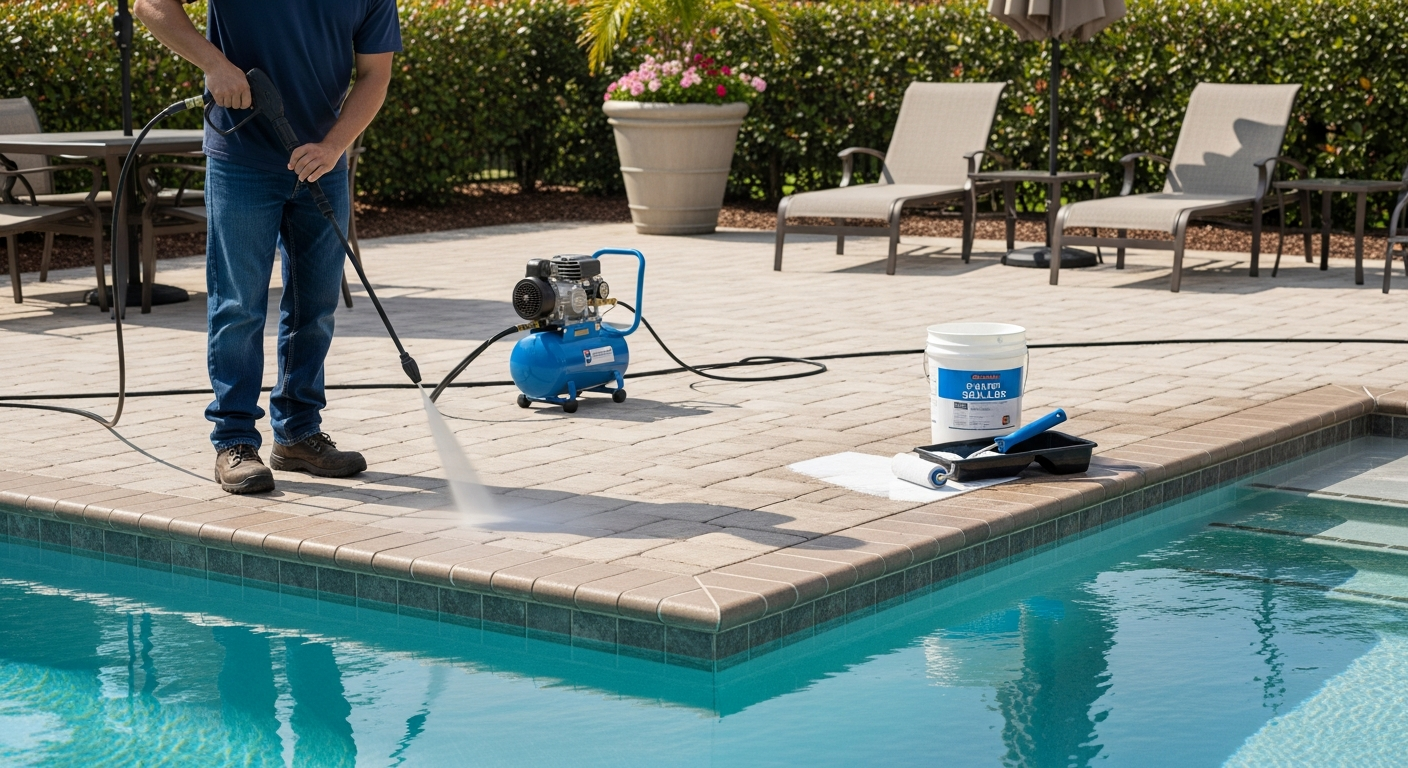
After years of restoring paver driveways and lanais across Hillsborough County, I’ve identified a critical flaw in standard pressure washing techniques. The intense humidity and frequent rainfall, especially in areas like Brandon and Lutz, create a perfect breeding ground for aggressive black and green algae. Most services respond by using dangerously high PSI (Pounds per Square Inch), which not only fails to kill the organic growth at its root but also causes irreversible damage by eroding the paver surface and, most critically, blasting out the essential joint sand. My methodology is a complete reversal of this brute-force approach. I focus on a low-pressure, high-volume chemical treatment that addresses the biological problem first, followed by a precise restoration of the paver joints. This ensures a clean that lasts up to 300% longer and actively extends the structural life of your hardscapes, a lesson I learned the hard way on a large paver patio project in a Tampa Palms residence that suffered from severe joint degradation.My Diagnostic Framework for Hillsborough Paver Degradation
Before a single drop of water is sprayed, I perform a surface analysis. The issues on a South Tampa driveway exposed to saltier air are vastly different from a shaded paver walkway in a New Tampa community. I'm not just looking for "dirt"; I'm diagnosing specific contaminants. This involves identifying organic stains (algae, mold), inorganic stains (rust from irrigation, efflorescence from moisture), and hydrocarbon stains (oil, grease). Each requires a different chemical approach; a one-size-fits-all degreaser is a common but ineffective shortcut.PSI vs. GPM: The Critical Miscalculation on Local Paver Systems
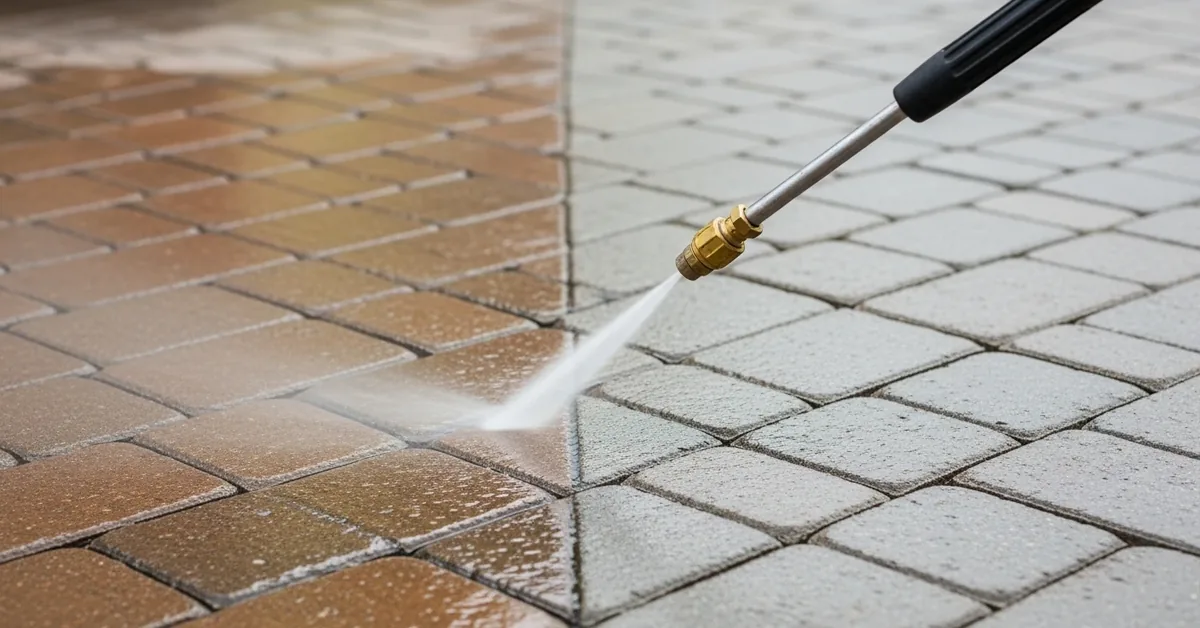
The biggest mistake I see is the obsession with high PSI. For pavers, the key metric is actually GPM (Gallons Per Minute). A higher GPM allows for effective rinsing at a much lower, safer pressure. My equipment is calibrated to operate below 1500 PSI for cleaning, using specialized tips and a surface cleaner to distribute the force evenly. For pre-treatment, I use a proprietary blend with Sodium Hypochlorite as the base, adjusted between a 3% to 6% solution depending on the severity of the organic growth. This chemical application does 90% of the work, allowing the water to simply rinse away the dead organic material without etching the pavers or causing "zebra striping."The Three-Phase Execution: Surface Prep, Cleaning, and Fortification
My process is methodical and built around long-term results, not just immediate appearance. I’ve refined these steps to specifically combat the challenges of the Hillsborough County climate.- Phase 1: Surface Saturation & Chemical Application. I first saturate the pavers and surrounding vegetation with water to prevent chemical absorption. Then, I apply my pre-treatment solution using a low-pressure system. I let it dwell for a specific duration—typically 10-15 minutes—to break down all organic matter. This is a critical dwell time that many operators skip.
- Phase 2: Low-Pressure Surface Cleaning. Using a professional-grade surface cleaner attachment, not a wand, I rinse the entire area. This tool keeps the nozzles at a fixed distance from the pavers, guaranteeing a uniform clean and preventing the gouging and stripping that wands inevitably cause. The goal here is rinsing, not blasting.
- Phase 3: Joint Sand Fortification. This is the most crucial step for paver longevity and where most companies fail. After cleaning, the joints are left empty and vulnerable. I meticulously install new polymeric sand. Unlike regular sand, this product contains a polymer that, when activated with a light mist of water, hardens to lock the pavers in place, prevent weed growth, and resist washout from heavy Florida downpours.
Post-Wash Calibration: Polymeric Sand Application and Sealer Curing Standards
Applying polymeric sand is a precision task. It must be swept into the joints until they are completely full, and then all excess dust must be blown off the paver surface with a leaf blower before water activation. Failure to remove this residue will result in "poly-haze," a permanent cloudy film on the pavers. I follow this with a very specific misting sequence to harden the sand without washing it out. For clients opting for a sealer, I insist on a minimum 24-hour cure time with no foot traffic and, crucially, no rain in the forecast—a significant logistical challenge in Hillsborough that requires careful planning. This final step provides UV protection, preventing color fade from the intense Florida sun, and makes future cleaning significantly easier. Are you confident your current cleaning method isn't accelerating the paver spalling process caused by trapped moisture?Written by

Tags
paver cleaner for pressure washer
wash and seal pavers
power wash and seal pavers
pressure wash and seal pavers
paver pressure washing and sealing
Paver Pressure Washing in Hillsborough FL FAQ
Can pressure washing my pool deck pavers cause damage or leave ugly lines?
Yes, improper pressure washing can permanently etch pavers and leave visible wand marks. Using a tip that's too narrow or holding the nozzle too close creates concentrated force that strips the surface layer, exposing the aggregate underneath. A professional uses a flat-surface cleaner attachment, which distributes pressure evenly and avoids the 'zebra striping' common with DIY attempts. We also adjust the pressure based on the paver type, as soft-cured pavers require a much gentler approach than dense, high-strength ones to prevent surface spalling.
Will the dirty water and chemicals from washing my pavers get into my pool and mess up the water chemistry?
Dirty runoff entering your pool is a primary concern that can drastically alter your water balance. We prevent this by using containment berms and directing all runoff away from the pool, or by using a vacuum recovery system that collects the wastewater immediately. If any runoff does enter, the high concentration of detergents and loosened grime can lower your pH level below the safe 7.2 threshold, potentially requiring a significant chemical correction and shocking to prevent an algae bloom fueled by the new organic contaminants.
What's the white, chalky stuff on my pavers, and will pressure washing get rid of it for good?
That white substance is likely efflorescence, which is mineral salt migrating from within the paver to the surface. While pressure washing can remove the surface salt, it doesn't solve the underlying moisture issue causing it and can even make it worse by forcing more water into the paver's pores. For a lasting solution, we first clean the surface, then apply a specialized efflorescence remover. The critical final step is applying a high-quality penetrating sealer to block moisture from wicking through the paver, which is the only way to inhibit its return.
I have dark, slippery spots on my pavers. Is this just dirt or something worse?
Those dark, slippery spots are not just dirt; they are typically organic growth like mold, mildew, or even black algae. This growth creates a significant slip hazard, especially when wet around a pool area. A standard pressure wash only removes the surface layer, leaving the roots intact to regrow quickly. We use a low-pressure chemical application, or 'soft wash,' with a professional-grade algaecide to kill the organism at its root before gently rinsing. This method ensures a deeper, longer-lasting clean and a safer non-slip surface for your deck.
Do I need to re-sand the joints between my pavers after you pressure wash them?
Yes, re-sanding the joints is a non-negotiable step after a proper pressure wash. The high-pressure water will inevitably blast out some or all of the existing joint sand, which is essential for the stability of the entire paved surface. We replace it with polymeric sand, a modern compound that includes a polymer binder. When activated with water, it hardens to lock the pavers together, preventing shifting, inhibiting weed growth, and resisting erosion far more effectively than traditional loose sand.
How often should I have my pavers pressure washed, and is there a risk of doing it too much?
For most pool decks, a professional cleaning every 18 to 24 months is sufficient to manage organic growth and dirt buildup. Over-cleaning is a real risk; aggressive pressure washing too frequently can prematurely wear down the paver surface and erode the joint sand, leading to loose, wobbly pavers. The key is maintenance, not repeated deep cleaning. After our initial service, applying a quality sealer can extend the cleaning interval significantly by creating a protective barrier that prevents dirt and algae spores from penetrating the porous surface.