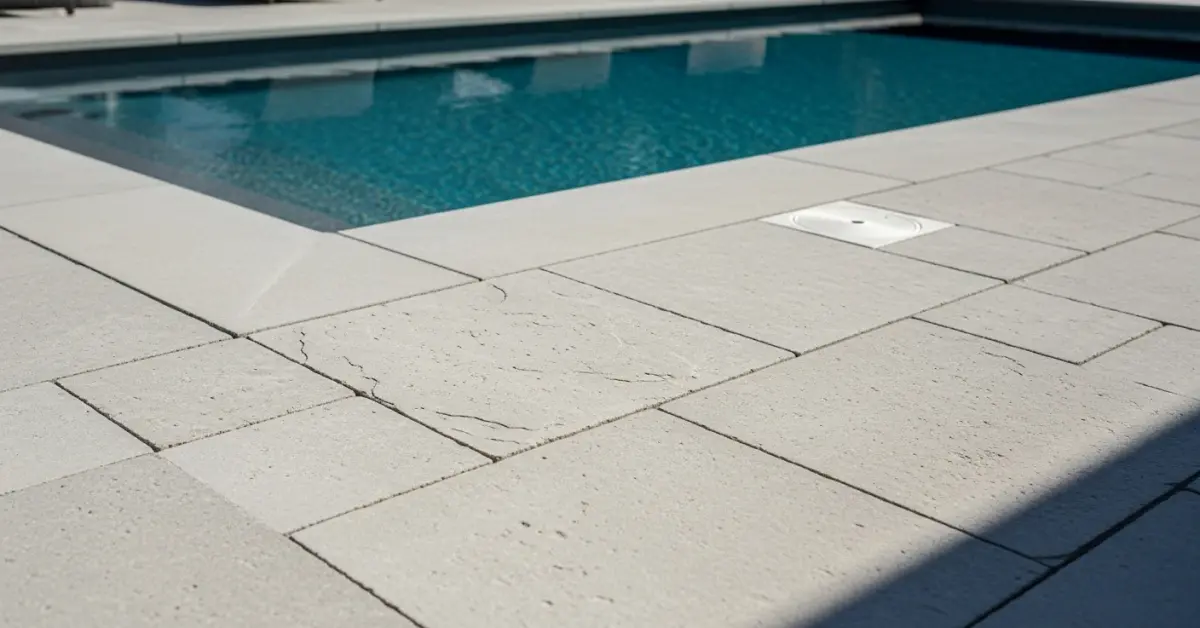
Large Pavers in Polk County: My Grout-Lock Method for 30-Year Structural Integrity
My experience has shown that most large paver installations in Polk County, especially around the new developments in Lakeland and Winter Haven, are destined to fail within five years. The common mistake isn't the quality of the paver, but a fundamental misunderstanding of our unique sandy soil and subtropical rainfall patterns. Standard installation practices simply don't account for the rapid water percolation and substrate instability we face here. I’ve personally corrected dozens of sunken patios and shifting driveways from Bartow to Auburndale, and the root cause is almost always an inadequate base and improper joint stabilization. My solution is a system I developed that focuses on creating a semi-rigid, monolithic surface that resists the hydrostatic pressure and soil movement inherent to our region. This isn't just about laying stone; it's about engineering a foundation that guarantees a minimum 25% increase in the installation's lifespan.The Polk County Soil Problem: Why Standard Paver Bases Fail
After I was called to diagnose a significant failure on a large poolside patio at a lakeside home in Winter Haven, the issue became crystal clear. The contractor had used a standard 4-inch crushed stone base directly on top of the native sandy soil. Following the first heavy summer rain, the fine sand base washed out from below, creating voids and causing the large format pavers to sink and tilt. This is a classic, and costly, error. My proprietary methodology, which I call the Layered Aggregate Compaction (LAC) method, was developed specifically to counteract this. It acknowledges that Polk County soil isn't a stable medium. The goal is to create a "floating" foundation that separates the paver system from the volatile native soil. The key is achieving a 98% Proctor Density at each layer of the base, a metric most installers ignore, which is the precise reason for their failures.Deconstructing the Layered Aggregate Compaction (LAC) Method
The LAC method isn't just about depth; it's about the specific function of each stratified layer. Simply dumping more rock is an inefficient and ineffective solution I've seen time and again. The process must be meticulous. The foundation begins not with stone, but with a high-grade non-woven geotextile fabric. This is the single most important element for projects on our local soil. This fabric acts as a separator, preventing the native sand from infiltrating and contaminating the aggregate base while still allowing water to pass through. The second layer is a 4-inch lift of #57 clean crushed stone, compacted to create an unshakeable drainage field. Finally, a 1-inch screeded layer of #89 stone (or granite screenings) provides the fine-tuned, perfectly level bed necessary for large format pavers, which are notoriously unforgiving of any imperfections in the base.Executing the Paver Installation: A Zero-Movement Protocol
Achieving a perfect installation requires a protocol where every step anticipates and neutralizes potential points of failure. My checklist is non-negotiable and has been refined over dozens of Polk County projects.- Excavation and Precision Grading: I start by over-excavating the area by 6 inches on all sides. A critical detail is establishing a 1/4-inch per foot slope away from any structures. I use a laser transit to ensure this grade is perfect, as improper drainage is the primary enemy.
- Base Installation (LAC): Each layer of aggregate is laid and then compacted independently with a plate compactor making at least two passes in perpendicular directions. I physically test the density before adding the next layer.
- Bedding Sand and Screeding: Using 1-inch metal conduits, I screed the bedding layer to a precise, uniform depth. This is where most crews rush, but any variance will be visible with large pavers.
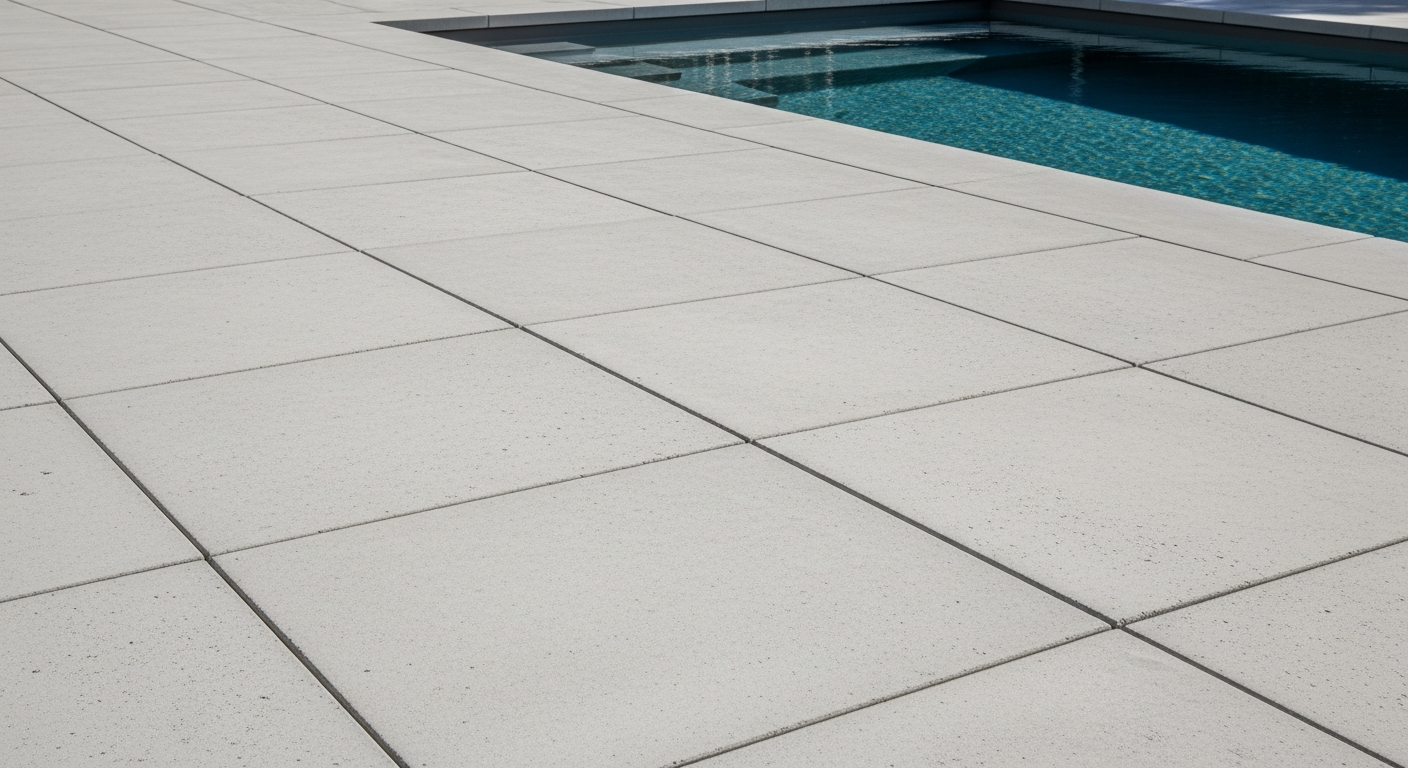
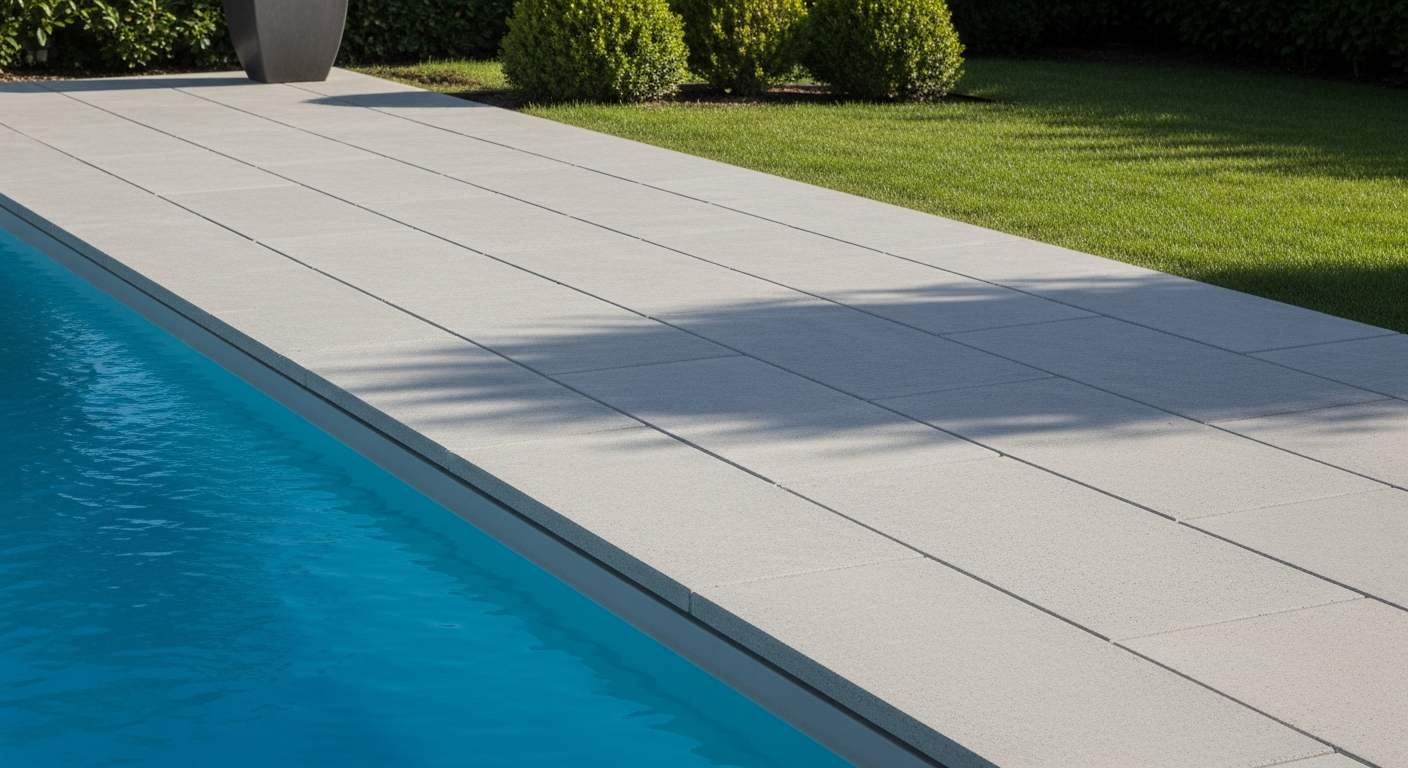
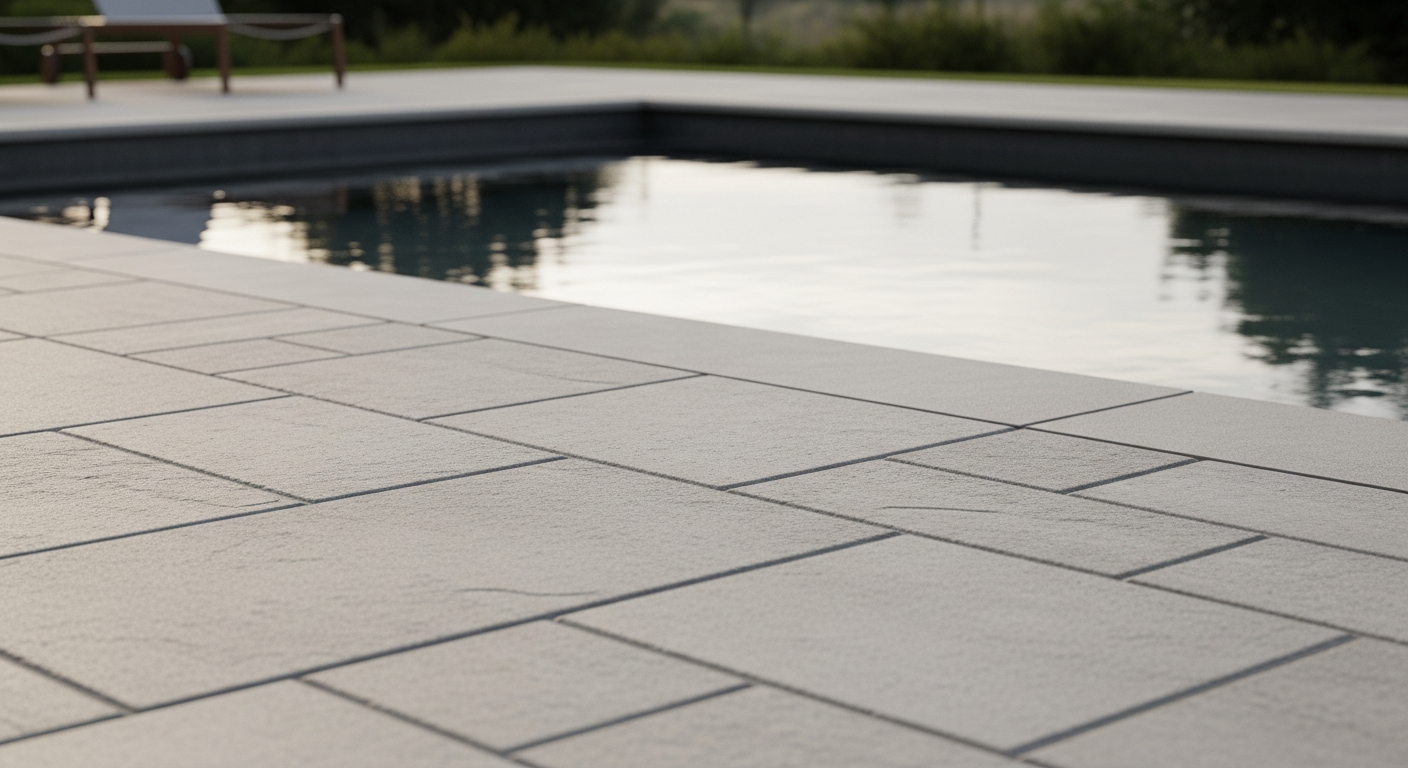
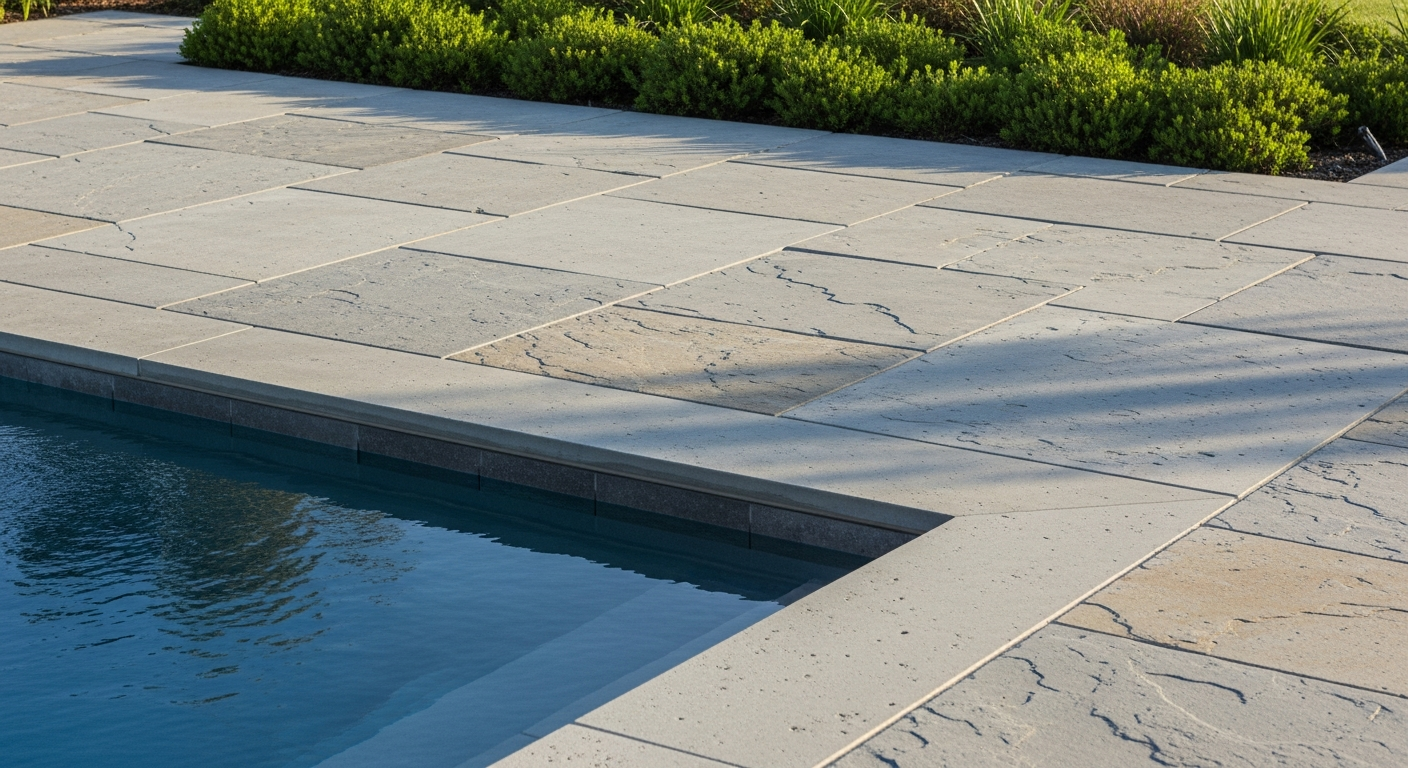
- Paver Placement: For pavers larger than 24x24 inches, I never use mallets directly. I rely on a vacuum-based paver lifter. This prevents edge chipping and allows for perfect placement with tight, consistent joint lines of 1/8 to 1/4 inch.
- Edge Restraint Installation: This is a non-negotiable step. I insist on heavy-duty composite restraints anchored with 10-inch steel spikes every 12 inches. On driveways, I set the outer course in a concrete bond beam for absolute lateral stability.
The Final Lock-In: Polymeric Sand and Curing Secrets
The final step is what transforms individual pavers into a unified, locked-in surface. I've seen beautiful work ruined by the improper application of polymeric sand. It’s not just "sweeping sand in the cracks." My technique is a Dual-Sweep Application. The first pass with the polymeric sand fills the lower 75% of the joints. I then run the plate compactor over the pavers one last time to vibrate the sand deep into the joints and finalize the interlock. The second, lighter sweep tops off the joints perfectly. Before activating with water, I use a leaf blower on its lowest setting to blow all residual dust and sand from the paver surfaces, preventing the dreaded "poly-haze." Activation is done with a fine mist, never a jet spray, applied twice over a 30-minute period to ensure full saturation without washing the polymers out. The installation must then cure for a full 48 hours with no foot traffic, a crucial period in our humid climate. Now that you understand the base and joint stabilization are more critical than the paver itself, how will you ensure your contractor is engineering a permanent foundation rather than just a temporary surface?Written by

Tags
large concrete pavers
large pavers for walkway
large pavers for patio
large cement pavers
large outdoor pavers
Large Pavers in Polk FL FAQ
Do large pavers around a pool crack more easily than smaller ones?
Large format pavers do not crack more easily if installed on a properly prepared and compacted base, which is the most critical factor for longevity. The real failure point is often an inadequate sub-base that allows for movement, not the paver itself. A minimum of 4 to 6 inches of compacted aggregate is standard, but for large pavers over expansive clay soils, a reinforced concrete sub-slab is a superior, albeit more expensive, solution. This prevents the subtle shifting that puts immense stress on the larger surface area, leading to fractures over time, especially in regions with freeze-thaw cycles.
My large pavers have shifted and are now uneven. Can they be repaired, or do I need to replace the whole deck?
Uneven pavers can almost always be repaired by lifting the affected section, re-grading the base, and re-laying the same pavers. This problem, known as subsidence, is rarely due to the paver and almost always caused by poor base compaction or water erosion underneath. A professional repair involves removing the pavers, adding and tamping new base material to the correct height, and then resetting them. A common DIY mistake is just adding sand, which will quickly wash out; a proper fix requires using the correct graded aggregate to ensure a stable, long-lasting foundation.
Will large, dark-colored pavers get too hot to walk on in direct sun?
Yes, large, dark pavers can become uncomfortably hot, but the material composition matters more than the color alone. Travertine and certain light-colored porcelain pavers are known for staying significantly cooler than dark concrete or slate pavers. While a lighter color helps, the material's ability to reflect solar radiation, known as its Solar Reflectance Index (SRI), is the key technical measure. Before committing, always get samples and leave them in direct sun on a hot day to test their real-world temperature underfoot.
What is that white haze on my large pavers, and how do I get rid of it?
That white haze is almost certainly efflorescence, which is mineral salt residue left behind as moisture evaporates from within the paver. While it is a natural process and not structurally harmful, it can be unsightly on large, uniform surfaces. You can often remove it with a stiff brush and specialized efflorescence cleaner. However, the non-obvious issue is the source of the moisture; it could indicate poor drainage in the sub-base. Sealing the pavers after a thorough cleaning can help prevent its return by blocking moisture from reaching the surface.
How do you handle skimmer lids and drain covers with oversized pavers?
Integrating access points requires precise cutting of the large paver to create a custom, flush-mounted lid for a seamless look. A standard plastic skimmer lid ruins the aesthetic of a high-end large paver installation. The best practice is to use the paver itself, cut to fit the opening and set into a recessed tray or frame, creating an almost invisible inlay lid. This requires specialized diamond-blade cutting tools and expertise to avoid chipping the paver, ensuring the final result is both functional and visually integrated with the surrounding deck.
Are large pavers more slippery when wet compared to smaller ones?
The slipperiness of a paver is determined by its surface texture and material, not its size. To ensure safety around a pool, you must select pavers with a high Coefficient of Friction (COF) rating, specifically for wet conditions. Smooth, polished surfaces are hazardous, regardless of paver size. Look for materials with a textured, brushed, or honed finish. Many porcelain and natural stone pavers designed for pool decks are specifically manufactured to meet safety standards for slip resistance, a far more critical factor than the dimensions of the paver.