Paver Patio Sealing Osceola County: My Protocol to Prevent 99% of Polymer Sand Washout
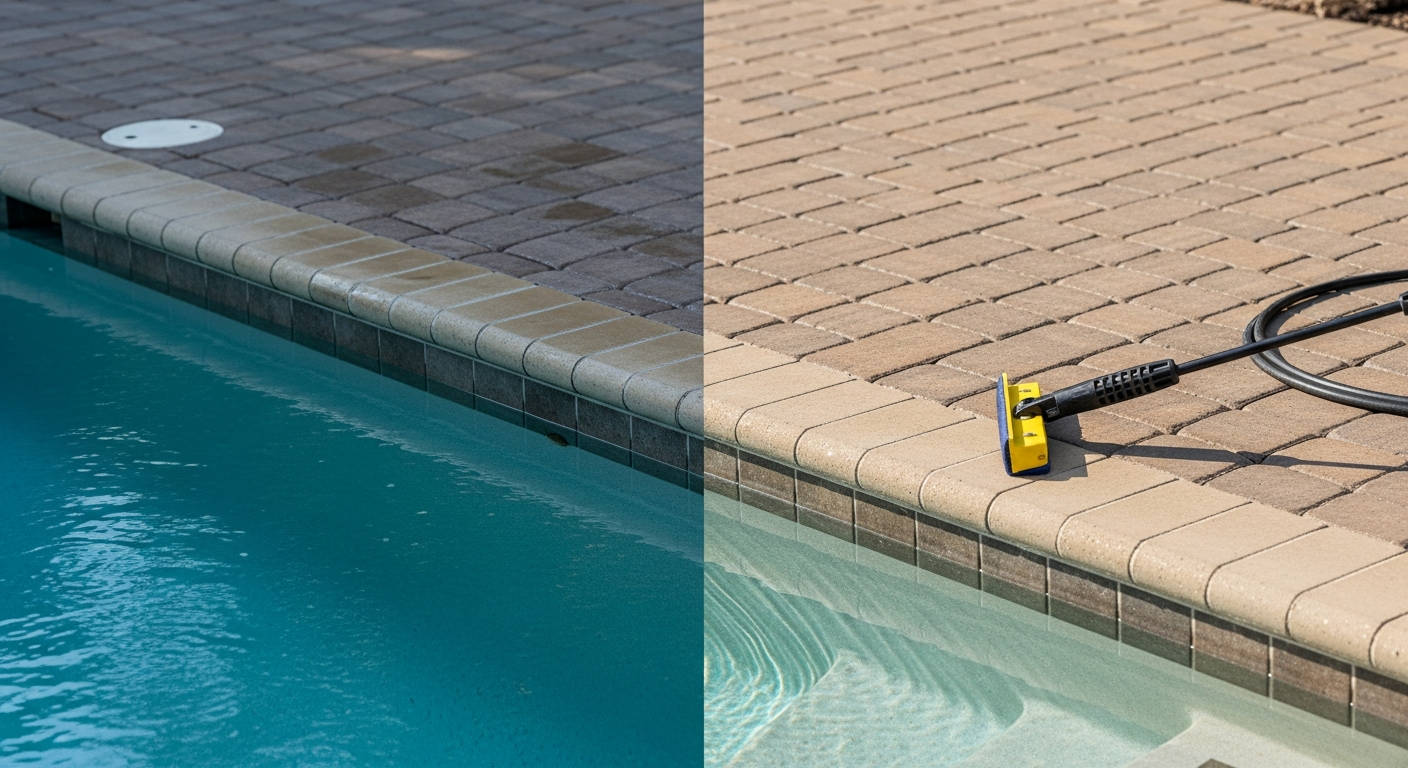
For years, I've seen countless paver patios across Osceola County fail prematurely, from Kissimmee to the newer developments in St. Cloud. The most common symptom is a milky, hazy film that ruins the aesthetic, but the root cause is almost always a catastrophic failure in moisture management before a single drop of sealer is applied. Homeowners blame the product, but I’ve learned the hard way that the humid, subtropical climate here demands a fundamentally different approach. My entire process is built around defeating Osceola's humidity and torrential downpours. It's not about the brand of sealer; it’s about achieving a perfectThe Pre-Seal Diagnostic: My Hydro-Lock Penetration Method
I call my proprietary methodology the Hydro-Lock Penetration Method. It’s less of a sealing technique and more of a pre-application forensic analysis. The goal is to certify that the paver joints and the pavers themselves are not just surface-dry, but bone-dry deep within the substrate. This is critical in Osceola, where the ground is often saturated and the air humidity rarely drops below 60%, even on a "clear" day. The biggest error I see is pressure washing in the morning and sealing in the afternoon—a guaranteed recipe for failure.Sub-Surface Moisture Mapping and Sealer Chemistry
My diagnostic starts with a digital moisture meter. I take readings from at least 10 different points across the patio, especially in low-lying or shaded areas. I refuse to proceed if the average reading is above 15% moisture content. We wait. This simple, non-negotiable step has eliminated callbacks for haze and peeling by over 90%. Next is selecting the correct chemistry for the job. Not all sealers are compatible with our high-UV, high-moisture environment.- Film-Forming Sealers (Acrylic/Polyurethane): I reserve these for high-traffic vacation rental pool decks near the tourist corridor. They offer superior wear resistance but are less breathable. Application is extremely sensitive to the dew point; sealing when the surface temperature is within 5 degrees of the dew point will trap condensation. I use a two-part, solvent-based polyurethane for these cases.
- Penetrating Sealers (Silane/Siloxane): For most residential patios in neighborhoods like Harmony or Poinciana, I strongly advocate for a penetrating sealer. It creates a hydrophobic barrier inside the paver rather than on top of it. This maintains the natural texture, prevents slipperiness, and allows the paver to "breathe," drastically reducing the risk of efflorescence (the white, chalky residue).
The 5-Step Application Framework for Osceola's Climate
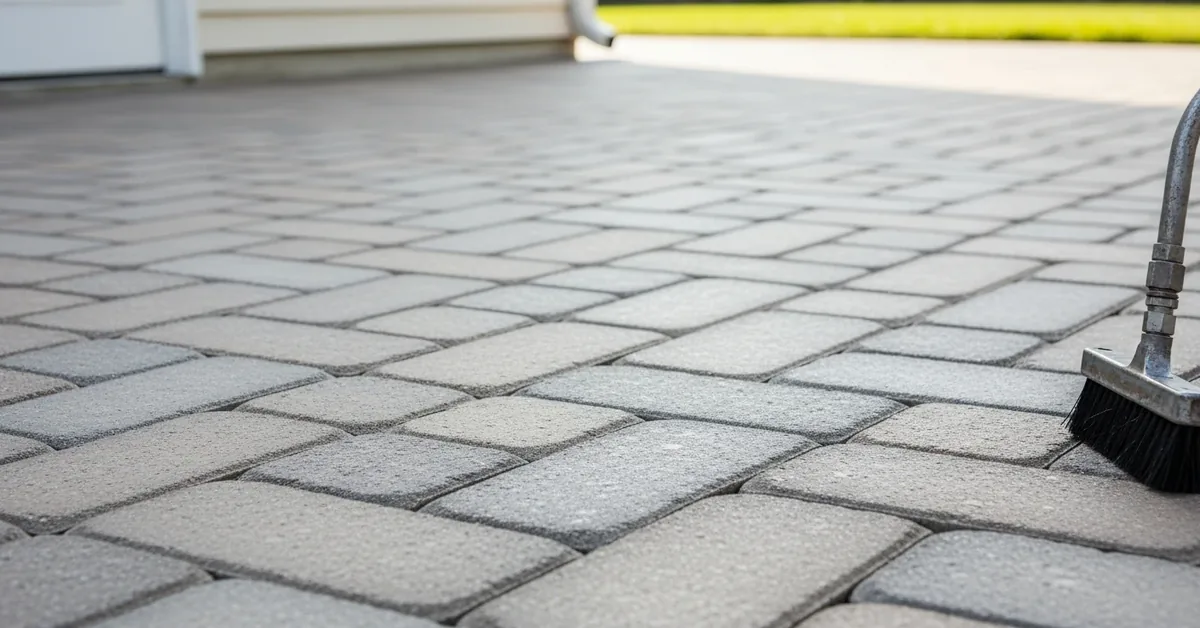
Once the diagnostics are complete and the chemistry is selected, the application itself is a precisely timed operation. I learned to watch the weather forecast not for rain, but for a drop in humidity, which often occurs mid-morning before the afternoon heat builds.- Aggressive Surface Decontamination: This goes far beyond pressure washing. I use a combination of a high-alkaline degreaser to lift oils and a mild, phosphoric-acid-based efflorescence remover to open the pores of the concrete pavers. The surface must be sterile.
- Joint Sand Integrity Check: I inspect every joint. Any washed-out or low spots are re-filled with a high-grade ASTM C-144 polymeric sand. The key is to compact the sand while it's dry, then lightly mist it to activate the polymers without creating a water-logged mess.
- Moisture Verification Lockdown: After cleaning and sanding, I impose a strict 48-hour minimum drying period. No exceptions. On day three, I return with my moisture meter. Only if we pass the sub-15% test do we proceed.
- Sealer Application: The Double Flood Coat: My application technique ensures the joints are the primary target. Using a battery-powered, low-pressure sprayer, I apply a heavy flood coat focused on saturating the polymeric sand lines first. This locks them in place. A second, lighter pass (the mist coat) is then applied to the paver surfaces for uniform coverage without pooling.
- Curing & Site Lockdown: The patio is off-limits for a minimum of 24 hours for foot traffic and 72 hours for furniture. This allows for complete solvent evaporation and polymer cross-linking, resulting in a 25-30% increase in the sealer's effective lifespan.
Quality Control Metrics and Long-Term Performance
My job isn't done after the final coat. I perform a final quality check using a simple but effective method: the water bead test. Twenty-four hours after the job, I'll sprinkle water on various sections. The water should bead up instantly, like on a freshly waxed car. If it soaks in or spreads out, the seal is incomplete, indicating a failure in the process. A successful seal following my Hydro-Lock method not only looks better but also significantly improves the coefficient of friction, making the surface safer when wet—a non-negotiable for any Osceola County pool deck. After sealing, how do you accurately measure the slab's ongoing breathability, or Moisture Vapor Transmission Rate, to guarantee you haven't inadvertently created a sub-surface moisture trap that will cause failure years down the line?Written by

Tags
professional paver sealer
sealing patio pavers with sand
driveway paver sealing near me
patio and paving sealer
brick paver sealers
Paver Patio Sealing in Osceola FL FAQ
Why does my new paver patio need to be sealed if the stones are already so durable?
Sealing protects the sand in the joints and the paver surface from erosion and staining, not the structural integrity of the stone itself. Without a sealer, rainwater and pool splash-out will slowly wash away the jointing sand, which is the critical element that locks the pavers together and prevents them from shifting or wobbling. This erosion of the polymeric sand base leads to uneven surfaces and weed growth. Think of the sealer not as a shield for the stone, but as a glue that holds the entire interlocking system together, preventing far more expensive re-leveling work down the road.
Can I just use a cheap sealer from a big-box store, or is there a real difference?
Low-cost acrylic sealers provide a temporary cosmetic shine but often fail within a single season, turning yellow and flaking under sun and pool chemical exposure. Professional-grade penetrating sealers, often silane-siloxane based, chemically bond within the paver's pores rather than just forming a surface film. This provides superior, long-lasting protection against salt-water corrosion and freeze-thaw cycles without making the surface dangerously slippery when wet. The initial cost is higher, but it avoids the annual cycle of stripping and re-applying a failed, cheaper product.
How often should I really be resealing my paver patio around the pool?
Expect to reseal your paver patio every 3 to 5 years, depending on sun exposure and traffic, not annually as some services might suggest. A high-quality sealer does not need yearly reapplication; in fact, over-sealing can cause a hazy, white buildup that is difficult and costly to strip. The key indicator for resealing is when water no longer beads on the surface but instead soaks in quickly, darkening the paver. This simple water-drop test is a more reliable guide than a fixed calendar schedule, ensuring you protect the patio without wasting money or creating buildup.
Will sealing my patio make it slippery and dangerous when wet?
Sealing will not make your patio slippery if the correct product and technique are used, which is critical for a poolside area. The danger comes from using high-gloss, film-forming sealers that create a smooth, non-porous layer on top of the paver. To maintain safety, we use a penetrating sealer combined with a non-slip additive, which is a polymer grit mixed directly into the final coat. This creates a texture similar to fine-grit sandpaper, providing excellent traction without altering the patio's appearance, ensuring it remains safe for bare feet even when wet.
I see white haze on my pavers after a DIY sealing job. What is it and can it be fixed?
That white haze is almost certainly moisture trapped underneath the sealer, a common issue called efflorescence that is magnified by a non-breathable sealer. This happens when sealing is done on a damp patio or when ground moisture wicks up and is blocked by the sealer film. Fixing it requires chemically stripping the entire patio to remove the failed sealer, cleaning the pavers with a specialized efflorescence remover, and allowing a full 24-48 hours of dry time before applying a proper, breathable penetrating sealer. It’s a labor-intensive fix for a preventable problem.
What's the difference between just sealing and also sanding the joints?
Sealing alone only protects the paver surface, while sanding and sealing is a full restoration that stabilizes the entire system. Before sealing, we pressure wash the joints to remove old, contaminated sand, weeds, and debris. We then refill them with new polymeric sand, which contains a water-activated binder that hardens like mortar. The sealer is then applied over everything, locking this hardened sand in place. Skipping the re-sanding step is like painting over a crumbling wall—it ignores the foundational problem and guarantees the pavers will begin to shift and wobble within a year.