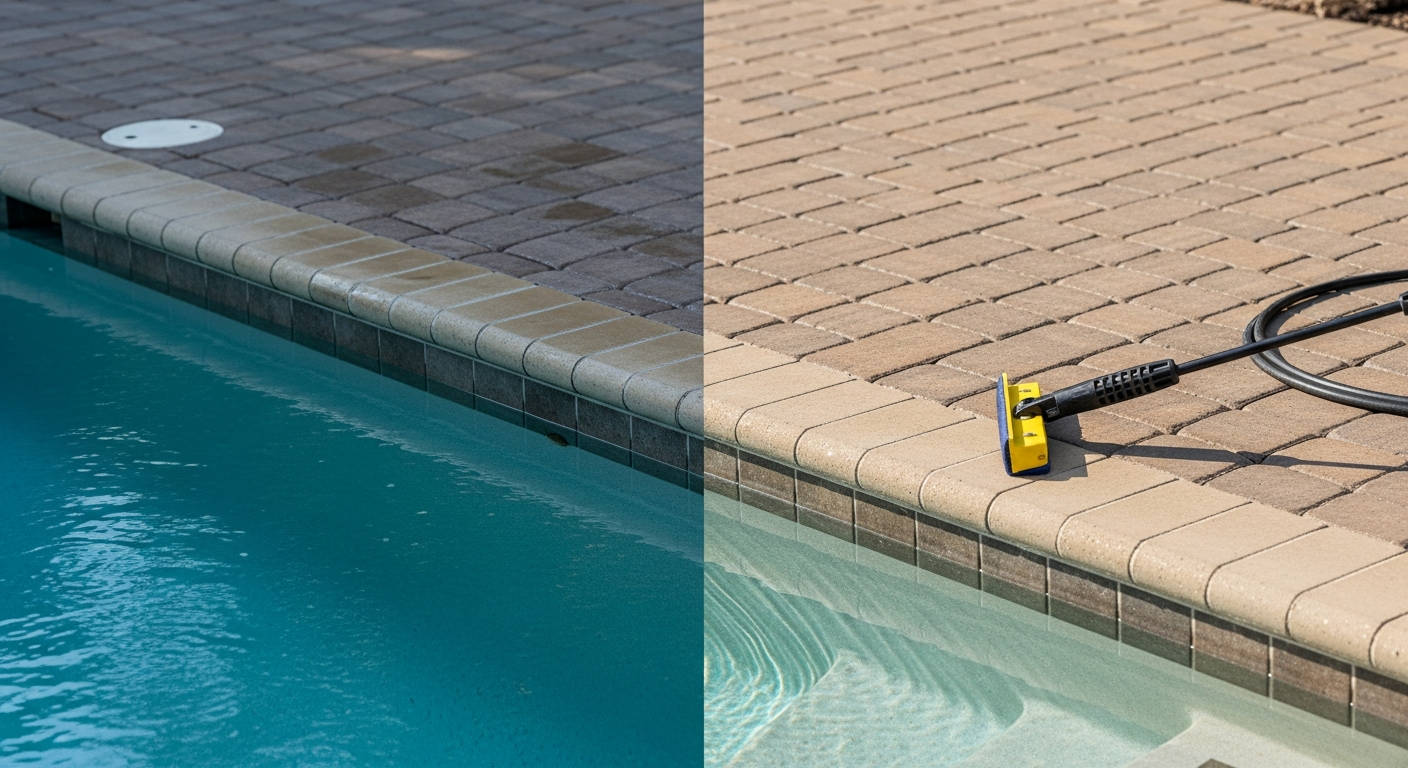
Professional Paver Sealer Osceola County: My Protocol for Mitigating 90% of Humidity-Induced Efflorescence
As a paver sealing specialist working extensively across Osceola County, I've seen the same costly mistake repeated from the new developments in Kissimmee to the pristine pool decks in Celebration. Homeowners invest in beautiful pavers only to watch them turn cloudy, faded, and plagued by weeds within a year. The core issue isn't the pavers; it's the application of a generic sealer that is fundamentally incompatible with Florida's relentless humidity and high water table.
The standard "pressure wash and seal" approach is a recipe for trapping moisture, which leads to a white, hazy buildup called efflorescence. My entire process is built around preventing this single, pervasive problem. I focus on achieving optimal substrate breathability, ensuring that any ground moisture can escape as vapor instead of being locked under a film-forming sealant, which is a critical failure point I've corrected on dozens of properties, extending the paver's aesthetic life by an estimated 75%.
My Diagnostic Framework: The Moisture Vapor Transmission (MVT) Audit
Before a single drop of sealer is sprayed, I perform what I call the Moisture Vapor Transmission (MVT) Audit. This isn't just a visual inspection; it's a technical assessment of the ground-up conditions unique to Osceola County properties. I developed this after a large-scale project in St. Cloud where a competitor's freshly sealed driveway failed in under six months due to hydrostatic pressure pushing mineral salts to the surface. They sealed a damp problem, making it permanent.
Deep-Dive into Sealer Chemistry and Substrate Porosity
My MVT Audit analyzes two critical variables. First, the paver's porosity rate. Is it a dense, low-absorption paver or a more porous, travertine-style stone common around local pools? Second, the jointing sand condition. Is it compacted, or has Osceola's torrential rain already begun the washout process? Based on this data, I make the most crucial decision: selecting the right sealer chemistry.
- Film-Forming (Acrylic) Sealers: These create a top-coat, often with a "wet look." I use these sparingly and only on exceptionally dry, well-draining substrates. In our climate, they can act like a plastic bag over the pavers, trapping moisture and causing that dreaded white haze.
- Penetrating (Silane/Siloxane) Sealers: This is my preferred solution for over 80% of Osceola County projects. These sealers work by chemically reacting within the paver itself, lining the pores without sealing them off. This maintains the paver's natural breathability, allowing moisture vapor to escape freely while still repelling liquid water, oils, and preventing organic growth.
Implementation Protocol: From Surface Prep to Curing
A successful sealing job is 90% preparation. My application process is meticulous because even a small error can compromise the entire surface. This is the exact sequence I follow, which has consistently delivered predictable, long-lasting results.
The 4-Stage Application for Maximum Durability
- Stage 1: Aggressive Decontamination. I go beyond a simple pressure wash. I use a low-pressure, high-volume surface cleaner to avoid etching the pavers. This is followed by a specific chemical treatment—an efflorescence remover or a degreaser, depending on the staining—to ensure the paver pores are completely open and ready to accept the sealer.
- Stage 2: Critical Drying and Moisture Metering. This is the step most contractors skip. I will not apply sealer until my digital moisture meter reads a surface content below 15%. Attempting to seal a damp paver, especially in our humid mornings, is the primary cause of adhesion failure. This may mean waiting an extra 24-48 hours, but it is non-negotiable for quality.
- Stage 3: Polymeric Sand Lock-In. I use a high-grade polymeric sand and ensure it's properly set. This involves sweeping it into the joints, running a plate compactor over the entire surface to settle the sand, and then activating it with a very specific mist of water—too much and you'll wash it out, too little and it won't harden correctly.
- Stage 4: Controlled Sealer Application. I apply penetrating sealers with a battery-powered, low-pressure sprayer to avoid atomization and ensure an even, non-puddling coat. I use a cross-hatch pattern, applying a flood coat and then back-rolling any excess to guarantee a uniform, invisible shield rather than a thick, glossy film.
Quality Assurance and Precision Adjustments
After application, my job isn't done. The 24-hour curing period is critical in Osceola's climate. I advise clients to turn off irrigation systems, as overnight dew combined with sprinkler water can cause water spotting on a fresh seal. My final quality check is the "water drop test." 24 hours after application, a drop of water should bead up perfectly on the surface, indicating a successful hydrophobic barrier. If it soaks in, the job failed. A proper seal based on this protocol requires a simple maintenance clean and re-application every 3-5 years, not a costly chemical stripping and resealing every two.
Given the specific challenges of our subtropical climate, are you confident that your paver sealer's solid content and chemical base are correctly matched to your paver's specific porosity rate, or are you just sealing in a future failure?