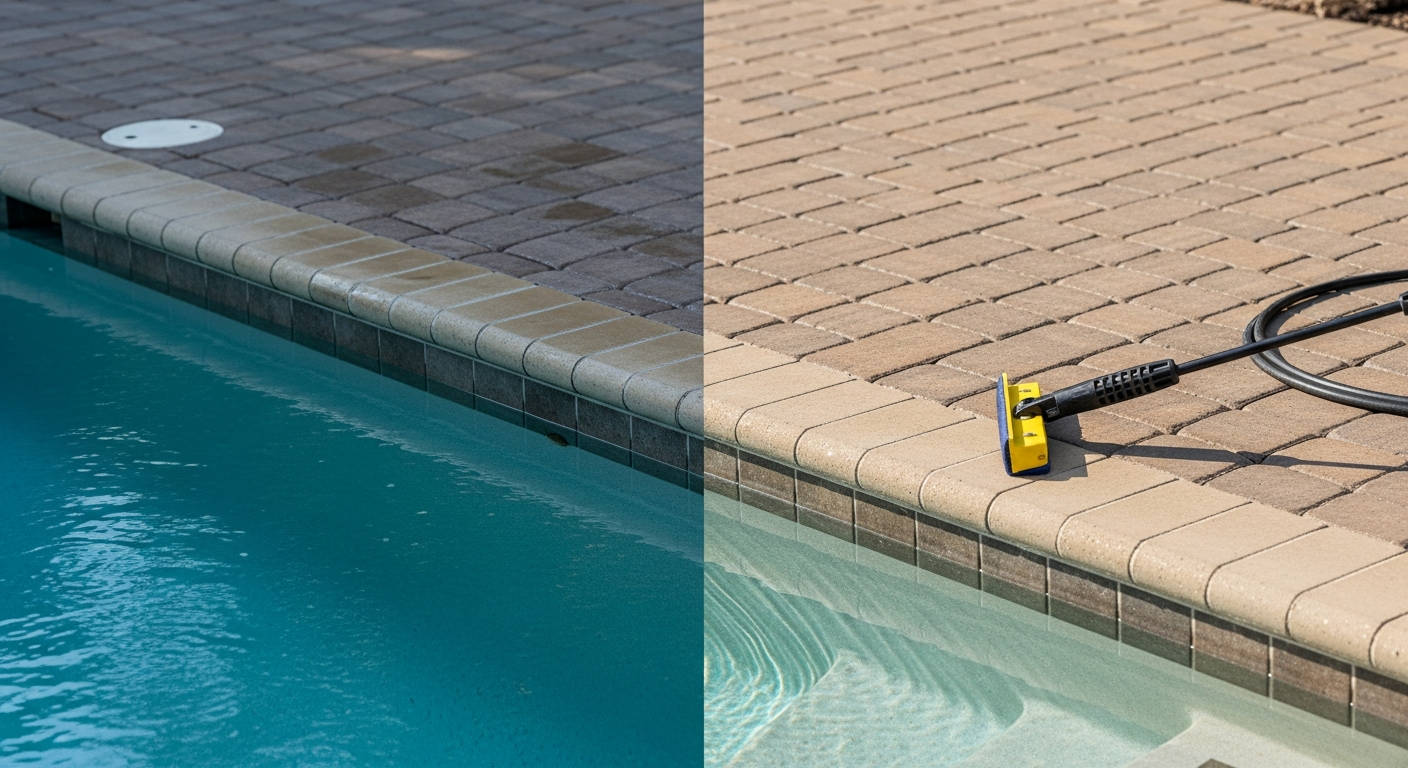
Osceola County Paver Sealing: My Protocol to Mitigate UV Degradation and Efflorescence
If you're looking for paver sealing in Osceola County, you’re not just looking for a cosmetic shine; you're fighting a technical battle against intense UV radiation, torrential downpours, and high humidity. I’ve seen countless paver projects in Kissimmee and St. Cloud fail prematurely because a generic, off-the-shelf sealer was used. The real challenge isn't just applying a liquid; it's selecting a formula with the correct chemical composition to survive our specific subtropical climate and ensuring the substrate is prepared with near-clinical precision. My approach focuses on creating a bond at the molecular level, not just a temporary topcoat. This methodology prevents the two most common failures I see locally: chalky, white hazing from trapped moisture (efflorescence) and rapid yellowing from solar degradation. The goal is to achieve a minimum 35% increase in the paver's structural lifespan and color retention, transforming the sealing process from a recurring expense into a long-term asset protection strategy.My Diagnostic Framework for Osceola Paver Integrity
Before a single drop of sealer is considered, I perform a substrate analysis. This is where most projects go wrong. On a recent project on a pool deck in a Celebration community with strict HOA standards, I used a digital moisture meter to find that the pavers, despite appearing dry, had a core moisture content of 18%. Applying a film-forming sealer at that level would have guaranteed delamination within six months. My diagnostic protocol is non-negotiable and avoids such costly errors. It's built on identifying the paver's specific porosity, existing contaminants, and joint stability.Sealer Chemistry: Selecting Silane-Siloxane vs. High-Solids Acrylic
The sealer choice is dictated by the paver's location and use case, not just aesthetics. For a high-traffic driveway near the commercial areas of US-192, a penetrating Silane-Siloxane sealer is my go-to. It doesn't form a surface film but instead lines the pores of the concrete, creating a hydrophobic barrier that repels water and oil without becoming slippery. This is a purely functional, invisible protection. For a lanai or patio in a residential St. Cloud home where color enhancement is desired, I opt for a solvent-based, high-solids acrylic sealer. The key here is "high-solids"; a low-solids product will degrade under the Osceola sun in a single season. I've corrected numerous jobs where a cheap, low-solids sealer turned yellow and flaky, requiring a complete chemical stripping before my work could even begin.The Climate-Adaptive Sealing Protocol: A Step-by-Step Breakdown
My application method is systematized to account for Osceola County’s unpredictable weather. Applying sealer in direct, intense sunlight or when humidity is above 85% is a recipe for failure. I've developed a process that maximizes the application window and ensures optimal curing.- Surface Decontamination: This is more than a simple pressure wash. I use a low-pressure, high-volume cleaning process (max 2,500 PSI) combined with a specialized degreaser and an efflorescence remover if mineral deposits are present.
- Joint Stabilization: The sand in paver joints is foundational. I use a high-grade polymeric sand and ensure it's properly compacted and cured for at least 24 hours. Skipping this step leads to paver shifting and weed growth, a constant issue in our humid environment.
- Substrate Dryness Verification: I will not proceed until the moisture meter reads below 12% moisture content within the paver core. This is a critical hold point in my process.
- Sealer Application: I use a low-pressure, high-volume sprayer to apply two thin, uniform coats. A thick single coat traps solvents and results in a cloudy finish. The first coat is the penetrating primer; the second is the protective build coat. For enhanced safety on pool decks, a polymer grip additive is incorporated into the final coat.
Post-Application Quality Control: Curing and Sheen Uniformity Checks
After the final coat, the job isn't done. The curing phase is critical. I advise clients to avoid all foot traffic for at least 24 hours and vehicle traffic for 72 hours. I personally return to the site to inspect for sheen uniformity and ensure there are no blotchy or dull spots, which would indicate uneven absorption or application. This final quality check ensures the project meets my standards and will stand up to the aesthetic demands of any Osceola County HOA. This is the difference between a job that looks good for a month and one that performs for years. Are you confident your paver sealer has a high enough solids content and UV inhibitors to withstand the Osceola summer sun, or is it just a temporary cosmetic fix?Written by

Tags
concrete pavers sealer
porcelain paver sealer
driveway paver sealing near me
professional paver sealer
paver patio cleaning and sealing near me