
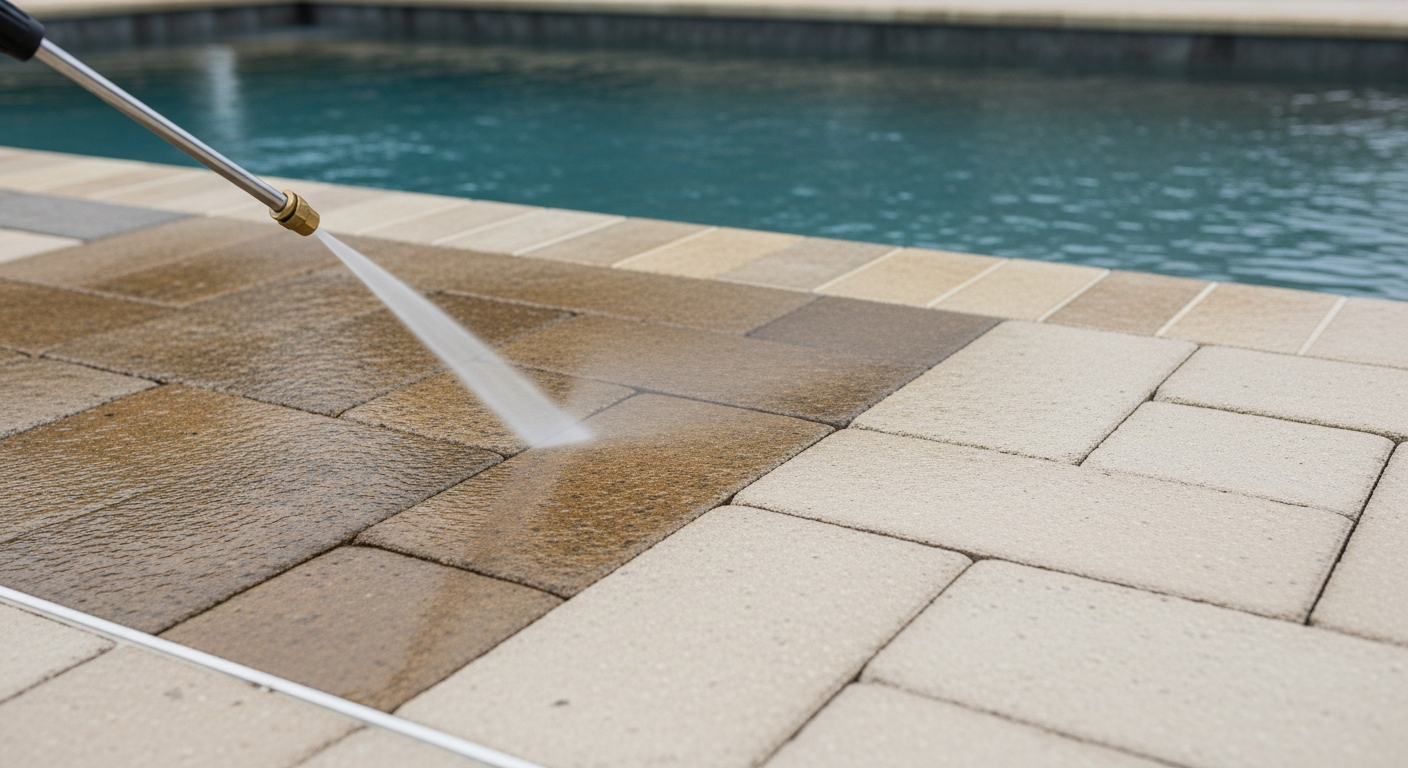
Pressure Cleaning Pavers Seminole County: The PSI Protocol That Prevents Joint Destabilization
I’ve lost count of the number of paver driveways in Seminole County, particularly in subdivisions around Lake Mary and Sanford, that I've seen permanently damaged by improper pressure washing. The primary culprit is almost always the same: excessive PSI that blasts out the jointing sand, leading to paver shifting and weed infestation within months. My entire approach is built around preventing this catastrophic failure, focusing on a low-pressure, high-volume cleaning methodology that preserves the structural integrity of your hardscape for years, not just making it look good for a season.
The core issue is that most operators treat paver cleaning like concrete cleaning. They use a high-RPM surface cleaner set at 3000+ PSI, which is a death sentence for the delicate polymeric sand in the joints. This is a critical error I identified on a large-scale HOA project in Winter Springs, where the previous contractor's work led to a 25% increase in paver repair costs year-over-year. My method focuses on chemical pre-treatment to do the heavy lifting, allowing for a much gentler, yet more effective, rinse.
My Diagnostic Framework: The Paver Preservation Protocol
Before a single drop of water is sprayed, I perform a diagnostic that dictates the entire project's parameters. Standard "eye-balling" is a recipe for failure, especially with the diverse paver materials used in Seminole County homes, from classic concrete pavers to more delicate travertine around pool decks. My protocol is a systematic assessment that has saved my clients from costly, premature paver replacement.
The first step is a Joint Integrity Assessment. I physically probe the paver joints in multiple areas to determine the state of the existing sand. Is it washed out? Is it cracked and failing? This tells me if we are in a "maintenance clean" or a "full restoration" scenario. Secondly, I identify the specific type of organic growth. The black mold common in shaded Sanford areas requires a different sodium hypochlorite concentration than the green algae that thrives in the full sun of a Longwood lanai. This granular diagnosis dictates the precise chemical mix and dwell time, ensuring maximum efficacy without damaging the paver or surrounding landscape.
Technical Deep Dive: GPM Over PSI and Nozzle Dynamics
The technical core of my method is prioritizing GPM (Gallons Per Minute) over PSI (Pounds per Square Inch). High PSI is a blunt instrument; it etches surfaces and erodes joint material. High GPM, on the other hand, provides superior rinsing power to flush away contaminants that the chemical pre-treatment has already lifted and neutralized. For most paver surfaces, I never exceed 1500 PSI, but I use a machine capable of 5 to 8 GPM.
Nozzle selection is just as critical. I exclusively use a 25-degree or 40-degree fan tip held at a consistent distance and angle from the surface. The ubiquitous "turbo nozzle" is forbidden in my process; its chaotic, high-impact spray pattern is the single fastest way to destroy paver joints. I once had to completely re-sand a 2,000 sq. ft. driveway because a new technician used a turbo nozzle for "efficiency." It was a costly lesson in precision that I never forgot. The goal is to "sweep" the surface with water, not blast it.
The 5-Step Implementation Sequence
My on-site execution is methodical and repeatable. It’s a system I’ve refined over hundreds of projects across Seminole County, designed to deliver predictable, high-quality results while protecting the client's investment.
- Surface Preparation & Pre-Treatment Application: The first step is to thoroughly clear the area of debris. Then, I apply my custom-blended chemical solution using a low-pressure applicator. This solution dwells for 10-15 minutes, actively killing mold, algae, and mildew at a molecular level.
- The Controlled Pressure Rinse: This is the main cleaning phase, executed with the low-PSI, high-GPM parameters. I work in manageable sections, using a sweeping motion to guide the dislodged grime and old sand off the surface in a controlled manner.
- Detailed Joint Cleaning: After the main surface is clean, I specifically target the joints with a lower-pressure, more direct stream to remove any remaining degraded sand and embedded organic matter. This step is crucial for ensuring the new sand will lock in properly.
- Thorough Final Rinse: A final, high-volume rinse ensures no chemical residue or fine debris is left on the surface or in the joints. This is a quality control checkpoint to guarantee a perfect canvas for sanding and sealing.
- Polymeric Sand & Sealer Application (Post-Wash): After allowing a minimum of 24 hours of dry time—a non-negotiable step in Florida's humidity—I sweep in fresh polymeric sand. This sand contains a polymer that, when activated with a light mist of water, hardens to lock the pavers in place and inhibit weed growth. This step alone can increase the lifespan of the paver installation by up to 50%.
Precision Tuning and Quality Assurance Checks
The final layer of my process involves micro-adjustments and quality checks. The amount of water used to activate the polymeric sand, for example, is critical. Too much, and you'll wash the polymers onto the paver surface, creating a hazy residue that is extremely difficult to remove. I call my final check the "Uniformity Sweep." I inspect the entire surface from multiple angles under different lighting conditions to ensure the color is uniform and every single joint is filled to the correct depth.
This level of detail is what separates a professional restoration from a simple "wash." A cheap, fast pressure wash is the most expensive one in the long run, as it accelerates the need for major repairs. My method is an investment in the longevity and structural health of your hardscape.
Given the high water table and frequent rains in Seminole County, have you considered how your cleaning and sealing process impacts the hydrostatic pressure beneath your paver patio?



