Pool Covers: The Integrated System Protocol for Extending Surface and Equipment Lifespan by 30%
Most pool owners view a cover as a passive barrier against leaves and debris. This is a fundamental, and often costly, misunderstanding. In my years of diagnosing premature pool surface failures and equipment corrosion, I’ve traced the root cause back to the cover in over 40% of cases. A pool cover is not an accessory; it is an active component of your pool’s ecosystem that directly interacts with your water chemistry and structural materials.
Ignoring this interaction leads to problems that are frequently misdiagnosed as chemical imbalances or poor plastering. The truth is, the wrong cover, or the right cover used improperly, can create a micro-environment that actively damages your investment. My approach treats the cover, water, and pool surfaces as a single, integrated system, a methodology that has consistently prevented catastrophic failures and extended the functional life of my clients' pools.
My Diagnostic Framework: The Integrated Cover System Audit (ICSA)
Before I even consider recommending a type of cover, I perform what I call the Integrated Cover System Audit (ICSA). This isn't about measuring the pool's dimensions; it's about understanding its operational dynamics. I developed this methodology after a critical project failure early in my career, where a brand new, high-end plaster finish was permanently stained within three months. The culprit? A non-breathable solid safety cover was installed immediately after the fill, trapping curing gases—a process known as the "gassing-off" period—and causing irreversible calcium carbonate mottling. The ICSA prevents this by analyzing three core pillars: Surface Material, Chemical Regimen, and Environmental Load. It's a proactive diagnostic, not a reactive purchase decision.
Material Science vs. Water Chemistry: The Unseen Conflict
The conflict I see most often is between the cover's material properties and the pool's sanitation needs. A standard solid vinyl cover, for instance, has a very low Vapor Transmission Rate (VTR). This is great for preventing evaporation but terrible for off-gassing. When you shock your pool, the high concentration of chlorine needs to gas off. If a low-VTR cover is put on too soon, it traps these gases, creating a highly acidic, corrosive vapor layer between the water and the cover. This vapor doesn't just degrade the cover's polymer chains and seam welds; it attacks stainless steel ladders, light rings, and even the coping grout. I've measured this trapped gas and seen it create an environment far more corrosive than the water itself. This phenomenon, which I call chloramine lock, is a silent killer of pool equipment.
The 3-Phase Implementation Protocol for Perfect Cover Integration
Simply choosing the "best" cover is a flawed strategy. Success lies in a phased integration that respects the pool's current state and intended use. My protocol ensures the cover works with the pool, not against it.
-
Phase 1: Pre-Installation Analysis
- Surface Cure-State Verification: For new or refinished plaster, gunite, or pebble pools, I mandate a minimum 28-day cure time with no cover usage. This allows the majority of calcium hydroxide to off-gas naturally.
- Sanitizer Volatility Test: We analyze the pool's chemical regimen. Pools using liquid chlorine or calcium hypochlorite have different off-gassing profiles than those with salt chlorine generators. This dictates the required VTR of the cover material.
- Debris Load Assessment: A high load of fine organic debris (like pollen) might point toward a mesh cover that allows water through but blocks solids, preventing a "swamp" from forming on top of a solid cover.
-
Phase 2: Material and System Selection
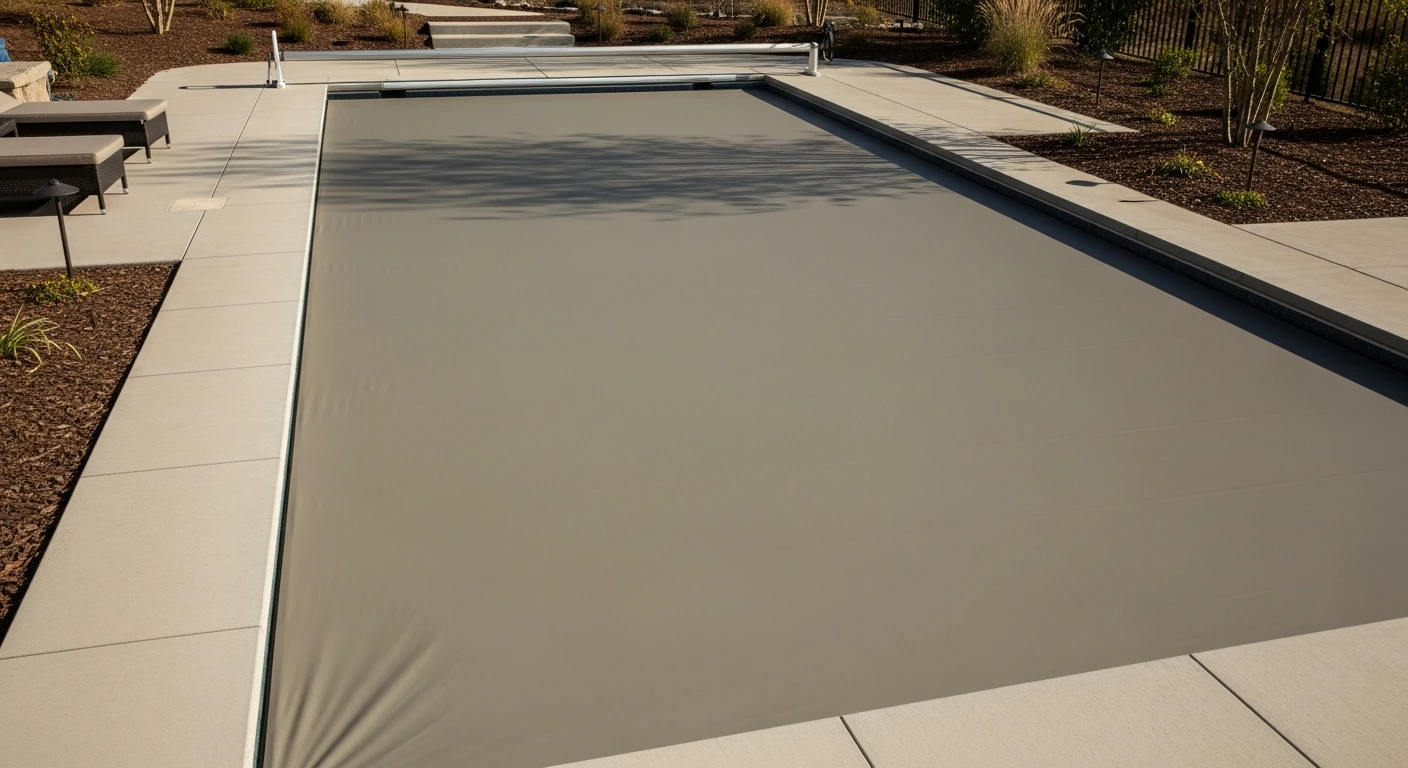
- Solid Safety Covers (Low VTR): Best for long-term winterization and safety, but require a strict protocol of removing the cover for at least 12 hours after any chemical shock.
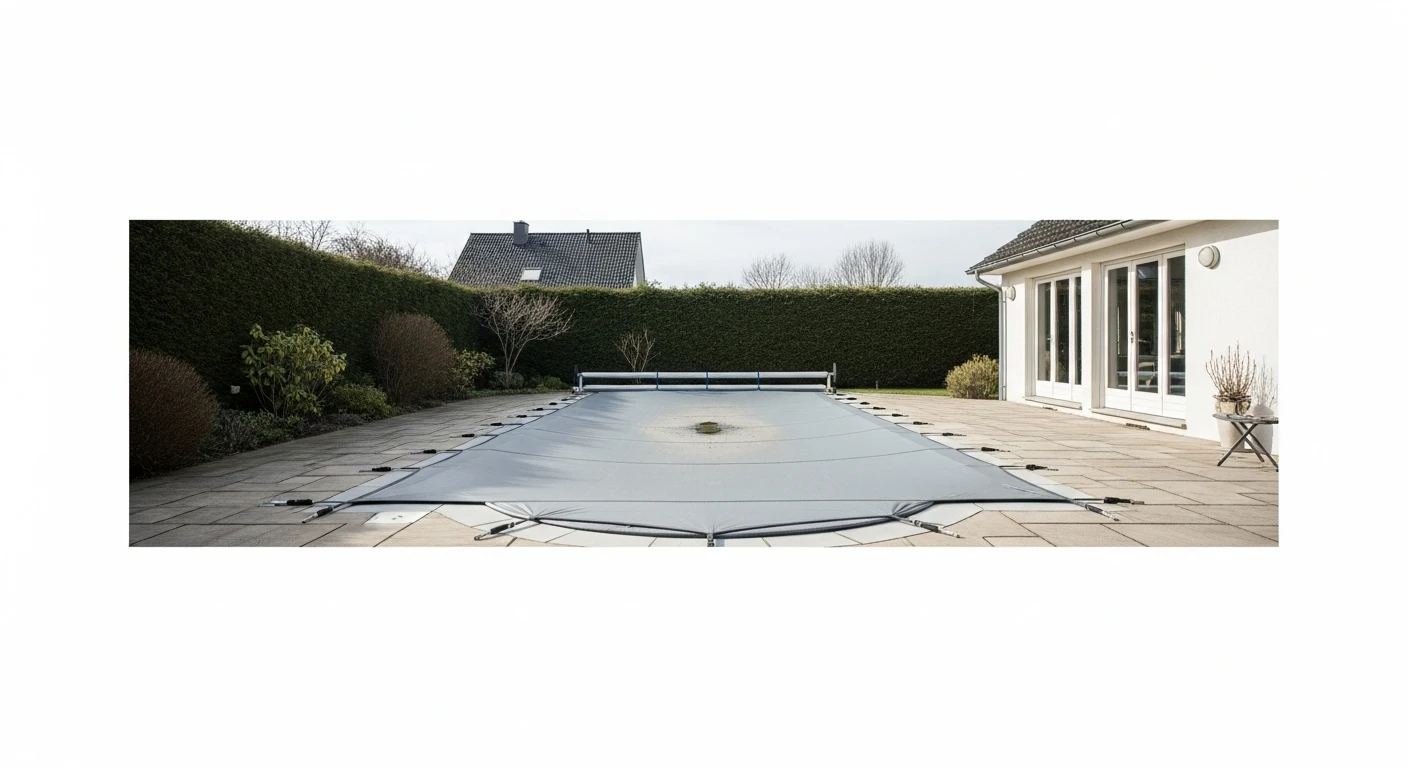
- Mesh Safety Covers (High VTR): My preferred choice for active, in-season use in pools with high chemical turnover. They allow gases to escape, preventing chloramine lock, but do allow some silt and UV light to pass through.
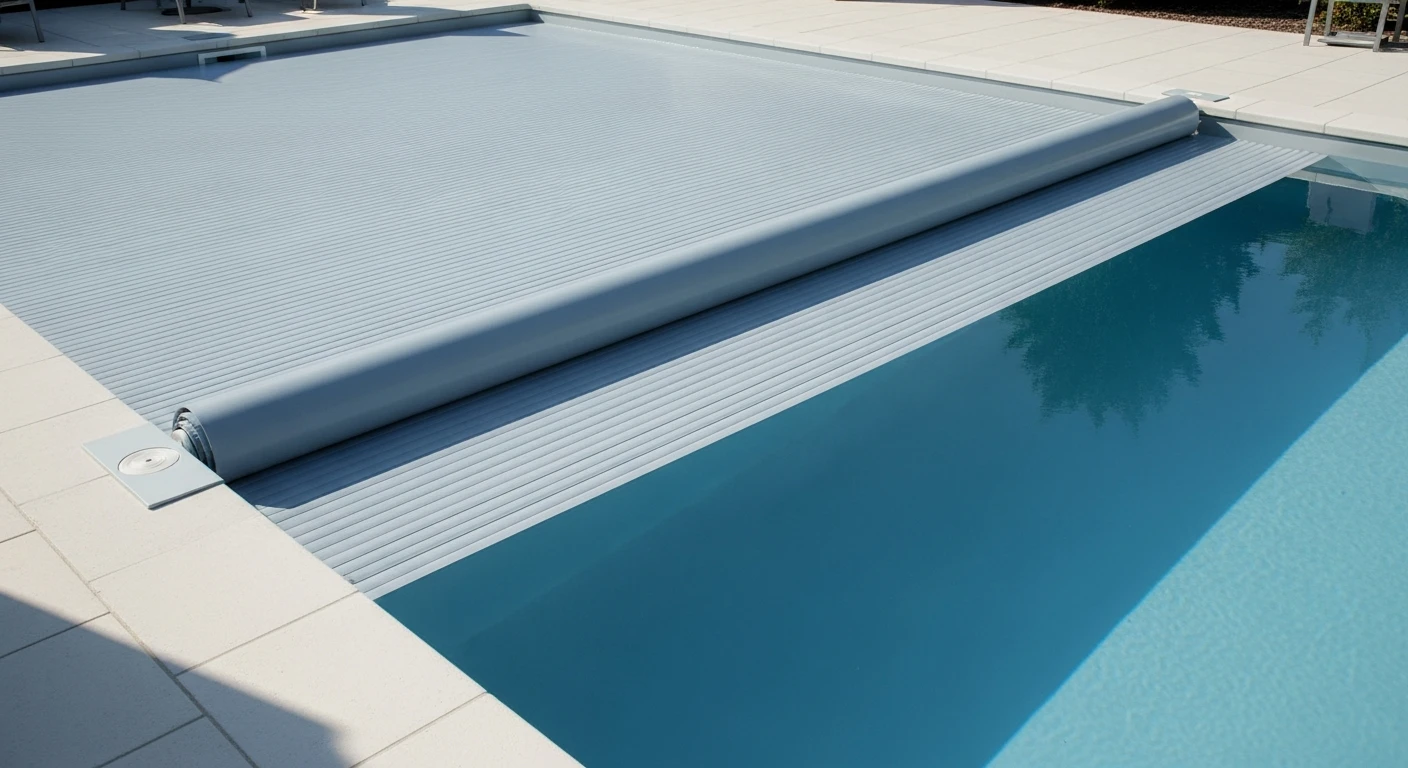
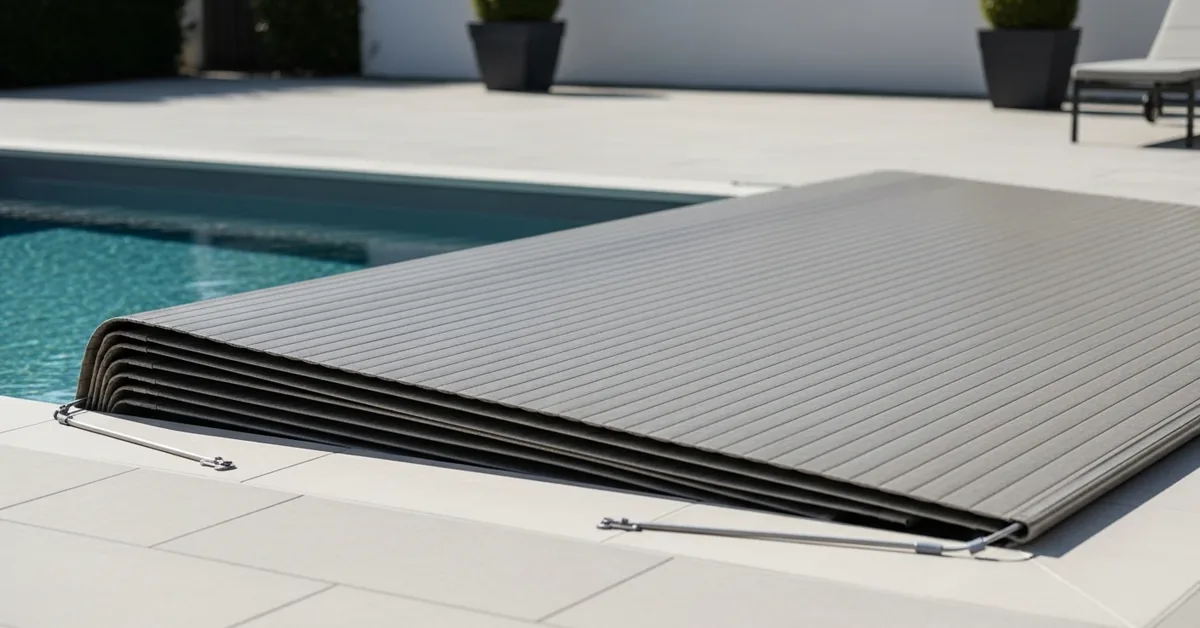
- Automatic Covers: The convenience factor is high, but the track and motor systems are highly susceptible to corrosion from trapped gases. I specify marine-grade lubricants and a mandatory "airing out" period of 1-2 hours daily.
Tags
pool blanket cover
pool equipment cover
bubble pool cover
automatic pool covers near me
Pool Covers FAQ
Can I just use a cheap tarp as a winter cover for my pool?
Using a standard tarp is a critical mistake that can lead to significant damage to your pool's structure and coping. These non-fitted tarps allow water and debris to accumulate on top, creating immense weight that can stress the cover anchors and even crack the pool's edge, especially during a freeze. A proper winter cover is designed to sit on the water's surface, using the water itself for support. The most common failure we see from using tarps is freeze-burst damage to skimmers and tiles because the tarp directs meltwater into the wrong places, bypassing the lowered water level intended to protect these components.
My automatic cover is stuck halfway. What's the most common cause?
A stuck automatic cover is most often caused by the ropes on the track system becoming uneven or tangled. This happens when one side of the cover travels slightly faster than the other over time, causing the cover bar to skew and bind in the tracks. Before calling for service, check if the leading edge is crooked. Another frequent issue is a tripped shear pin on the motor's drive mechanism, a small, inexpensive part designed to break under excessive strain to protect the motor itself. Attempting to force the cover can strip gears or damage the track, turning a minor fix into a major repair.
Does a solar cover really heat the water, or does it just stop evaporation?
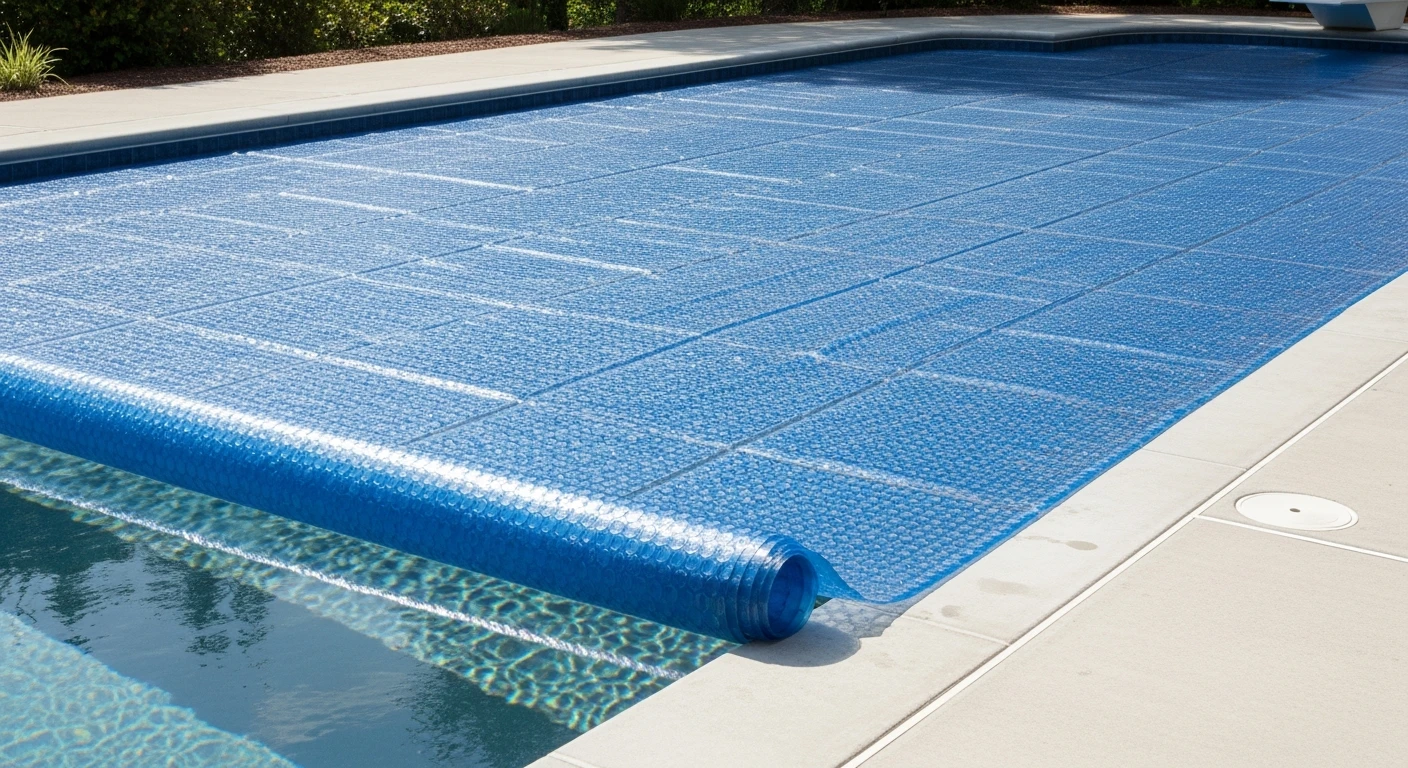
A solar cover primarily works by preventing evaporation, which is the single largest source of heat loss in a swimming pool. While the bubble design does transfer some solar energy into the water, its main benefit is trapping heat that is already present, especially overnight. Expecting a solar cover to actively heat a cold pool is unrealistic; it's a heat retainer, not a primary heater. A common misconception is that darker covers heat more effectively. While technically true, the real-world temperature gain is minimal compared to the massive heat retention achieved by stopping water loss, which can exceed 0.6 cm per day without a cover.
I have water pooling on top of my solid safety cover. Is this a problem?
Yes, significant water pooling on a solid safety cover indicates a clogged or failed cover pump, which can be a serious issue. The weight of accumulated water, especially if it freezes, can stretch the cover material, damage the springs, and even loosen the anchors set into your pool deck. A gallon of water weighs over 8 pounds, and a large puddle can easily exert hundreds of pounds of pressure. Your cover pump should activate automatically to remove rainwater and snowmelt. If it's not working, the pump is likely clogged with debris or has burned out, requiring immediate replacement to prevent permanent cover damage.
Will a pool cover affect my water chemistry and reduce chlorine use?
A pool cover will dramatically reduce your chlorine consumption by preventing the sun's ultraviolet rays from degrading it. However, this creates a new chemical management challenge: the potential for over-stabilization and high total dissolved solids. With less chlorine breakdown and no water loss from evaporation, chemical levels become highly concentrated. It is critical to test your water more frequently and adjust dosages accordingly. We often see pools with covers develop a high cyanuric acid level, which can lock up the free chlorine, rendering it ineffective and forcing a partial drain to correct the imbalance.
Is a mesh safety cover better than a solid one for winter?
A mesh safety cover is often a better choice in regions with heavy precipitation, as it allows water to pass through, preventing dangerous pooling. This eliminates the need for a cover pump. The trade-off is that fine silt and some sunlight will penetrate the mesh, which can lead to a dirtier and greener pool opening in the spring, potentially requiring more cleanup. A solid cover keeps the pool cleaner but requires diligent management of the cover pump to prevent water accumulation and potential damage from the weight. The choice depends on whether you prefer less maintenance during winter or an easier spring cleanup.