Backyard Pool Designs in Pinellas County: My Framework for Mitigating Hydrostatic Pressure & Increasing Pool Lifespan by 25%
Designing a pool in Pinellas County is a completely different challenge than anywhere else in the country. I’ve seen countless projects fail not because of aesthetics, but because the builder ignored our two fundamental realities: a relentlessly high water table and corrosive, salt-laden air. The biggest mistake is treating the pool shell as a simple container; here, it’s a submarine hull that must constantly battle upward pressure from the ground. My entire design philosophy is built around mastering this environmental pressure. Forget fancy water features for a moment—if your structural engineering and material selection aren't tailored for our sandy, water-saturated soil, you're building a liability, not an asset. This is especially true for properties in flood-prone zones like Shore Acres in St. Pete or the coastal homes along Indian Rocks Beach, where I’ve seen improperly installed pools literally lift out of the ground after a major storm.The Coastal Durability Protocol: A Foundation-First Diagnosis
Over 15 years of building pools from Tarpon Springs to Tierra Verde, I developed what I call the Coastal Durability Protocol. It’s a non-negotiable methodology that prioritizes the unseen structure over the visible finishes. I learned this the hard way on an early project in Clearwater where we faced constant shell cracking. The issue wasn't the concrete mix, but the lack of an adequate hydrostatic relief system combined with a subpar foundation on shifting sand. My protocol addresses this head-on, starting with the ground itself. The core principle is to assume the ground will always be saturated. We're on a peninsula, after all. This means every design decision is filtered through one question: how will this component perform when subjected to constant moisture, potential saltwater intrusion, and immense upward pressure? This shifts the focus from simply digging a hole to engineering a permanent, buoyant-resistant structure.Technical Deep-Dive: Material and Structural Imperatives
Under my protocol, we move beyond standard industry practices. Standard rebar, for example, is a non-starter; it will corrode. We exclusively use composite or hot-dip galvanized rebar, which provides a 30% increase in structural longevity against rust. For the pool shell itself, the concrete mix must have a higher PSI (pounds per square inch) rating, typically 4000 PSI or more, and incorporate a waterproofing admixture directly into the mix, not just as a surface coat. The finish is equally critical. While traditional plaster is cheap, it's porous and susceptible to the aggressive water chemistry required to combat Florida's intense sun and algae growth. I guide my clients toward a PebbleTec or quartz aggregate finish. It’s a significant upfront investment, but its density and chemical resistance prevent the etching and staining I see on plaster pools within five years. For plumbing, I never use metal fittings below ground; it’s all Schedule 40 or 80 PVC to eliminate any chance of corrosion from the soil.Implementation: The 5-Step Pinellas Pool Blueprint
Executing a design that will last requires a rigid sequence of operations. Deviating from this order is where I see most independent contractors make critical errors, especially regarding ground stabilization.- Step 1: Geotechnical Soil Analysis. Before a single shovel hits the ground, I mandate a soil boring test. This isn't optional. It tells me the exact depth of the water table and the sand's compaction level, which dictates the engineering for the pool's foundation.
- Step 2: Sub-Base & Dewatering Plan. Based on the soil report, we design a sub-base of compacted gravel and a plan for a well-point dewatering system that must run continuously from excavation until the pool is filled with water. Turning it off prematurely is the single most common cause of a "popped" pool shell.
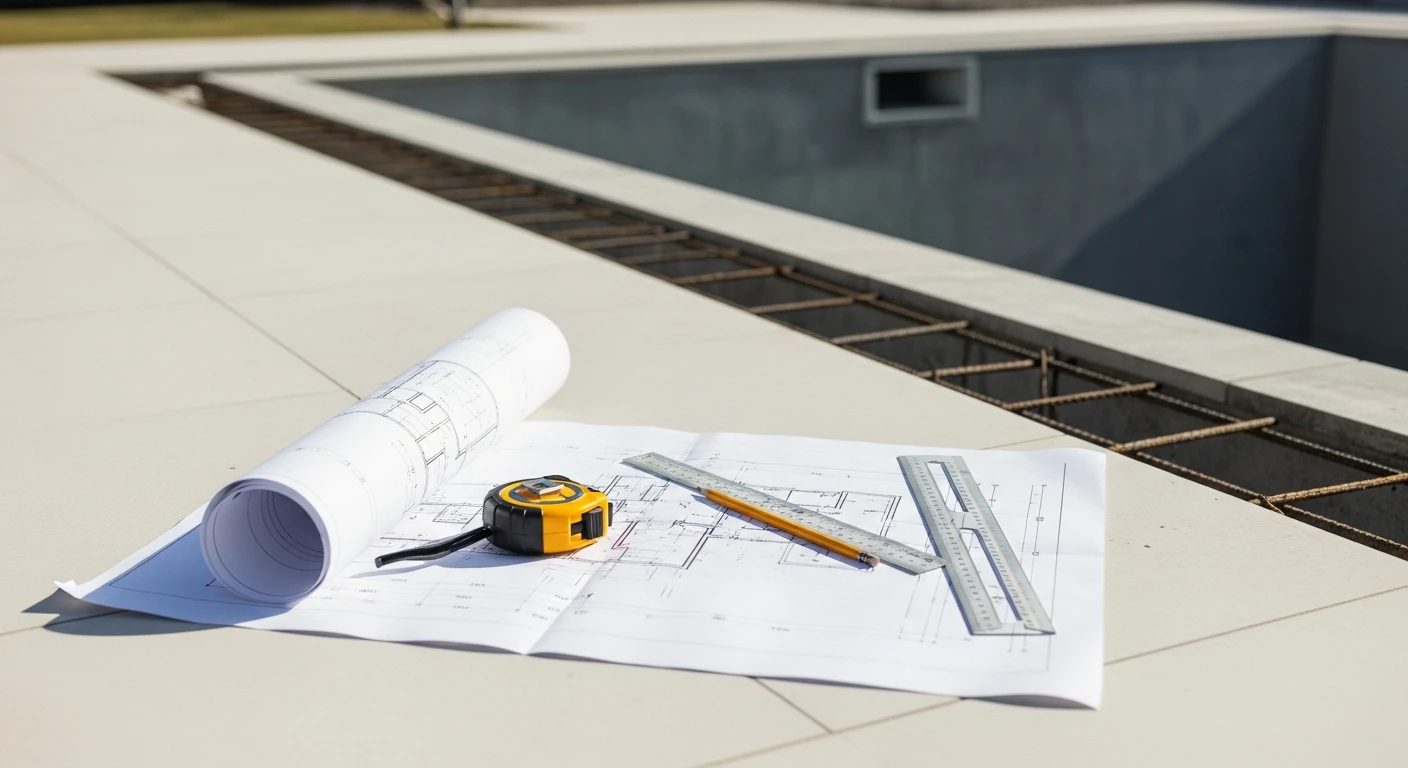
- Step 3: Structural Cage & Plumbing Installation. The rebar cage is constructed with specified non-corrosive materials. A crucial, often-missed detail is to bond all metal components to the home's electrical system to prevent galvanic corrosion. All plumbing lines are pressure tested for 24 hours at this stage.
- Step 4: Gunite or Shotcrete Application. The concrete is applied pneumatically to create a dense, monolithic vessel. The critical action here is the curing process. The shell must be kept wet for at least 7 to 10 days to achieve its full design strength.
- Step 5: Waterproofing and Interior Finish. A multi-layer waterproofing membrane is applied before the final aggregate interior finish. This provides a secondary barrier, ensuring the shell itself stays as dry as possible from the inside out.
Precision Adjustments for Peak Performance & Quality
With the core structure sound, we can focus on systems that make ownership in Pinellas County manageable. Given our high summer temperatures and intense UV exposure, a standard pump and filter system is inefficient. I strongly recommend a variable-speed pump, which can cut energy costs by up to 70%, and a larger cartridge filter to reduce cleaning frequency. For sanitation, a saltwater chlorine generator is the default choice for its softer-feeling water and consistent chlorine production. However, it’s vital to pair this with a sacrificial zinc anode tied into the bonding system. This small, inexpensive part will corrode instead of your expensive pump seals, heater cores, and handrails, protecting them from the galvanic corrosion accelerated by saltwater. This is a "pulo do gato" that extends the life of all your equipment. Finally, the lanai, or screen enclosure, is not an afterthought. The screen mesh must be a 20/20 density to keep out the small "no-see-ums" that plague our evenings, especially in areas bordering nature preserves like Brooker Creek. Now that your pool's structure is engineered to withstand our ground pressure, have you considered how you'll manage the chemical demands created by our 8 months of intense, pool-warming sun?Written by

Tags
pools for small backyards
small pool for small backyard
backyard pool designs
backyard pool ideas
Backyard Pool Designs in Pinellas FL FAQ
What are the benefits of having a backyard pool?
Having a backyard pool can provide numerous benefits, including relaxation and stress relief, improved physical health through exercise or swimming, increased property value, and enhanced social opportunities for entertaining guests.
What are the different types of pool designs available?
There are several types of pool designs to choose from, including infinity pools, lap pools, plunge pools, hot tubs, and traditional in-ground or above-ground pools. Each design has its own unique features and benefits.
How do I choose the right pool size and shape for my backyard?
To choose the right pool size and shape, consider the space available in your backyard, the number of people who will use the pool, and your personal preferences. Our experts can help you determine the optimal pool size and shape for your specific needs.
What are the costs associated with installing a backyard pool?
The costs associated with installing a backyard pool can vary widely, depending on the size and complexity of the pool, the materials used, and the location. On average, the cost of a pool installation can range from $30,000 to over $100,000.
What are the maintenance requirements for a backyard pool?
Regular maintenance is essential for keeping your backyard pool clean and safe. This includes regular cleaning, testing and balancing of chemicals, and performing routine inspections and repairs.
Can I add features such as a hot tub or water slide to my backyard pool?
Yes, many backyard pools can be customized with additional features such as hot tubs, water slides, or swim-up bars. Our experts can help you design a pool that meets your specific needs and preferences.
How do I ensure the safety of my backyard pool?
Pool safety is a top priority. We recommend installing fencing, gates, and alarms to prevent accidental drowning, and teaching children and adults how to swim and use the pool safely.
Can I install a backyard pool in my existing yard?
In many cases, it is possible to install a backyard pool in an existing yard, even if there are obstacles such as trees or slopes. Our experts can assess your yard and determine the best way to install a pool that meets your needs.
How long does it take to install a backyard pool?
The time it takes to install a backyard pool can vary depending on the complexity of the project and the size of the pool. On average, it can take several weeks to several months to complete the installation.
Do you offer pool design and installation services?
Yes, we offer comprehensive pool design and installation services, from concept to completion. Our team of experts will work with you to design a pool that meets your needs and budget, and will handle all aspects of the installation process.