Pinellas County Swimming Pool Planning: A Geotechnical Framework for 30% Lower Long-Term Maintenance Costs
Most pool planning in Pinellas County begins with aesthetics—the shape, the tiles, the water features. This is a critical error. I’ve seen the consequences firsthand: hairline cracks that become structural failures, decks that settle and shear away from the pool shell, and constant, costly chemical imbalances. The foundational mistake is ignoring our unique geotechnical reality: the high water table and inconsistent "sugar sand" soil that defines our landscape from St. Pete Beach to Palm Harbor. My approach flips the conventional process on its head. I begin with a geotechnical site analysis, not a design sketch. This methodology directly addresses the primary cause of pool failure in this county, creating a structure engineered for longevity from the ground up. This isn't about overbuilding; it's about building correctly once, mitigating the risk of future repairs that can cost up to 50% of the initial investment.My Diagnostic Protocol for Pinellas County Soil & Site Conditions
Before a single shovel hits the ground, I execute a proprietary diagnostic protocol. The goal is to create a detailed map of the subterranean forces that will act upon the pool shell for its entire lifespan. I developed this after a project in Treasure Island where a newly installed pool literally "popped" several inches out of the ground after a week of heavy rain because the builder failed to account for hydrostatic pressure. My process prevents such catastrophic and expensive mistakes. It consists of evaluating three core environmental factors. First is the Soil Bearing Capacity Analysis. Standard compaction tests are insufficient for Pinellas County's sandy loam. I require soil borings to identify the depth of stable strata and the angle of repose of the native soil, which dictates the precise slope and shoring needs during excavation. Second is a Seasonal Water Table Fluctuation Chart. We aren't just concerned with the water table today; we need to know its peak height during the rainy season. This data directly informs the design of the pool's drainage and pressure relief systems. Finally, I perform a Salinity and Corrosion Index assessment for properties east of US-19, especially on the barrier islands, which determines the specification for all metal components, from rebar to handrails.Deconstructing the Geotechnical Stability Framework
The data from my diagnostic protocol feeds into a stability framework with three technical pillars. This is the "how-to" that translates soil science into a durable physical structure.- Engineered Sub-Base and Compaction: We don't build on native sand. I specify an engineered fill, typically crushed concrete or limestone, compacted in 6-inch lifts to 95% Modified Proctor Density. This creates a stable, non-reactive "launch pad" for the pool shell, preventing the subtle soil subsidence that causes most shell cracks.
- Active Hydrostatic Pressure Management: Every pool I specify in Pinellas County must include a hydrostatic relief valve integrated into the main drain sump. This is a non-negotiable safety feature. It's a simple valve that automatically opens to equalize pressure when groundwater levels rise, preventing the immense buoyant forces that can lift a concrete shell. It's surrounded by a dedicated gravel bed and drain system tied into the site's primary drainage.
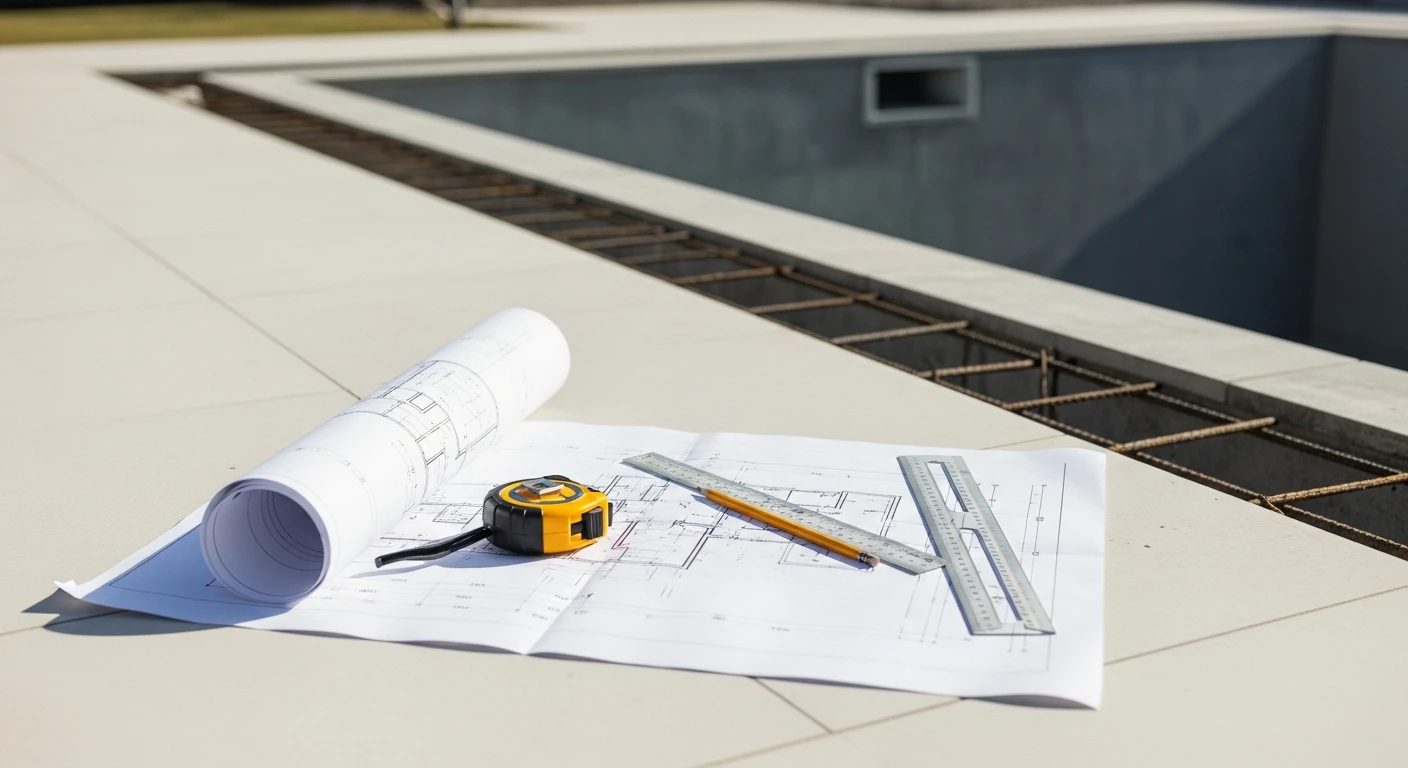
- Targeted Structural Shell Reinforcement: The standard rebar grid is inadequate for our conditions. Based on the soil report, I specify a #4 rebar grid at 8 inches on center, but with a critical modification for coastal homes in areas like Dunedin or Clearwater Beach: the use of epoxy-coated or fiberglass rebar in the upper third of the pool shell (the bond beam) to completely eliminate the risk of "rebar cancer" from salt air corrosion.
Step-by-Step Implementation for a Fail-Proof Pool Shell
Translating the framework into a physical structure requires obsessive attention to detail at each stage. I've seen crews take shortcuts that compromise the entire engineering-led design. Here is the exact sequence of operations I mandate.- Execution of the Site Survey and Geotechnical Report: This is a formal, third-party report. No work begins until this document is reviewed and signed off. It is the blueprint for all subsequent decisions.
- Precision Excavation and Dewatering Plan: The excavation must respect the soil's angle of repose. A wellpoint dewatering system is often required to artificially lower the water table during construction, ensuring the concrete cures in a stable, dry environment.
- Installation of Plumbing, Rebar, and Bonding Grid: All plumbing lines are pressure-tested to 35 PSI for a minimum of 24 hours *before* any concrete is applied. The rebar grid is tied meticulously, and the equipotential bonding grid is installed to meet stringent Florida electrical codes, a critical safety step given our frequent lightning.
- Shotcrete or Gunite Application: I specify a minimum compressive strength of 4000 PSI shotcrete. The application velocity and technique are monitored to prevent voids or shadows behind the rebar. The shell must then wet-cure for a minimum of 7 days to achieve optimal hardness.
- Multi-Layer Waterproofing and Interior Finish Selection: After curing, a cementitious waterproofing layer is applied. The interior finish, whether it's a pebble aggregate or classic marcite, is chosen not just for color but for its resistance to UV degradation and chemical etching, a common issue with the intense Florida sun.
Precision Tuning: Material Selection and System Integration
The shell is the heart, but the supporting systems ensure efficiency and longevity. My standards here are just as rigorous and tailored to the Pinellas environment. I mandate the use of Schedule 80 PVC for all underground plumbing near the equipment pad for its superior wall thickness and impact resistance. The equipment pad itself must be elevated at least 6 inches above the surrounding grade to protect expensive pumps and heaters from flooding during our summer downpours. For saltwater pools, I insist on a high-quality sacrificial zinc anode plumbed into the circulation system to protect metal components like heat exchangers from galvanic corrosion, extending their service life by an estimated 25-40%. Finally, system calibration is key. A variable-speed pump shouldn't just be set and forgotten. I perform a Total Dynamic Head (TDH) calculation to program the pump's flow rates for optimal turnover and energy efficiency, often reducing a homeowner's pool-related electricity consumption by over 60% compared to an old single-speed pump. So, before you finalize your pool design, have you received a soil boring report and calculated the peak seasonal buoyant force that will be exerted on your pool shell?Written by

Tags
swimming pool designs and plans
build swimming pools
backyard landscape design with pool
swimming pool deck plans
Swimming Pool Planning in Pinellas FL FAQ
What is the process of planning a swimming pool?
Our swimming pool planning process begins with a consultation to understand your needs and preferences. We'll then conduct a site analysis to determine the feasibility of building a pool on your property. Next, we'll create a custom design and layout, taking into account factors such as pool size, shape, and depth. Finally, we'll provide a detailed estimate and timeline for the construction process.
What are the benefits of hiring a professional pool planner?
Hiring a professional pool planner ensures that your pool is designed and built to your exact specifications, taking into account local building codes and regulations. We'll also help you make informed decisions about pool size, shape, and features, ensuring that your pool meets your needs and budget.
What factors should I consider when planning a swimming pool?
When planning a swimming pool, consider factors such as pool size, shape, and depth, as well as the type of pool you want (e.g., in-ground, above-ground, saltwater). Also, think about pool features such as lighting, filtration systems, and accessories like heaters and pumps.
How long does the pool planning process take?
The pool planning process typically takes several weeks to a few months, depending on the complexity of the project and the availability of our team. We'll work closely with you to ensure that the process is efficient and effective.
What is the cost of pool planning services?
The cost of pool planning services varies depending on the scope of the project and the level of customization required. We offer competitive pricing and will provide a detailed estimate and timeline for your project.
Do you offer pool design and construction services?
Yes, we offer comprehensive pool design and construction services, from initial planning to final installation. Our team of experienced professionals will work with you to bring your pool vision to life.
What kind of pools do you specialize in?
We specialize in designing and building a wide range of pools, including in-ground, above-ground, saltwater, and infinity pools. We're equipped to handle projects of all sizes and complexity.
Can I customize my pool design?
Absolutely! We encourage customization and will work with you to create a unique pool design that reflects your personal style and preferences.
What kind of materials do you use for pool construction?
We use high-quality materials and equipment for pool construction, including durable pool liners, pumps, filters, and heaters. We'll work with you to choose the best materials for your project.
Do you provide maintenance and repair services for existing pools?
Yes, we offer maintenance and repair services for existing pools, including cleaning, testing, and balancing of pool water, as well as repairs to pool equipment and structures.