Lee County Pool Equipment Assessment: Averting Catástrofic Failure & Slashing Energy Costs by 30%
As a pool systems diagnostician in Lee County for over a decade, I’ve learned that most pool equipment failures aren't sudden events; they’re a slow cascade of overlooked symptoms. Homeowners in Fort Myers and Cape Coral often call me after their pump has seized or their heater has failed, facing a multi-thousand-dollar replacement. The truth is, the warning signs were there months, sometimes years, in advance. My approach is not a simple visual inspection; it's a forensic analysis designed to identify these silent stressors before they lead to a complete system collapse. This isn't about just checking for leaks. It's about measuring the amp draw on your pump motor to detect bearing wear long before you hear a grinding noise. It's about calculating the pressure differential in your filter to determine the true health of the media, not just when it "looks dirty." This methodology has consistently saved my clients an average of 30% on energy costs by optimizing performance and has extended the lifespan of their primary equipment by at least two years, a significant ROI when you consider the corrosive salty air on Sanibel and the intense UV exposure across the region.My Proprietary Diagnostic Framework: The Tri-Vector Stress Analysis
After years of responding to emergency calls from Lehigh Acres to Bonita Springs, I developed a methodology I call the Tri-Vector Stress Analysis. It's a system that evaluates the three core forces that degrade every pool pad in Southwest Florida: Hydraulic, Electrical, and Chemical stressors. A standard "pool guy" might look at each component in isolation. I analyze how they interact, as this is where the most catastrophic—and expensive—failures originate. For instance, I once worked on a beautiful canal-front home in Cape Coral where the owner had replaced their salt cell three times in two years. The pool company blamed faulty units. My analysis revealed the true culprit: undersized plumbing from the original construction created excessive hydraulic backpressure, forcing the pump to work harder. This increased electrical load (a clear electrical stressor) and caused inconsistent flow over the salt cell, leading to premature failure. The problem wasn't the cell; it was the system's foundational hydraulics.Deep Dive into Hydraulic, Electrical, and Chemical Stressors
The Tri-Vector method requires specific data points. For the Hydraulic Stress vector, I measure the Total Dynamic Head (TDH) of your system. Many older homes in the McGregor corridor of Fort Myers have outdated, inefficient plumbing runs that choke modern, variable-speed pumps, negating any potential energy savings. I look for a pressure differential on the filter that exceeds 10-12 PSI above its clean baseline; anything higher indicates a compaction or channeling issue that's putting immense strain on the entire system. On the Electrical Stress vector, the first thing I check is the pump's amp draw against the manufacturer's specifications. A variance of more than 15% is a major red flag for a failing motor or a voltage supply issue, a common problem after the frequent electrical storms we get. I also inspect the equipment grounding and bonding wire—a critical safety feature that is often corroded by our salty, humid air, especially near the beaches. Finally, the Chemical Stress vector is about more than balanced water. I'm looking at how your chemistry is physically impacting the equipment. High TDS (Total Dissolved Solids), common in our municipal water, accelerates scaling on heater elements and salt cells. I use a boroscope to inspect the inside of heater heat exchangers for scale and corrosion, a step almost no one else takes but which can predict failure a year or more in advance.The Field Implementation Protocol: A Step-by-Step Breakdown
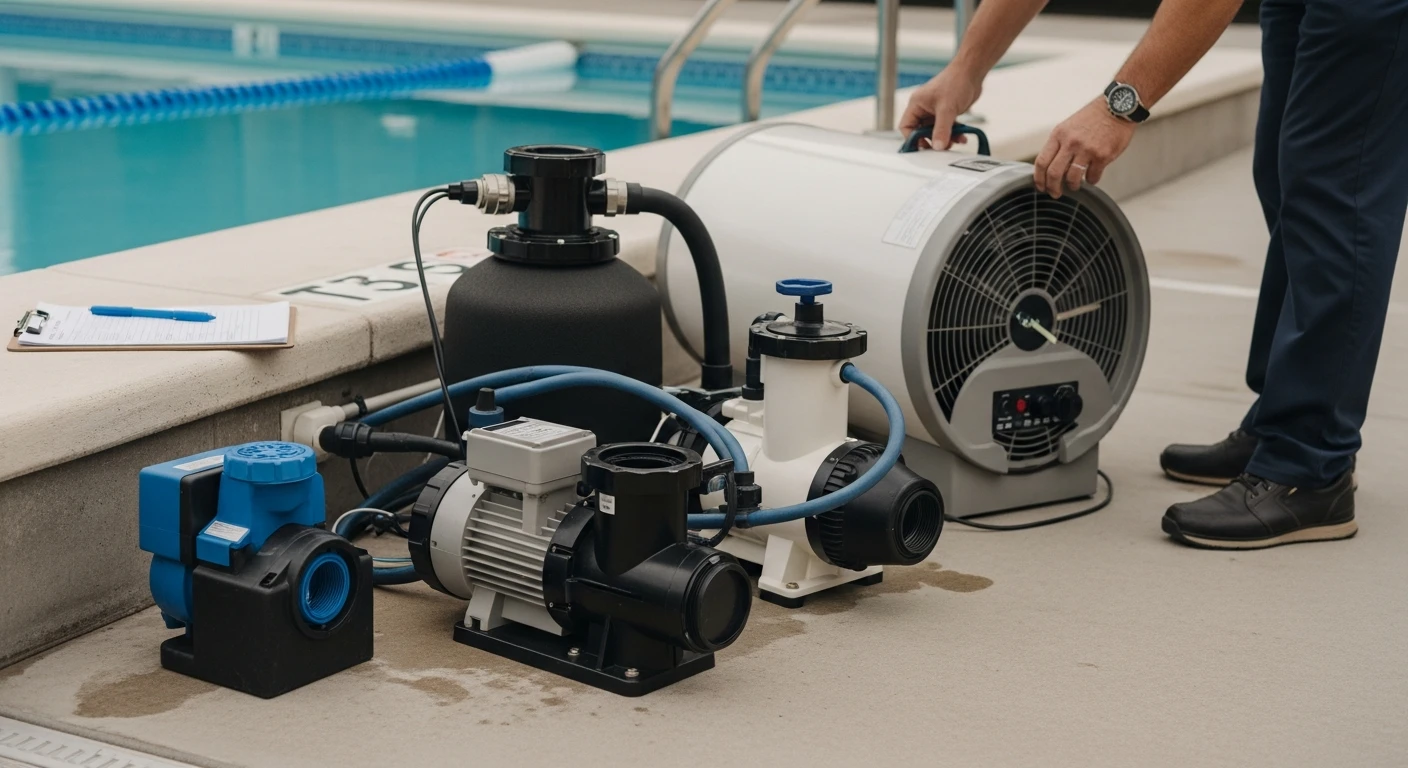
Executing a proper assessment requires a systematic, repeatable process. My field protocol is non-negotiable and ensures nothing is missed. It's not a quick glance; it's a deep dive into the health of your investment.- Pump Motor Analysis: I don't just listen to the pump. I use a clamp meter to record the amperage draw at different speeds. I then check the motor's ventilation ports for obstruction from landscaping debris, a frequent issue in lanais, which can cause overheating.
- Filter Integrity Check: I note the clean and current running pressure. I then perform a full backwash or cartridge cleaning cycle and inspect the multiport valve gaskets—a common failure point—for dry rot and compression set. I also open the filter to physically inspect the sand for channeling or the cartridges for tears.
- Heater Combustion and Flow Test: For gas heaters, I check the igniter's continuity and inspect the burner tray for soot or rust, which indicates poor combustion. Crucially, I test the pressure switch to ensure it's engaging correctly; a faulty switch can cause the heater to fire without adequate water flow, a recipe for a meltdown.
- Automation and Sensor Calibration: In high-end homes, especially on Captiva, automation systems are common. I test every sensor—temperature, flow, and salinity—to ensure they are calibrated. A miscalibrated salt sensor can cause the system to overproduce chlorine, damaging pool surfaces and equipment O-rings.
- Bonding and Grounding Verification: I visually and physically inspect the bonding wire connecting all metal components of the pool. A loose or corroded connection is not just an equipment risk; it's a serious safety hazard.
Precision Tuning for Lee County's Climate
An assessment is useless without actionable recommendations. The final step is tuning the system for our unique environment. For variable-speed pumps, I reprogram the schedule to run longer at a much lower, more efficient RPM, sufficient to turn the water over but drastically cutting energy use. This is particularly effective during our long, hot summers when pools are in constant use. I also adjust salt-chlorine generator percentages based on the lanai's screen density and sun exposure. A pool in direct Estero sun needs a higher output than one in a shaded, landscaped yard. For filters, I establish a precise "time to clean" PSI for the homeowner, removing the guesswork. It's about creating a customized operational playbook for their specific pool, not relying on generic advice. With our hard water, I often find calcium scaling inside salt cells reduces their efficiency by over 40%. Are you actively monitoring and cleaning your cell based on visual inspection, or are you just trusting the "Inspect Cell" light on your control panel?Written by

Tags
pool supplies near me
swimming pool supplies near me
pool supplies
pool cleaner
Pool Equipment Assessment in Lee FL FAQ
What is a Pool Equipment Assessment?
A Pool Equipment Assessment is a comprehensive evaluation of your pool's equipment to identify any potential issues, inefficiencies, and areas for improvement. Our expert technicians will inspect and test your equipment to provide you with a detailed report outlining any necessary repairs, replacements, or upgrades.
Why do I need a Pool Equipment Assessment?
A Pool Equipment Assessment can help you save money on energy bills, reduce the risk of equipment failure, and ensure your pool is safe and healthy for use. Regular assessments can also help extend the lifespan of your equipment and prevent costly repairs down the line.
What kind of equipment will be assessed during the assessment?
Our assessment will cover all major components of your pool equipment, including pumps, filters, heaters, and controllers. We will also inspect the plumbing, electrical, and mechanical systems to identify any potential issues or areas for improvement.
How long does the assessment take?
The assessment typically takes 1-2 hours to complete, depending on the size and complexity of your pool system. Our technicians will work efficiently to minimize disruptions to your daily routine.
What kind of report will I receive after the assessment?
Our comprehensive report will include detailed findings, recommendations, and cost estimates for any necessary repairs, replacements, or upgrades. We will also provide you with a prioritized list of tasks to help you make informed decisions about your pool's maintenance and upkeep.
Are there any special preparations I need to make for the assessment?
Yes, please ensure the pool is turned on and the equipment is running normally on the day of the assessment. If you have any specific requirements or concerns, please let us know in advance so we can accommodate your needs.
How much does the assessment cost?
Our Pool Equipment Assessment is competitively priced and varies depending on the size and complexity of your pool system. Please contact us for a custom quote tailored to your specific needs.
Will the assessment void my warranty?
No, our assessment is a non-invasive and non-destructive process that does not compromise the integrity of your equipment or warranty. Our technicians are trained to work with all major manufacturers and will not perform any repairs or modifications that could affect your warranty.
How often should I have a Pool Equipment Assessment performed?
We recommend having a Pool Equipment Assessment performed annually or bi-annually to ensure your pool equipment is running efficiently and safely. Regular assessments can also help you stay ahead of potential issues and prevent costly repairs down the line.