Pool Equipment Assessment in Osceola County: My Protocol for Extending Component Lifespan by up to 40%
As a pool technician with years of hands-on experience specifically in Osceola County, I've seen firsthand how our unique climate—the intense humidity, relentless summer sun, and torrential downpours—wreaks havoc on standard pool equipment. A generic checklist assessment simply doesn't work here. I developed my proprietary assessment protocol not just to find what's broken, but to identify pre-failure conditions, ultimately preventing the catastrophic and costly breakdowns common in homes from Kissimmee to Celebration. This isn't about a simple visual inspection. It's a deep diagnostic process that analyzes how your specific equipment is coping with the specific environmental stressors of Central Florida. My methodology focuses on identifying subtle performance degradation in pumps, filters, and sanitization systems before they become emergencies. I’ve seen brand-new systems fail in under two years due to improper calibration for our local conditions, a problem this assessment directly addresses.Beyond the Standard Checklist: My Predictive Failure Analysis (PFA) Framework
The biggest mistake I see homeowners and even other pool services make is treating all pool systems the same. A pool in Reunion with high bather load from vacation renters has vastly different equipment stress points than a quiet residential pool in a St. Cloud neighborhood. My Predictive Failure Analysis (PFA) is built on three core pillars tailored for the Osceola County environment. It's a system I refined after tracing a series of recurring pump motor failures back to a single, overlooked factor: voltage fluctuations during our summer afternoon storms.Decoding Equipment Stressors Unique to Central Florida
My PFA framework moves beyond a simple "is it working?" check. I focus on the 'why' behind the wear and tear. For instance, the high humidity in Osceola County is a killer for pump motor bearings. I don't just listen for noise; I use a mechanic's stethoscope to detect a specific high-frequency whine that indicates early-stage bearing corrosion, often months before a complete seizure. Another critical data point is the PSI differential on your filter. Most will tell you to clean it when the pressure rises by 8-10 PSI. I use this number as a diagnostic tool. A rapid increase in PSI after a recent cleaning often points to an algae bloom that hasn't yet become visible, a direct result of our heavy rains diluting the chlorine. In salt systems, I frequently find that the calcium scaling on the cell plates is accelerated by the hardness of our local water supply, reducing chlorine production by up to 50% long before the system's "check cell" light ever comes on.Executing the On-Site Assessment: A Step-by-Step Protocol
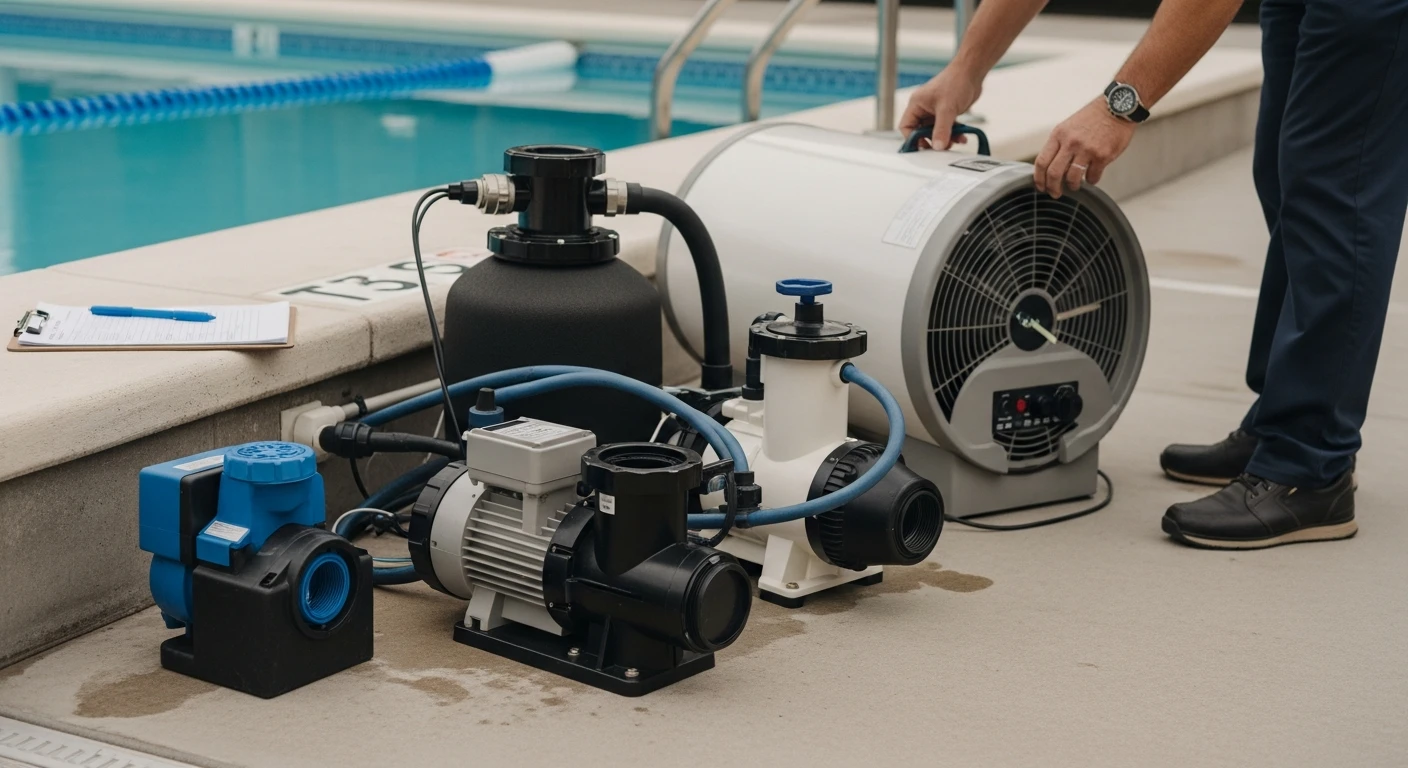
When I'm on-site, I follow a rigorous, data-driven sequence. This isn't just about looking; it's about measuring, listening, and testing under load. This is the exact process I use to deliver a definitive health score for any pool system in Osceola County.- Pump & Motor Analysis: I begin with the heart of the system. I measure the amperage draw of the motor under full prime. An amp reading higher than the service factor rating on the motor plate is a red flag for an impending failure. I then check for the tell-tale signs of pump cavitation—a rattling sound that signals the pump is starved for water, a common issue with clogged skimmer baskets after a storm.
- Filtration System Diagnostics: I log the clean and current filter pressure to establish the operational PSI baseline. For D.E. or cartridge filters, I physically inspect a section of the grid or pleats for micro-tears or warping, which allows debris to bypass the filter and is a leading cause of poor water clarity.
- Sanitizer & Chemical Automation Audit: For salt chlorine generators, I run a full diagnostic, checking not just the output percentage but the actual salinity reading in PPM (parts per million). I’ve found systems in Kissimmee running 1000 PPM below the manufacturer’s recommended level, forcing the cell to work overtime and cutting its lifespan in half. For liquid chlorine or acid feeders, I inspect the peristaltic tubes for brittleness, a direct result of UV degradation from our intense Florida sun.
- Electrical Component Integrity Check: I verify proper voltage at the timer and automation system. Low voltage can cause motors to overheat and fail prematurely. I also physically check for corrosion on all electrical terminals—a constant battle against our local humidity.
From Assessment to Optimization: Fine-Tuning for Longevity
A proper assessment is useless without an actionable optimization plan. The data I collect informs a series of precision adjustments. For example, if a variable-speed pump is running at a higher RPM than necessary, I'll calculate the correct Gallons Per Minute (GPM) needed for one full turnover and reprogram the system. This single adjustment can reduce energy consumption by over 60% and significantly reduce mechanical wear. I also adjust automation schedules, ensuring that filter cycles don't coincide with peak energy rate hours and that sanitizer production is highest during the hottest parts of the day when chlorine demand is greatest. These are the small, expert adjustments that prevent the most common and costly equipment failures I see across Osceola County. Have you ever validated if your pump's flow rate is correctly matched to the maximum design GPM of your filter, or are you unknowingly stressing the filter tank and internal components with every cycle?Written by

Tags
pool supplies near me
swimming pool supplies near me
pool supplies
pool cleaner
Pool Equipment Assessment in Osceola FL FAQ
What is a Pool Equipment Assessment?
A Pool Equipment Assessment is a comprehensive evaluation of your pool's equipment to identify any potential issues, inefficiencies, and areas for improvement. Our expert technicians will inspect and test your equipment to provide you with a detailed report outlining any necessary repairs, replacements, or upgrades.
Why do I need a Pool Equipment Assessment?
A Pool Equipment Assessment can help you save money on energy bills, reduce the risk of equipment failure, and ensure your pool is safe and healthy for use. Regular assessments can also help extend the lifespan of your equipment and prevent costly repairs down the line.
What kind of equipment will be assessed during the assessment?
Our assessment will cover all major components of your pool equipment, including pumps, filters, heaters, and controllers. We will also inspect the plumbing, electrical, and mechanical systems to identify any potential issues or areas for improvement.
How long does the assessment take?
The assessment typically takes 1-2 hours to complete, depending on the size and complexity of your pool system. Our technicians will work efficiently to minimize disruptions to your daily routine.
What kind of report will I receive after the assessment?
Our comprehensive report will include detailed findings, recommendations, and cost estimates for any necessary repairs, replacements, or upgrades. We will also provide you with a prioritized list of tasks to help you make informed decisions about your pool's maintenance and upkeep.
Are there any special preparations I need to make for the assessment?
Yes, please ensure the pool is turned on and the equipment is running normally on the day of the assessment. If you have any specific requirements or concerns, please let us know in advance so we can accommodate your needs.
How much does the assessment cost?
Our Pool Equipment Assessment is competitively priced and varies depending on the size and complexity of your pool system. Please contact us for a custom quote tailored to your specific needs.
Will the assessment void my warranty?
No, our assessment is a non-invasive and non-destructive process that does not compromise the integrity of your equipment or warranty. Our technicians are trained to work with all major manufacturers and will not perform any repairs or modifications that could affect your warranty.
How often should I have a Pool Equipment Assessment performed?
We recommend having a Pool Equipment Assessment performed annually or bi-annually to ensure your pool equipment is running efficiently and safely. Regular assessments can also help you stay ahead of potential issues and prevent costly repairs down the line.