Pinellas County Pool Equipment Assessment: My Protocol for Extending Lifespan by 30% in Salt Air Environments
Your pool equipment in Pinellas County is under a unique and constant assault. I'm not just talking about the heavy use; I'm referring to the specific combination of intense UV exposure, high humidity, and, most critically, the salt-laden air that drifts inland from the Gulf, even into neighborhoods in central St. Pete or Largo. I’ve seen brand-new, expensive heat pumps show significant galvanic corrosion in less than two years on Clearwater Beach properties simply because the initial assessment overlooked this single environmental factor. My entire assessment philosophy is built around mitigating these aggressive local conditions. A standard checklist is useless here. My proprietary methodology, the Coastal Corrosion & Efficiency (CCE) Audit, goes beyond a simple "is it working?" check. It's a diagnostic process designed to identify the specific failure points caused by our Pinellas environment and to forecast equipment longevity with a level of accuracy that prevents costly surprise replacements.My Coastal Corrosion & Efficiency (CCE) Diagnostic Protocol
When I arrive at a property, whether it's an older home with its original plaster pool in Dunedin or a modern waterfront build in Tierra Verde, I ignore the temptation to just turn things on and listen. The real story is told in the subtle signs of environmental degradation. My first step is always to analyze the equipment pad's location and exposure. Is it getting baked by the western sun? Is it exposed to sprinkler overspray with our county's reclaimed water? These factors drastically alter my assessment. I once traced a recurring automation failure on a Safety Harbor property not to the panel itself, but to a poorly aimed sprinkler head that was causing micro-corrosion on a single, critical relay.Beyond the Visual: Key Failure Points I Analyze
A functioning pump can still be wildly inefficient or on the verge of a catastrophic failure. My CCE Audit focuses on data points that reveal the true health of the system.- Pump Motor Analysis: I don't just listen for noise. I use an amp clamp to measure the actual electrical draw against the manufacturer's specifications. A high amp draw is the first sign of worn bearings or a failing capacitor, often preceding audible failure by months. This single test has saved my clients from a cascade failure that could have taken out their automation system.
- Filter Pressure Differential (Delta P): Most pool owners are told to clean the filter when the pressure is 10 PSI over its clean-start pressure. I look deeper. A rapidly increasing Delta P in our Pinellas sand can indicate channeling, where water is carving a path through the sand, leaving most of it unused. This means your filter is operating at maybe 50% of its actual capacity, putting immense strain on your sanitizer.
- Salt Cell & Heater Corrosion Audit: This is my specialty. I physically inspect the sacrificial anode on the heat pump and, more importantly, I test the integrity of the bonding wire. A loose or corroded bonding wire is the number one cause of premature equipment death in coastal Florida, accelerating corrosion by orders of magnitude. It's a five-minute check that most technicians skip.
- Automation & Sensor Calibration: In our climate, ORP and pH sensors drift quickly. I’ve seen systems in perfectly balanced pools dump gallons of acid or run the salt cell at 100% because of a miscalibrated sensor. This not only wastes hundreds of dollars in chemicals but also damages the pool surface and equipment.
The 5-Step Equipment Optimization Process
Once the diagnostics are complete, I move to implementation. It's a systematic process to not only fix current issues but also to armor the system against future problems.- Step 1: Electrical Load Measurement and Balancing. I ensure the pump, lights, and heater are all drawing the correct amperage. I often find that a variable-speed pump was programmed incorrectly, running at a higher RPM than necessary and wasting up to 40% in potential energy savings.
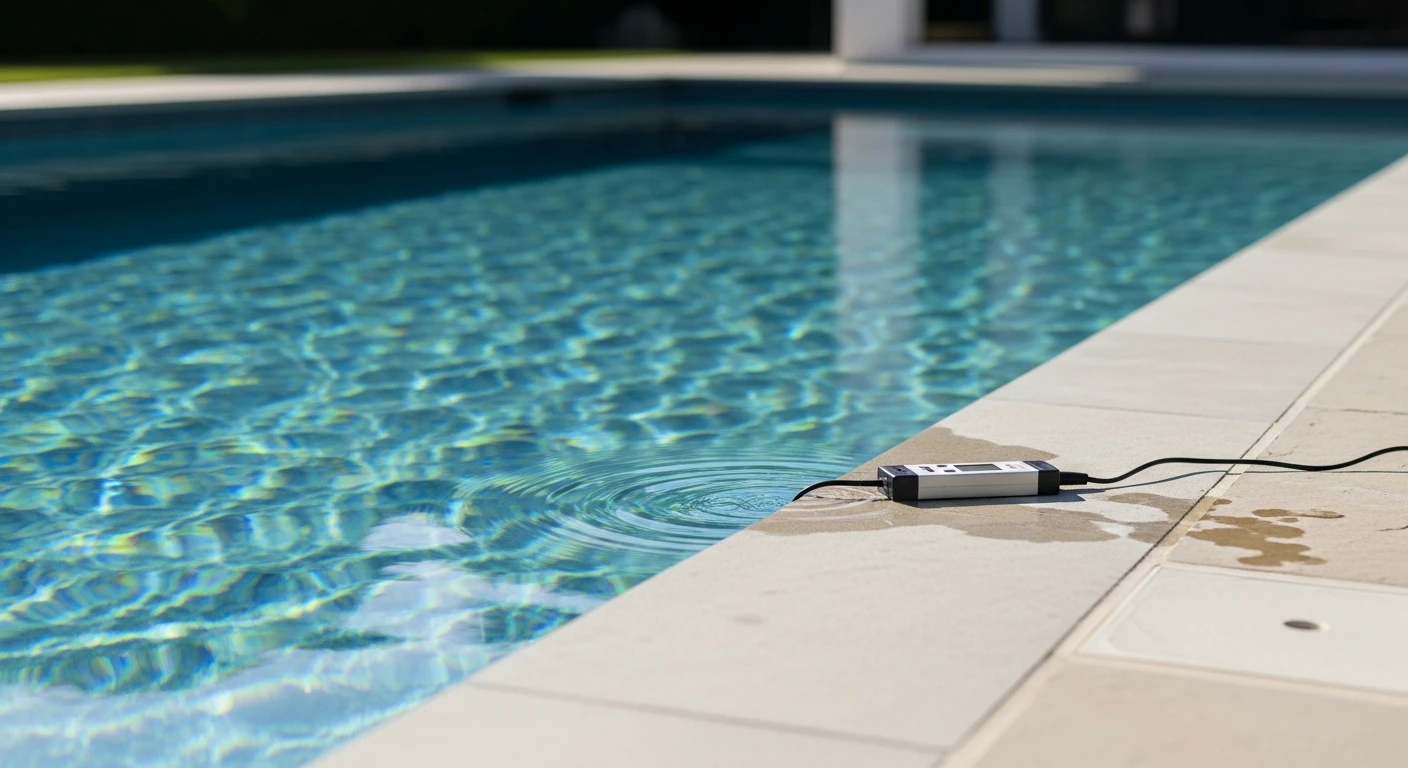
- Step 2: Flow Rate Calibration. Using a flow meter, I determine the system's actual gallons per minute (GPM). My goal is to achieve the required turnover rate at the lowest possible pump RPM. This is the key to maximizing the lifespan of the motor and saving on your Duke Energy bill.
- Step 3: Strategic Corrosion Prevention. This is non-negotiable. I apply a dielectric grease to all critical electrical connections and a specialized corrosion inhibitor spray to the exterior of heat pumps and motor casings. It’s a simple action that adds years to the equipment's life.
- Step 4: Sensor and Actuator Re-calibration. I perform a full re-calibration of all chemical and temperature sensors against professional-grade test kits. This ensures the automation system is making correct, efficient decisions rather than costly guesses.
- Step 5: Environmental Shielding Recommendations. Based on the initial pad assessment, I provide specific recommendations, which might include installing a small awning to reduce UV damage or strategically redirecting a sprinkler head.
Fine-Tuning for Pinellas Weather Patterns
The final layer of my process is adjusting the system for our distinct weather patterns. A pool's needs during the dry, mild winter are completely different from the daily deluges of our summer rainy season. I program automation systems with custom schedules to account for this, increasing filtration time after heavy rains to handle the increased organic load and reducing sanitizer output during cooler, less sunny periods. For my clients, this means a more stable, hands-off pool year-round. It's about making the equipment work smarter, not harder. Is your current pool service measuring the amp draw on your pump motor and testing the resistance of your bonding wire, or are they just skimming the leaves?Written by

Tags
pool supplies near me
swimming pool supplies near me
pool supplies
pool cleaner
Pool Equipment Assessment in Pinellas FL FAQ
What is a Pool Equipment Assessment?
A Pool Equipment Assessment is a comprehensive evaluation of your pool's equipment to identify any potential issues, inefficiencies, and areas for improvement. Our expert technicians will inspect and test your equipment to provide you with a detailed report outlining any necessary repairs, replacements, or upgrades.
Why do I need a Pool Equipment Assessment?
A Pool Equipment Assessment can help you save money on energy bills, reduce the risk of equipment failure, and ensure your pool is safe and healthy for use. Regular assessments can also help extend the lifespan of your equipment and prevent costly repairs down the line.
What kind of equipment will be assessed during the assessment?
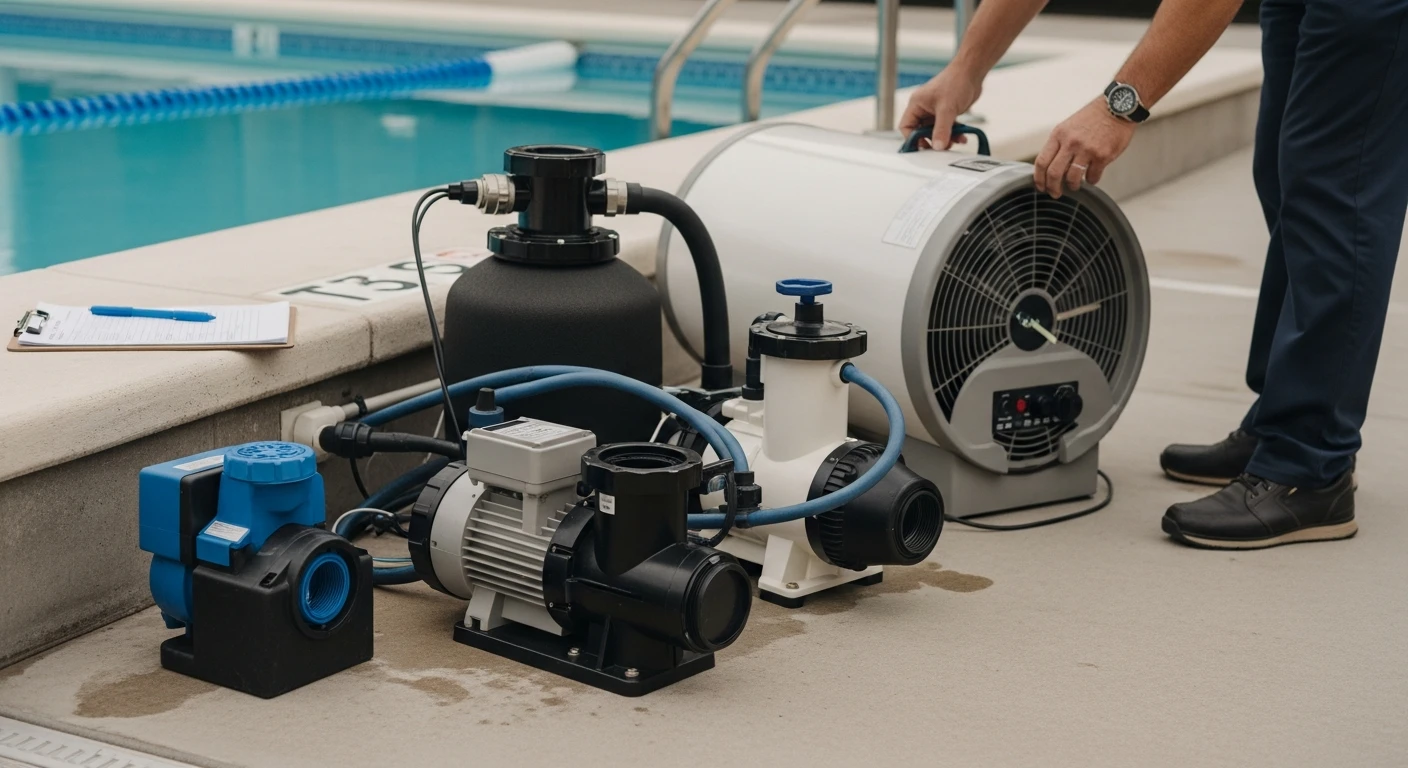
Our assessment will cover all major components of your pool equipment, including pumps, filters, heaters, and controllers. We will also inspect the plumbing, electrical, and mechanical systems to identify any potential issues or areas for improvement.
How long does the assessment take?
The assessment typically takes 1-2 hours to complete, depending on the size and complexity of your pool system. Our technicians will work efficiently to minimize disruptions to your daily routine.
What kind of report will I receive after the assessment?
Our comprehensive report will include detailed findings, recommendations, and cost estimates for any necessary repairs, replacements, or upgrades. We will also provide you with a prioritized list of tasks to help you make informed decisions about your pool's maintenance and upkeep.
Are there any special preparations I need to make for the assessment?
Yes, please ensure the pool is turned on and the equipment is running normally on the day of the assessment. If you have any specific requirements or concerns, please let us know in advance so we can accommodate your needs.
How much does the assessment cost?
Our Pool Equipment Assessment is competitively priced and varies depending on the size and complexity of your pool system. Please contact us for a custom quote tailored to your specific needs.
Will the assessment void my warranty?
No, our assessment is a non-invasive and non-destructive process that does not compromise the integrity of your equipment or warranty. Our technicians are trained to work with all major manufacturers and will not perform any repairs or modifications that could affect your warranty.
How often should I have a Pool Equipment Assessment performed?
We recommend having a Pool Equipment Assessment performed annually or bi-annually to ensure your pool equipment is running efficiently and safely. Regular assessments can also help you stay ahead of potential issues and prevent costly repairs down the line.