Lee County Pool Chemical Balance: My Protocol for a 30% Reduction in Chemical Fluctuation
As a pool specialist who has serviced countless properties from the canal-front homes in Cape Coral to the larger estates in Fort Myers, I’ve seen one constant struggle: maintaining pool chemical balance against our relentless Lee County climate. The combination of intense, year-round sun and sudden, heavy downpours during the rainy season creates a volatile environment that standard chemical routines simply can't handle. Homeowners are often trapped in a frustrating cycle of shocking their pool on Monday only to find it cloudy or green by Friday. My approach isn't about adding more chemicals; it's about creating a chemically resilient body of water. The secret lies in mastering the relationship between **Total Alkalinity (TA)** and **Cyanuric Acid (CYA)** to build a buffer that withstands environmental shocks. This methodology has consistently reduced chemical consumption and fluctuation by up to 30% for my clients, saving them both money and the headache of constant water testing.My 3-Point Diagnostic Framework for Lee County Pools
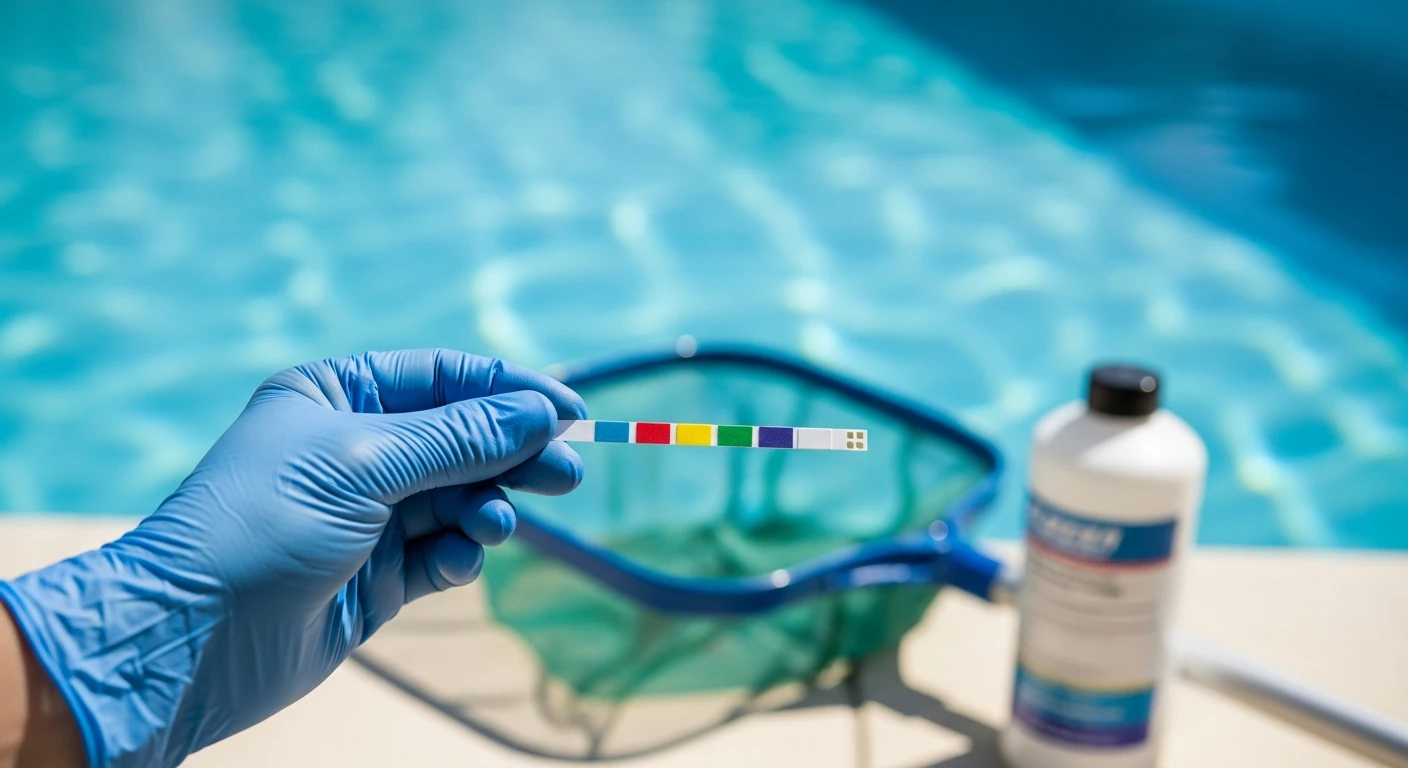
Before I even touch a chemical, I perform a diagnostic that goes beyond a simple test strip. This is a crucial step I developed after realizing that many pool problems in our area are environmental, not just chemical. My framework is built to understand the unique load on each specific pool. The process starts with an **Environmental Load Assessment**. I analyze the pool's direct sun exposure, which is a massive factor in Fort Myers where open-air pools are common. A pool getting eight hours of direct sun will have its **Free Chlorine (FC)** burned off at a dramatically different rate than one on Sanibel Island with partial shade from vegetation. I also factor in the volume of rain runoff from unscreened lanais, which directly impacts pH and alkalinity. The second point is **Usage and Debris Profiling**. A pool used daily by a family will have a different sanitizer demand than a weekend-only pool. I also assess the type of debris. Fine pollen and dust that get through lanais consume more chlorine than larger leaves. Finally, I conduct a **Total Dissolved Solids (TDS) Creep Analysis**. Over time, every chemical, piece of sunscreen, and particle added to a pool increases its TDS. Once TDS levels get too high (typically above 2500 ppm for non-saltwater pools), chemicals, especially chlorine, become less effective. It’s a silent problem I often identify in pools that are 5+ years old and have never been partially drained.Decoding Alkalinity as a pH Buffer Against Acid Rain
Here’s a technical insight that many pool owners miss: **Total Alkalinity (TA)** is the single most important factor for pH stability in Lee County. Our summer rains are naturally acidic and can cause a pool's pH to plummet overnight, making chlorine harsh and less effective. Think of TA as the water's ability to absorb that acid without a drastic pH swing. I’ve seen pools with "perfect" pH but low TA at 60 ppm become cloudy after a single afternoon thunderstorm. The pH crashed because there was no buffer. My proprietary method involves maintaining TA in a slightly higher range, between **100-120 ppm**, creating a robust shield. I had a client in a new Bonita Springs development whose pH was on a rollercoaster. By focusing solely on raising and stabilizing his TA first, his pH locked into place, and his chlorine consumption dropped significantly because it was no longer fighting to work in an unstable environment.Executing the Lee County Climate-Proofing Sequence
After the diagnosis, I implement a precise sequence of adjustments. This isn't just about dumping chemicals in; it's a methodical calibration. Following this order is critical for success.- Step 1: Foundational Baseline Correction. Before anything else, I adjust Calcium Hardness and address the TDS if necessary. Trying to balance a pool with excessively high TDS is a losing battle. This might involve a partial drain and refill, a step many are hesitant to take but is foundational for long-term stability.
- Step 2: Cyanuric Acid (CYA) Calibration. In our sun, CYA is non-negotiable; it acts as a sunscreen for your chlorine. However, I’ve seen pools in Lehigh Acres with CYA levels over 150 ppm from years of using stabilized chlorine tabs. At this level, chlorine becomes slow and ineffective. My target for Lee County is a tight range of **40-60 ppm**. This provides adequate protection without over-stabilizing and hindering sanitization.
- Step 3: Total Alkalinity (TA) Layering. Once CYA is set, I raise the TA to my target of 100-120 ppm. I do this slowly, over 24-48 hours, using sodium bicarbonate and allowing it to circulate thoroughly to prevent clouding. This creates the pH buffer that is the core of the system.
- Step 4: Sanitizer Titration and Maintenance. Only after the other levels are locked in do I establish the target Free Chlorine level. Based on the calibrated CYA, the FC level should be maintained at roughly 7.5% of the CYA level. This ensures you have enough active sanitizer without over-chlorinating.
Post-Storm Recovery & High-Heat Chlorine Demand
Once the pool is balanced with my method, maintenance becomes predictive rather than reactive. After a heavy afternoon downpour, the protocol isn't to immediately shock the pool. The first step is to **test the TA**. If it has dropped, that's the priority. Correcting the TA will often cause the pH to self-correct. During the peak heat of August, I advise clients to test for FC in the evening, not the morning. This gives a true picture of how much chlorine was consumed during the day's intense sun and allows for a precise dose of liquid chlorine overnight to prepare for the next day. I strongly advocate for using **liquid chlorine (sodium hypochlorite)** for routine adjustments, as it doesn't add more CYA to the water, preventing the dreaded "CYA creep" from stabilized pucks. Given that your pool's chemistry is a dynamic system, have you ever considered how the source water from Lee County Utilities itself, with its specific mineral content, provides the initial baseline you're constantly fighting against?Written by

Tags
balance pool water
pool alkalinity increaser
pool chemical balance
pool ph balance
Pool Chemical Balance in Lee FL FAQ
What is pool chemical balance?
Pool chemical balance refers to the process of maintaining the optimal levels of chemicals in your pool water to ensure a safe and healthy swimming environment. This includes adjusting the levels of chlorine, pH, alkalinity, and calcium hardness to prevent damage to your pool and its equipment, as well as to maintain the overall appearance and quality of the water.
Why is pool chemical balance important?
Pool chemical balance is crucial because it helps to prevent a range of issues, including eye and skin irritation, respiratory problems, and damage to your pool and its equipment. Additionally, proper chemical balance can help to extend the lifespan of your pool and its components, reducing the need for costly repairs and replacements.
How often should I test my pool water for chemical balance?
It is recommended to test your pool water at least once a week, or more frequently if you notice any changes in the appearance or smell of the water. This will help you to identify any imbalances and take corrective action before they become major issues.
What are the common signs of pool chemical imbalance?
Common signs of pool chemical imbalance include cloudy or murky water, eye and skin irritation, and the presence of algae or other contaminants. Other signs may include unusual odors, slimy or sticky surfaces, and damage to your pool or its equipment.
Can I perform pool chemical balance tests myself?
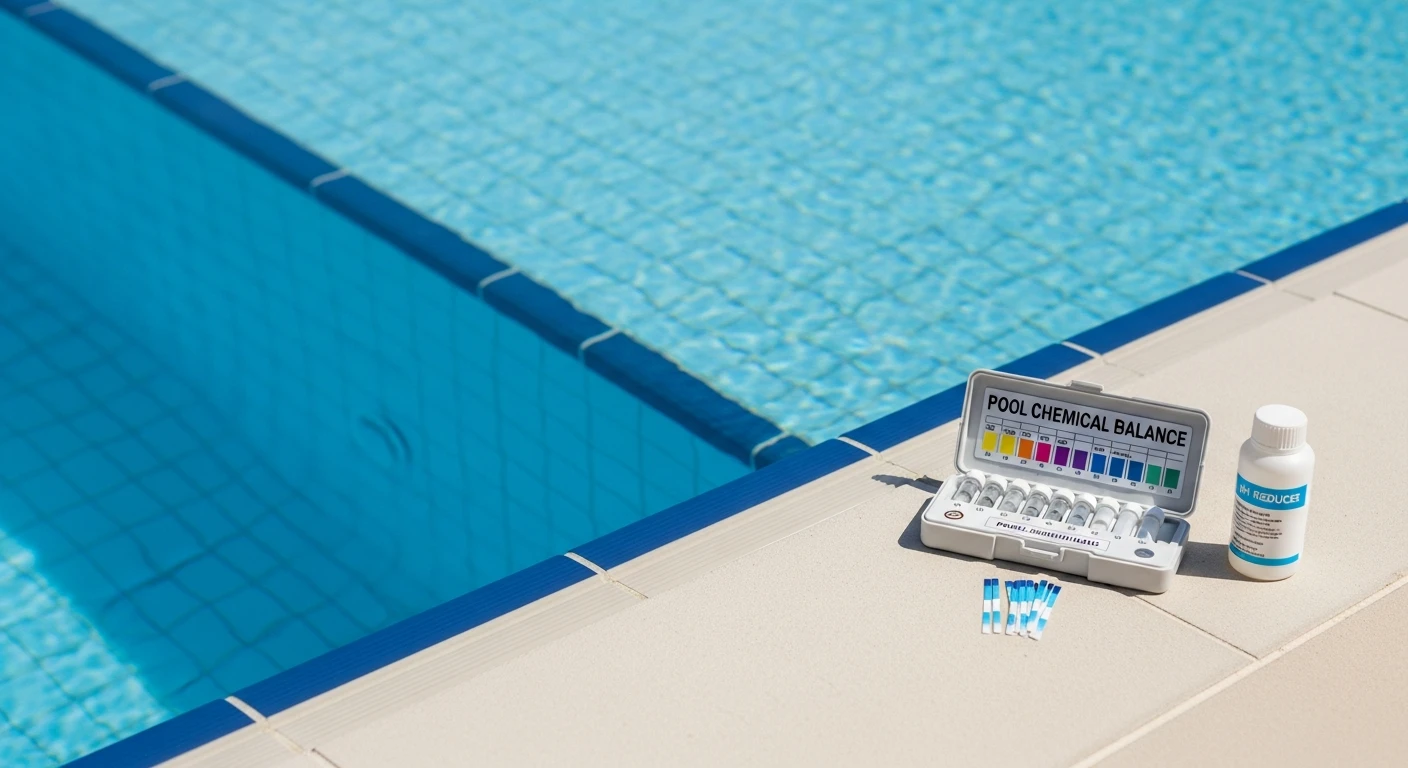
Yes, you can perform pool chemical balance tests yourself using test kits or strips available at most pool supply stores. However, if you are unsure of how to interpret the results or are not comfortable with the testing process, it is recommended to consult with a professional pool technician.
What should I do if my pool water is out of balance?
If your pool water is out of balance, it is essential to take immediate action to correct the imbalance. This may involve adding chemicals to the water, such as chlorine or pH increaser, or taking steps to remove contaminants or debris from the pool. It is recommended to consult with a professional pool technician if you are unsure of how to correct the imbalance.
How can I maintain pool chemical balance over time?
To maintain pool chemical balance over time, it is recommended to establish a regular maintenance routine that includes regular testing and adjustment of the chemical levels. Additionally, it is important to ensure that your pool is properly filtered and cleaned, and that any debris or contaminants are removed from the water on a regular basis.
Can I use homemade pool chemical treatments?
No, it is not recommended to use homemade pool chemical treatments, as they may not be effective or safe for your pool and its users. Instead, it is recommended to use pool chemicals that are specifically designed and formulated for use in pools, and to follow the instructions provided by the manufacturer.
How can I prevent pool chemical imbalance in the future?
To prevent pool chemical imbalance in the future, it is recommended to establish a regular maintenance routine that includes regular testing and adjustment of the chemical levels. Additionally, it is important to ensure that your pool is properly filtered and cleaned, and that any debris or contaminants are removed from the water on a regular basis.