Lee County Pool Service: My Preemptive Protocol to Eliminate Algae Blooms by 95%
For years, I've serviced pools from the waterfront homes in Cape Coral to the family neighborhoods of Fort Myers, and the single biggest misconception is that pool care is reactive. A client calls me when the pool is already green. My entire service philosophy is built on the opposite principle: preemptive chemical warfare. In Lee County's climate, with its intense summer sun and sudden afternoon downpours, a "wait-and-see" approach is a guaranteed failure that costs homeowners hundreds in shock treatments and algaecides. My system focuses on creating an environment where algae simply cannot gain a foothold, regardless of the weather. This isn't about just dumping chlorine in once a week. It's a data-driven approach that anticipates environmental shifts. A single heavy rainstorm can deposit enough phosphates—algae's primary food source—to turn a pristine pool into a swamp in 48 hours. I saw this firsthand on a large residential pool in a Bonita Springs community; the previous company ignored the high phosphate readings from lawn fertilizer runoff, leading to a massive bloom that cost nearly $500 to correct. My methodology prevents that from ever happening.My Diagnostic Framework: The Lee County Water Chemistry Blueprint
Before I even touch a pool net, my first step is a comprehensive water audit that goes far beyond the basic test strips. Standard pool services check pH and chlorine. I build a complete chemical profile, because the interaction between all parameters is what dictates pool health, especially in our humid environment where water chemistry is constantly under assault. My proprietary blueprint is based on controlling the unseen catalysts of pool problems.The Technical Pillars of Proactive Pool Stability
My analysis centers on three often-ignored metrics. The first is phosphates. I aim for a reading below 100 ppb (parts per billion). Many Lee County pools, especially those near canals or large landscaped areas, can test over 1,000 ppb without showing visible signs, creating a ticking time bomb for an algae bloom. The second is Cyanuric Acid (CYA), the stabilizer that protects chlorine from our intense UV radiation. The critical error I see is letting CYA get too high. In a vinyl-lined pool in Lehigh Acres, I diagnosed a "chlorine lock" where the chlorine level was high, but the water was still cloudy because a CYA level of over 150 ppm was rendering the sanitizer ineffective. For Lee County, I maintain a strict range of 30-50 ppm. Finally, I calculate the Langelier Saturation Index (LSI). This index tells me if the water is corrosive (damaging plaster and equipment) or scaling (causing calcium buildup on surfaces and in salt cells). I adjust alkalinity, calcium hardness, and pH to keep the LSI between +0.2 and -0.2, protecting the client's investment.The Algae-Lock Implementation Protocol
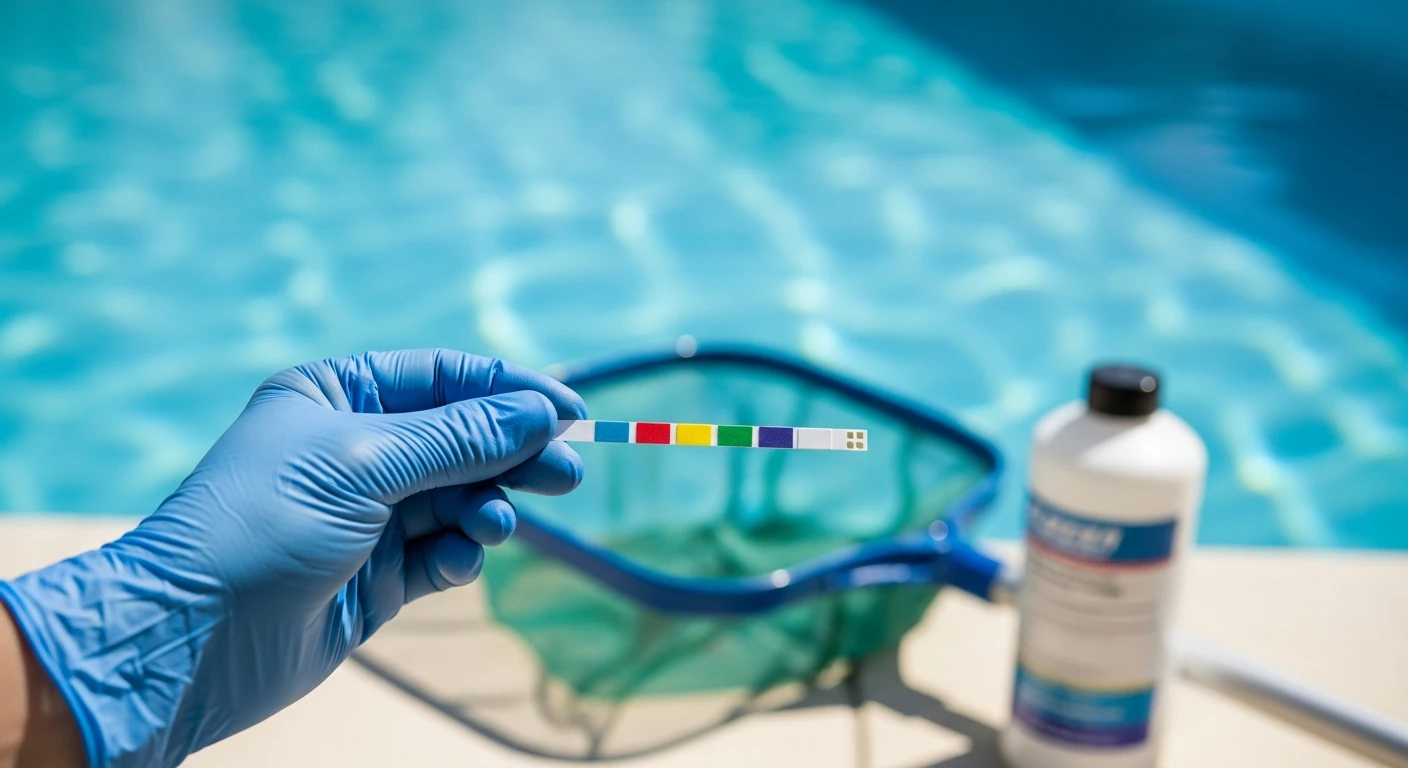
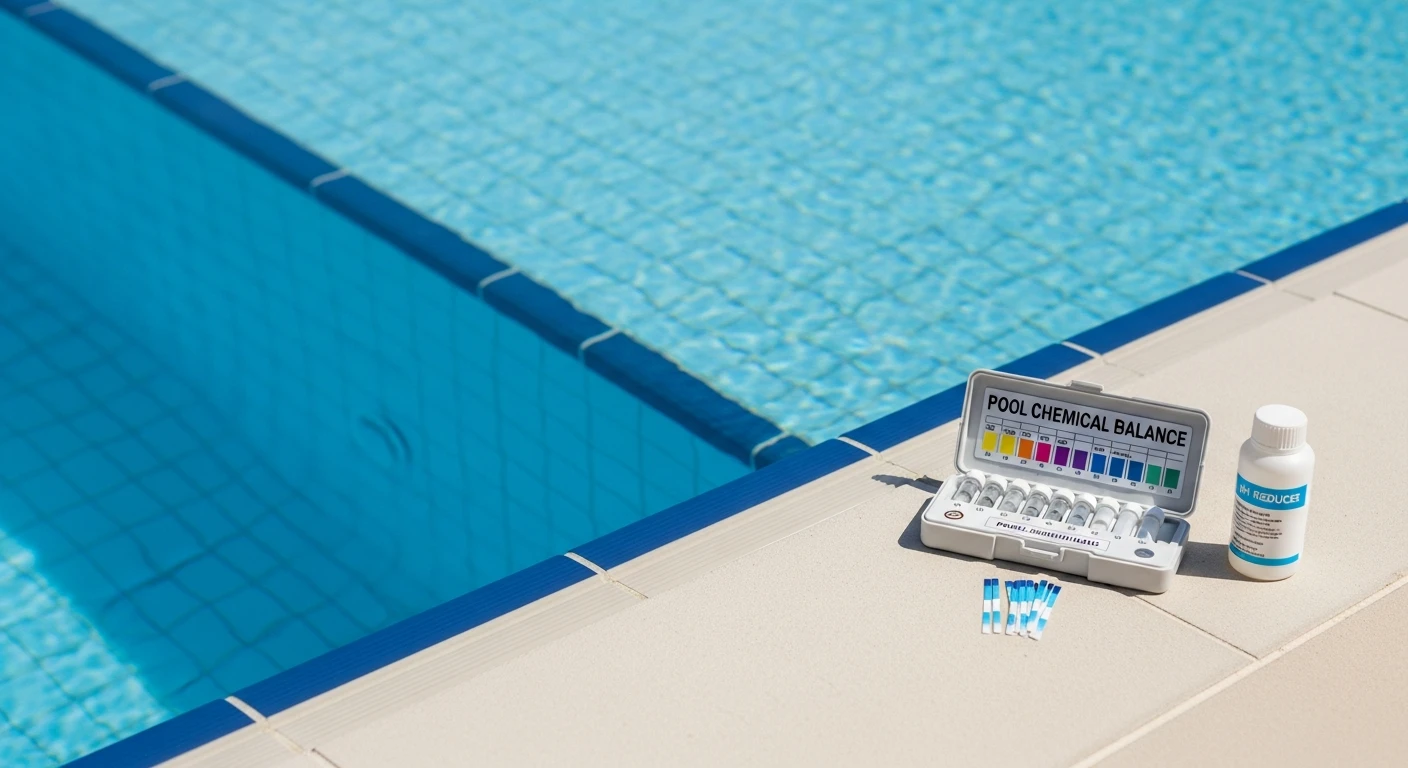
Once the initial blueprint is established, I deploy a precise, multi-step weekly service protocol designed for maximum stability. This isn't a one-size-fits-all checklist; it's a dynamic process adjusted based on the latest readings and weather forecasts.- Step 1: Advanced Water Chemistry Test. I perform a digital test for Free Chlorine (FC), Combined Chlorine (CC), pH, Total Alkalinity (TA), Calcium Hardness (CH), CYA, and Phosphates. This gives me a full picture, not a snapshot.
- Step 2: Phosphate Neutralization. If phosphates test above 100 ppb, I apply a dose of a lanthanum-based phosphate remover. This starves any potential algae spores before they can multiply.
- Step 3: LSI-Balanced Chemical Dosing. Based on the LSI calculation, I add chemicals in a specific order to avoid negative reactions. For example, I never add acid and chlorine at the same time. All adjustments are made to bring the water into the ideal LSI range.
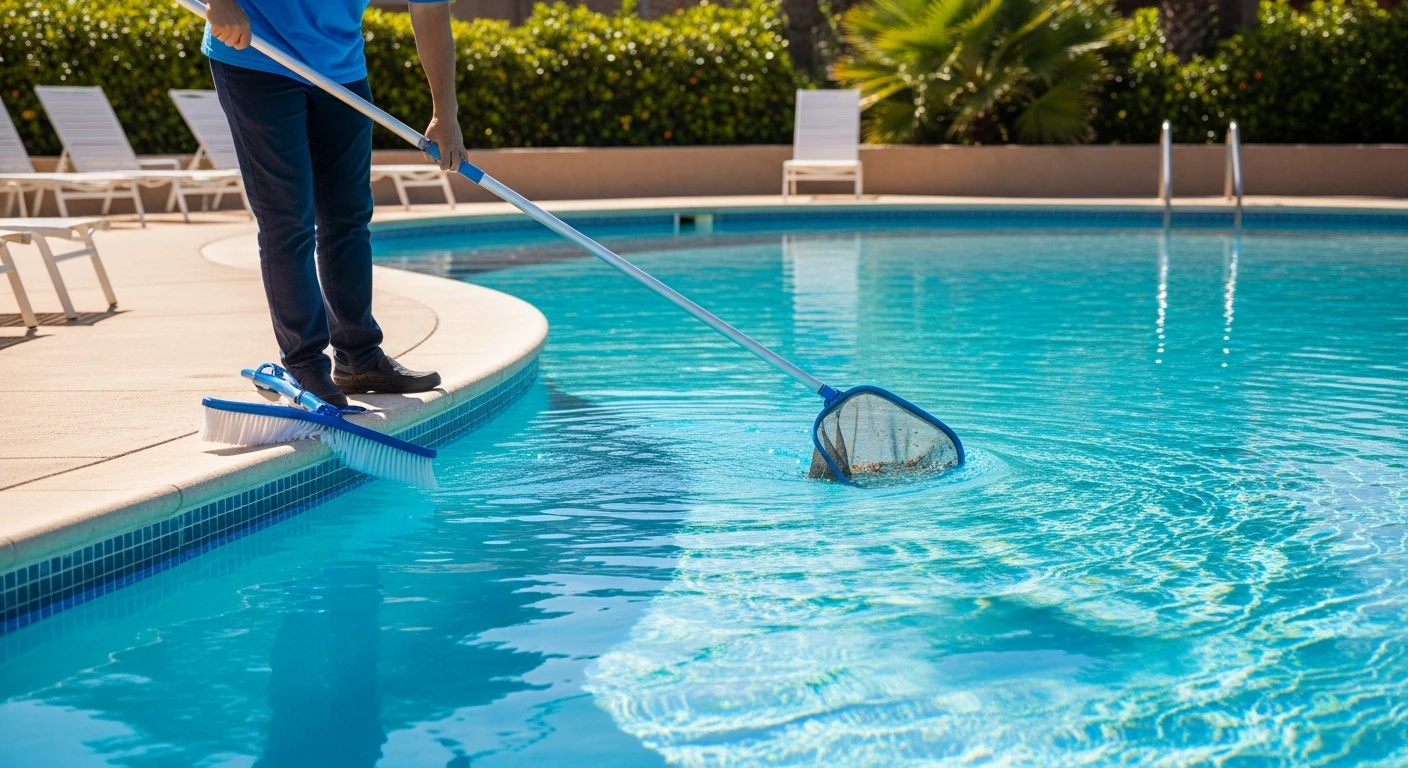
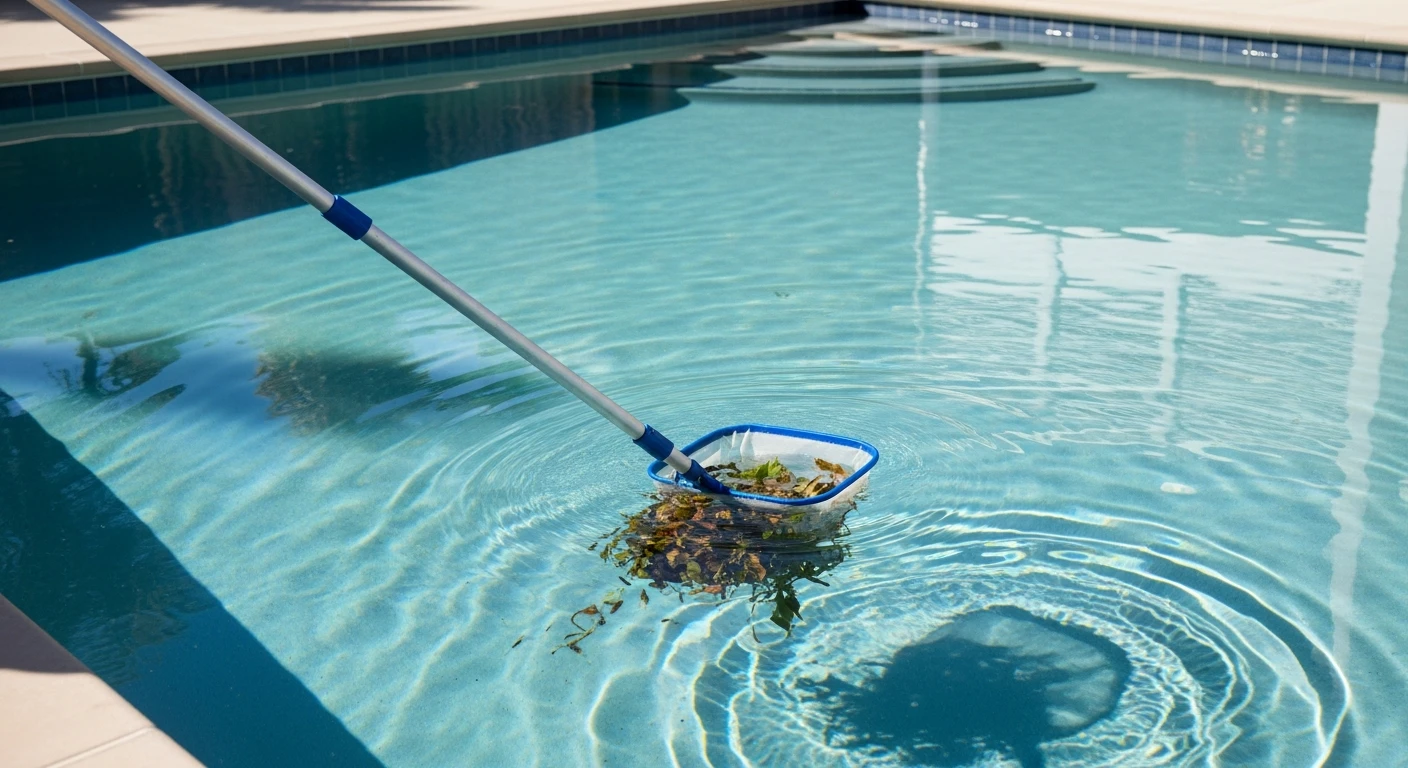
- Step 4: Physical Debris Removal. I perform a thorough skimming, brushing of all pool walls and steps, and vacuuming. This is critical as organic debris consumes chlorine and introduces phosphates. Special attention is paid to the tile line in screened lanais, a common breeding ground for mustard algae.
- Step 5: System & Equipment Check. I inspect the pump, filter, and skimmer baskets. I backwash sand or D.E. filters only when pressure rises 8-10 PSI above the clean baseline, as over-backwashing reduces filtration efficiency.
Precision Tuning for Year-Round Clarity
The work doesn't stop after the weekly visit. My quality standard is maintaining water clarity that allows you to read the date on a dime at the bottom of the deep end. During the summer rainy season, I may recommend a small weekly dose of a preventative algaecide as an insurance policy. For saltwater pools, I regularly inspect the salt cell for calcium buildup, which is accelerated by our hard water, to ensure consistent chlorine production. This level of detail is what separates a truly clean and safe pool from one that just looks clear today. Is your current pool service actively managing your Langelier Saturation Index to prevent long-term surface and equipment damage, or are they just reacting to problems as they appear?Written by

Tags
pool cleaning
swimming pool maintenance
pool care
acid wash pool
Pool Cleaning Service in Lee FL FAQ
What is the frequency of pool cleaning services?
Our pool cleaning services are available on a one-time, weekly, bi-weekly, or monthly basis, depending on your specific needs and pool usage. We can work with you to create a customized schedule that suits your requirements.
What areas of the pool are included in the cleaning service?
Our comprehensive pool cleaning service includes the cleaning of the pool floor, walls, and surfaces, as well as the skimmer and pump baskets. We also clean the pool deck, surrounding areas, and equipment.
Do you offer additional services beyond pool cleaning?
Yes, we offer a range of additional services, including pool maintenance, repairs, and renovation. Our team can also assist with equipment installation and troubleshooting.
How do you handle pool equipment repairs?
Our trained technicians are equipped to handle minor repairs and maintenance tasks. In cases where more extensive repairs are required, we can recommend reliable and licensed professionals to ensure your pool is up and running smoothly.
What types of pools do you service?
We service in-ground and above-ground pools of all sizes and types, including saltwater, fiberglass, and vinyl pools.
Are your technicians certified and insured?
Yes, our technicians are certified in pool operations and maintenance, and we carry comprehensive liability insurance to ensure your property and pool are protected.
How do you handle chemical imbalances and water testing?
Our technicians are trained to test and balance pool water chemistry, ensuring your pool water is safe and healthy for swimmers. We also provide guidance on maintaining proper water chemistry levels.
Can I schedule a one-time cleaning or maintenance service?
Yes, we offer one-time services for pool cleaning, maintenance, and repairs. This is ideal for special events, pool openings, or when you're experiencing an unexpected issue.
How do I know if my pool needs additional maintenance or repairs?
Our technicians will assess your pool's condition and provide recommendations for any necessary maintenance or repairs. We can also schedule regular maintenance services to prevent issues from arising.
Can I cancel or reschedule a service appointment?
Yes, please contact us at least 24 hours in advance to cancel or reschedule a service appointment. We understand that unexpected events may occur, and we're happy to accommodate changes when possible.