Lee County Pool Skimming & Brushing: A Method to Stabilize Chlorine Demand by 20%
After servicing hundreds of pools across Lee County, from the waterfront properties in Cape Coral to the serene homes on Sanibel Island, I've seen one fundamental mistake cripple pool health more than any other: treating skimming and brushing as simple chores. Most pool owners see a leaf and they skim it. They see a speck of dirt and they brush it. This reactive approach is precisely why they constantly battle cloudy water and creeping algae, especially during our intense rainy season. The real goal isn't just removing visible debris; it's about proactively managing the organic load and disrupting biofilm formation before they can tax your chemical system. My entire maintenance philosophy is built on this principle. Proper technique isn't about working harder; it's about making every pass with the net and every stroke of the brush a strategic action that directly reduces your pool's chlorine demand. I can tell within minutes of watching someone service a pool whether they understand this concept. It's the difference between a pool that stays balanced for weeks and one that needs constant chemical shocks and adjustments, a common frustration for homeowners in the high-humidity environment of Fort Myers.My Diagnostic Framework for Lee County's Unique Pool Challenges
Before I even touch a tool, I diagnose the pool's environment. In Lee County, this is non-negotiable. The challenges here are specific. We have high pollen counts in the spring, which creates a fine yellow film on the water's surface that many standard nets barely touch. We have lanais, which people assume keep pools clean, but in reality, they just trap fine dust and allow it to build up on the screen, only to be washed into the pool during the first heavy downpour. My method, which I call the Surface & Subsurface Integrity Protocol, addresses these local factors head-on. It's not just about cleaning; it's about anticipating the environmental load.The Technical Difference Between Surface Debris and Wall Biofilm
Most people see a clean-looking pool and assume it's fine. I see the potential for failure. The key is understanding the two primary enemies. First is surface tension debris. This isn't the big leaves; it's the fine dust, pollen, and oils from sunscreen that float on the water's "skin." They are a massive food source for bacteria and algae. Second, and far more insidious, is biofilm. This is a microscopic, slimy layer that forms on your pool walls, steps, and in crevices. You often can't even see it. Brushing isn't for visible dirt; it's a preemptive strike to break up this biofilm, preventing it from becoming a foothold for mustard or green algae. Ignoring these two elements is why a pool's free chlorine level can plummet overnight, even without heavy use.The Step-by-Step Protocol for Flawless Execution
I’ve refined this process over years of work, identifying the exact sequence and technique that yields the best results with the least amount of wasted effort. This is how I ensure a pool's chemistry remains stable.- My Skimming Sequence (The Surface Protocol)
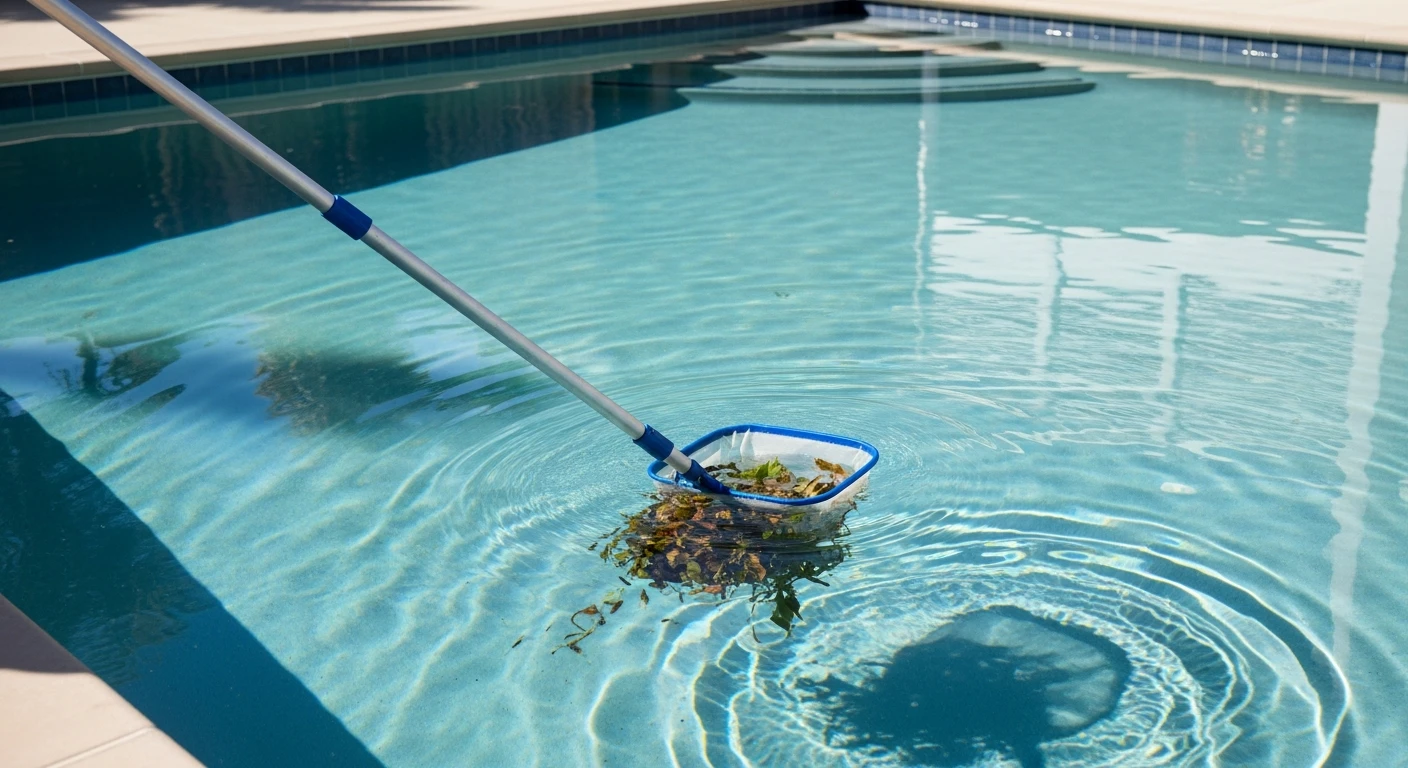
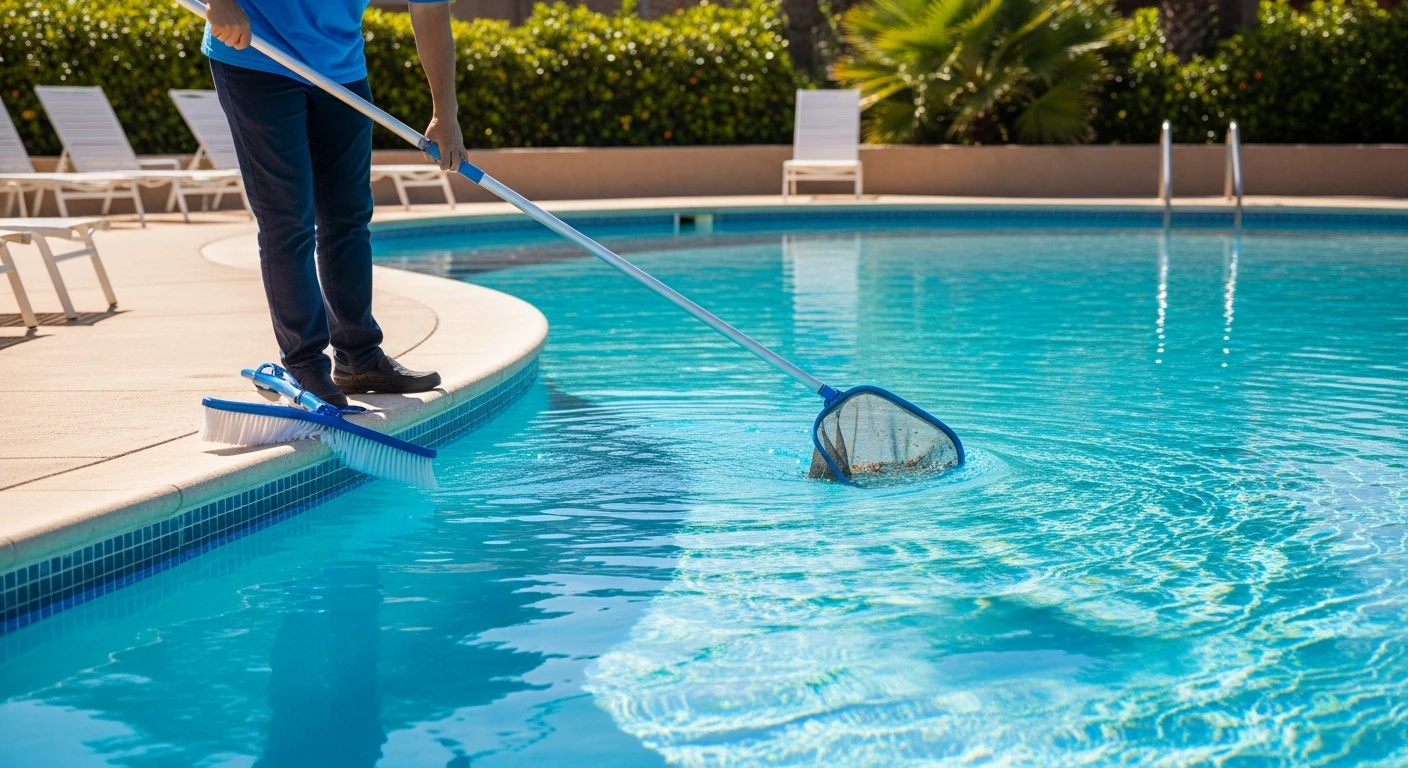
- Empty the skimmer basket first. This is a rookie mistake I see everywhere. Skimming debris into a full basket just pushes dirty water back into the pool. This single action immediately improves circulation efficiency.
- Start at the shallow end, working your way towards the deep end. Use a gentle, long "pulling" motion rather than a choppy "scooping" motion. This preserves the surface tension and collects the finer particles.
- Execute overlapping passes. Just like mowing a lawn, ensure each pass with the net slightly overlaps the last. This guarantees you capture the fine film of pollen common in Lee County.
- Give a final, gentle shake to the net away from the pool to shed excess water before dumping the debris.
- My Brushing Method (The Wall & Floor Protocol)
- Select the correct brush. For the plaster and pebble-tec pools common in our area, a nylon/stainless steel combination brush is my go-to for its effectiveness against biofilm. For vinyl or fiberglass, only use nylon.
- Begin at the shallow end steps, brushing all surfaces toward the main drain.
- For the walls, use a consistent top-down pattern. This pushes all the dislodged biofilm and algae spores down to the floor where they can be drawn into the drain and filter.
- Pay special attention to "dead zones" where water circulation is poor: behind ladders, in corners, around light niches, and on love seats. These are the breeding grounds for algae.
- Brush towards the main drain on the pool floor, completing the process of moving all suspended particles toward the primary point of filtration.
Precision Adjustments for Lee County's Climate
The protocol must adapt. During the heavy summer rains, I instruct clients to perform a "post-storm brush." The rain washes in phosphates from lawn fertilizers and tannins from mulch, which are pure algae fuel. A quick brush immediately after a storm helps the filter remove these contaminants before they can cause a bloom. Similarly, during the peak pollen season from February to April, skimming may need to be a daily task to prevent the organic load from overwhelming the sanitizer. My quality benchmark is simple: I must be able to clearly see the head of a screw on the main drain in the deep end. If I can't, the job isn't done to my standard. Now that you've systematically brushed the unseen biofilm off your walls and into suspension, how have you adjusted your pump's runtime and valve settings to ensure those particles are captured by the filter, or are you just allowing them to resettle and start the cycle all over again?Written by

Tags
pool brushing
pool skimming
best pool brush
swimming pool brush
Pool Skimming and Brushing in Lee FL FAQ
What is pool skimming and brushing?
Pool skimming and brushing are essential maintenance tasks that help to remove dirt, debris, and algae from the surface of your pool. Skimming removes floating debris such as leaves and insects, while brushing helps to scrub the walls and floor of the pool to remove dirt and algae that can accumulate.
Why is pool skimming and brushing important?
Regular pool skimming and brushing are crucial to maintaining a clean and healthy pool. It helps to prevent the growth of algae, reduces the risk of pool equipment damage, and ensures that your pool water is safe and enjoyable for swimming.
How often should I skim and brush my pool?
The frequency of skimming and brushing depends on the size of your pool, the number of users, and the environmental conditions around your pool. As a general rule, it's recommended to skim your pool daily and brush it weekly. However, it's best to consult with a professional pool technician for personalized advice.
Can I do pool skimming and brushing myself?
While it's possible to do pool skimming and brushing yourself, it can be a time-consuming and labor-intensive task. If you're short on time or not comfortable with the process, it's recommended to hire a professional pool technician to do it for you.
What equipment do I need for pool skimming and brushing?
To skim your pool, you'll need a pool skimmer or a pool net. For brushing, you'll need a pool brush and a suitable cleaning solution. You can purchase these equipment at a pool supply store or online.
Can I hire a professional to do pool skimming and brushing for me?
Yes, you can hire a professional pool technician to do pool skimming and brushing for you. They will have the necessary equipment and expertise to do the job efficiently and effectively. Contact us to learn more about our pool skimming and brushing services.
What are the benefits of hiring a professional for pool skimming and brushing?
Hiring a professional for pool skimming and brushing can provide numerous benefits, including improved pool water quality, reduced energy consumption, and increased peace of mind. Our professionals will ensure that your pool is properly maintained and cleaned, allowing you to enjoy your pool to the fullest.
How can I schedule a pool skimming and brushing service with your company?
To schedule a pool skimming and brushing service with our company, simply contact us through our website or give us a call. One of our friendly customer service representatives will be happy to assist you with scheduling a service that meets your needs.
What areas do you serve?
We serve [insert areas served], offering pool skimming and brushing services to residential and commercial pool owners in these areas. Contact us to learn more about our service areas and to schedule a service.