LED Pool Lighting in Osceola County: My Protocol for Eliminating Voltage Drop and Extending Fixture Life by 30%
As a specialist who has installed and troubleshot hundreds of pool lighting systems across Osceola County, I can tell you the single biggest point of failure isn't the LED fixture itself—it's the electrical delivery system. I've seen brand-new, expensive lights in beautiful Kissimmee homes flicker and die within a year. The culprit is almost always voltage drop, exacerbated by our region's high humidity and long cable runs common in properties from Celebration to St. Cloud. Standard installations simply don't account for these hyper-local factors. My approach fundamentally shifts the focus from just picking a bright light to engineering a resilient, low-voltage ecosystem for it. I developed a methodology I call the "Sealed-System Voltage Calibration" after a frustrating project in a large Reunion estate where the lights furthest from the transformer were visibly dimmer and failed prematurely. This protocol ensures every single fixture receives stable, correct voltage, directly increasing its operational lifespan and preventing color-shift issues common in multi-light setups.My Diagnostic Framework: Pre-Installation Failure Point Analysis
Before I even consider a fixture's lumen output or color features, I perform a rigorous site analysis. The average installer grabs a standard low-voltage transformer and runs wire, but this is a recipe for failure in Osceola's environment. My diagnosis is built on identifying the three primary failure vectors I consistently see in our area: improper wire gauge selection, inadequate transformer load calculation, and compromised conduit sealing. My entire project's success hinges on mitigating these risks from the outset.The Technical Deep Dive: Voltage, Sealing, and Light Quality
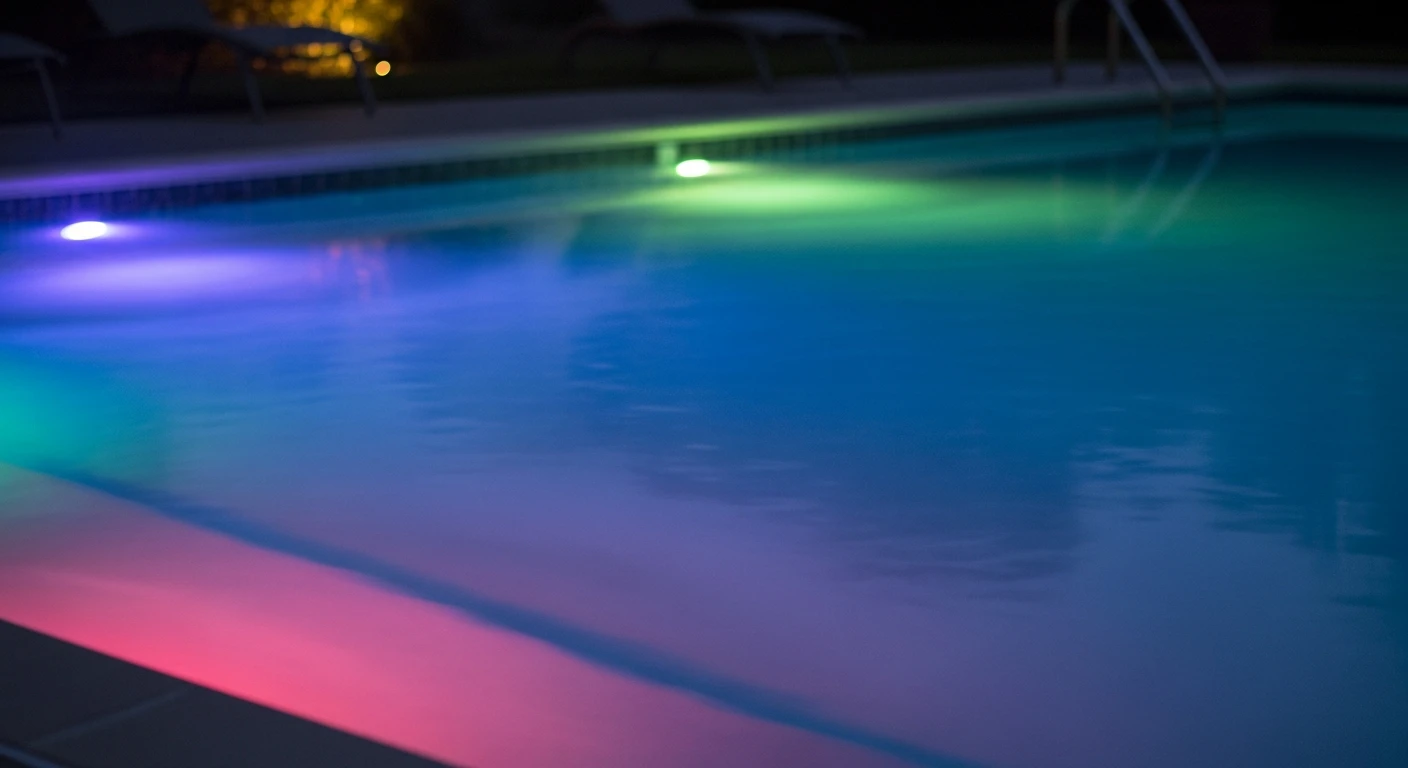
The core of my system is based on non-negotiable technical standards. First is the voltage drop calculation. I mandate that the voltage at the final fixture must not drop more than 3% from the transformer's output tap. For a 12V system, this means the furthest light receives no less than 11.64V. Anything lower starves the LED driver, causing flicker and heat buildup that degrades the electronics. Second, I only specify fixtures with a true IP68 rating. I've seen "water-resistant" IP67 lights fail after a single heavy Florida storm season due to water ingress at the cord entry point. An IP68 rating ensures it's designed for continuous submersion. Finally, I focus on light quality. For the pools in Osceola, which often feature travertine or paver decks, a Kelvin temperature between 3000K and 4000K provides a sophisticated, clean look without being sterile. I also insist on a CRI (Color Rendering Index) of 90 or higher to ensure the water looks crystal clear and inviting, not green or murky.Implementation: My Step-by-Step Installation Protocol
Executing the installation requires precision. Rushing these steps is what leads to the costly repairs I'm often called in to fix. This is my field-tested checklist for a lighting system built to withstand our local conditions.- Circuit Path & Wire Gauge Selection: I map the entire wire run and calculate the total load. Based on this, I select the appropriate wire gauge, often using a heavier 10-gauge or 8-gauge direct-burial wire, far exceeding the manufacturer's minimum. This is my primary defense against voltage drop.
- Transformer Sizing and Placement: I calculate the total wattage of all fixtures and select a magnetic transformer with a capacity at least 25% higher. This buffer prevents overheating on hot summer nights. It is always mounted on a concrete pad, elevated to avoid ground moisture and potential flooding.
- Niche and Conduit Sealing: This is a critical step I've perfected. I use a two-part marine-grade epoxy to seal the conduit entry point behind the light niche. This creates an impermeable barrier against water wicking down the conduit, a common problem I've diagnosed in older pools in Poinciana.
- Connection Integrity Check: All connections are made with silicone-filled, direct-burial wire nuts. I then encase each primary connection in a heat-shrink wrap with an adhesive liner for a second layer of moisture protection. This level of redundancy is essential.
Fine-Tuning for Optical Perfection and Longevity
Once the system is powered, the final phase begins. I use a digital multimeter to test the voltage directly at the terminals of each and every light fixture. My standard of quality is an absolute must: the reading must be within +/- 2% of the fixture's specified operating voltage. If a light is off, I will adjust the transformer's multi-tap output to compensate. I also assess the beam angle of each light. For a long rectangular pool, I might use a wider 120-degree beam, but for highlighting a spa or sun shelf, a more focused 60-degree beam creates dramatic effect without light spillage. This final calibration ensures perfect visual uniformity and maximum electronic efficiency. Instead of just asking about the fixture's warranty, have you confirmed your installer's protocol for guaranteeing stable voltage at the furthest light on a hot Florida night?Written by

Tags
inground lights
solar lights for pool cage
pool landscape lighting
inground led lights
LED Pool Lighting in Osceola FL FAQ
What is LED pool lighting?
LED pool lighting is an eco-friendly and energy-efficient lighting solution that uses light-emitting diodes (LEDs) to illuminate your pool. LEDs offer a long lifespan, low power consumption, and a wide range of color options, making them an ideal choice for pool lighting.
What are the benefits of LED pool lighting?
LED pool lighting offers several benefits, including energy efficiency, long lifespan, and design flexibility. LEDs also provide a vibrant and consistent color output, which can enhance the overall ambiance of your pool area.
Can I install LED pool lighting myself?
While it is possible to install LED pool lighting yourself, we recommend hiring a professional to ensure a safe and proper installation. Our team of experts can provide guidance and installation services to ensure your LED pool lighting system is installed correctly and functions properly.
How long does it take to install LED pool lighting?
The installation time for LED pool lighting varies depending on the complexity of the project and the size of your pool. On average, our team can complete an installation within 2-5 days, depending on the specific requirements of your project.
Can I customize my LED pool lighting?
Yes, our LED pool lighting systems are highly customizable. We offer a range of color options, lighting effects, and installation configurations to suit your specific needs and preferences.
How much does LED pool lighting cost?
The cost of LED pool lighting varies depending on the size of your pool, the type of lighting system you choose, and the installation requirements. Our team can provide a customized quote for your specific project, taking into account your unique needs and budget.
Is LED pool lighting safe?
Yes, LED pool lighting is designed with safety in mind. Our systems are fully encapsulated and protected from water, ensuring they are safe for use around pools and water features.
Can I control my LED pool lighting remotely?
Yes, our LED pool lighting systems are compatible with remote control systems, allowing you to adjust the lighting levels, colors, and effects from the comfort of your own home.
Do I need to maintain my LED pool lighting?
While LED pool lighting is designed to be low-maintenance, we recommend regular cleaning and maintenance to ensure optimal performance and extend the life of the system. Our team can provide guidance on regular maintenance procedures.
What is the warranty on LED pool lighting?
Our LED pool lighting systems come with a comprehensive warranty that covers parts and labor for a specified period. The warranty terms and conditions vary depending on the specific product and installation, so please consult with our team for more information.