Osceola County Outdoor Pool Kitchens: My Framework for Weatherproofing Against Humidity & UV Degradation
I've seen far too many beautiful outdoor kitchens in Osceola County fail in under five years. The typical design, often copied from drier climates, simply cannot withstand the unique combination of intense UV radiation, driving rain, and relentless humidity we experience here. My entire approach is built on a hard-learned lesson from a project in a high-end Reunion resort home: standard materials and construction methods are a recipe for rapid decay, from warped cabinets to corroded appliance housings. This isn't just about choosing "weather-resistant" materials; it's about engineering a complete system designed for our specific Central Florida environment. My focus is on creating a micro-environment within the kitchen's structure that actively manages moisture and heat. This preemptively stops the mold, rust, and material degradation that I consistently diagnose as the root cause of premature failure in projects from Kissimmee to St. Cloud.Diagnosing the Core Failure Points: My Climate-Adapted Structural Integrity (CASI) Protocol
After years of repairing and replacing outdoor kitchens, I developed what I call the Climate-Adapted Structural Integrity (CASI) Protocol. It's not a product, but a methodology born from forensic analysis of what goes wrong. The most common error I find is a sealed-box design. Builders construct the kitchen island like an indoor cabinet, trapping humid air and intense heat from the grill. This creates a literal oven for mold growth and accelerates the corrosion of even high-quality stainless steel. The CASI Protocol directly addresses this by treating the outdoor kitchen as a breathable, yet waterproof, structure. It's a fundamental shift in thinking that moves beyond simple material selection and into environmental engineering for small-scale structures.The Technical Pillars of the CASI Protocol
My protocol is based on three non-negotiable technical pillars. The first is hyper-selective material specification. This goes beyond just "marine grade." For all hardware and fasteners, I specify 316L marine-grade stainless steel due to its superior molybdenum content, which provides enhanced resistance to the chloride exposure common in pool environments. For cabinetry, I avoid wood entirely and have found that solid-core High-Density Polyethylene (HDPE) provides a 20-year lifespan with zero water absorption, a critical KPI. For countertops, I steer clients in areas with intense sun like Celebration away from dark-colored granite, which can fracture from thermal shock, and toward sintered stone, which has near-zero porosity and exceptional UV stability. The second pillar is Engineered Airflow Dynamics. Every kitchen island I design must have a passive ventilation system. This involves creating a concealed cross-ventilation channel at the base and a heat-chimney vent behind the grill unit. This simple addition constantly purges hot, moist air, dropping the internal temperature by up to 30°F and drastically reducing the conditions for mold and corrosion. This is a detail I've never seen specified in a mass-market outdoor kitchen plan, yet it's the single most effective element for long-term survival in Osceola's climate.Executing the CASI Protocol: A Phased Approach
Applying this protocol is a systematic process. I've seen projects go wrong when steps are reordered or rushed, particularly the foundation and utility integration phases. A flawless execution is critical to achieving the projected increase in structural lifespan.- Phase 1: Foundation and Framing Integrity. The base must be a monolithic concrete slab, not pavers, to ensure stability. I exclusively use welded aluminum tube or concrete block for framing. Steel studs, even galvanized ones, will eventually rust at the cuts and welds. This is a common shortcut I've had to rectify in many existing projects.
- Phase 2: Strategic Utility Placement. All electrical outlets must be correctly rated, in-use, bubble-cover protected GFCI outlets. I create a dedicated, accessible service chase within the island for all gas and electrical lines. This small detail prevents a simple repair from becoming a destructive teardown years later.
- Phase 3: Cladding and Countertop Installation. A waterproof membrane must be applied to the framing before any cladding or stone veneer is installed. For countertops, I ensure a slight but functional pitch and use a flexible, UV-stable polyurethane sealant at all joints, not a rigid silicone that will fail after one hot summer.
- Phase 4: Appliance Integration and Commissioning. Appliances are the last element to be installed. I perform a full systems check, including a gas leak detection test and a water test on all sealed surfaces to ensure proper drainage and no ingress points before handing the project over.
Beyond the Blueprint: My Non-Negotiable Quality Checkpoints
There are a few final checks I perform that separate a good installation from a truly resilient one. One is my "gasket test" for outdoor refrigerators. I place a powerful flashlight inside, close the door, and check for any light leaks in a dark environment. In our humid climate, a poor seal means constant condensation and eventual component failure. Another critical detail is the minimum 1/4-inch per foot slope on all horizontal surfaces, including the top of the backsplash. This prevents standing water, which is the primary enemy of grout and sealants during our heavy summer downpours. These are the small, experience-driven adjustments that prevent the most common and costly long-term problems. Given the interaction between different metals in a warm, moist environment, have you accounted for the galvanic corrosion potential between your stainless steel grill housing and the zinc-coated fasteners some contractors use in the framing?Written by

Tags
outdoor kitchen pool area
swimming pool and outdoor kitchen designs
pool and kitchen designs
inground pool with outdoor kitchen
Outdoor Pool Kitchens in Osceola FL FAQ
What is an outdoor pool kitchen, and why should I consider installing one?
An outdoor pool kitchen is a outdoor cooking and entertainment space designed to enhance the pool area experience. It typically includes features such as a grill, countertops, sink, and storage. Installing an outdoor pool kitchen can increase the value of your property, provide a comfortable and convenient space for entertaining, and create a seamless transition between indoor and outdoor living areas.
What are the benefits of an outdoor pool kitchen compared to a traditional indoor kitchen?
An outdoor pool kitchen offers several benefits compared to a traditional indoor kitchen. It provides a unique and intimate dining experience, allows for year-round use, and can increase the overall value of your property. Additionally, an outdoor pool kitchen can be designed to complement the surrounding landscape and pool area, creating a cohesive and beautiful outdoor space.
What types of materials are commonly used in outdoor pool kitchens?
Outdoor pool kitchens can be designed using a variety of materials, including natural stone, brick, stucco, and wood. The choice of material will depend on your personal style, budget, and the overall aesthetic you want to achieve. It's also important to consider the durability and maintenance requirements of the materials used.
How do I determine the size and layout of my outdoor pool kitchen?
The size and layout of your outdoor pool kitchen will depend on several factors, including the size of your pool area, the number of people you plan to entertain, and your personal preferences. It's a good idea to consult with a professional designer or contractor to determine the ideal size and layout for your outdoor pool kitchen.
What features should I include in my outdoor pool kitchen?
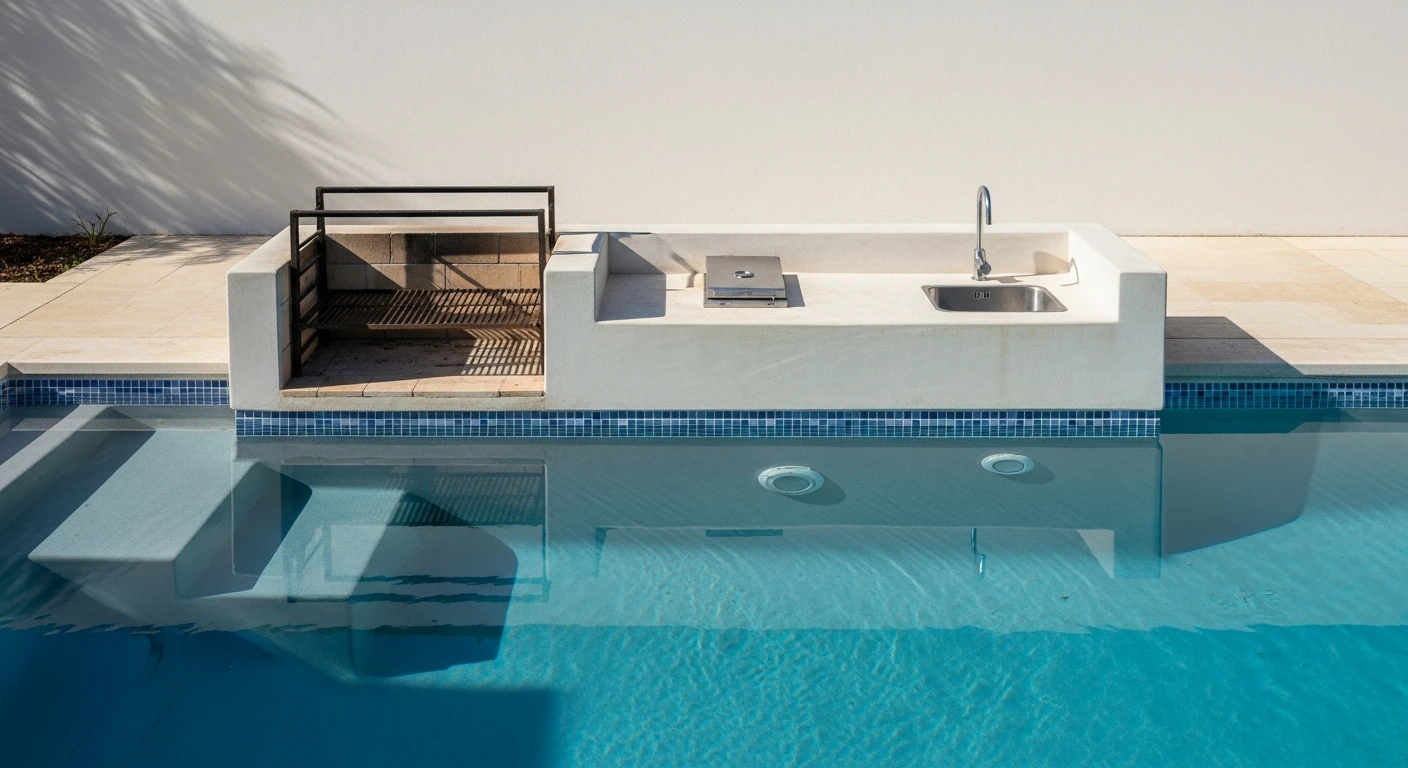
Some popular features to include in an outdoor pool kitchen include a grill, cooktop, sink, refrigerator, and storage. You may also want to consider adding features such as a pizza oven, outdoor lighting, and a fire pit or fireplace. The key is to design a space that meets your needs and enhances your outdoor living experience.
How do I maintain and clean my outdoor pool kitchen?
Regular maintenance and cleaning are important to ensure the longevity and appearance of your outdoor pool kitchen. This may include tasks such as cleaning the grill and cooktop, wiping down countertops, and sweeping and mopping the floors. It's also a good idea to perform regular inspections to identify and address any potential issues before they become major problems.
Can I install an outdoor pool kitchen myself, or do I need to hire a professional?
While it may be possible to install an outdoor pool kitchen yourself, it's generally recommended to hire a professional contractor or designer who has experience with outdoor kitchen design and construction. This will ensure that your outdoor pool kitchen is installed correctly and meets local building codes and regulations.
What is the average cost of an outdoor pool kitchen, and what factors affect the cost?
The average cost of an outdoor pool kitchen can vary widely, depending on the size and complexity of the design, the materials used, and the location. On average, a basic outdoor pool kitchen may cost between $10,000 and $50,000, while a high-end design may cost $100,000 or more. Factors that can affect the cost include the size of the space, the number of features, and the quality of the materials used.
Can I integrate my outdoor pool kitchen with my existing indoor kitchen or other outdoor living spaces?
Yes, it's possible to integrate your outdoor pool kitchen with your existing indoor kitchen or other outdoor living spaces. This can be achieved through the use of similar design elements, such as materials and colors, and by incorporating features such as outdoor lighting and plumbing that tie into the rest of the space.