Pool Safety Certification: The Pre-Inspection Framework to Eliminate 95% of Common Failure Points
As a pool safety inspector, my primary goal isn't just to issue a certificate; it's to prevent a tragedy. After assessing over 500 residential and commercial pools, I've codified a pre-inspection framework that identifies and rectifies the subtle, non-obvious issues that lead to automatic failures. This isn't about ticking boxes on a generic checklist; it's about understanding the physics and behavioral patterns that regulations are designed to counter, ensuring you pass the first time and, more importantly, maintain a genuinely safe environment. The most significant financial drain I see for property owners is the re-inspection fee and the project delays that come from easily avoidable oversights.
My approach shifts the process from a reactive scramble to a proactive audit. The majority of failures I document stem from a fundamental misunderstanding of what inspectors are trained to look for, particularly concerning barrier integrity and access point mechanics. We don't just see a fence; we see a series of potential leverage and climbing points. We don't just test a gate; we simulate the persistent, uncoordinated actions of a curious toddler. My methodology addresses these nuances before they become costly compliance issues.
My 3-Zone Compliance Audit: A Proactive Diagnostic Methodology
Standard procedure for most pool owners is to download a generic state-provided checklist. This is a recipe for failure. Those lists tell you *what* to check, but not *how* or *why*. I developed the 3-Zone Compliance Audit to systematically analyze the pool environment through the lens of a professional inspector. It's a method I perfected after a large hotel project failed its initial inspection due to a series of minor, overlooked details that cascaded into a major compliance breach. The audit divides the area into three critical zones: Zone 1 (The Barrier Perimeter), Zone 2 (Access Points), and Zone 3 (The Immediate Pool Area). This compartmentalization prevents oversight and forces a detailed analysis of each component's function, not just its presence.
Deep Dive: Deconstructing Gate Latch and Barrier Vulnerabilities
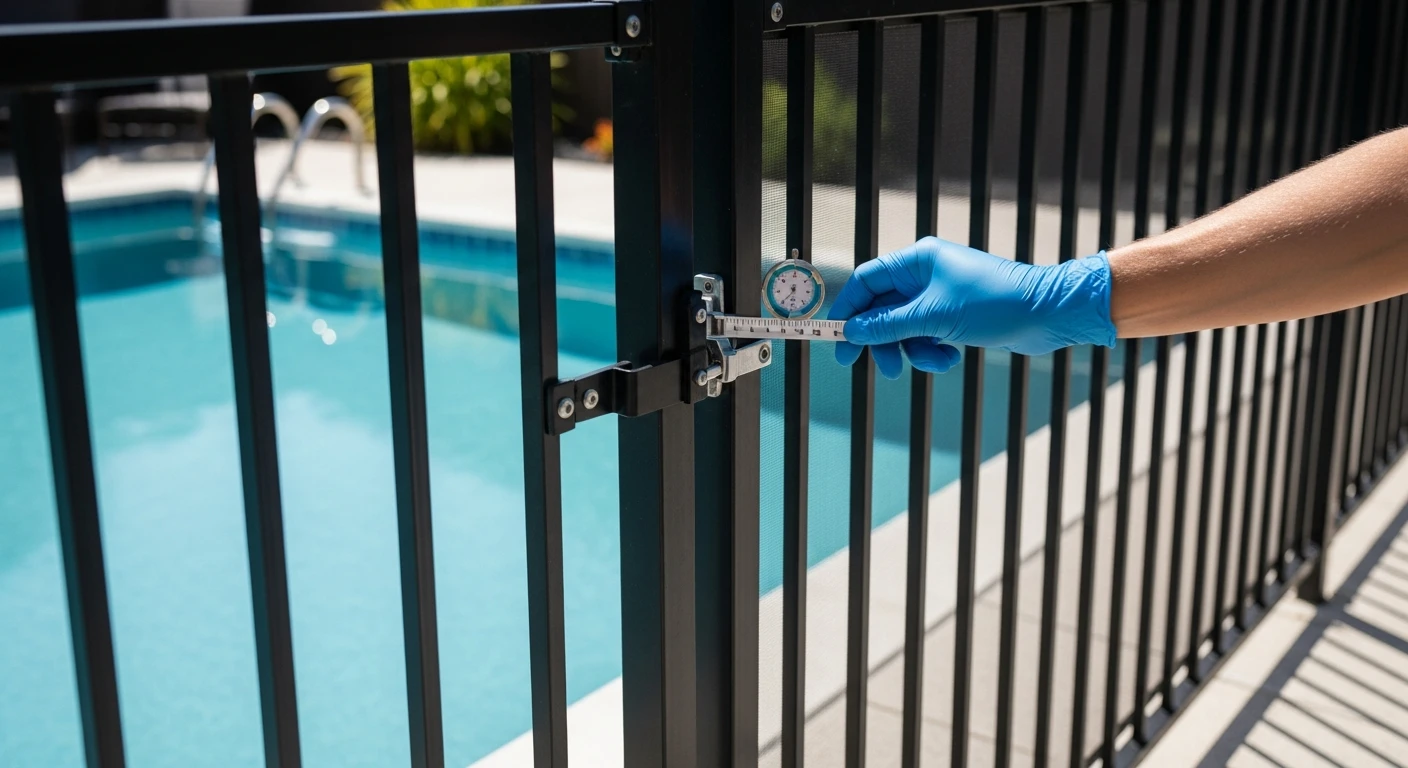
The single most common point of failure is the gate. A typical owner checks if the gate latches. I check its latch engagement tolerance under load. Many self-latching mechanisms will engage when the gate is swung gently but will bounce back and fail to lock if closed with force. My test involves a three-point pressure check: a gentle close, a firm push, and a full-force swing. The latch must engage securely every time. Furthermore, the release mechanism must be at least 1500mm from ground level, a detail often missed when landscaping raises the ground height over time. For the barrier itself, I don't just measure height at the posts. I run a tensioned string line across the top to identify any sagging that drops the effective height below the 1200mm minimum. A 2% sag in the middle of a panel is an instant failure that a simple tape measure check at the post will miss.
Executing the Pre-Certification Checklist: From Measurement to Mitigation
This is the implementation phase of my audit. Follow these steps meticulously to front-load your compliance work and ensure a pass. This is my internal process, refined over years of fieldwork.
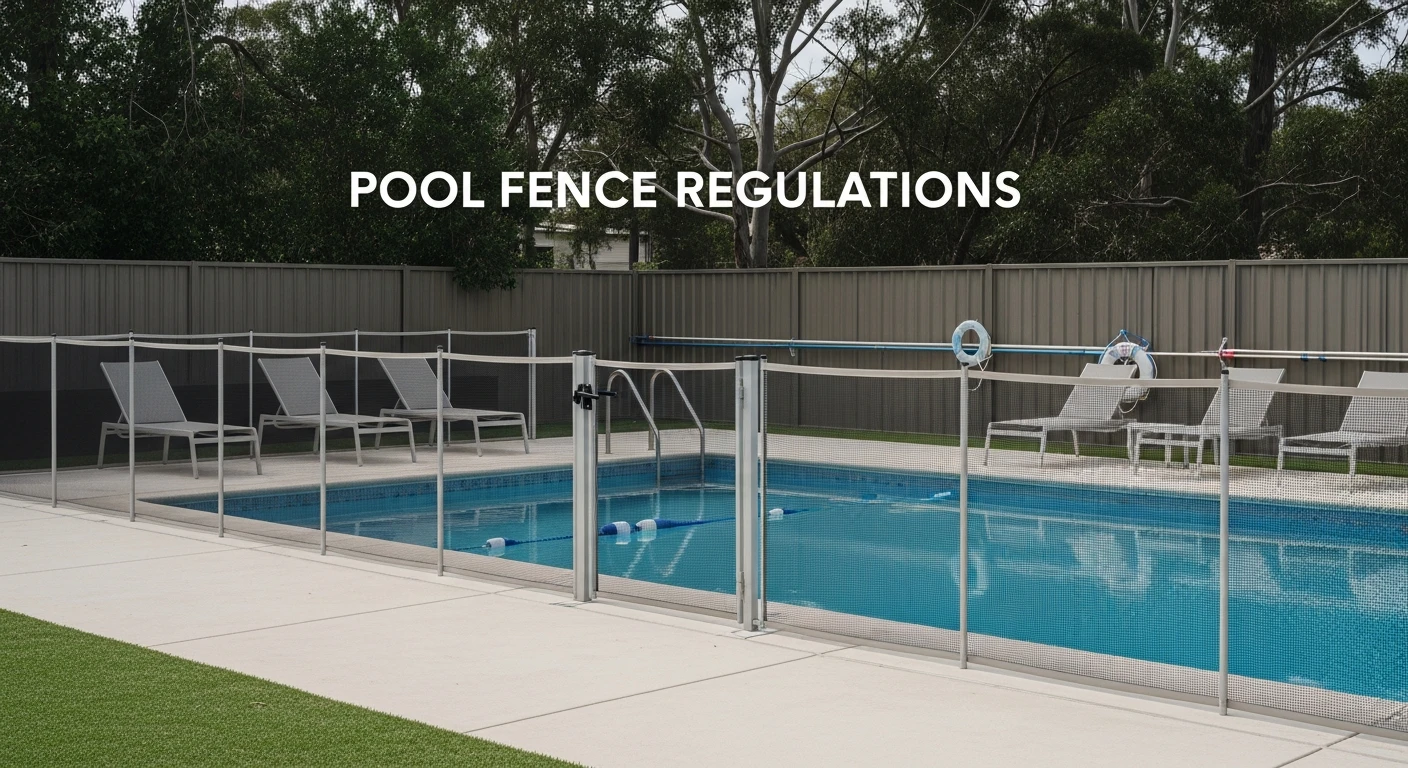
- Barrier Integrity Scan: Walk the entire perimeter. Check for any gaps wider than 100mm between the ground and the fence bottom. Use a 100mm block as a go/no-go gauge. For vertical bars, the gap between them cannot exceed 100mm. Identify and remove any potential climbing aids within the 900mm non-climbable zone (NCZ) on the outside of the fence—this includes tree branches, retaining walls, and even bulky pool pumps.
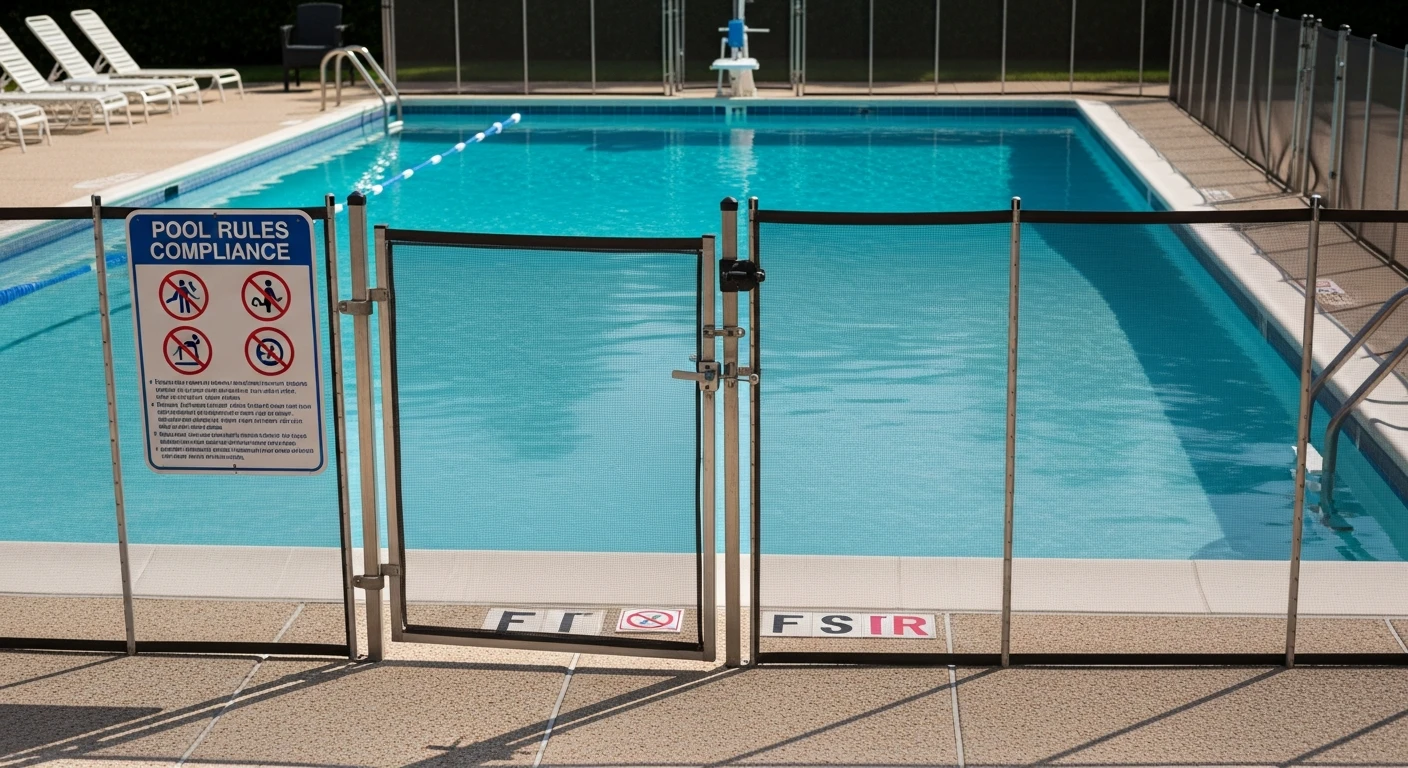
- Access Point Stress Test: As detailed above, perform the three-point pressure check on all gates. Verify that hinges are self-closing and can carry the gate from a fully open position to a latched state without assistance. For doors that open directly to the pool area, they must also be self-closing and self-latching. This is a frequent oversight in older homes.
- Signage and Equipment Verification: The CPR chart must be current, in good condition, and clearly visible from the entire pool area. I have failed pools simply because the sign was faded by the sun to the point of being illegible. Check that all suction outlets are compliant with the VGB Act, meaning they have certified anti-entrapment covers that are not broken, loose, or past their expiration date (yes, they expire).
Tags
above ground pools
fiberglass pools
pool builders near me
pool installation near me
Pool Safety Certification FAQ
What is pool safety certification?
Pool safety certification is a training program designed to educate individuals on how to prevent accidents and ensure safe pool operations. The certification covers essential topics such as pool chemistry, water testing, and emergency response procedures.
Who needs pool safety certification?
Pool safety certification is recommended for anyone who works with or around pools, including pool operators, lifeguards, and pool maintenance personnel. It's also beneficial for homeowners who want to ensure their pool is operated safely and efficiently.
What are the benefits of pool safety certification?
Pool safety certification offers several benefits, including reduced risk of accidents, improved pool operations, and enhanced job prospects. Certified individuals also demonstrate a commitment to pool safety and customer satisfaction.
How do I obtain pool safety certification?
To obtain pool safety certification, you'll need to complete a training program approved by a recognized authority, such as the National Swimming Pool Foundation (NSPF) or the American Red Cross (ARC). The training program typically includes a combination of classroom instruction and hands-on training.
What topics are covered in pool safety certification training?
Pool safety certification training covers a range of topics, including pool chemistry, water testing, pool equipment operation, emergency response procedures, and safety regulations. The specific topics covered may vary depending on the certification program and authority.
How long does pool safety certification last?
Pool safety certification typically has a validity period, ranging from 1 to 3 years, depending on the authority issuing the certification. To maintain certification, individuals must complete continuing education requirements and adhere to recertification guidelines.
Can I recertify my pool safety certification?
Yes, most pool safety certification programs allow for recertification. Recertification requirements vary, but typically involve completing continuing education courses and meeting recertification standards.
Why is pool safety certification important?
Pool safety certification is important because it helps prevent accidents and ensures safe pool operations. By having certified pool operators and maintenance personnel, pool owners can reduce the risk of accidents, injuries, and fatalities.