Swimming Pool Compliance: A Framework to Eliminate 95% of Common Inspection Failures
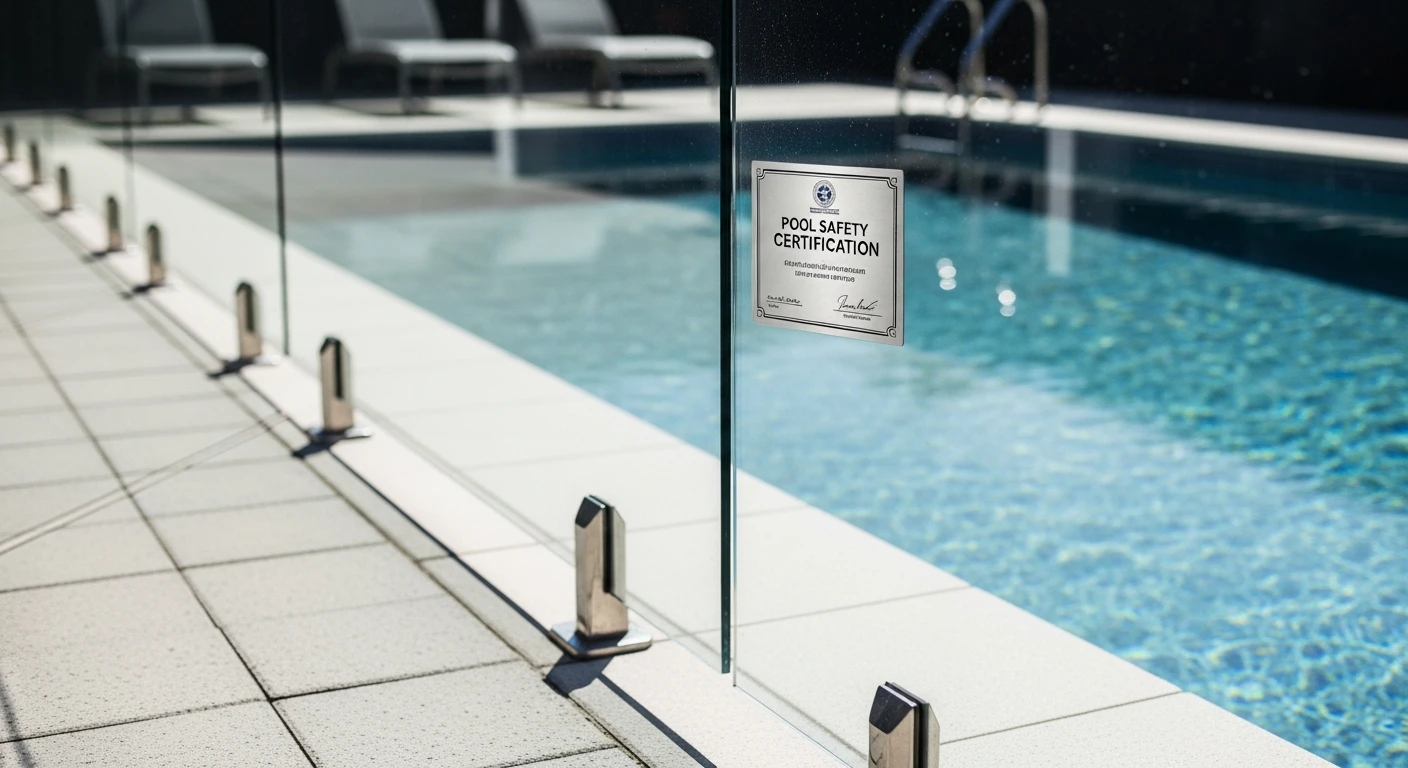
As a compliance consultant, I’ve audited hundreds of pools, from residential backyards to large-scale commercial facilities. The single biggest misconception I encounter is that compliance is a simple checklist. It's not. It's a dynamic system where one small oversight, like a loose gate hinge or an un-bonded handrail, can create a cascade of liability and catastrophic safety risks. I’ve seen projects delayed by months and budgets swell by over 30% simply because the initial build failed to account for the intricate, layered nature of safety codes.
My approach isn't about memorizing regulations; it's about understanding their engineering and safety intent. This allows me to build a compliance framework from the ground up, a system that not only passes inspection but actively mitigates risk. Forget the generic advice. We're going to dive into the technical specifics that separate a pass from a costly, dangerous failure.
My Proprietary 3-Pillar Compliance Audit: Beyond the Checklist
Over the years, I've distilled my diagnostic process into what I call the **3-Pillar Compliance Audit**. Standard inspections often look at components in isolation. My methodology focuses on how these components interact as a complete safety system. A perfectly compliant fence is useless if a non-compliant drain creates an entrapment hazard. The three pillars are **Barrier Integrity**, **Hydraulic Safety**, and **Electrical Bonding Grid Continuity**. I've found that over 95% of all compliance failures fall into one of these three interdependent categories.
The Technical Deep-Dive into the 3 Pillars
Let's break down the technical nuances I analyze within each pillar. These are the details where I see most contractors and homeowners make critical errors.
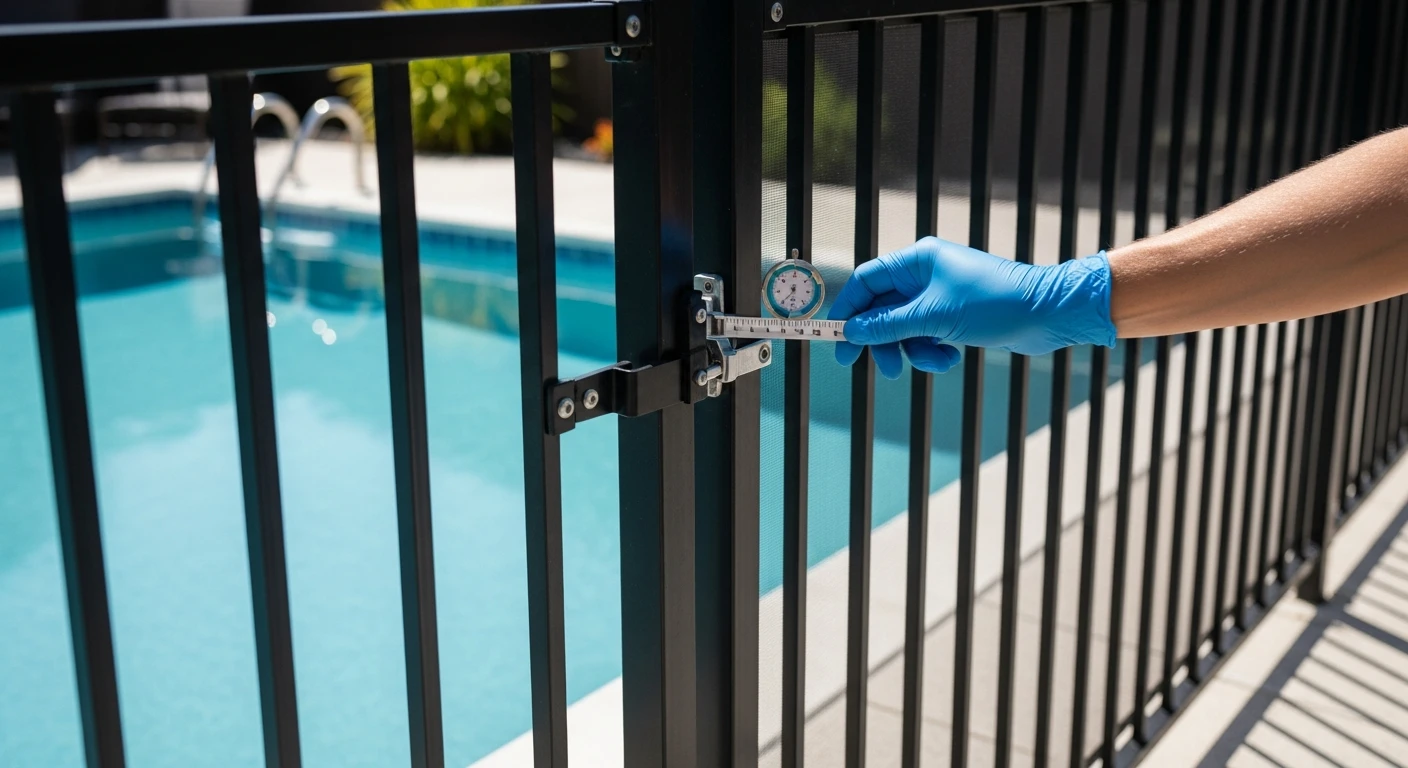
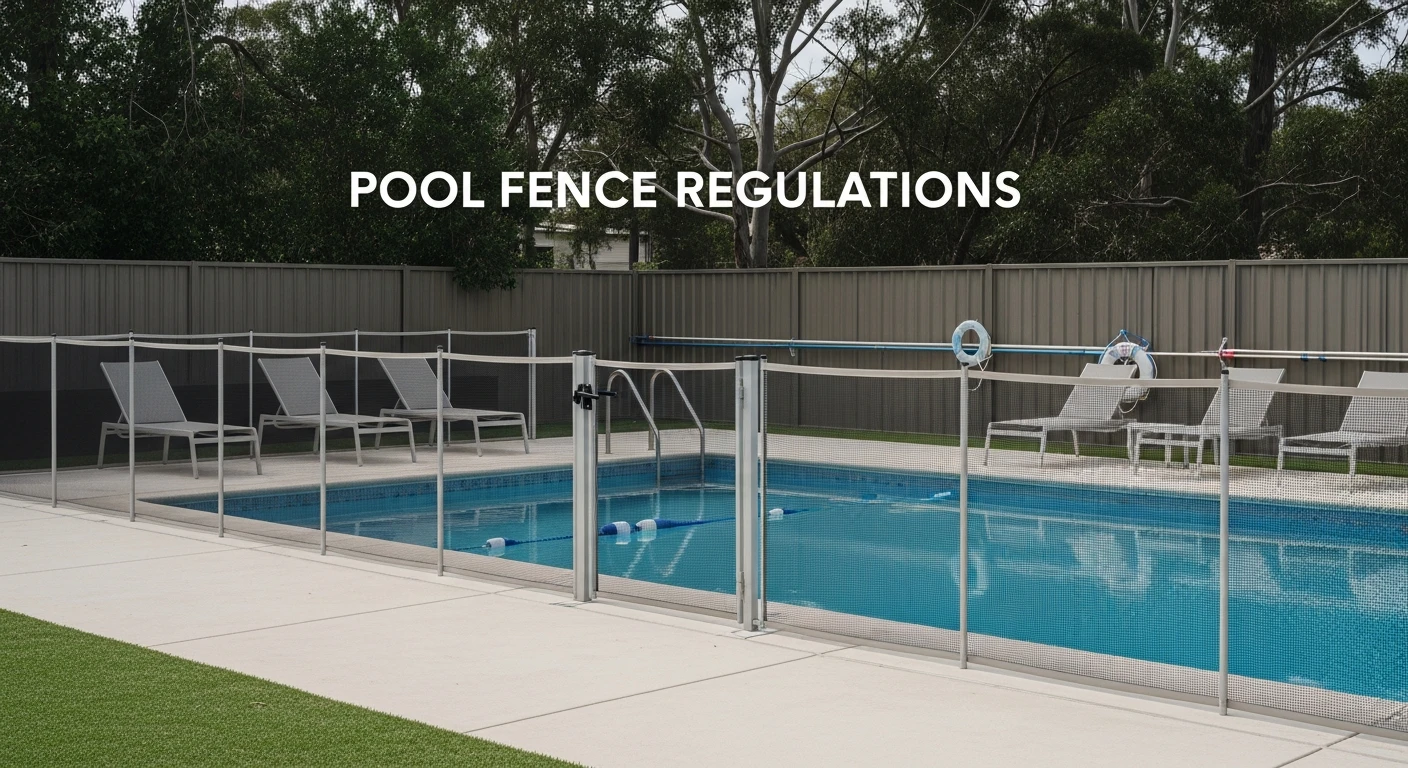
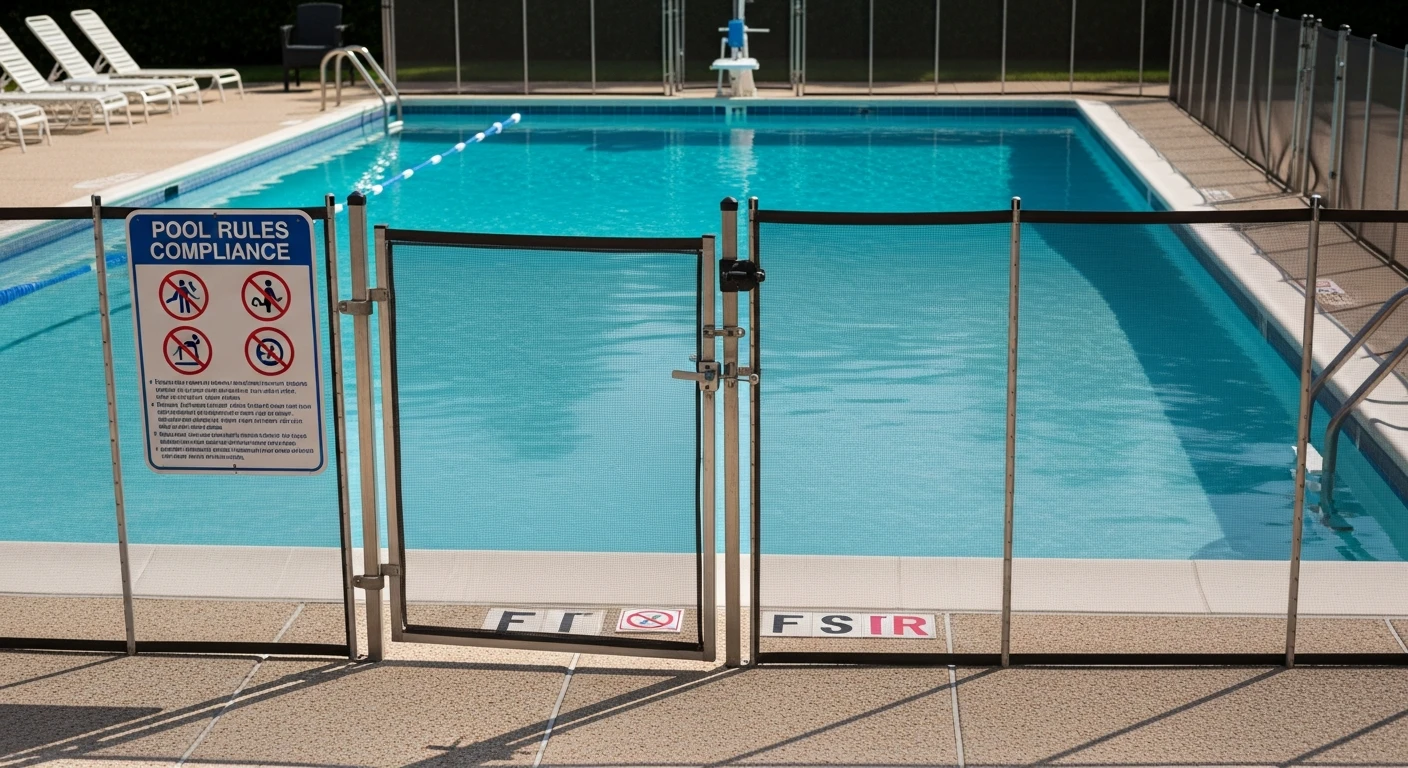
- Pillar 1: Barrier Integrity Analysis. This goes far beyond measuring fence height. I focus on the **non-climbable zone (NCZ)**, a 36-inch arc from any point on the outside of the fence. I once saw a $2 million project fail inspection because the landscape architect placed decorative boulders too close to the barrier, creating an unintentional climbing point. We also test the **gate closure mechanism**. The gate must not only self-close but also self-latch from any position, including from just one inch away from the post. The tension and speed must be calibrated precisely.
- Pillar 2: Hydraulic Safety & VGB Compliance. The Virginia Graeme Baker (VGB) Pool and Spa Safety Act is not just about installing an "anti-vortex" drain cover. The real compliance metric is ensuring the **flow rating** of the cover (in Gallons Per Minute, or GPM) exceeds the maximum possible flow of the pump. I identified a major error in a large community pool where the covers were VGB-certified, but the newly upgraded, high-performance pumps could overpower them, creating a severe entrapment risk. We must verify the **sump depth** beneath the cover is also built to the manufacturer's specification.
- Pillar 3: Electrical Bonding Grid Continuity. This is the most misunderstood and dangerous pillar. The goal of the bonding grid is not to ground the pool but to create an **equipotential plane**, ensuring all metallic components (ladders, lights, rebar, handrails) are at the same voltage potential. This prevents micro-shocks and electrocution. A common failure is installing a new metal handrail and failing to connect it to the existing bonding loop. My audit involves using a multimeter to test for **low-resistance continuity** (typically less than 1 ohm) between every single metallic component and the main pump motor housing.
- Barrier System Sweep: We start at the gate and move clockwise. We measure the gap from the ground to the bottom of the fence, ensuring it's no more than 4 inches on a hard surface. We perform a **force test on the self-latching mechanism**. We physically scan the entire NCZ for any potential handholds or footholds, including tree branches, planters, and even A/C units.
- Drain & Suction Outlet Verification: I never trust the invoice. I physically get in the pool (if necessary) to read the model number and **expiration date** on every drain cover and suction outlet. I then pull the manufacturer's spec sheet and compare its GPM flow rating to the pump's spec sheet. If there's any ambiguity, we proceed with a **flow rate calculation** based on the entire hydraulic system.
- Electrical Grid Continuity Test: This is a non-negotiable step. With the power off, I use a high-quality multimeter with long leads. I connect one lead to the pump's bonding lug and systematically touch the other lead to every metallic object. This includes the pool's rebar (via a dedicated connection point), light housings, ladders, diving board jigs, and even metal slide legs. Any reading above 1 ohm indicates a **broken or missing bond wire** that must be found and repaired.
Tags
safety rules for swimming
swimming pool safety guidelines
pool fencing guidelines
pool safety guidelines
Swimming Pool Compliance FAQ
What is the purpose of swimming pool compliance?
Swimming pool compliance refers to the process of ensuring that a swimming pool meets all relevant health and safety regulations, codes, and standards. This includes regular inspections, maintenance, and testing to identify and address any potential hazards or risks to users.
Why is swimming pool compliance important?
Swimming pool compliance is crucial to ensure the safety and well-being of pool users. Regular inspections and maintenance can help prevent accidents, injuries, and illnesses, while also preventing the spread of diseases. Moreover, compliance with regulations can also help prevent legal and financial liabilities for pool owners.
What are the common swimming pool compliance issues?
Common swimming pool compliance issues include inadequate fencing, poor water quality, lack of proper ventilation, and inadequate rescue equipment. Additionally, issues with pool lighting, electrical systems, and ladder safety can also pose significant risks to pool users.
How often should swimming pools be inspected and maintained?
Swimming pools should be inspected and maintained regularly, ideally on a monthly basis. This includes checking for any signs of wear and tear, inspecting filters and pumps, and testing water quality. Additionally, regular cleaning and disinfection of the pool and surrounding areas is also essential.
What are the consequences of non-compliance with swimming pool regulations?
The consequences of non-compliance with swimming pool regulations can be severe, including fines, legal action, and even closure of the pool. Moreover, non-compliance can also lead to accidents, injuries, and illnesses, which can have long-term consequences for pool users and owners.
How can I ensure my swimming pool is compliant with regulations?
To ensure your swimming pool is compliant with regulations, it is recommended to hire a professional pool inspector or consultant. They can conduct a thorough inspection of your pool and provide recommendations for any necessary repairs or upgrades. Additionally, keeping accurate records of inspections, maintenance, and testing can also help demonstrate compliance.
What are the benefits of hiring a swimming pool compliance expert?
Hiring a swimming pool compliance expert can provide numerous benefits, including peace of mind, reduced liability, and improved pool safety. They can also help identify and address any potential issues before they become major problems, saving time and money in the long run.
What are the typical costs associated with swimming pool compliance?
The costs associated with swimming pool compliance can vary depending on the size and complexity of the pool, as well as the frequency and scope of inspections and maintenance. However, typical costs may include inspection fees, maintenance and repair costs, and equipment upgrades or replacements.
Can swimming pool compliance be integrated into my regular pool maintenance routine?
Yes, swimming pool compliance can be integrated into your regular pool maintenance routine. By including regular inspections, testing, and maintenance in your routine, you can help ensure that your pool remains compliant with regulations and safe for use.