Seminole County Pool Safety Inspection: A Framework for Avoiding the 3 Most Common (and Costly) Code Violations
My personal inspection framework focuses on the three critical failure points I see weekly across Seminole County: gate latch mechanisms, fence height and gap regulations, and door alarm functionality. Mastering these three areas, especially with our humid climate wreaking havoc on hardware, is the key to passing your inspection on the first attempt and ensuring true safety, not just ticking a box on the Florida Residential Swimming Pool Safety Act.My Barrier Integrity Protocol: A Pre-Inspection Diagnostic
After inspecting hundreds of pools, from the newer builds in Lake Mary to the more established homes in Casselberry, I developed what I call the Barrier Integrity Protocol. It's not just a checklist; it's a system analysis. Most homeowners check if a gate closes. I analyze the entire sequence: the hinge tension, the swing path, the latch engagement, and the lock mechanism as a single, interdependent system. A failure in one component often indicates a latent failure in another. This protocol preemptively identifies points of degradation before they become an official violation, saving homeowners from the cost and hassle of a re-inspection.
Deconstructing the 3 Critical Failure Points in Seminole County Homes
The Florida Building Code is specific, but the real-world application is where I see the most errors. Here’s a technical breakdown of the top three failure points I encounter, particularly in Seminole County's climate and housing stock.
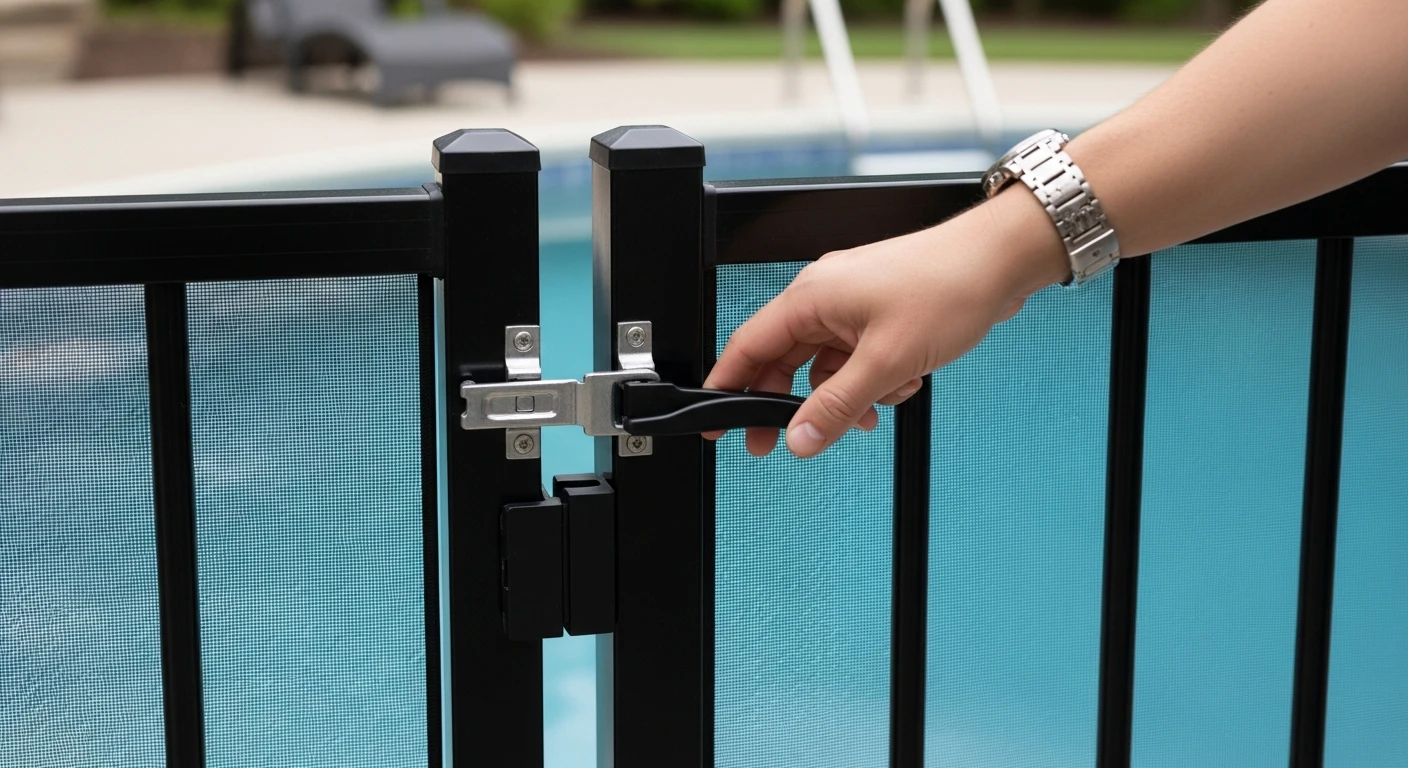
- Gate Latch & Swing Dynamics: The code requires a self-closing, self-latching gate that opens outward, away from the pool. The common mistake I find in Winter Springs homes, where wood fences are prevalent, is gate sag due to humidity. This slight drop, even a quarter of an inch, prevents the latch from fully engaging. The release mechanism must also be at least 54 inches from the bottom of the gate. I use a calibrated tension gauge to ensure the closing mechanism has enough force to overcome a light breeze, a factor often overlooked.
- Barrier Gaps and Climbability: The fence must be a minimum of 48 inches high. However, the most frequent failure is the gap at the bottom. A 4-inch sphere cannot pass under the fence at any point. For chain-link fences, the mesh size cannot exceed a 1.75-inch square. I also look for "ladders"—any horizontal brace or nearby object (like an AC unit or planter) that a child could use to climb the barrier. This is a common issue in properties with more compact lot sizes.
- Door & Window Alarm Efficacy (UL 2017): Any door or window with direct access to the pool must be alarmed. The critical detail is that the alarm must meet UL 2017 standards and sound within 7 seconds of the door opening. A frequent shortcut I see is the use of cheap, non-compliant stick-on alarms. I test the decibel level and the reset mechanism; it must be manually resettable and often requires a keypad or bypass button placed at least 54 inches high.
A Proactive Self-Audit Checklist Before the Official Inspection
Performing your own audit is the single most effective way to guarantee a first-pass result. Use my internal methodology to check your property. This isn't just about looking; it's about physically testing each component under stress.
- Perform a Full Gate Stress Test: Open the gate to varying degrees—from just a few inches to fully open—and ensure it closes and latches completely every single time. Jiggle the gate firmly once latched to confirm it cannot be forced open. Verify the latch release is at the 54-inch height minimum.
- Conduct a "Sphere" and "Tape Measure" Barrier Audit: Take a 4-inch diameter ball (or cut a 4-inch circle from cardboard) and attempt to push it under your fence along its entire perimeter. Use a tape measure to confirm the 48-inch height at multiple points, as ground can be uneven. For homes in communities like Heathrow with concrete block walls, check for any deterioration in the mortar joints that could create a foothold.
- Test All Access Alarms: Open each door and window that has direct pool access. Does the alarm sound immediately and loudly? Can it be easily deactivated by a child? Confirm the deactivation switch is at the 54-inch height requirement. I've seen many homeowners fail because a battery in one of the alarms simply died.
- Inspect All Drains for VGB Compliance: Ensure your pool and spa drains have federally compliant anti-entrapment covers. Look for the VGB 2008 marking on the cover itself. These covers have an expiration date; I check it on every inspection, and it's an immediate failure if it's expired.
Beyond the Checklist: Fine-Tuning for Longevity and Absolute Compliance
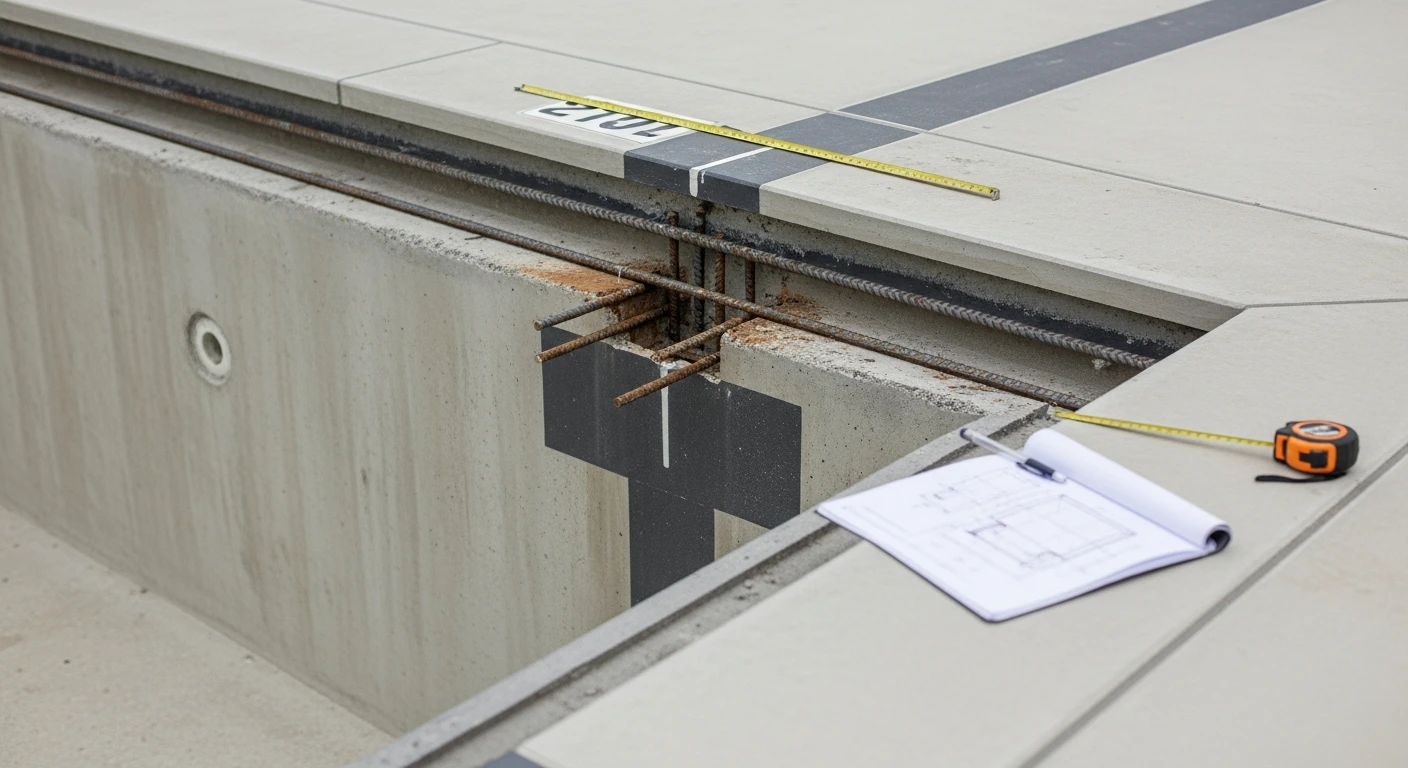
Passing the inspection is one thing; maintaining a truly safe environment is another. My goal is to ensure the systems are not just compliant today, but robust enough to remain compliant for years. I focus on two areas of precision: hardware resilience and electrical safety. The Seminole County humidity is relentless on metal. I always recommend that any replacement hinges or latches be 316-grade stainless steel, not just galvanized. This small investment prevents the rust and degradation that cause most gate failures. Additionally, I verify the pool's equipotential bonding. This is a safety grid of conductive materials that prevents electrical voltage gradients in the water. I've identified faulty bonding wires that were cut during landscaping, a hidden but critical hazard that most inspectors don't look for as closely.
Have you verified that your pool's electrical bonding grid is continuous and not compromised by recent landscaping or deck work?