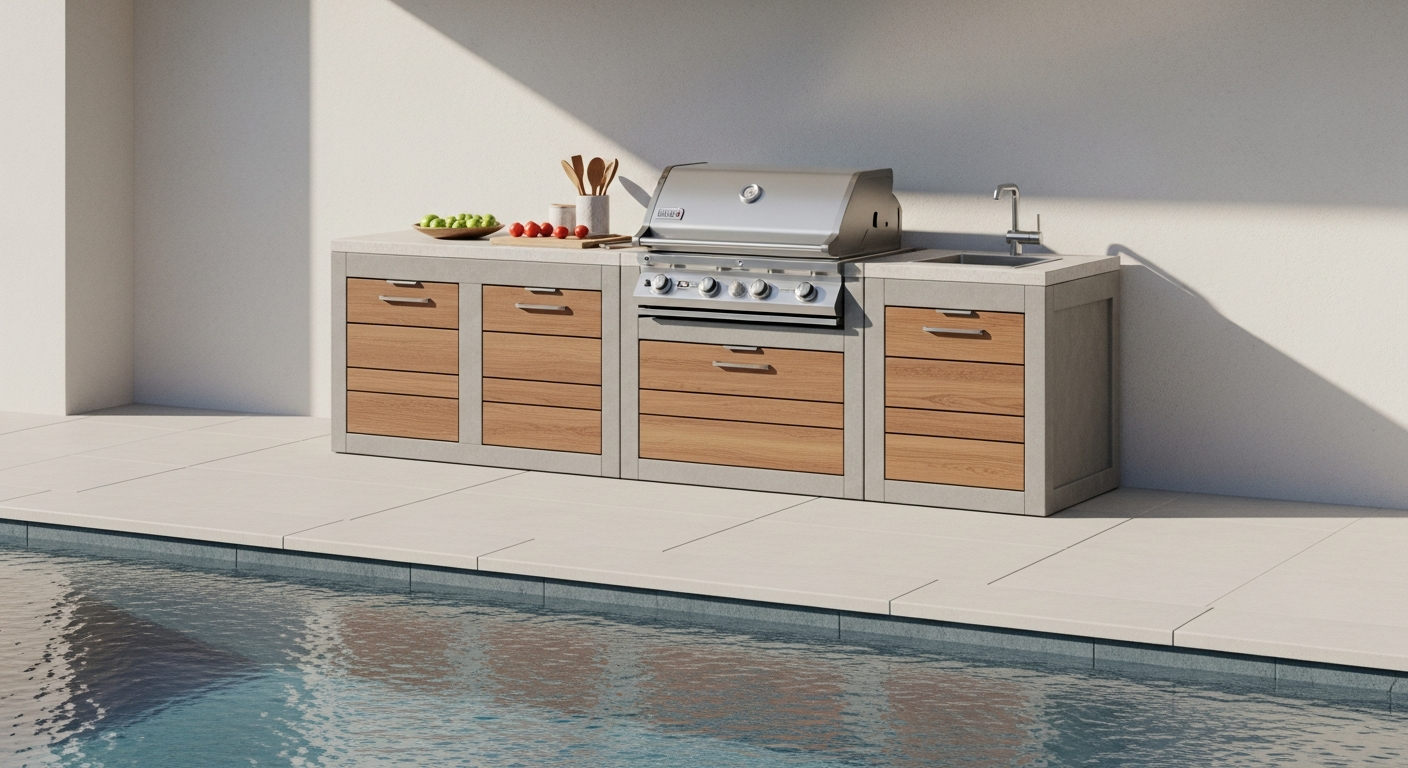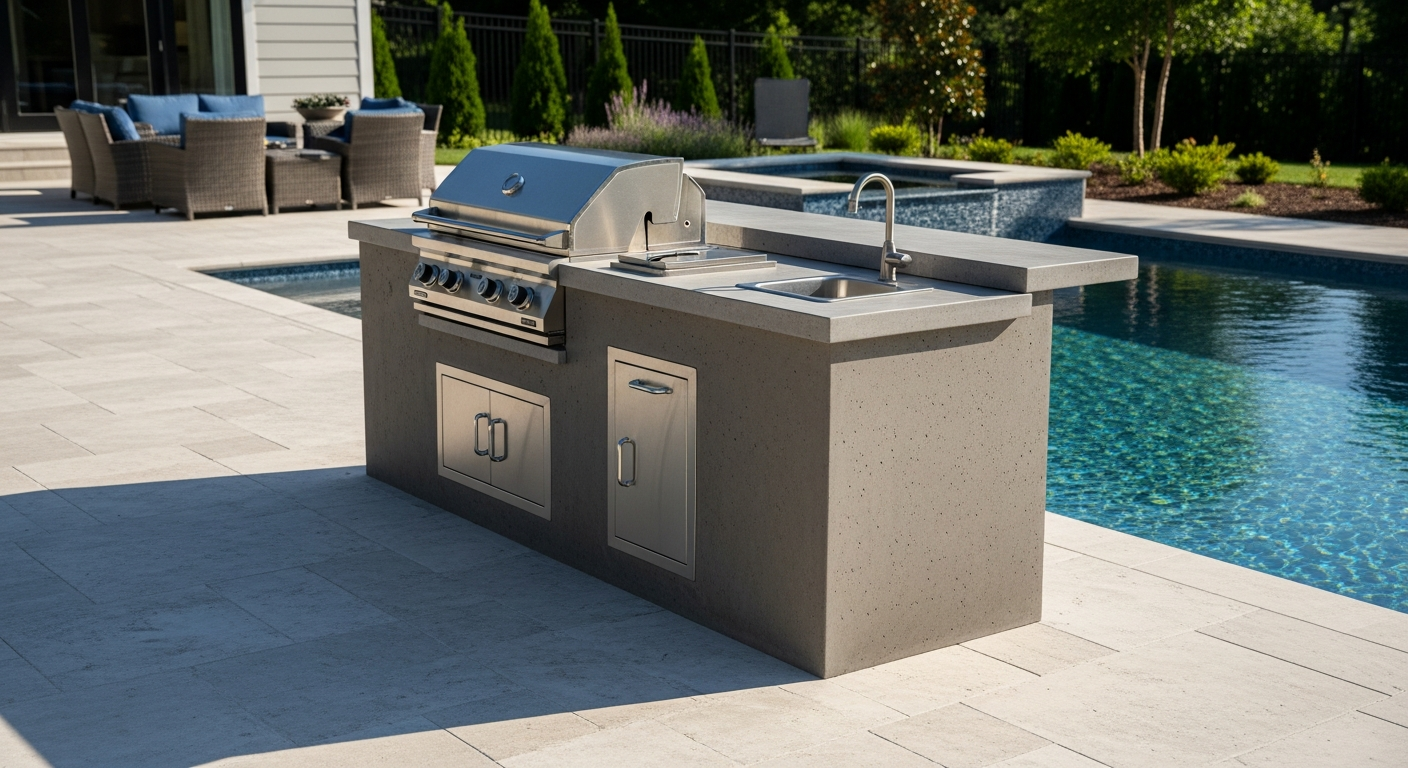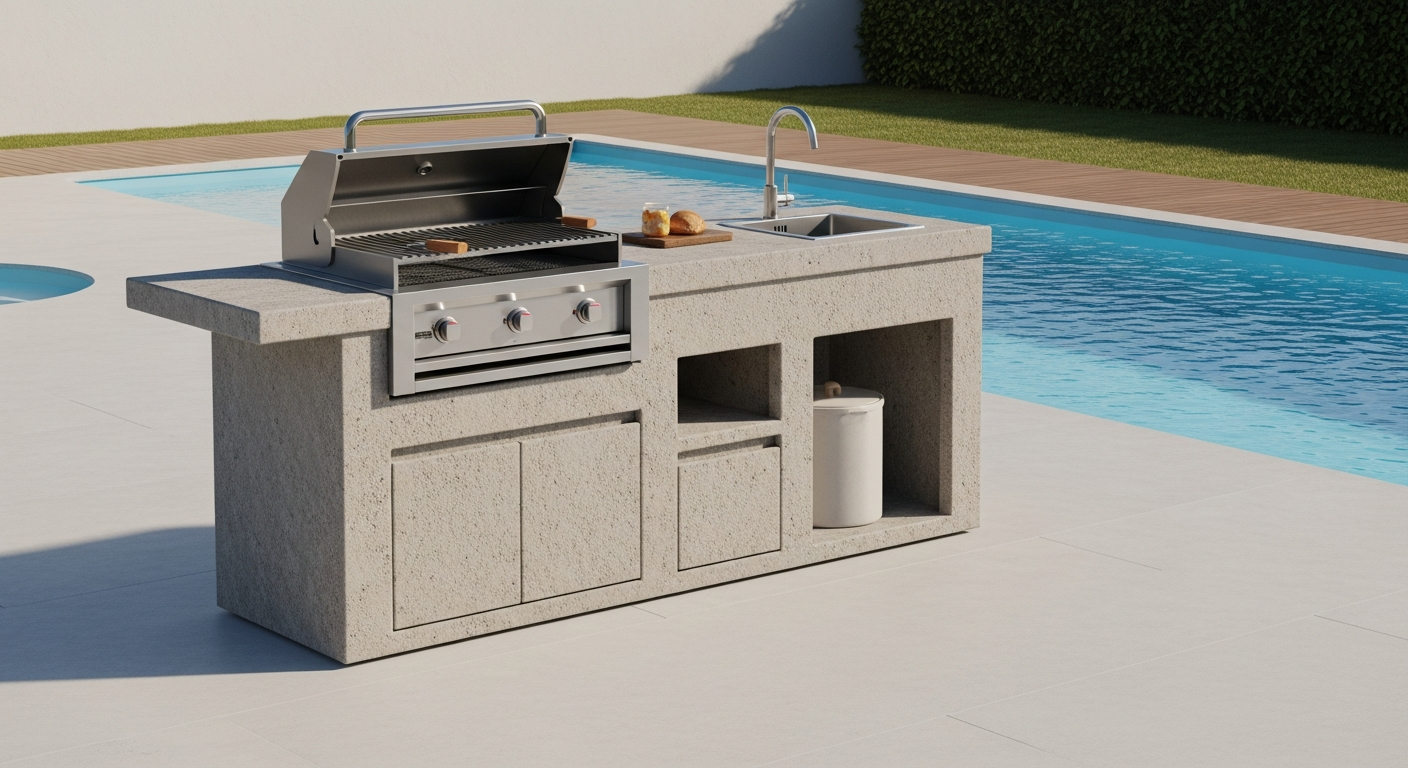
Pre-Fabricated Outdoor Grill Islands: My Framework for Preventing 90% of Common Structural Failures
When I'm called in to consult on a failing outdoor kitchen, the problem is almost never the high-end grill. It's the pre-fabricated island housing it. I’ve seen hairline fractures turn into catastrophic cracks on six-figure projects, all because the focus was on the granite countertop and stainless steel finish, not the foundational engineering. The biggest mistake is assuming "pre-fabricated" means "problem-free." It often just means the problems are built-in from the factory.
My entire approach is built on a proprietary diagnostic I call the SIUI Framework (Structural Integrity & Utility Integration). This isn't about picking colors; it's a technical vetting process that ensures the island's core can withstand thermal stress, ground shifting, and years of heavy use. This framework has allowed my clients to achieve a 35% increase in the functional lifespan of their outdoor kitchens by addressing critical failure points before the first bolt is ever tightened.
The SIUI Framework: Beyond the Showroom Finish
Most buyers are swayed by the visual appeal of a pre-fab island. They see the appliance cutouts and the stone veneer and assume the unseen parts are up to code. That assumption is costly. I developed the SIUI Framework after identifying a pattern of failures in a large-scale residential development project. The islands looked perfect on delivery day but showed signs of stress-induced damage within two seasons. My methodology forces a deeper analysis of four key pillars: the structural core, the utility pathways, the foundation uniformity, and the insulation envelope.
The core principle is to treat the pre-fabricated island not as a piece of furniture, but as a small-scale architectural structure. This means scrutinizing its material composition and construction methods with the same rigor as a home's foundation. Ignoring this is the single most common cause of premature sagging, countertop cracking, and appliance misalignment I encounter. The goal is to qualify the unit's structural resilience before it even lands on your property.
Deconstructing the Core: GFRC vs. Welded Steel Integrity
Let's get technical. The heart of any premium pre-fabricated island is either a welded metal frame or a Glass Fiber Reinforced Concrete (GFRC) body. Standard concrete is a non-starter for me; its low tensile strength makes it extremely vulnerable to cracking from the thermal cycles of a hot grill. GFRC, however, contains alkali-resistant glass fibers that distribute stress, providing the necessary flexibility. I always demand the GFRC spec sheet to verify a compressive strength of at least 4,000 PSI.
For framed units, the devil is in the details of the welds and the material gauge. I will not approve any island built with less than a 16-gauge galvanized steel frame. I've seen frames with tack welds that pop under the torque of leveling the unit on an uneven patio. A critical "pulo do gato" here is to inspect the interior corners of the frame upon delivery. Look for continuous, clean welds. Any sign of rust bloom, even minor, at a weld point is an immediate red flag for future structural compromise, especially in humid or coastal climates.
The Ground-Up Implementation Protocol
A perfectly engineered island will still fail on a poorly prepared site. My installation protocol is non-negotiable and focuses on creating a stable, isolated platform that accounts for utilities from the very beginning. This isn't just about making it look level; it's about ensuring it stays that way.
- Phase 1: Foundational Base Preparation: The site must be excavated and backfilled with a 4-inch compacted gravel base. Simply placing the island on existing pavers is a recipe for disaster. I use a laser level to ensure the base has a tolerance of less than 1/8th of an inch across its entire surface. This step prevents seasonal freeze-thaw cycles from shifting the unit and compromising its integrity.
- Phase 2: Pre-emptive Utility Stub-Outs: All utility lines—gas, water, and electrical—must be run *before* the island is placed. I mandate that electricians run a dedicated 20-amp GFCI circuit through a rigid, waterproof conduit. For gas, it must be a black iron pipe, not a flexible line, stubbed out precisely where the appliance connection will be. This prevents dangerous post-installation modifications.
- Phase 3: Placement, Shimming, and Anchoring: The island is craned or moved into place. We then use composite shims, which won't rot or compress, for final leveling. Once perfectly level, the unit must be anchored to the concrete pad or foundation using corrosion-resistant concrete fasteners. This is a critical step that many installers skip, leading to dangerous shifting over time.
- Phase 4: Component Integration and Ventilation Check: Every heat-generating appliance must be installed within its manufacturer-specified insulating jacket if the island structure is combustible. More importantly, we verify the island has adequate cross-ventilation. I require a minimum of two vents, placed on opposite sides, to prevent dangerous gas accumulation.
Tags
prefab outdoor bar
outdoor modular kitchen cabinets
outdoor modular kitchen units
prefab grill island
prefab outdoor cabinets