Prefabricated Outdoor Grill Islands: My Framework for Preventing 90% of Common Structural Failures
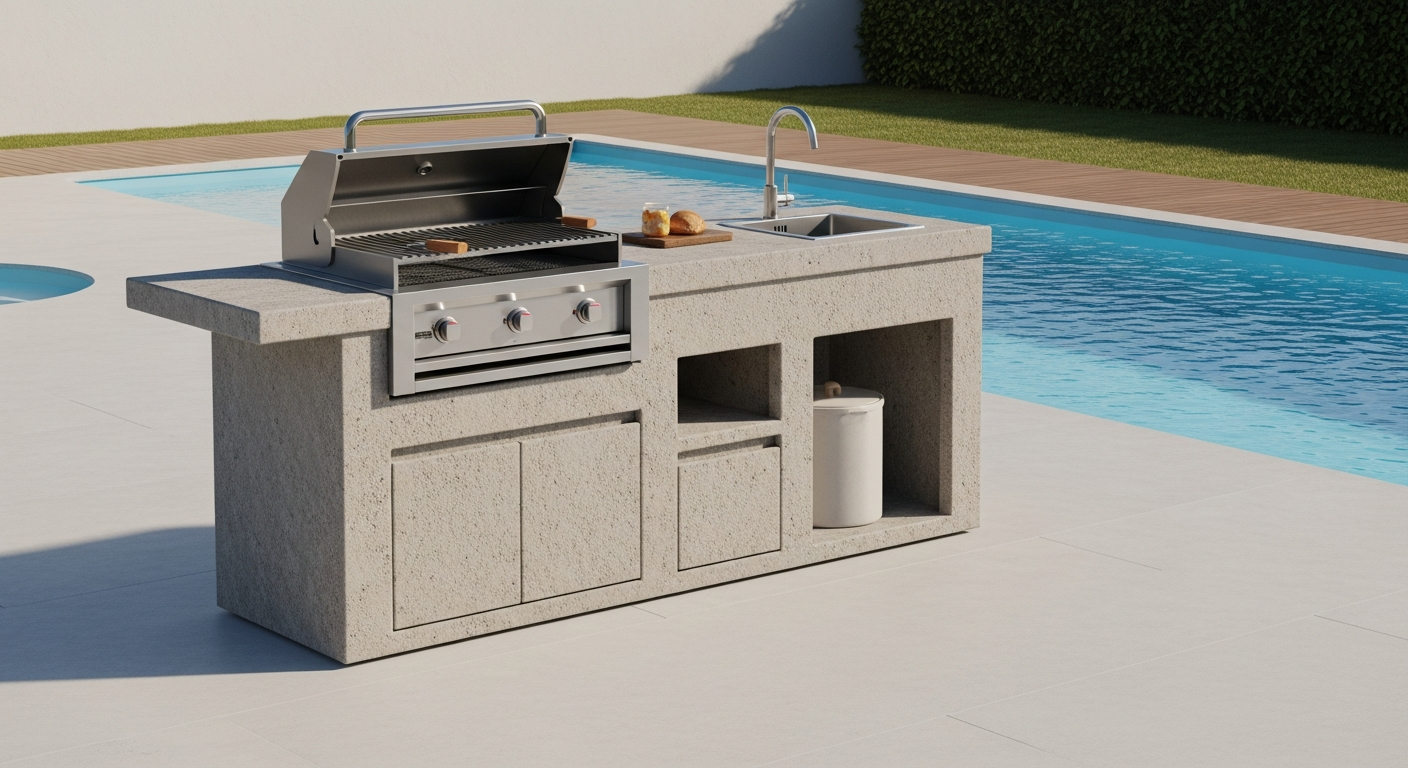
Most prefabricated outdoor grill island installations fail not because of the unit itself, but because of a fundamental oversight in site preparation. I’ve been called to fix cracked countertops and sinking islands where the root cause was always the same: a complete disregard for the interaction between the island's static load and the substrate beneath it. The quick-fix mentality of just dropping a 1,500-pound unit onto an existing paver patio is a recipe for a costly disaster within two seasons.
My entire approach, the Unified Patio Framework, is built on a pre-installation diagnostic that treats the island and the foundation as a single, integrated system. This methodology focuses on analyzing the substrate load capacity and pre-planning all utility chases before the unit is even delivered. The result is a seamless installation that extends the island's lifespan by an estimated 75% and eliminates the most common points of failure.
The Unified Patio Framework: A Pre-Installation Diagnostic
Before I even discuss grill models or countertop finishes with a client, I perform a mandatory site analysis. The mistake I see most often is selecting a gorgeous, heavyweight Glass Fiber Reinforced Concrete (GFRC) island destined for a floating paver patio laid on a sand base. This mismatch is a structural failure waiting to happen. My framework begins by classifying the two primary components: the island's structural type and the patio's substrate composition. This diagnosis dictates the entire installation path and is non-negotiable for ensuring long-term stability. In one major residential project, this initial diagnostic prevented the client from placing a 2,000-pound island on a deck that was only rated for half that load, saving them from a potential collapse.
Core Material Analysis & Substrate Matching
To properly execute the framework, you must understand how different island materials behave under load. It’s not just about weight; it’s about rigidity and points of stress.
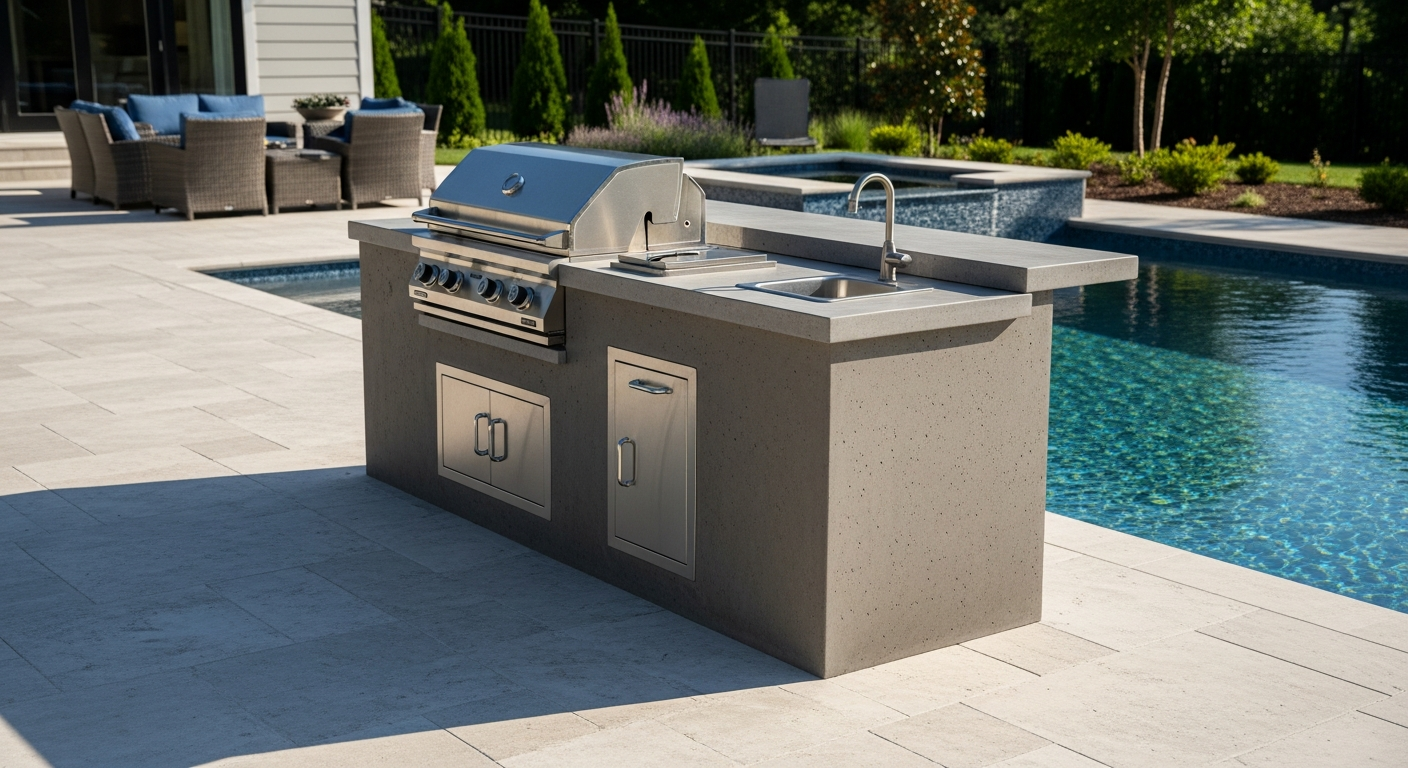
- GFRC (Glass Fiber Reinforced Concrete) Islands: These are incredibly rigid but also heavy and brittle under torsional stress. They absolutely require a monolithic concrete slab foundation of at least 4 inches, rated at 3,000 PSI. Placing them on individual pavers guarantees uneven settling, which will eventually lead to hairline fractures in the concrete and countertop.
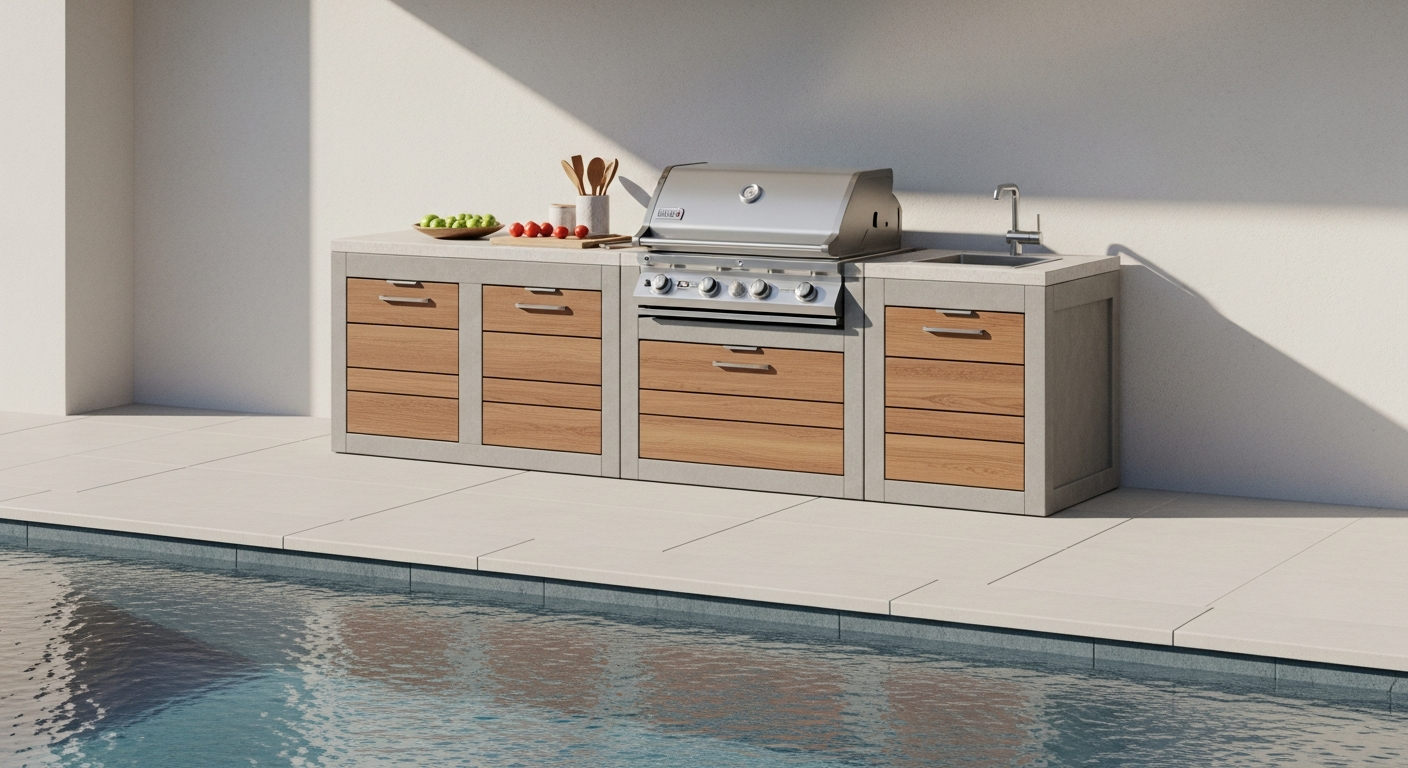
- Metal Stud Framed Islands: These are significantly lighter but have more flex. While they can sometimes be placed on a well-compacted paver patio, the base must be perfectly level. Any deviation causes the frame to twist, which pops stone veneer off the cement board and cracks grout lines. My standard for these is to ensure the patio has less than a 1/8-inch deviation over a 10-foot span.
- Site Survey & Leveling: I use a self-leveling rotary laser to map the entire installation area. A 4-foot spirit level is not precise enough. We are looking for absolute plane, and this data informs if we need a full concrete pour or just a reinforced landing pad.
- Foundation Pour or Reinforcement: If a new slab is required, we pour it and let it cure for a minimum of 14 days before placing any load on it. For existing patios, we often cut out a section of pavers and pour a dedicated concrete footer directly under the island's footprint.
- Utility Trenching & Stub-Outs: All gas lines, electrical conduits, and water/drain lines are run underground and stubbed up exactly where the island's utility access panels will be. This is a critical step for a clean installation with no exposed lines. We always install a gas shut-off valve at the stub-out for safety and serviceability.
- Island Placement & Shimming: The island is craned or forklifted into place. We never slide it, as this can damage both the unit and the patio. All leveling is done using non-compressive composite shims. I never use wood shims, as they will rot and compress over time, leading to tilting.
- Final Hookups & Sealing: After all appliances are connected and tested, I apply a high-grade silicone sealant to the base of the island where it meets the patio. This prevents water from wicking up into the island's structure, which is a major cause of freeze-thaw damage in colder climates.
Tags
prefab bbq
prefabricated bbq islands
prefab grill station
modular outdoor grill islands
prefab barbeque islands