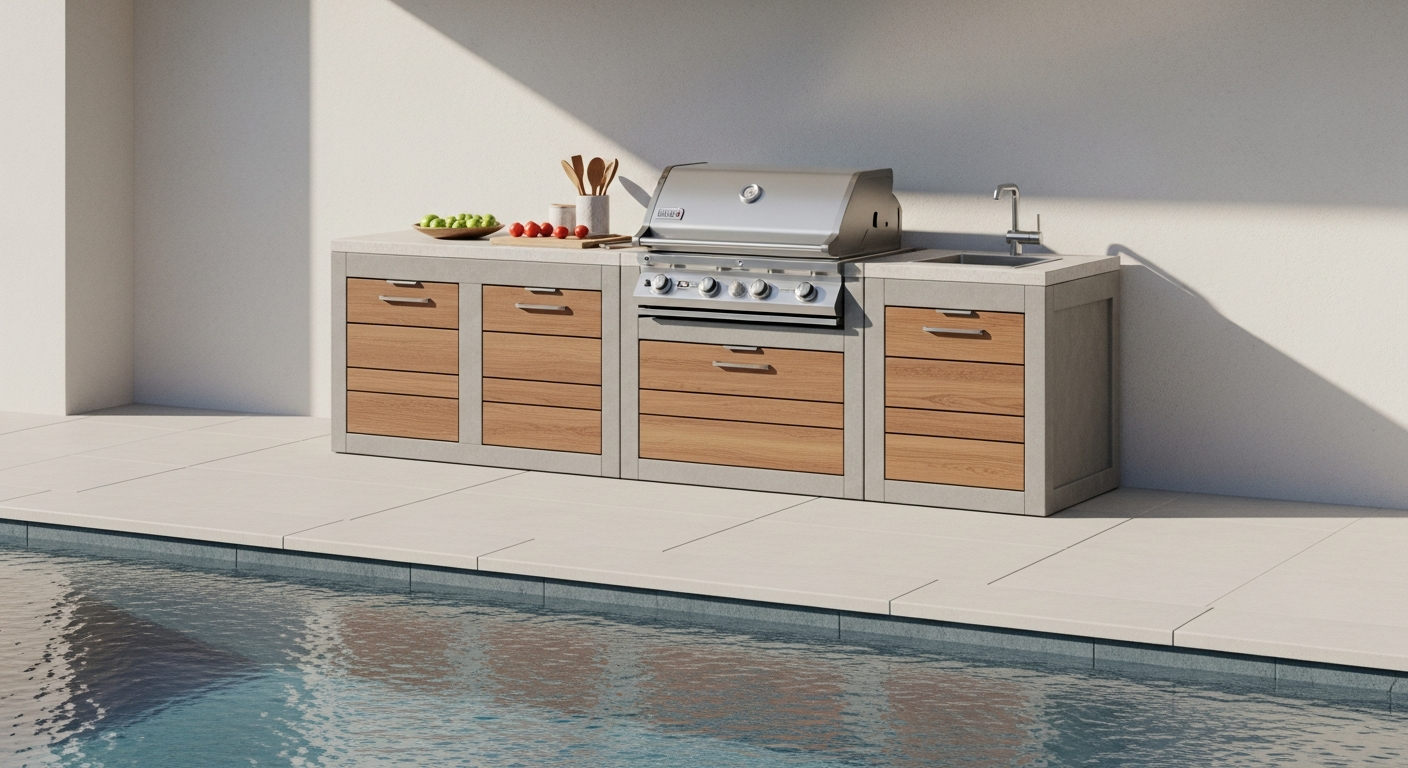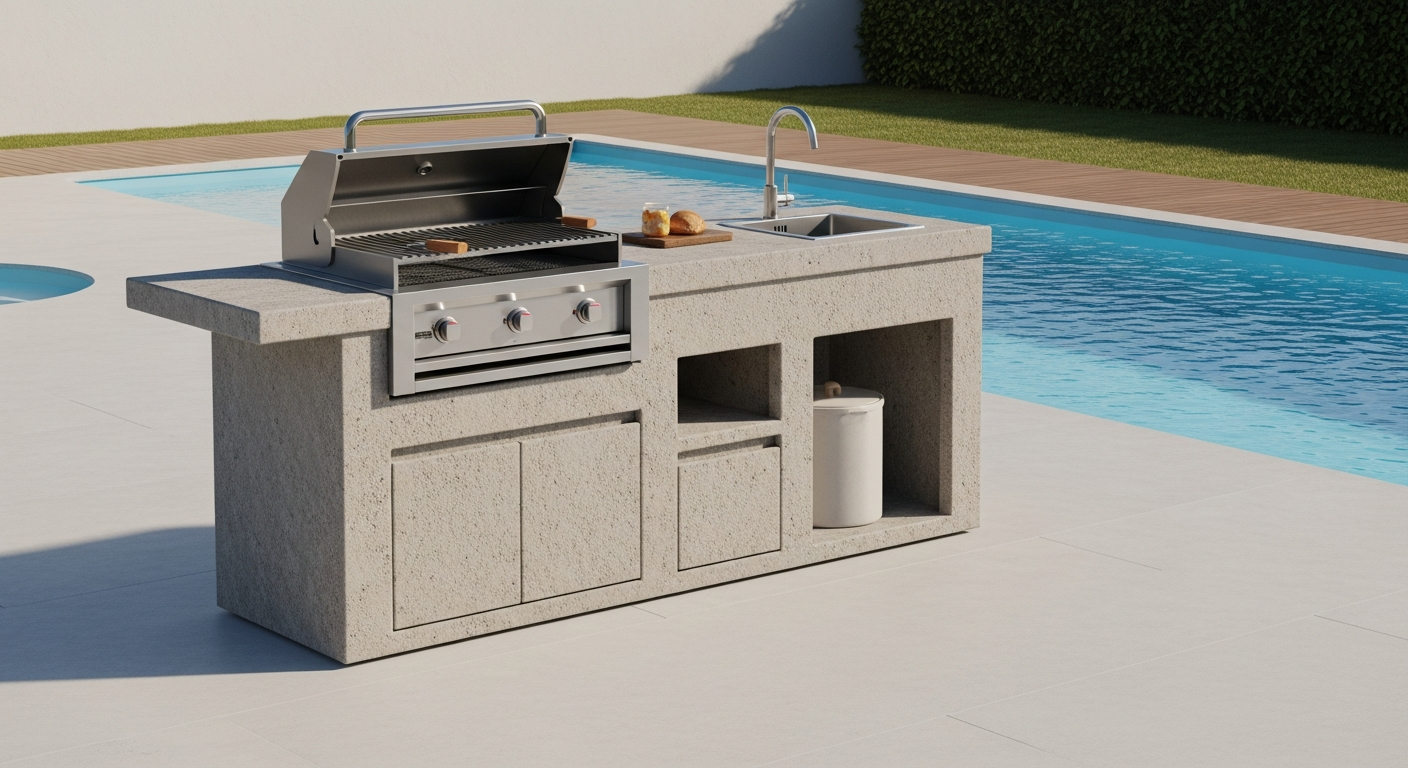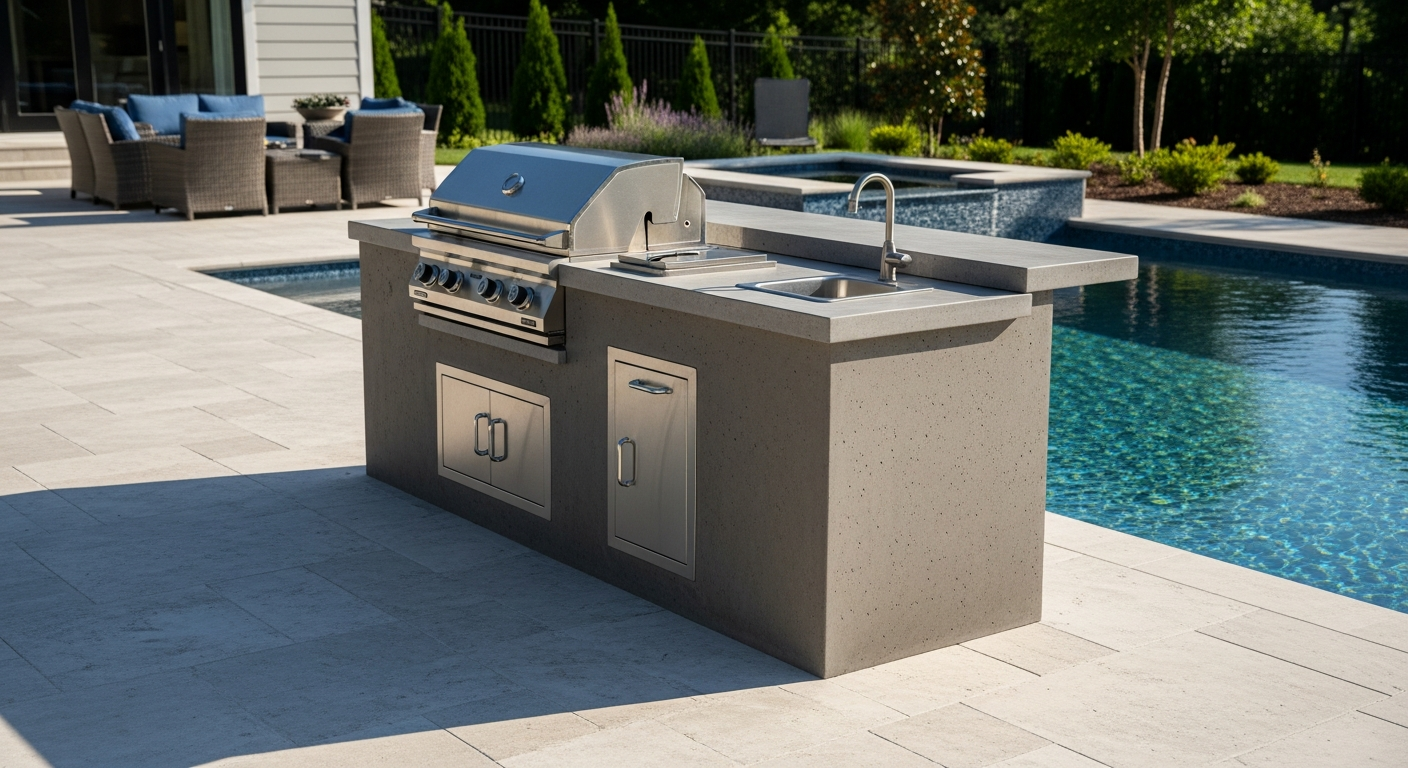
Prefab Outdoor Kitchen Island: My Framework for Avoiding the 5-Year Structural Failure
Over my career, I've seen countless homeowners invest heavily in beautiful prefab outdoor kitchens, only to watch them develop critical failures within a few years. The most common point of failure isn't the appliance or the countertop—it's the island's structural integrity, compromised by a flawed installation base. My entire methodology is built around a single principle: a prefab unit is only as durable as the foundation it rests upon. The common mistake is treating the island as a piece of furniture, when in reality, it requires a civil engineering mindset to guarantee a 20+ year lifespan.
I developed what I call the Ground-Up Integrity Protocol after a client's high-end, GFRC (Glass Fiber Reinforced Concrete) island developed a hairline fracture across its entire length in its third winter. The cause wasn't a defect in the island; it was an improperly cured and unreinforced concrete patio slab that shifted during a freeze-thaw cycle. This protocol shifts the focus from the product selection to the site preparation, a step that accounts for 80% of the long-term success of the installation.
The Ground-Up Integrity Protocol: A Diagnostic Approach
Before a client even shows me a catalog, I perform a mandatory site assessment. My protocol isn't about aesthetics; it’s a technical audit of the environmental and foundational factors that will dictate the project's longevity. Most suppliers will simply ask if you have a "level patio." I ask for soil compaction reports and core samples of existing concrete. This is the level of detail that separates a temporary setup from a permanent outdoor living asset.
Core Technical Pillars of the Protocol
The protocol is based on three non-negotiable technical pillars. I've seen projects fail when even one of these is overlooked.
- Material Stress Analysis vs. Climate: I don't just approve a material like GFRC or a steel-framed unit. I cross-reference its known thermal expansion coefficient with the local climate's average temperature swings. In a region with dramatic temperature shifts, a material with high thermal expansion requires specific control joints in the foundation to prevent stress transfer, a detail that is almost universally ignored. I've seen steel frames warp because they were bolted directly to a monolithic slab with no room for micro-movements.
- Foundation Load-Bearing Capacity: A standard 4-inch paver patio is not an adequate foundation. My minimum standard for any island weighing over 800 pounds is a 6-inch reinforced concrete slab with a minimum 3,000 PSI rating, poured over a compacted gravel base. This distributes the load and provides the rigidity needed to resist ground heave and settling, which are the primary culprits of structural cracks.
- Utility Chase and Venting Blueprint: I mandate a full-scale blueprint of all utility runs—gas, electrical, water, and drainage—before the island is ordered. We install conduits directly into the foundation pour. This not only provides a clean installation but also prevents future issues, like a kinked gas line or improper ventilation for a grill, which I've seen cause dangerous flare-ups and damage to internal components. Proper cross-ventilation compliance is a safety and performance KPI.
- Site Excavation and Compaction: We excavate the area to a depth of 10-12 inches. The soil is then compacted using a plate compactor to achieve 95% proctor density. This prevents future settling.
- Sub-Base Installation: A 4-inch layer of crushed aggregate (gravel) is laid and compacted. This layer is critical for drainage and frost heave prevention.
- Forming and Reinforcement: We build the forms for the concrete slab and lay a grid of #4 rebar tied at 18-inch centers. This reinforcement provides the tensile strength the concrete lacks.
- Concrete Pour and Curing: The concrete is poured and finished to be perfectly level. The most critical, and often rushed, step is the 28-day curing period. We cover the slab and keep it moist to allow the concrete to reach its full design strength. Installing an island on "green" concrete is the single most destructive mistake you can make.
- Utility Stub-Out Finalization: All conduits for gas, electric, and water are stubbed up from the slab at the precise locations mapped out in the blueprint.
Tags
prefabricated outdoor kitchen
prefab bbq islands
prefab outdoor kitchen
prefabricated outdoor grill islands
grills modular outdoor kitchens