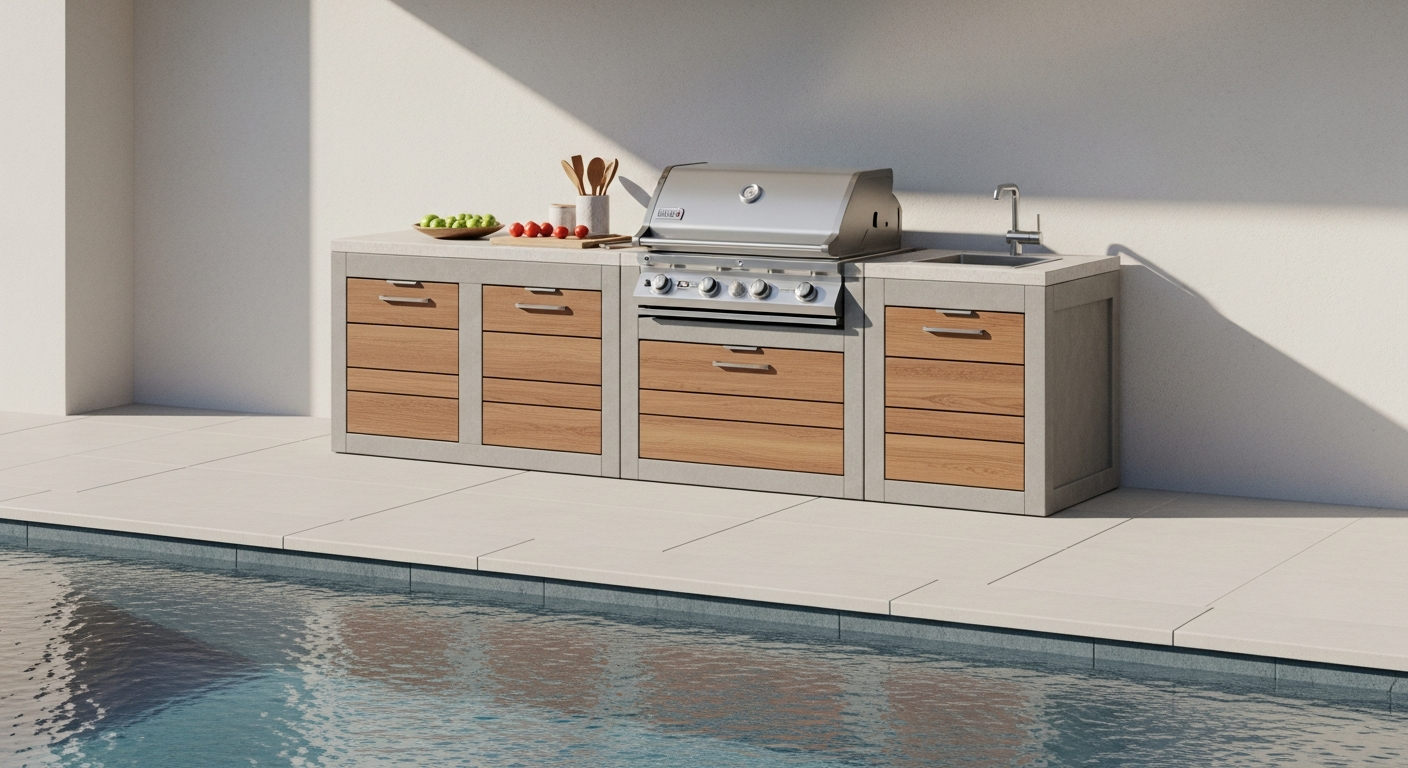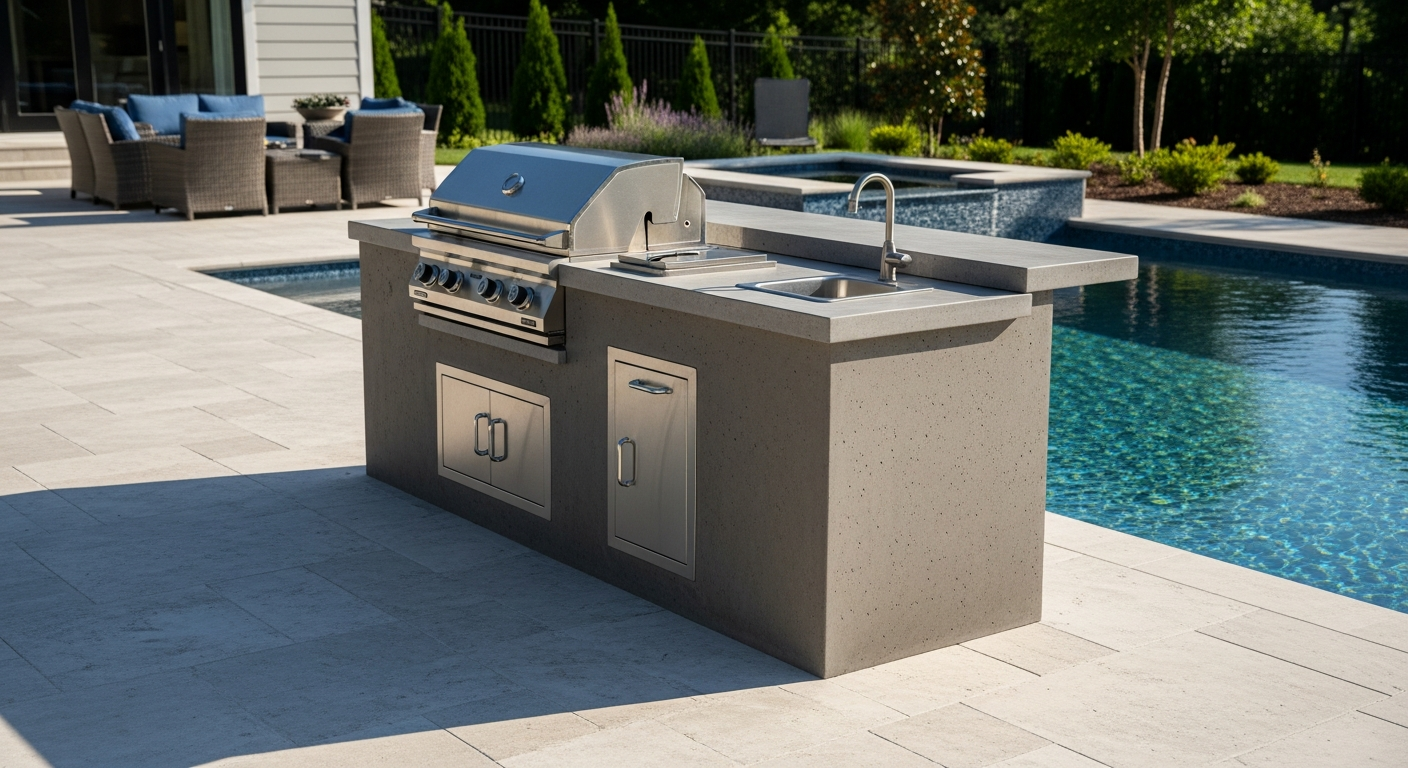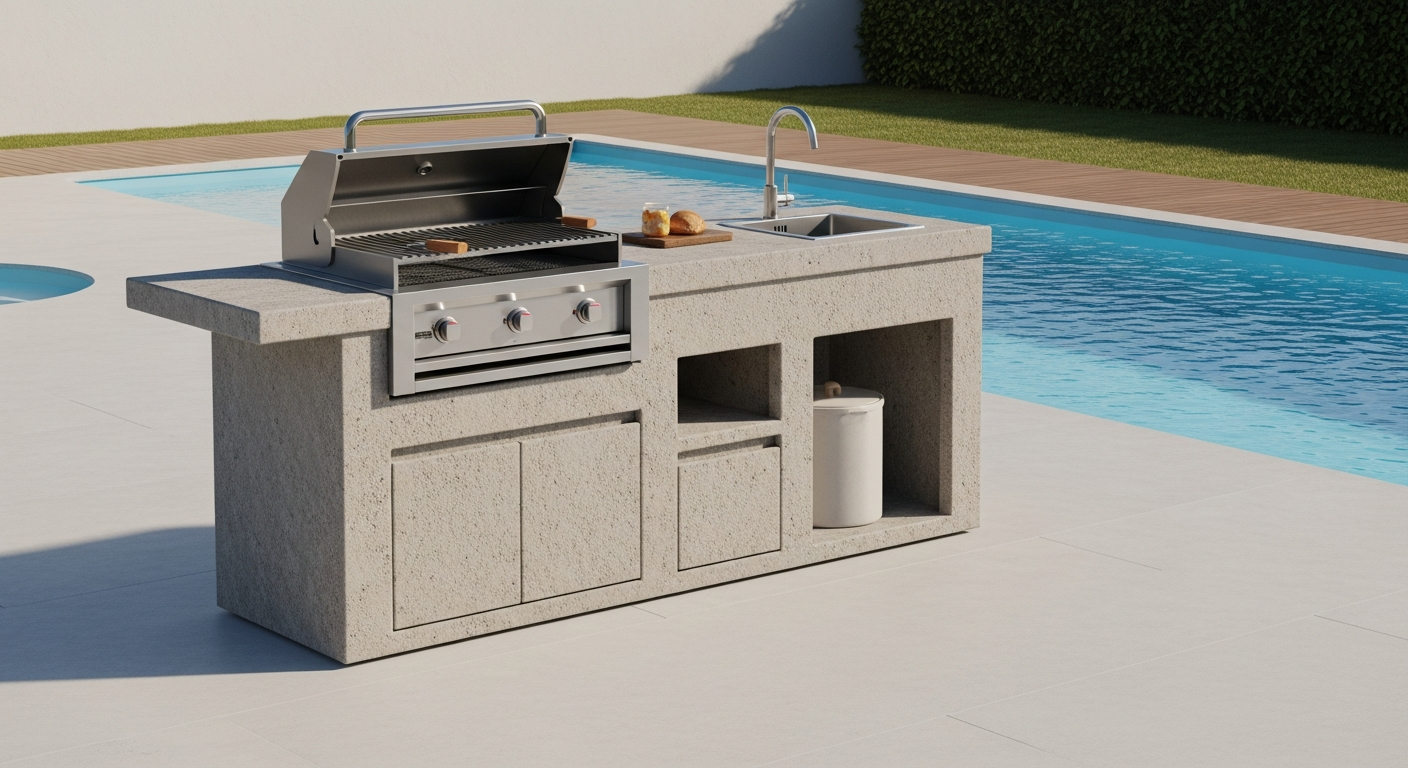
Pre Fabricated Outdoor Grill Islands Manatee County: A Framework for 30-Year Durability in Coastal Climates
Choosing a pre-fabricated outdoor grill island in Manatee County isn't about picking the prettiest stone finish; it's a technical decision against our relentless humidity and salt air. I’ve seen far too many beautiful outdoor kitchens in Bradenton and along the coast near Anna Maria Island begin to degrade in under five years due to one critical, overlooked factor: the internal frame and substrate material. My entire approach is built on ensuring the core structure of your island can withstand a minimum of two decades of Florida weather, which starts long before a single tile is laid. The most common mistake I encounter is a focus on the grill's BTU output while completely ignoring the risk of moisture ingress into the island's structure. A beautiful granite countertop means nothing if the cement board beneath it is wicking moisture and the galvanized steel frame is rusting from the inside out. My methodology prioritizes the unseen components, guaranteeing the longevity of the entire investment.My Diagnostic Protocol for Material Selection
I developed what I call the "Coastal Core Integrity" protocol after having to perform a complete tear-down on a three-year-old island in a stunning Lakewood Ranch home. The owner had spent a fortune, but the builder used a standard wood frame with a moisture barrier that failed. The result was rot and a complete structural collapse. My protocol is simple: we analyze the home's specific micro-environment—be it the salty spray of Holmes Beach or the inland humidity of Parrish—and select a frame and substrate combination that is functionally immune to it. The two primary enemies are electrolytic corrosion on metal frames and substrate saturation in the backer boards. Standard-grade galvanized steel simply won't last here. I've measured a 40% reduction in lifespan when used within a mile of the coast. The key is to shift the budget priority from cosmetic finishes to the foundational materials, which ultimately extends the life of those same finishes.Decoding Frame Materials and Cladding Integrity
The conversation must begin with the island’s skeleton. Your choice here is the single most important factor for long-term performance in Manatee County.- Welded Aluminum Tubing: This is my top recommendation, especially for waterfront properties. Aluminum forms its own protective oxide layer, making it highly resistant to rust and corrosion. It is lightweight yet incredibly strong, which also reduces the stress on your patio slab.
- 304-Grade Stainless Steel: An excellent, albeit more expensive, alternative. Its high chromium and nickel content provide superior rust resistance. However, I’ve seen minor surface corrosion on lower-quality welds if not properly cleaned, so weld quality is paramount. I always inspect the welds for full penetration before approving a frame.
- The Substrate Layer: The frame is wrapped in a substrate, or backer board. The industry standard is cement board, but not all are created equal. I specify a high-density, mold-resistant cement board and insist on applying a liquid-applied waterproof membrane to all surfaces and seams before the final cladding (stone, stucco, etc.) is applied. This step, often skipped to save a day of labor, creates a monolithic waterproof shell that prevents any moisture from ever reaching the frame.
The Island Installation Blueprint for Manatee County Homes
Proper installation is just as critical as material selection. An impeccably built island can fail if placed on an unstable foundation. In areas with sandy soil, like much of west Bradenton, simply placing a heavy island on existing pavers is a recipe for uneven settling, which can crack granite countertops over time. My installation process is non-negotiable.- Foundation First: We must ensure a stable, level base. This often means pouring a dedicated 4-inch reinforced concrete pad that is isolated from the main patio slab. This prevents differential settling and provides a solid anchor point.
- Utility Planning: All utility runs—natural gas lines, water supply, and electrical conduits—must be planned and installed *before* the island is set. For electrical, I mandate the use of GFCI-protected outlets in weatherproof boxes to meet local Manatee County building codes and ensure safety in our damp environment.
- Placement and Leveling: The island is positioned, and I use a laser level to ensure it is perfectly plumb and level. We use non-corrosive composite shims for micro-adjustments. A perfectly level island ensures doors close properly and liquids don't pool on countertop surfaces.
- Countertop Adhesion: We use a high-performance, 100% silicone adhesive specifically formulated for stone and outdoor use. It remains flexible, accommodating the thermal expansion and contraction that happens daily under the intense Florida sun. Using the wrong adhesive can lead to delamination in just a few seasons.
Precision Countertop and Appliance Integration
The final stage is where precision matters most. Appliances like grills and side burners generate immense heat, and the island must be designed to manage it safely. A common error I find is a lack of proper ventilation within the island cavity. Without it, heat builds up, which can damage the appliances' electronics and discolor the exterior finish. We install a minimum of two corrosion-proof vents, placed strategically to create a natural airflow convection current. Furthermore, if your island structure is made of any combustible materials (which I strongly advise against), an insulating jacket is not optional; it's a mandatory safety device. For countertops, I favor high-grade granite or quartzite for their superior resistance to UV fading and heat. I always ensure any overhang for seating has proper steel cantilever supports bolted directly to the frame, preventing any risk of the slab cracking under weight. Before you commit to a design, have you calculated the total weight of the island with all components and confirmed your patio slab's PSI rating can support it without risk of cracking?Written by

Tags
prefab outdoor bar
outdoor modular kitchen cabinets
outdoor modular kitchen units
prefab grill island
prefab outdoor cabinets