Solar Pool Heaters Sarasota: My Protocol for a Consistent 15°F+ Temperature Gain
I've lost count of how many pool owners in Sarasota, from the newer builds in Lakewood Ranch to the classic homes near Lido Key, tell me the same thing: their pool is perfect for six months, then becomes a beautiful, unusable water feature from November to March. They invest in a solar heater expecting a year-round swimming season, only to find the performance underwhelming. The problem is rarely the solar technology itself; it's almost always a failure in the initial system design and a misunderstanding of Sarasota's specific environmental factors. My approach isn't based on generic square-footage calculators. It's a diagnostic protocol I developed after correcting dozens of underperforming installations across the county. The goal isn't just to "warm" the water; it's to achieve a predictable and substantial temperature differential—typically 10-15°F or more—even during the cooler, sunnier days of a Florida winter. This transforms your pool from a seasonal amenity into a year-round asset.My Diagnostic Framework: Auditing Heat Loss, Not Just Pool Size
The most common mistake I see is sizing a solar system based solely on the pool's surface area. This is a critical error. In reality, we are fighting against heat loss, which is influenced by a unique set of variables here in Sarasota. Before I even consider panel size, my methodology requires a complete site audit. My process starts with a Thermal Performance Assessment. I analyze factors that online calculators completely ignore. For a client on Siesta Key, for example, the constant, unimpeded coastal breeze dramatically increases evaporative heat loss compared to a home in a dense Palmer Ranch subdivision. I also perform a shade analysis, mapping the path of the low winter sun across the property. The beautiful mature oak trees common in older Sarasota neighborhoods can render a poorly placed solar array useless from December to February. It's this granular, on-site data that dictates the true thermal demand of the pool.The Physics of Panel Placement in Sarasota County
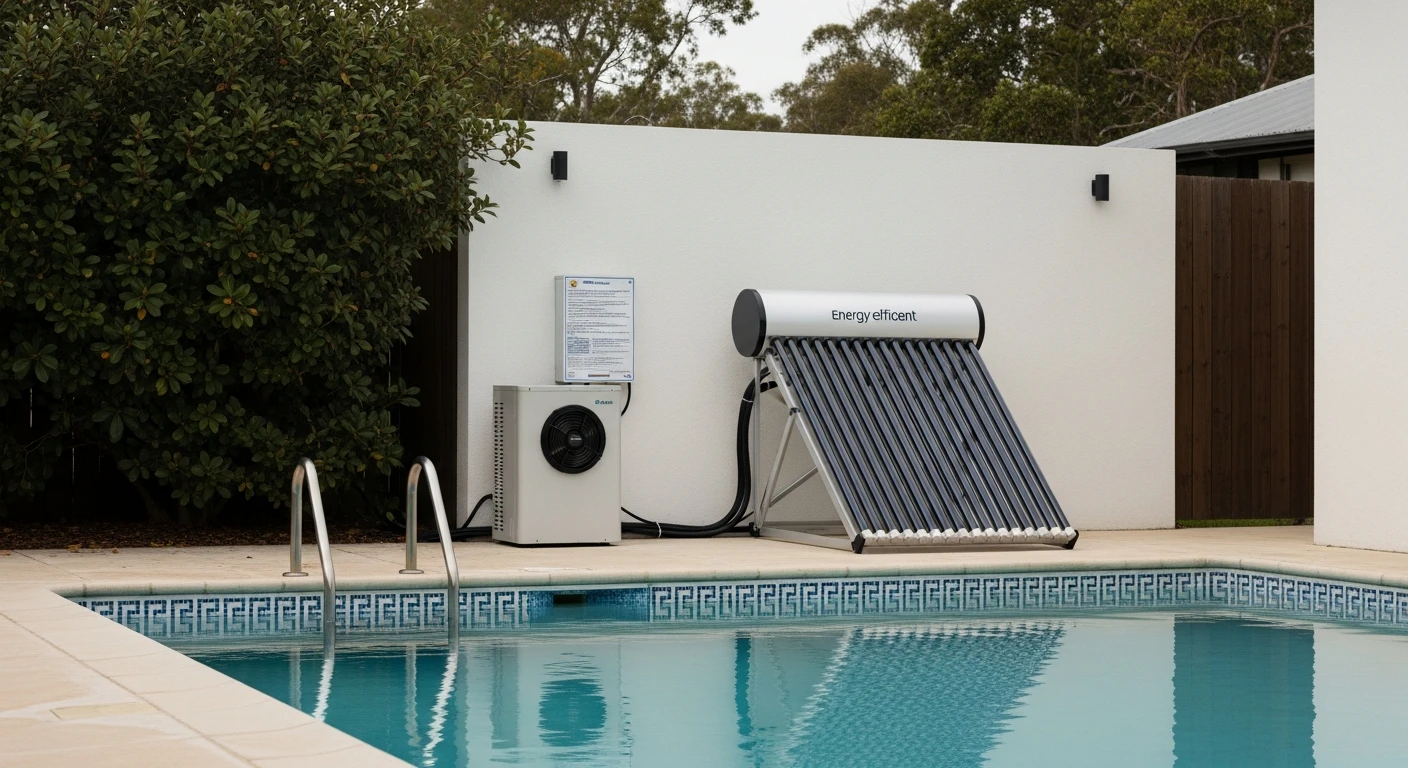
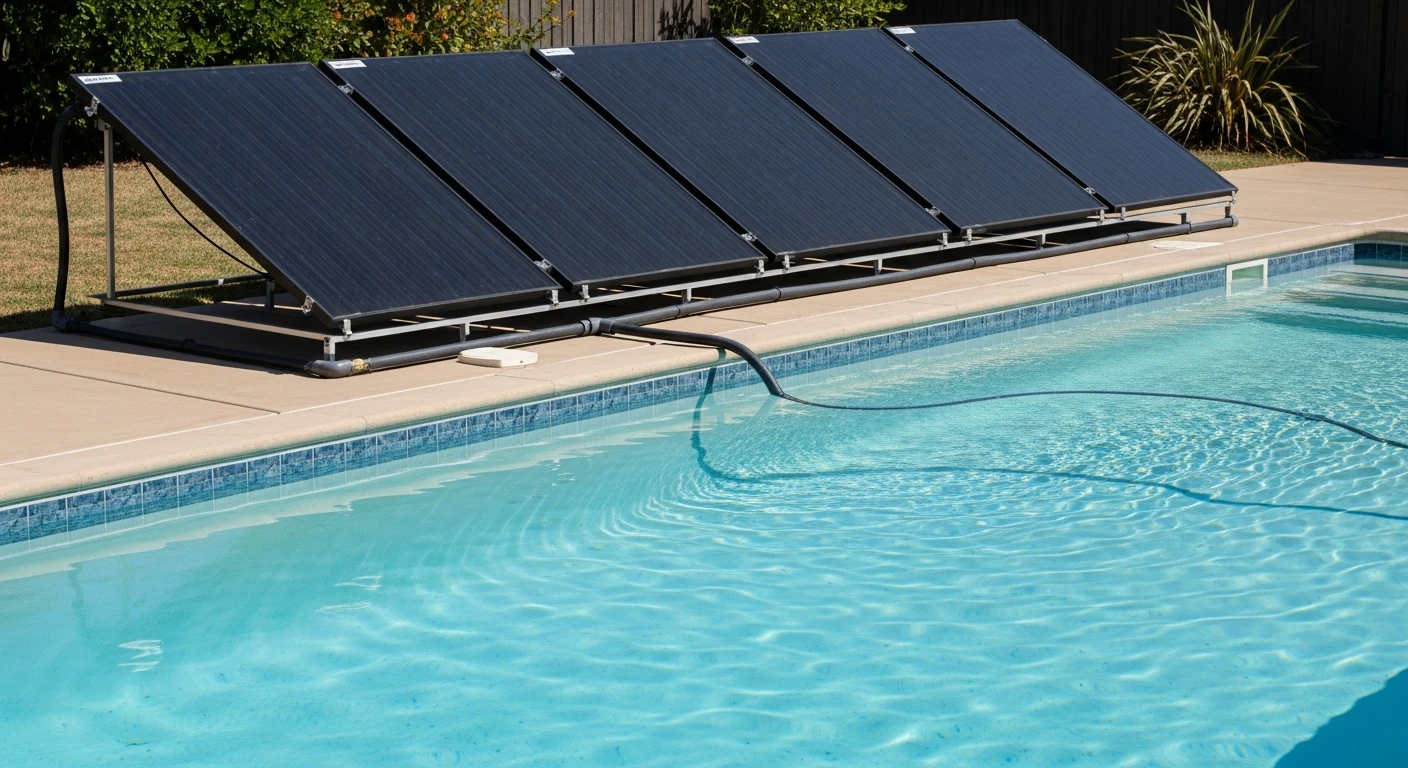
Once the thermal demand is established, the next critical phase is optimizing the solar collection. Most installers will simply find an open patch of roof and declare it "good enough." This is a recipe for mediocrity. My methodology focuses on two key physical principles often overlooked: azimuth and tilt angle. For maximum winter performance in Sarasota (latitude approx. 27.3° N), the solar collectors must face true south, not magnetic south. More importantly, the tilt angle should be optimized to capture the low-angle winter sun. While a shallow angle works fine in the summer, I often engineer a mounting system to achieve a tilt closer to our latitude, around 25-30 degrees. This simple adjustment can increase solar energy absorption by over 20% during the critical cooler months. I've seen systems installed flat on a low-slope roof that were barely functioning in January, and by simply correcting the angle, we achieved a significant temperature boost.The Implementation Checklist for Flawless Performance
A correct diagnosis and design are pointless without flawless execution. Over the years, I've refined a non-negotiable checklist for every installation. These are the steps that separate a functional system from a high-performance one.- Flow Rate Calibration: This is the most overlooked technical specification. Each solar panel system is designed for an optimal gallons per minute (GPM) flow rate. Too slow, and the water gets too hot, stressing the panels; too fast, and the water doesn't have enough time to absorb the heat. I use a flow meter during commissioning to dial in the pump speed or valve settings to hit the exact GPM target, ensuring maximum heat transfer.
- Sensor Placement Accuracy: An automated solar controller works by comparing two temperatures: the pool water and the solar collectors. I insist on placing the roof sensor directly on the main water outflow pipe of the last panel in the series. Placing it just on the roof surface, a common shortcut, gives false readings and causes the system to cycle inefficiently.
- Strategic Plumbing Runs: Minimizing the length and number of bends in the PVC pipes running to and from the roof is critical. Every foot of pipe and every 90-degree elbow adds to the system's total dynamic head, making the pump work harder. I design plumbing paths to be as direct and efficient as possible, which reduces energy consumption and improves flow.
- Air Relief Valve Installation: At the highest point of the solar panel array, I always install an automatic air relief valve. This small but vital component automatically purges any air that gets trapped in the system, preventing airlocks that can stop water flow and halt the heating process entirely.
Fine-Tuning for Efficiency: The 5% Performance Edge
With the system physically installed, the final step is optimization. This is where a deep understanding of thermodynamics provides a final performance boost. My primary tool for this is programming the differential controller with precision. The system should only activate when the solar collectors are at least 3-4°F warmer than the pool water, ensuring a net energy gain with every cycle. Furthermore, I educate every client on the single most effective tool for retaining the heat we've just generated: a solar pool cover. Using a cover at night can prevent up to 90% of evaporative heat loss, which is the primary way a pool cools down. By combining a correctly installed solar heating system with disciplined cover usage, we are not just adding heat during the day; we are actively preventing its escape at night. This synergy is what makes year-round swimming in Sarasota not just possible, but comfortable and cost-effective. Is your current system's performance being limited by an uncalibrated flow rate, or is improper sensor placement causing your pump to run when there is no thermal energy to gain?Written by

Tags
pool warmer solar
pool solar panels
swimming pool solar panels
pool solar installation
Solar Pool Heaters in Sarasota FL FAQ
What is a solar pool heater?
A solar pool heater is a device that uses the sun's energy to heat your pool water, providing a cost-effective and eco-friendly alternative to traditional pool heating methods.
How does a solar pool heater work?
A solar pool heater works by circulating pool water through a network of tubes filled with a special fluid that absorbs the sun's heat. The heated fluid is then pumped back into the pool, warming the water.
What are the benefits of using a solar pool heater?
Solar pool heaters offer several benefits, including reduced energy costs, a lower carbon footprint, and a longer lifespan for your pool equipment. They also provide a safe and chemical-free heating solution.
Can I install a solar pool heater myself?
While it is possible to install a solar pool heater yourself, it is recommended to hire a professional to ensure proper installation and to ensure that your system is working efficiently and safely.
How long does it take to install a solar pool heater?
The installation process typically takes several hours to a few days, depending on the size of your pool and the complexity of the installation.
How much does a solar pool heater cost?
The cost of a solar pool heater varies depending on the size of your pool, the type of system, and the installation costs. However, on average, a solar pool heater can pay for itself in just a few years through energy savings.
Will a solar pool heater work in cold weather?
While solar pool heaters can still work in cold weather, their efficiency may be reduced. It is recommended to use a pool cover or other heat retention methods to help keep the pool warm during cold weather.
How often do I need to maintain my solar pool heater?
Regular maintenance is important to ensure your solar pool heater is working efficiently and safely. This includes checking and cleaning the system, checking for leaks, and performing routine inspections.
Can I use a solar pool heater with my existing pool equipment?
In most cases, yes. Solar pool heaters can be designed to work with your existing pool equipment and plumbing. However, it is recommended to consult with a professional to ensure compatibility.
What is the warranty on a solar pool heater?
The warranty on a solar pool heater varies depending on the manufacturer and the type of system. Typically, solar pool heaters come with a 5-10 year warranty on the system and a 5-10 year warranty on the components.
Can I get a tax credit or incentive for installing a solar pool heater?
Yes, many governments offer tax credits or incentives for installing solar pool heaters as part of their efforts to promote renewable energy and reduce energy consumption.