Saltwater Pool Maintenance in Osceola County: My Protocol to Eliminate Algae Blooms and Cut Chemical Costs by 30%
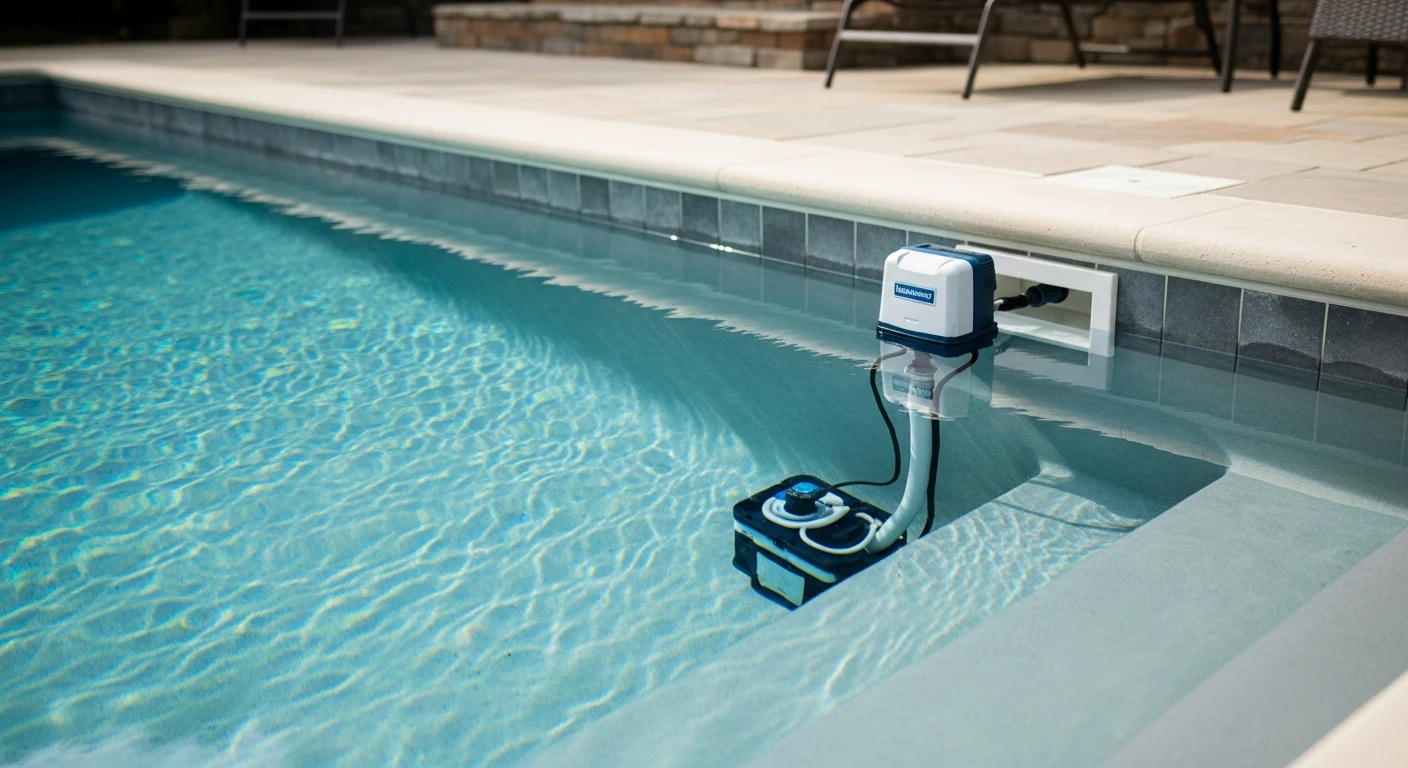
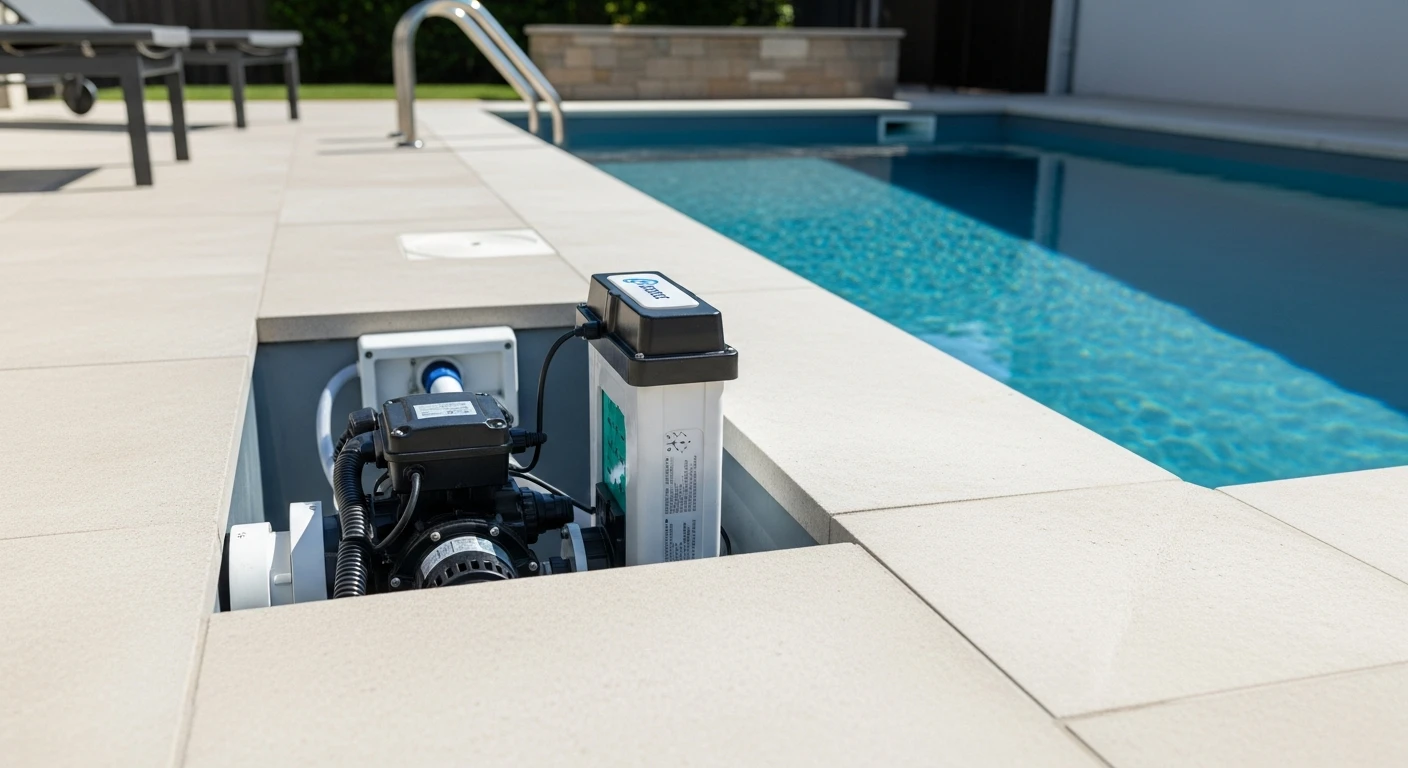
My approach to Osceola saltwater pools bypasses the common errors by focusing on proactive salinity buffering against our heavy rains and optimizing Cyanuric Acid levels to combat intense Florida UV. This methodology prevents the constant, costly cycle of algae treatments I see in homes from Kissimmee to St. Cloud and can extend the life of a typical T-Cell-15 salt cell by at least two seasons. The fundamental mistake is treating a saltwater pool like a traditional chlorine pool. It's an independent chlorine factory, and its production efficiency is directly tied to a few key variables that the Osceola climate relentlessly attacks. After managing a portfolio of over 50 high-use vacation rental pools in the Celebration area, I refined a system that anticipates problems rather than just reacting to them, saving homeowners significant time and money on emergency "green pool" service calls.Decoding Your Salt System's Real Needs in the Kissimmee-St. Cloud Climate
The biggest challenge here isn't just the heat; it's the volatility. We face intense UV radiation that degrades free chlorine, followed by sudden, torrential downpours that can dump an inch of rain in 30 minutes, severely diluting your pool's chemistry. This creates a "yo-yo effect" on your water balance. My proprietary methodology, which I call the **"Osceola Salinity Buffer Method,"** is designed to counteract this. It's not about just keeping salt in the recommended range; it’s about strategically positioning it to absorb environmental shocks. I once took over a pool in a new development in Lake Nona that was constantly cloudy and developing mustard algae despite the salt generator running at 100%. The previous company kept adding salt and shock. My initial diagnosis showed the salinity was fine, but the Cyanuric Acid (CYA) was below 20 ppm. The sun was literally burning off the chlorine the moment the cell produced it. The generator was working itself to death for zero effective result. This is a classic, and expensive, mistake.The Critical Triad: Salinity, Cyanuric Acid, and Cell Output
Your success hinges on mastering three interconnected variables. Ignoring one renders the other two ineffective.- Salinity: Most salt systems recommend a range of 2700-3400 parts per million (PPM). My Osceola-specific protocol is to maintain levels between 3200-3600 PPM. This slightly higher concentration provides a buffer against heavy rain dilution. It ensures that after a typical summer thunderstorm, your salinity doesn't drop below the minimum threshold where the cell stops producing chlorine, leaving your pool vulnerable.
- Cyanuric Acid (CYA): This is your chlorine's sunscreen. Without it, the Osceola sun will destroy up to 90% of your free chlorine in a couple of hours. The target here is 60-80 PPM. Below 50 PPM, you're wasting the chlorine your cell produces. Above 100 PPM, you risk "chlorine lock," where the CYA binds so strongly to the chlorine that it becomes ineffective as a sanitizer.
- Cell Inspection and Output: Your salt cell's plates are the heart of the operation. I tell my clients to visually inspect the cell every two to three months. You're looking for white, flaky deposits known as calcium scaling. This buildup insulates the plates, drastically reducing chlorine production even if the system's diagnostics say everything is fine. The cell's output percentage should be adjusted seasonally—lower in the cooler months, higher during the summer peak.
My Step-by-Step Saltwater Pool Calibration Process
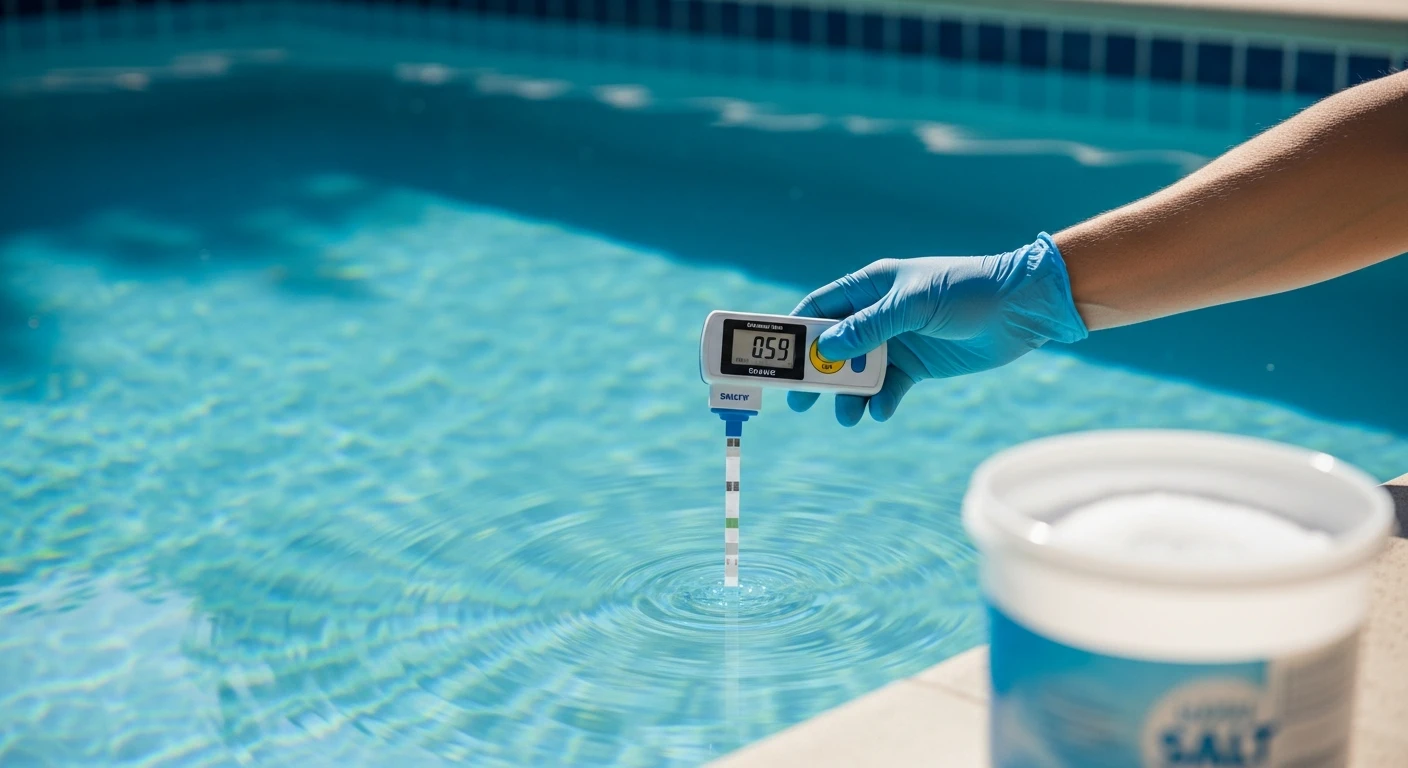
Achieving stable, crystal-clear water is a process, not a single action. Whether you're in a single-family home with a lanai in St. Cloud or managing a high-traffic rental near the 192 corridor, this weekly calibration is non-negotiable.- Test Water Before Adjusting Anything: Use a quality test kit, not cheap strips. You need precise readings for Free Chlorine (FC), pH, Total Alkalinity (TA), and Salinity. Test weekly, without fail.
- Adjust Alkalinity First, Then pH: Total Alkalinity is the buffer for your pH. Get your TA into the 80-120 PPM range first. Only then should you adjust your pH to its ideal range of 7.4-7.6. Saltwater pools have a natural tendency to drift upward in pH, so this step is critical.
- Verify Salinity & Adjust Slowly: Use your test kit to verify the salt reading from your system's control panel, as sensors can fail. If you need to add salt, pre-dissolve it in a bucket before adding it to the deep end. Never dump it straight onto the pool floor, as this can stain the surface. Brush the pool floor afterward to help it circulate.
- Calibrate CYA Seasonally: Check your CYA level monthly. It doesn't get consumed, but it does get diluted by rain and backwashing. Adjust as needed to maintain that 60-80 PPM sweet spot.
- Clean Your Cell Correctly: If you see calcium scaling, turn off all power to the pool equipment. Unscrew the cell and submerge it in a solution of 1 part muriatic acid to 4 parts water. Do not leave it for more than 10-15 minutes. Any longer and you risk stripping the precious coating off the metallic plates, permanently damaging the cell. Rinse thoroughly before reinstalling.
Fine-Tuning for Peak Performance and Longevity
Once your core chemistry is balanced, the final step is optimization. I analyze the pool's specific demand. A pool in Celebration with a high bather load from tourists requires a higher generator output percentage than a quiet residential pool. Another critical factor often overlooked in our area is phosphates. They are a primary food source for algae, introduced into the pool through lawn fertilizers and organic debris, a common issue in Osceola's leafy neighborhoods. Keeping phosphates below 500 parts per billion (PPB) with a phosphate remover can be the final piece of the puzzle to achieving perfectly clear water and reducing chlorine demand by up to 25%. After a heavy Osceola summer rain, is your first instinct to add more salt or to test your Total Alkalinity, and why does one choice prevent a cascade of chemical imbalances?Written by

Tags
maintaining a saltwater pool
maintaining a salt pool
salt cell pool cleaning
saltwater pools maintenance
Saltwater Pool Maintenance in Osceola FL FAQ
What is the difference between a saltwater pool and a traditional pool?
A saltwater pool uses a saltwater chlorine generator to sanitize the water, whereas a traditional pool uses chlorine tablets or liquid chlorine. Saltwater pools are considered more gentle on the skin and hair, and produce a softer, more natural swimming experience.
How do I maintain my saltwater pool?
Regular maintenance of your saltwater pool includes testing and adjusting the pH and chlorine levels, cleaning the filter and skimmer, and performing routine saltwater cell cleaning and replacement. Our team can provide customized maintenance plans to keep your pool in top condition.
Why do I need to replace my saltwater cell?
Your saltwater cell should be replaced every 6-12 months, depending on usage and pool conditions. Replacing the cell ensures optimal sanitizing performance and prevents damage to your pool equipment.
Can I use a saltwater pool without a saltwater chlorine generator?
No, a saltwater chlorine generator is necessary to convert salt into chlorine to sanitize your pool. Without one, you'll need to use traditional chlorine tablets or liquid chlorine, which can be harsh on the skin and hair.
Why is it important to monitor my pool's pH level?
Proper pH levels are crucial for maintaining a healthy pool. If the pH level is too high or too low, it can cause scaling, corrosion, or eye and skin irritation. Our team can help you maintain optimal pH levels for a safe and enjoyable swimming experience.
How often should I clean my pool filter?
We recommend cleaning your pool filter every 1-2 weeks, or as needed. Cleaning the filter ensures optimal water circulation and prevents clogging, which can lead to reduced sanitizing performance and increased maintenance costs.
What if I notice algae growth in my pool?
Algae growth can occur if your pool's sanitizer levels are too low or if the pool is not properly maintained. Our team can help you identify the cause and provide a customized solution to eliminate algae growth and prevent future occurrences.
Can I swim in my pool immediately after cleaning or maintenance?
It's recommended to wait at least 30 minutes to an hour after cleaning or maintenance before swimming. This allows the sanitizer to re-establish and ensures a safe and healthy swimming environment.
Do I need to test my pool water regularly?
Yes, regular water testing is crucial for maintaining a healthy pool. We recommend testing your pool water at least once a week, or as needed, to ensure optimal sanitizer levels, pH, and alkalinity.