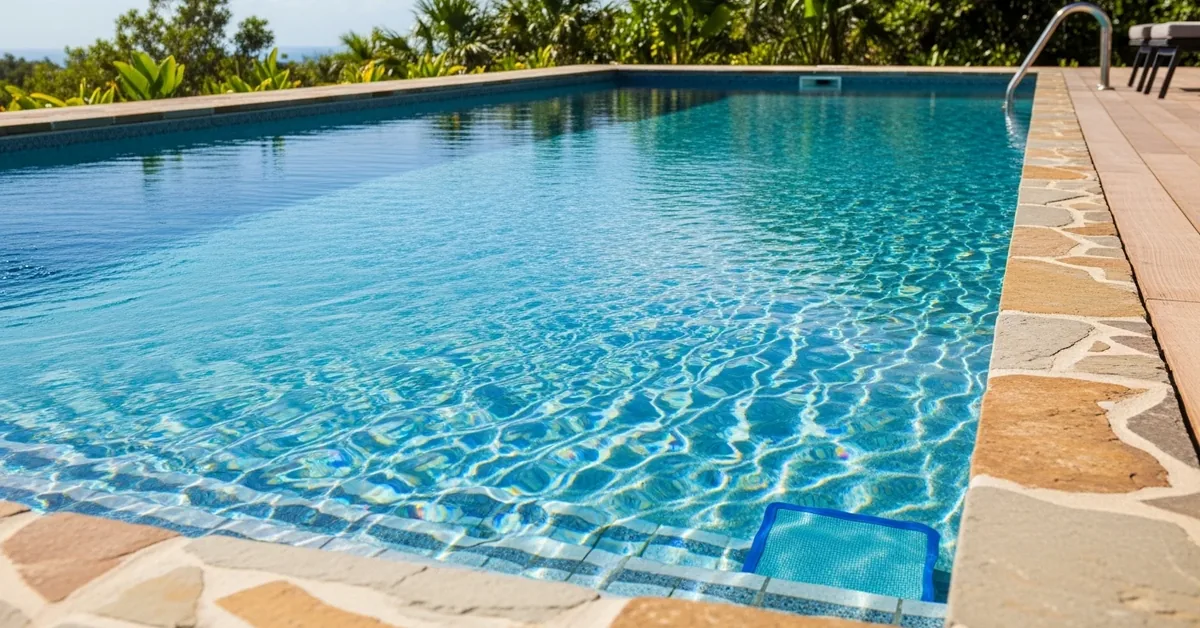
Saltwater Pools Polk County: My Protocol for Eliminating 90% of Chemical Fluctuations
For anyone maintaining a traditional chlorine pool in Polk County, the routine is painfully familiar: the intense Lakeland sun burns through chlorine by midday, an afternoon thunderstorm in Winter Haven dilutes the water, and you're back to shocking the pool again. I've seen this cycle frustrate countless homeowners. The common solution presented is a saltwater pool, but simply installing a Saltwater Chlorine Generator (SWG) without a climate-specific strategy is a mistake I’ve had to correct on numerous projects. It often leads to new problems, like scaling and equipment corrosion. My approach isn't just about adding salt; it's about creating a balanced aquatic ecosystem engineered to withstand our unique Central Florida climate.The Climate-Adapted Salinity Blueprint
My methodology for saltwater conversions in Polk County hinges on a core principle: you must oversize the system's capacity and proactively manage pH, not just chlorine output. The "install it and forget it" sales pitch is a myth here. The constant high UV index and heavy rainfall create a volatile environment. My proprietary blueprint focuses on building a resilient system that anticipates these stressors, rather than just reacting to them. I start every project by analyzing not just the pool's gallonage, but its direct sun exposure, the presence of a lanai, and the local water hardness, which can be a significant factor in areas like Auburndale and Bartow.The Technical Nuances of Salt in Central Florida
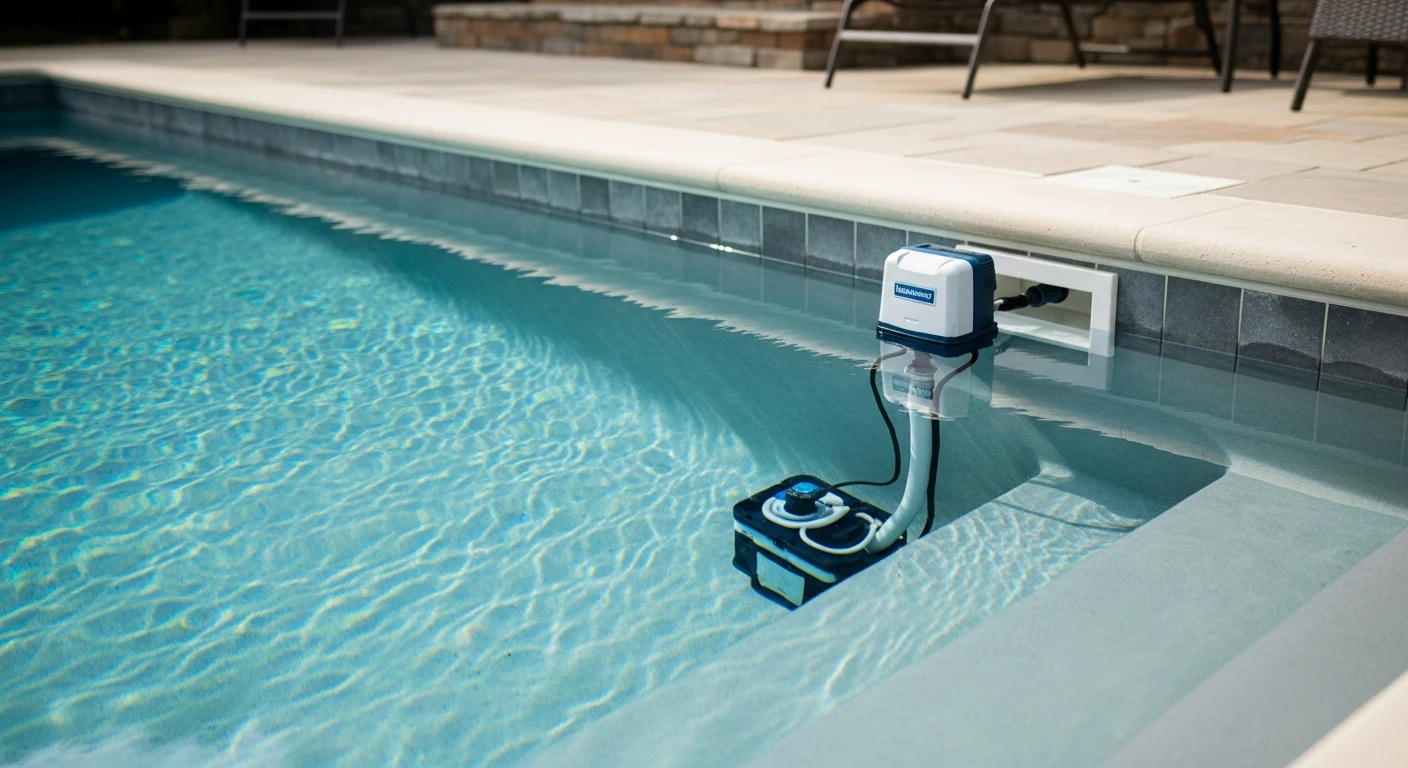
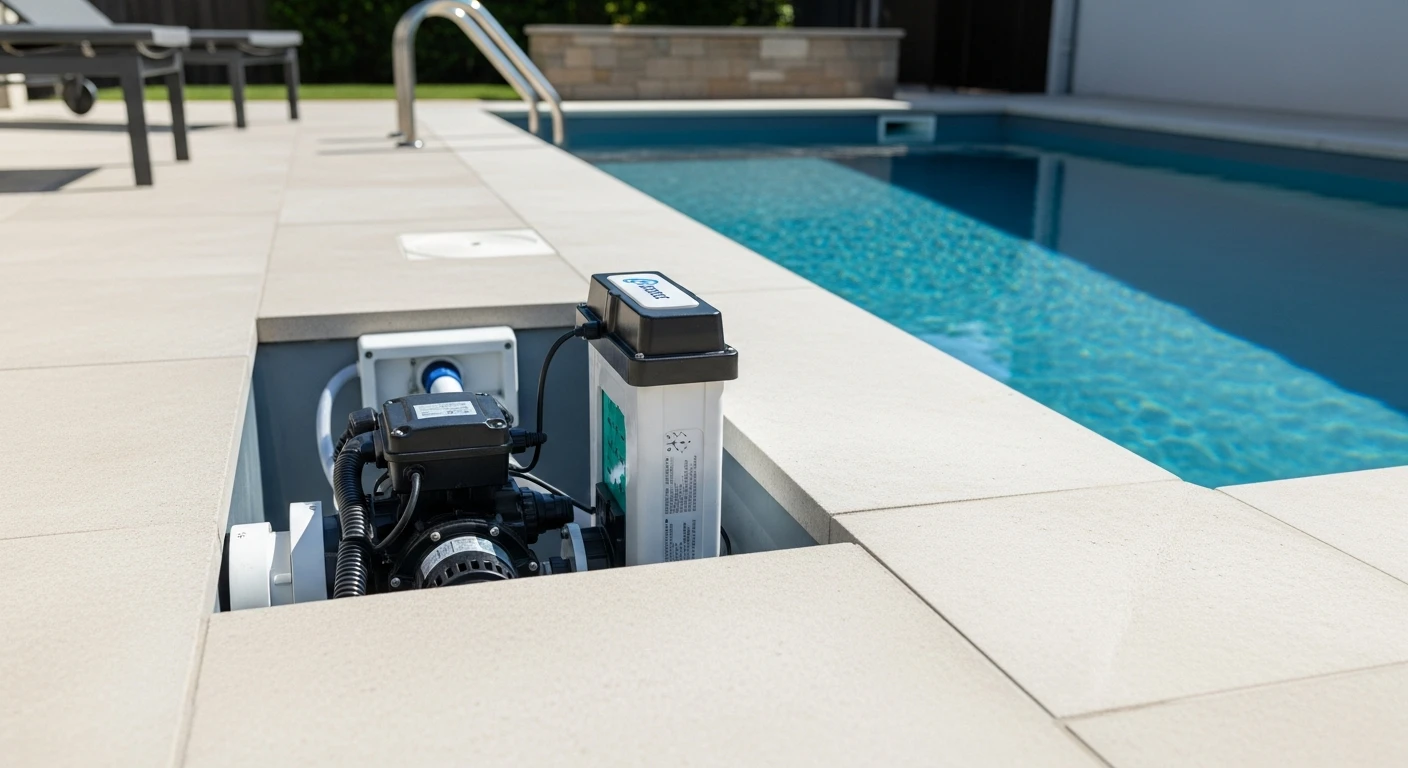
The real gain from a saltwater system isn't "no chlorine"; it's consistent, on-demand chlorine generation. An SWG uses electrolysis to convert salt (sodium chloride) into chlorine. This process is fantastic for battling the sun's degradation. However, a critical byproduct that is often ignored is sodium hydroxide, which consistently drives your pool's pH level upwards. In Polk County's typically hard water, a high pH is the primary catalyst for calcium scaling on your pool surfaces and, more critically, inside the SWG cell itself. This is the single biggest failure point I see. My non-negotiable rule: you must oversize the generator's capacity by at least 50% of your pool's volume. A 40,000-gallon cell on a 25,000-gallon pool can run at a lower percentage for fewer hours. This simple change can increase the cell's lifespan by 30-40% and gives you the power needed to super-chlorinate after a major rain event without maxing out the system.Implementation: My 5-Step Saltwater Conversion Checklist
I've refined this process over years of working on single-family homes across Polk County. Following these steps precisely prevents 99% of common post-conversion issues.- Step 1: Pre-Conversion Water Balancing. Before a single grain of salt is added, I ensure the baseline chemistry is perfect, with a special focus on Calcium Hardness (target: 200-400 ppm) and Cyanuric Acid (target: 60-80 ppm). The CYA is crucial as it acts as a sunscreen for the chlorine your new system will generate.
- Step 2: Calculating the Initial Salt Dose. Do not use generic bag instructions. My formula is: Pool Gallons x 8.33 x 0.0035 = Pounds of Salt needed for a target of 3500 ppm. I insist on using only high-purity, food-grade salt with no anti-caking agents.
- Step 3: The 24-Hour Dissolution and Circulation Mandate. After adding the salt, the pump must run continuously for a full 24 hours with the SWG turned OFF. This ensures complete dissolution and prevents concentrated saline solution from damaging pool surfaces.
- Step 4: SWG Activation and Calibration. Only after 24 hours do I power on the SWG. I start it at a 50% output setting. Then, I test the free chlorine level daily for the next 3-5 days, adjusting the output up or down by 5-10% increments until it consistently holds a stable 2-4 ppm.
- Step 5: Instituting the New Testing Cadence. The client's job now shifts from daily chlorine management to twice-weekly checks of pH and alkalinity. This proactive monitoring is the key to preventing scale buildup.
Precision Tuning and Long-Term Integrity Standards
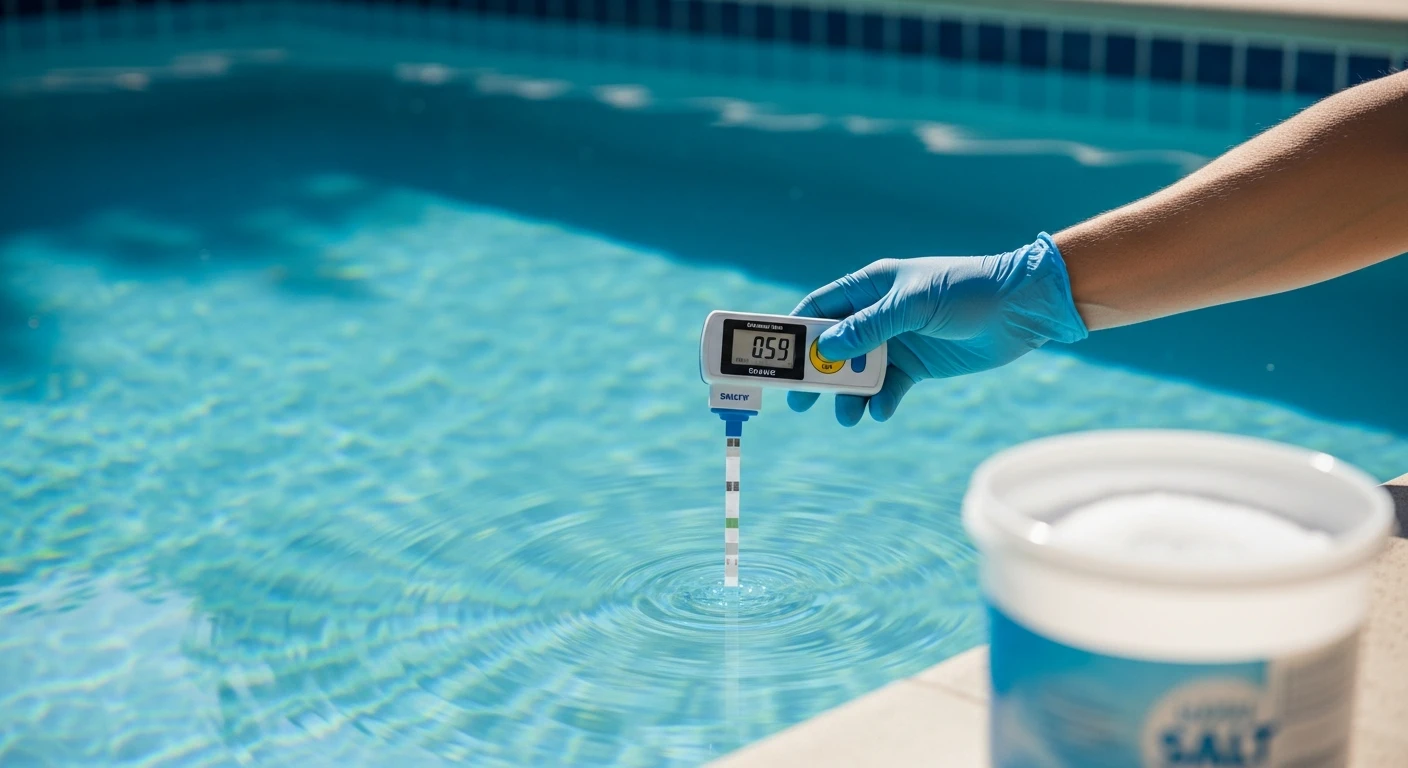
Once the system is running, the work shifts to long-term optimization. The biggest mistake is "salinity creep"—the gradual over-salting of a pool as owners add more salt after rain without testing first. A high-quality digital salinity tester is a mandatory tool, far more accurate than test strips. Furthermore, to combat galvanic corrosion which can be accelerated in saltwater, I always recommend installing a sacrificial zinc anode into the plumbing line. This simple, inexpensive device sacrifices itself to protect expensive components like your pool heater's heat exchanger. Finally, a quarterly inspection and cleaning of the SWG cell with a diluted muriatic acid solution is essential to remove any calcium buildup and ensure maximum chlorine production efficiency. Now that you understand the critical relationship between pH, SWG output, and our Polk County climate, how will you adjust your system's runtime and output percentage to prepare for the next multi-day summer heatwave?Written by

Tags
best salt water pool system
best pool salt system
salt water system
Switching to a saltwater system
Saltwater Pools in Polk FL FAQ
Is a saltwater pool really chlorine-free and better for my skin?
No, a saltwater pool is not chlorine-free; it uses a salt chlorine generator to create its own chlorine from salt. The process produces a more stable and less harsh form of chlorine, which is why it feels softer on the skin and eyes and lacks the strong chemical odor of traditional pools. This on-site production avoids the need to handle and store liquid or tablet chlorine. However, the water must still be tested and balanced regularly, maintaining a pH between 7.2 and 7.6 to ensure the chlorine produced is effective and non-corrosive.
Will the salt damage my concrete pool deck, coping, and equipment?
Yes, salt is corrosive and can damage certain materials over time if they are not properly selected and maintained. Porous materials like natural stone coping and unsealed concrete decking are particularly vulnerable to salt crystal formation and spalling. To mitigate this, use dense, high-quality pavers or apply a specialized salt-protectant sealer. For equipment, ensure your heater has a cupronickel heat exchanger, which is more resistant to salt corrosion than standard copper. Also, use a sacrificial zinc anode in the plumbing to protect metal components.
My 'Check Salt' light is on, but my salt level tests fine. What's wrong?
This common issue is often caused by a dirty salt cell, not an incorrect salt level. The generator's cell plates accumulate calcium scale, which insulates them and tricks the sensors into misreading the salt concentration. Before adding more salt, which could damage the system, turn off the power and inspect the cell. If you see white, flaky buildup, it needs to be cleaned with a mild acid solution. Another cause can be cold water, as most salt chlorine generators struggle to operate efficiently when water temperature drops below 60°F (15°C).
Why is my saltwater pool still turning green or cloudy?
Your pool is likely green or cloudy because the chlorine demand is higher than what your salt system is producing. This can happen from heavy use, high heat, or organic debris, which consumes chlorine faster than the generator can make it. Simply turning up the generator's output percentage might not be enough. You may need to use the 'super chlorinate' or 'boost' function for 24 hours. Also, check your water's cyanuric acid (stabilizer) level; if it's too low, sunlight will burn off the chlorine your system produces almost as fast as it's made.
Can I convert my existing vinyl liner or fiberglass pool to salt?
Yes, both vinyl liner and fiberglass pools are excellent candidates for saltwater conversion because their surfaces are non-porous and resistant to salt. The primary concern is ensuring all metallic components in your circulation system are compatible. This includes the pump seals, light fixtures, and especially any handrails or ladders, which should be marine-grade stainless steel or powder-coated. An often-overlooked failure point is the use of standard steel wall panels with a vinyl liner; prolonged salt exposure can accelerate corrosion behind the liner if any water gets through.
How often do I need to add more salt to the pool?
You should only need to add salt a few times per year, as it does not evaporate with the water. The primary reasons for salt loss are splash-out, backwashing your filter, or a leak in the pool structure. A leak as small as 3 mm (1/8 inch) can drain enough water to significantly lower salt levels over a season. Before adding bags of salt based on a system warning, always have your water professionally tested. Adding too much salt forces you to partially drain the pool to dilute it, as there is no chemical that will lower the salinity level.