UV & Ozonation in Polk County: My Framework for a 75% Reduction in Chemical Use
I’ve seen firsthand the frustration of Polk County homeowners, especially in lakefront communities around Winter Haven and Lakeland. They invest in beautiful pools, only to fight a constant battle against algae blooms fueled by our intense Florida sun and high humidity. The typical solution is to dump more and more chlorine, leading to irritated skin, faded swimwear, and a chemical smell that overpowers the scent of gardenias. This is a battle you can't win with chemicals alone. My approach bypasses this endless cycle. I've developed a system that integrates UV-C sterilization and Corona Discharge ozonation, not as separate components, but as a synergistic Advanced Oxidation Process (AOP). The goal isn't just clearer water; it's achieving a state of microbiological purity that allows for a drastic reduction in chlorine to mere residual levels, effectively transforming your pool's ecosystem and protecting your investment in equipment often damaged by high chemical loads.My Diagnostic Protocol for Polk County's Unique Water Challenges
Before I even touch a pipe, my process begins with a specific water quality diagnosis that is crucial for our region. Standard pool store test strips are woefully inadequate. I’ve found that the water in many newer developments, particularly east of Bartow, often has high levels of Total Dissolved Solids (TDS) and phosphates from source water, which are essentially fertilizer for algae. My proprietary methodology, the Purity Point Assessment, focuses on two key metrics often ignored for residential systems. First, I measure the Oxidation-Reduction Potential (ORP) to get a true reading of the water's sanitizing power. Second, I analyze the bather load and environmental exposure. A screened-in pool in a quiet Davenport subdivision has a vastly different demand than an unscreened one on the Chain of Lakes, which is constantly bombarded with organic debris and rainfall. Ignoring this initial diagnosis is the single most common failure I see; it leads to undersized systems that can't keep up with the demand, a mistake I once had to correct on a large residential project in the historic district of Lake Wales.Sizing and Synergy: The Technical Core of the System
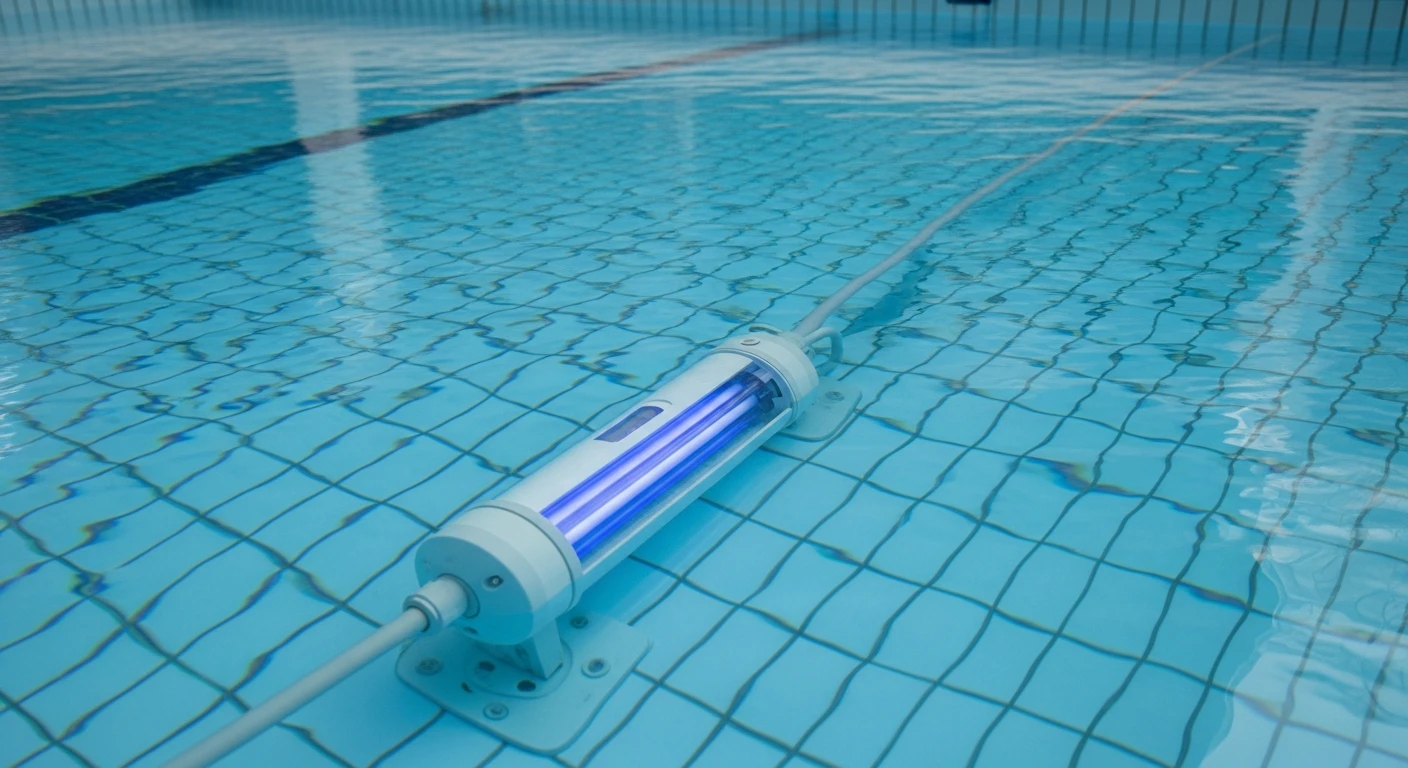
Getting the technical details right is non-negotiable. It’s about creating a powerful, yet balanced, AOP. Most off-the-shelf solutions fail here. They pair a weak UV lamp with a token ozone generator, a combination that provides a false sense of security. The core of my system relies on two principles. The UV sterilizer must be sized for a specific flow rate to achieve a sanitization dose of at least 30 mJ/cm², which is the industry standard for inactivating resilient pathogens like Cryptosporidium. The UV-C light, specifically at the 254-nanometer wavelength, is the component that scrambles the DNA of microorganisms. For the ozone side, I exclusively use Corona Discharge (CD) generators, which are far more effective and reliable in our high-humidity environment than their UV-based counterparts. The ozone (O3) acts as a powerful flocculant, causing tiny suspended particles to clump together, making them large enough for the filter to capture. This is what creates that "crystal clear" look that chemicals alone can't achieve. The real magic, however, happens when ozonated water passes through the UV chamber, creating hydroxyl radicals—the most powerful oxidizers available in water treatment.Step-by-Step Implementation for Flawless Integration
Proper installation is paramount for system efficiency and safety. The sequence of equipment in the plumbing line is absolutely critical. Installing components in the wrong order can render a thousand-dollar system useless. Here is my mandated installation sequence for all projects in Polk County.- Water Source Analysis: Before anything is purchased, a comprehensive water test is performed to establish baseline levels for TDS, phosphates, and hardness.
- Flow Rate Calculation: I calculate the system's exact GPM (gallons per minute) using a flow meter. This determines the correct size for both the UV sterilizer and the ozone injector.
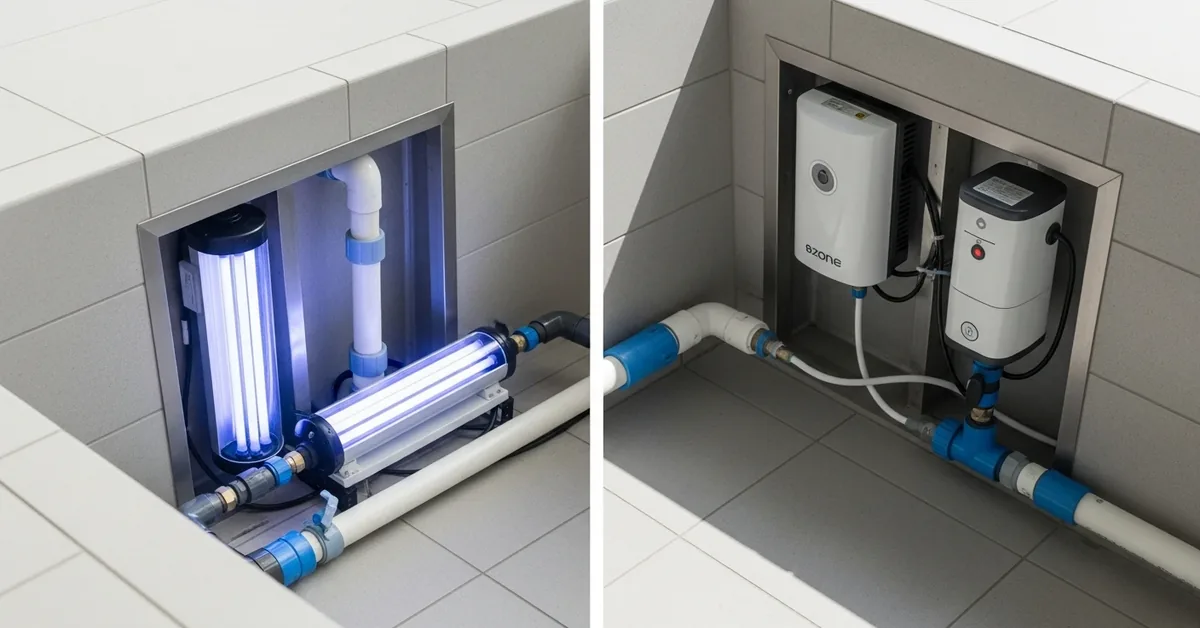
- Post-Filter Installation: Both units must be installed after the main filter and heater. This ensures they receive the cleanest possible water, which is critical for protecting the UV quartz sleeve and preventing clogs in the ozone injector.
- Ozone Injection Point: The ozone is injected into the water line using a Mazzei venturi injector, which uses differential pressure to create a vacuum and efficiently mix the gas into the water. This is far superior to simple bubble diffusers.
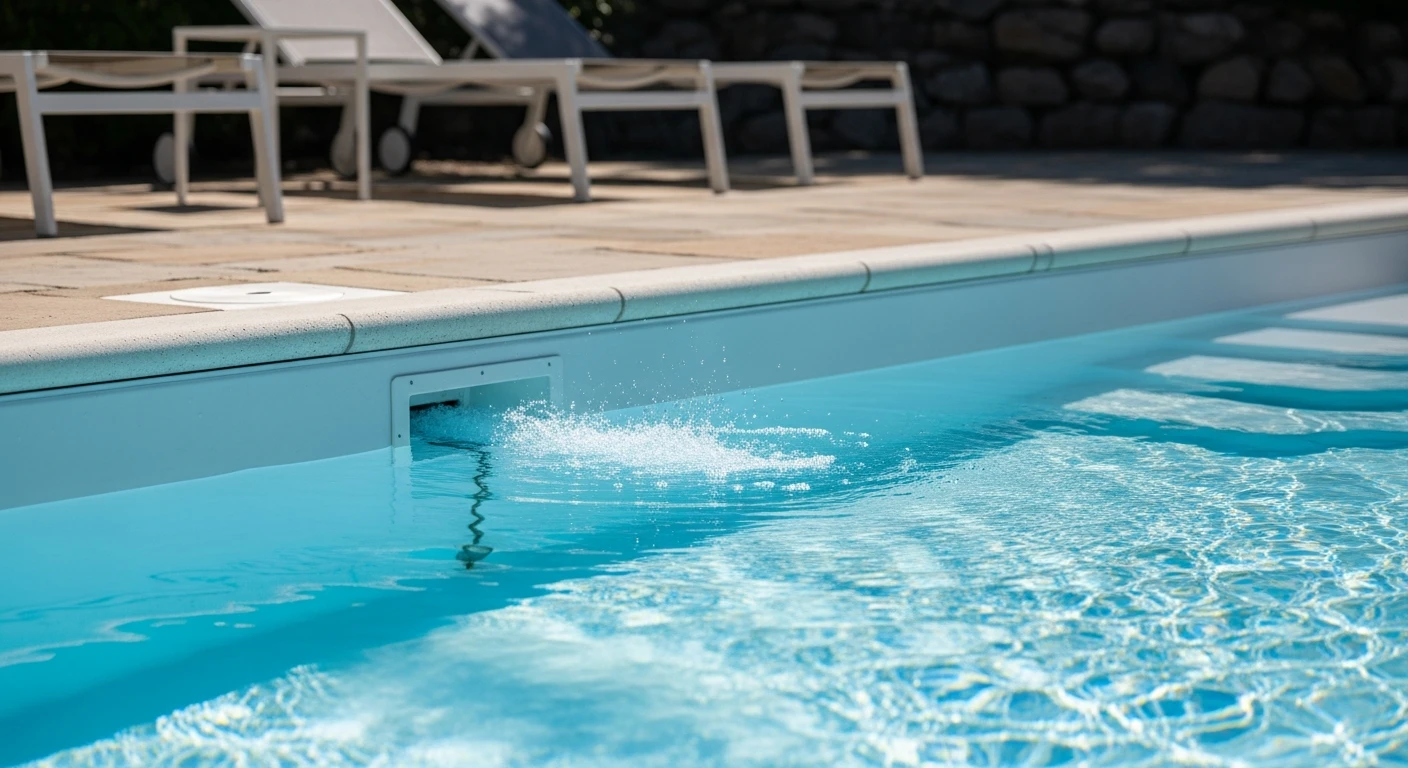
- UV Sterilizer Placement: The UV unit is the final piece of equipment the water passes through before returning to the pool. This placement ensures it zaps any remaining pathogens and also helps break down any residual ozone.
- Off-Gassing Verification: A crucial safety and performance check is to verify proper ozone dissolution and off-gassing. No noticeable ozone smell should be present at the pool return jets. If it is, the system is oversized or improperly calibrated.
Precision Tuning for Peak Performance and Longevity
Once installed, the system requires precise calibration. This isn't a "set it and forget it" appliance, at least not initially. The goal is to find the sweet spot where the ozone generator runs just enough to maintain an ORP level consistently above 650mV, a level at which pathogens are killed almost instantly. This allows the residual chlorine level to be safely dropped to as low as 0.5 ppm—similar to drinking water standards. My quality benchmark is simple: water clarity so high you can easily identify the date on a coin in the deep end, combined with a complete lack of "pool smell." Regular maintenance involves an annual UV lamp replacement and a semi-annual cleaning of the UV unit's quartz sleeve. In Polk County, due to our hard water, I've found this cleaning is essential to prevent mineral scaling that can block the UV-C light and reduce sanitization efficiency by up to 40% in just a few months. Now that you understand the process, how would you adjust the ozone dissolution rate to account for the heavy afternoon rains common in Polk County without shocking the system?Written by

Tags
uv pools
swimming pool uv system
uv light pool sanitizer
ultraviolet pool system
UV and Ozonation Technology in Polk FL FAQ
Can I completely stop using chlorine if I install a UV or ozone system?
No, you cannot eliminate chlorine entirely, but you can significantly reduce its use by 50-80%. UV and ozone systems are powerful sanitizers that destroy contaminants as water passes through them, but they do not leave a lasting residual sanitizer in the main body of the pool. A low level of chlorine, typically 0.5-1.0 parts per million, is still required to act as a residual sanitizer, ensuring that any new bacteria or algae introduced by swimmers or debris are neutralized before they can multiply. Relying solely on UV or ozone would leave the pool water unprotected once it returns from the equipment pad.
My pool installer said ozone will damage my cover and equipment. Is that true?
This is a valid concern, but modern systems are designed to prevent it. High concentrations of ozone gas can indeed degrade certain materials, but properly installed systems use a degassing unit or a mixing chamber that ensures excess ozone is neutralized before the water returns to the pool. This process prevents harmful off-gassing that could damage a vinyl liner or a solar cover. When choosing a system, verify it includes an effective method for ozone destruction or containment, which is a critical feature often overlooked in cheaper, less-engineered units.
What's the real difference between a UV system and an ozonator? Do I need both?
UV systems use ultraviolet light to inactivate microorganisms, while ozonators inject ozone gas to oxidize and destroy them. The key difference is that ozone also acts as a powerful oxidizer, breaking down non-living organic waste like lotions and oils, which improves water clarity. Combining them, often in a single unit, provides a multi-layered sanitation barrier. This dual approach is highly effective at destroying chloramines—the compounds responsible for the 'chlorine smell' and irritation—which neither system can eliminate as effectively on its own. While not strictly necessary, having both offers the most robust, low-chemical water treatment.
How often do I need to replace the bulb in my UV system or the chip in my ozonator?
UV lamps typically require replacement every 9,000 to 14,000 operating hours, which usually translates to every 12 to 24 months depending on usage. Ozone generators using corona discharge technology have components, like a chip or cartridge, that last from 2 to 5 years. It is critical to replace these on schedule, even if they still appear to be working. A UV bulb's germicidal effectiveness drops significantly after its rated lifespan, even though it still emits visible light, leaving your pool under-sanitized and vulnerable to outbreaks like black algae.
Will adding a UV or ozone system affect my pool's pH level?
Ozone systems can have a minor effect, tending to slightly raise the pool's pH over time. This is because the process of injecting and mixing ozone gas can cause some carbon dioxide to off-gas from the water, which reduces acidity. In contrast, a UV sterilizer has virtually no impact on water balance, as it is a physical process that does not add or remove any substances. In either case, the effect is gradual and easily managed with routine chemical testing and adjustments, ensuring you maintain the crucial pH range of 7.2 to 7.6 for bather comfort and equipment protection.
I have a salt chlorine generator. Is it redundant or even harmful to add UV or ozone?
It is not redundant; in fact, it creates a highly effective and synergistic system. A salt chlorine generator (SCG) produces chlorine, which provides the necessary residual sanitizer, while the UV or ozone unit handles the primary sanitation load and destroys chloramines. This combination allows you to run your salt cell at a much lower output setting, significantly extending its lifespan, which can be a costly replacement. The systems do not conflict; they complement each other by targeting different sanitation tasks, resulting in exceptionally clean water with a minimal chemical feel and reduced wear on your equipment.