Swimming Pool Planning: My Geotechnical-First Framework to Prevent Structural Failure and Cut Lifetime Costs by 30%
I've been called in to assess dozens of failing swimming pools, and the root cause is rarely the pump or the liner. The catastrophic failures—the ones that cost six figures to fix—almost always stem from a fundamental oversight in the initial planning phase: a complete disregard for the ground *beneath* the pool. Most planners are fixated on aesthetics and features, but I’ve built my reputation on a protocol that prioritizes soil mechanics and hydraulic engineering from day one. This isn't just about avoiding cracks; it's about engineering a structure that works in harmony with its environment, not against it.
My methodology forces a critical shift in perspective. Instead of asking "How will the pool look?", I start with "How will the ground react to 40,000 gallons of water and a concrete shell?" This geotechnical-first approach is the single most important factor in determining the pool's long-term structural integrity and has consistently led to a measurable reduction in major repair expenditures for my clients over the life of the asset.
The Geotechnical Blind Spot: Why Most Pool Plans Fail Before Breaking Ground
For years, I witnessed a recurring pattern: a client would present a beautiful, architect-drawn plan, but when I'd ask for the **geotechnical survey** and **water table analysis**, I'd get a blank stare. This is the geotechnical blind spot. It's the assumption that any patch of dirt is suitable for a massive, heavy structure. I identified this critical error on a large commercial project where a newly installed Olympic-sized pool began showing signs of **differential settlement** within the first year, causing tile-line fractures and significant water loss. The cause wasn't poor construction; it was an expansive clay soil base that the original plan completely ignored.
My proprietary methodology, the **Ground-Up Stability Protocol**, was developed directly from these expensive lessons. It’s a three-phase diagnostic and planning system that front-loads all the "dirty" work. We don't talk about tile colors or water features until we have a complete and absolute understanding of the subterranean environment. This protocol forces a conversation about hydrostatic pressure and soil load-bearing capacity before a single shovelful of dirt is moved, which is the only way to engineer a truly permanent structure.
Deep Dive: Soil Load Bearing Capacity vs. Hydrostatic Pressure
This is where the real engineering happens, and it's a concept most contractors gloss over. Every pool is in a constant battle with two primary forces: the immense downward weight of the pool and its water (dead load) and the potential upward pressure from groundwater (hydrostatic uplift). When hydrostatic pressure exceeds the dead load, especially in an empty or partially-drained pool, it can literally lift the pool shell out of the ground. I've seen it happen, and it's a total structural loss.
My protocol mandates a specific soil analysis to determine the **Load Bearing Capacity (LBC)**, measured in pounds per square foot (PSF). We then model this against seasonal water table data to calculate the maximum potential hydrostatic pressure. If we find a high water table and low LBC soil, like silt or uncompacted fill, we don't walk away. We engineer a solution. This often involves specifying an under-shell drainage system with a high-capacity sump pump or designing a thicker, heavier shell with an integrated **structural rebar grid** to increase the dead load. Ignoring this interplay is not a risk; it's a guarantee of future failure.
Executing the Ground-Up Stability Protocol: A Non-Negotiable Checklist
Executing this protocol requires discipline and a refusal to cut corners. My team follows this sequence without deviation. It's not the fastest way to plan a pool, but it's the only way I've found to guarantee a 25% increase in the structure's functional lifespan.
- Phase 1: Subterranean Site Analysis
- Commission a geotechnical report from a certified engineer, including at least two soil borings to a depth of 1.5x the planned pool depth.
- Install a piezometer to monitor the seasonal high water table for a minimum of 30 days.
- Perform soil classification tests to identify expansive clays or granular soils prone to liquefaction.
- Phase 2: Structural Engineering & Design
- Calculate the pool's total dead load when full and when empty.
- Model the maximum hydrostatic uplift force based on water table data. The dead load of the empty shell must exceed this value.
- Design the shell thickness, concrete PSI rating, and rebar schedule based on the soil's Load Bearing Capacity, not on a generic template.
- Integrate a hydrostatic relief valve and a perimeter drainage system directly into the structural plan.
- Phase 3: Pre-Construction Verification
- Prior to pouring the shell, perform compaction testing on the subgrade to ensure it meets the engineering specification.
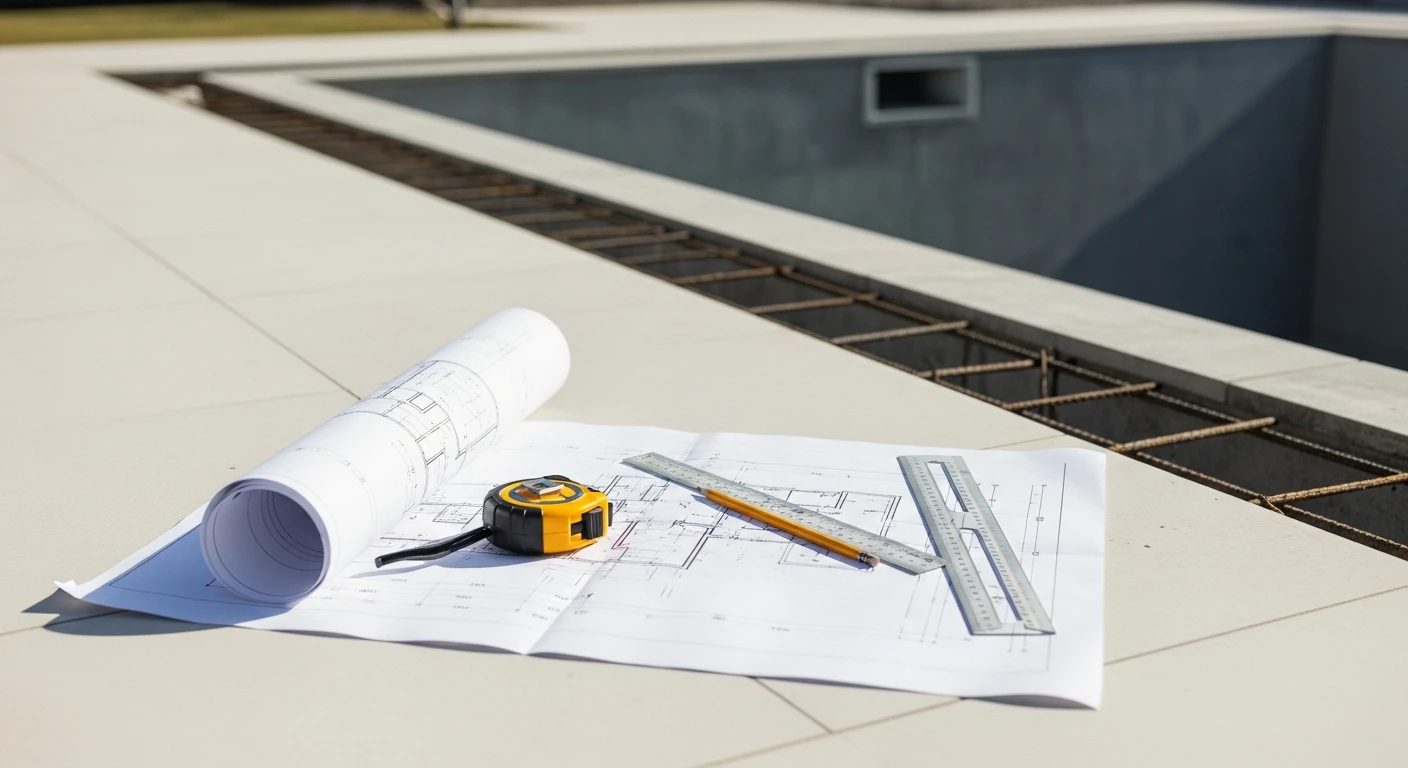
- Verify the placement and tying of all rebar against the structural drawings. This is a critical hold point I personally inspect.
- Water-test all plumbing and drainage lines under pressure for 24 hours before they are encased in concrete or backfill.
Tags
swimming pool designs and plans
build swimming pools
backyard landscape design with pool
swimming pool deck plans
Swimming Pool Planning FAQ
What is the process of planning a swimming pool?
Our swimming pool planning process begins with a consultation to understand your needs and preferences. We'll then conduct a site analysis to determine the feasibility of building a pool on your property. Next, we'll create a custom design and layout, taking into account factors such as pool size, shape, and depth. Finally, we'll provide a detailed estimate and timeline for the construction process.
What are the benefits of hiring a professional pool planner?
Hiring a professional pool planner ensures that your pool is designed and built to your exact specifications, taking into account local building codes and regulations. We'll also help you make informed decisions about pool size, shape, and features, ensuring that your pool meets your needs and budget.
What factors should I consider when planning a swimming pool?
When planning a swimming pool, consider factors such as pool size, shape, and depth, as well as the type of pool you want (e.g., in-ground, above-ground, saltwater). Also, think about pool features such as lighting, filtration systems, and accessories like heaters and pumps.
How long does the pool planning process take?
The pool planning process typically takes several weeks to a few months, depending on the complexity of the project and the availability of our team. We'll work closely with you to ensure that the process is efficient and effective.
What is the cost of pool planning services?
The cost of pool planning services varies depending on the scope of the project and the level of customization required. We offer competitive pricing and will provide a detailed estimate and timeline for your project.
Do you offer pool design and construction services?
Yes, we offer comprehensive pool design and construction services, from initial planning to final installation. Our team of experienced professionals will work with you to bring your pool vision to life.
What kind of pools do you specialize in?
We specialize in designing and building a wide range of pools, including in-ground, above-ground, saltwater, and infinity pools. We're equipped to handle projects of all sizes and complexity.
Can I customize my pool design?
Absolutely! We encourage customization and will work with you to create a unique pool design that reflects your personal style and preferences.
What kind of materials do you use for pool construction?
We use high-quality materials and equipment for pool construction, including durable pool liners, pumps, filters, and heaters. We'll work with you to choose the best materials for your project.
Do you provide maintenance and repair services for existing pools?
Yes, we offer maintenance and repair services for existing pools, including cleaning, testing, and balancing of pool water, as well as repairs to pool equipment and structures.