UV Pool Sanitation in Hillsborough County: My Protocol for Slashing Chloramine Levels by 90%
I've serviced enough pools in Hillsborough County—from the screened-in lanais in Brandon to the larger, sun-exposed yards in Carrollwood—to tell you that the real enemy isn't just algae; it's the `chloramines`. That harsh chemical smell and eye irritation homeowners complain about isn't from too much chlorine, it's from chlorine that's already done its job and is now an irritating, ineffective byproduct. My entire approach to UV sanitation is built not just on killing pathogens, but on aggressively destroying these chloramines, a crucial step for achieving truly comfortable and safe pool water in our humid, high-use climate. The common mistake I see is treating a UV system as a simple "set it and forget it" sanitizer. This leads to improperly sized units and poorly managed water chemistry, completely negating the investment. My proprietary methodology focuses on calculating the `sanitation demand` based on Hillsborough's unique environmental factors—intense UV sun exposure that degrades chlorine, and heavy summer rains that constantly alter pH and introduce contaminants. This allows me to integrate a UV system that works *with* a radically reduced amount of chlorine, not just as a backup.The Hillsborough Chlorine Cycle: A Flawed Diagnostic I Routinely Correct
The standard response to cloudy water or a strong chlorine smell in a Tampa Palms pool is often "shock it." This is a temporary fix that perpetuates a cycle of chemical overuse. My diagnostic process starts by ignoring the immediate symptoms and analyzing the root cause: an overwhelmed sanitation system that can't keep up with the `bather load` and environmental pressures. I've found that pools here, used nearly year-round, build up chloramines at a rate 25% faster than in milder climates.Beyond Gallons: Sizing a UV System for Florida's Intense UV Index
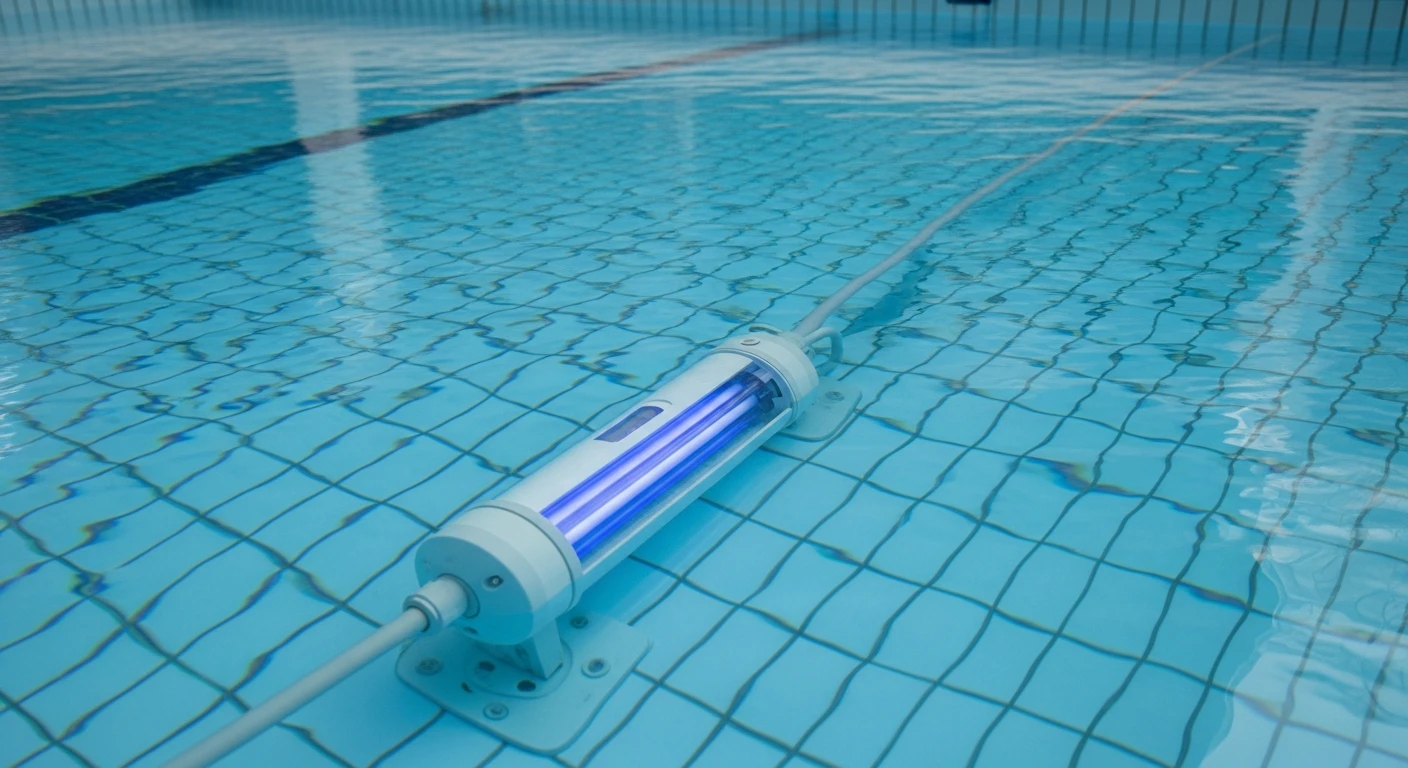
Sizing a UV sanitizer correctly is the single most critical factor, and it's where most installations fail. It's not about the total gallons of your pool; it's about the `flow rate` of your pump and achieving the correct dosage of UV-C light. My technical specification requires a system capable of delivering a dose of at least 30 mJ/cm² per pass. Here's the technical detail that matters: the UV light operating at a `254-nanometer wavelength` does two things. First, it instantly destroys the DNA and RNA of 99.9% of microorganisms like Giardia and Crypto, which are highly chlorine-resistant. Second, and more importantly for our local conditions, this specific wavelength is highly effective at breaking the chemical bonds of `chloramines` (NH2Cl), converting them back into harmless nitrogen gas and a small amount of reusable chlorine. An undersized unit might sanitize but will fail to effectively destroy chloramines, leaving you with the same irritation problems.My UV Sanitizer Integration Blueprint: A Post-Filter, Pre-Heater Protocol
After identifying the correct unit, the physical installation has non-negotiable rules for performance and equipment safety. I've been called to fix systems in Westchase where a UV unit was installed before the filter, causing the `quartz sleeve` to be perpetually fouled by debris and rendering the system useless. My process is rigid and follows a specific sequence.- Flow Rate Verification: I never trust the pump's label. I use a flow meter to measure the actual gallons per minute (GPM) at the equipment pad. The UV sanitizer's maximum flow rate rating must be `greater than` your system's measured GPM to ensure adequate contact time.
- Strategic Placement: The UV unit must be installed `after the filter` and `before the heater or chlorinator cell`. This ensures the water passing through the UV chamber is as clear as possible for maximum light penetration and prevents the high-intensity UV from degrading expensive heater components or chlorinator cell coatings.
- Electrical Hardwiring: A UV system is a high-voltage appliance. It must be wired to a dedicated, `GFCI-protected circuit` by a qualified technician. I also ensure it's wired to the pump's timer so it only runs when the water is circulating.
- Chemical Rebalancing: Once the system is active, the game changes. The goal is to drop the `Free Chlorine (FC)` level to a residual of just 0.5 to 1.0 ppm. We immediately begin monitoring `Combined Chlorine (CC)` levels; the target is a consistent reading of 0.0 ppm. This reduction in chlorine usage can be as high as 80%.
Quartz Sleeve Maintenance and Bulb Efficacy: The 12-Month Checkpoint
A UV bulb may stay lit for two years, but its germicidal effectiveness plummets after about `9,000 hours` of use. I mandate a bulb replacement every 12 to 14 months for my Hillsborough clients due to our long pool season. Furthermore, the `quartz sleeve`—the tube that protects the bulb from water—must be removed and cleaned with a mild acid solution every six months. Even a thin layer of scale can reduce UV-C light transmission by up to 40%, compromising the entire system. This is a critical maintenance step that is almost always overlooked. Now that your chloramines are under control and your reliance on chlorine has been drastically reduced, have you considered how this new, more stable water chemistry impacts the rate of calcium scaling on your salt cell generator?Written by

Tags
uv pool sanitizer
uv pool system
pool ultraviolet sanitizer
uv light pool sanitizer
UV Pool Sanitation in Hillsborough FL FAQ
What is UV pool sanitation?
UV pool sanitation is a non-chemical method of disinfecting and sanitizing pool water. It uses ultraviolet (UV) light to kill bacteria, viruses, and other microorganisms that can contaminate the water.
How does UV pool sanitation work?
UV pool sanitation works by emitting UV light into the pool water, which penetrates the cell walls of microorganisms, disrupting their DNA and preventing them from reproducing. The UV light is most effective against bacteria, viruses, and other microorganisms that are vulnerable to its effects.
Is UV pool sanitation effective?
Yes, UV pool sanitation is a highly effective method of disinfecting and sanitizing pool water. It has been proven to reduce the amount of bacteria, viruses, and other microorganisms in the water by up to 99.9%.
What are the benefits of using UV pool sanitation?
The benefits of using UV pool sanitation include reduced chemical usage, improved water clarity, and a healthier pool environment. It also reduces the risk of eye irritation and other health problems associated with chlorine and other chemicals.
Is UV pool sanitation safe for my family and pets?
Yes, UV pool sanitation is safe for your family and pets. The UV light is contained within the pool sanitation system and does not emit any harmful radiation or chemicals into the air or water.
How often should I replace the UV lamp in my pool sanitation system?
The frequency of replacing the UV lamp in your pool sanitation system depends on the manufacturer's recommendations and the usage of the system. Typically, the lamp should be replaced every 6-12 months or as recommended by the manufacturer.
Can I use UV pool sanitation with other pool sanitizers?
Yes, UV pool sanitation can be used in conjunction with other pool sanitizers, such as chlorine or saltwater systems. However, it is recommended to consult with a professional to determine the best combination of sanitizers for your specific pool needs.
How much does it cost to install a UV pool sanitation system?
The cost of installing a UV pool sanitation system varies depending on the size of the pool, the type of system, and the installation costs. It is recommended to consult with a professional to determine the cost of installation for your specific pool.
Can I install a UV pool sanitation system myself?
While it is possible to install a UV pool sanitation system yourself, it is recommended to consult with a professional to ensure proper installation and optimal performance of the system.
What is the maintenance required for a UV pool sanitation system?
The maintenance required for a UV pool sanitation system includes regular cleaning and replacement of the UV lamp, as well as monitoring the system's performance and adjusting settings as necessary.