UV Pool Sanitation: A Framework for Slashing Chlorine Demand by 70% in Pinellas County
As a pool systems specialist here in Pinellas, I’ve seen firsthand how our unique climate wages war on pool water. The intense sun, high humidity, and frequent summer downpours create a perfect storm for algae and bacteria. Many pool owners in areas from St. Pete Beach to Dunedin are trapped in a cycle of shocking their pool and fighting chloramine buildup. The most common mistake I see is treating UV sanitation as a simple plug-and-play accessory; it's a precision instrument that, when miscalibrated, is little more than an expensive lightbulb. My approach is built on a decade of fieldwork, correcting flawed installations and optimizing systems that were underperforming. A properly integrated UV system isn't just about clearer water; it's about fundamentally altering your pool's chemistry to achieve a level of safety and comfort that chemicals alone cannot. The goal is a drastic reduction in Free Available Chlorine (FAC) required, often cutting chemical costs and exposure by more than half while destroying contaminants that chlorine can't touch.My Flow-Matched Dosing Protocol: Beyond Manufacturer Specs
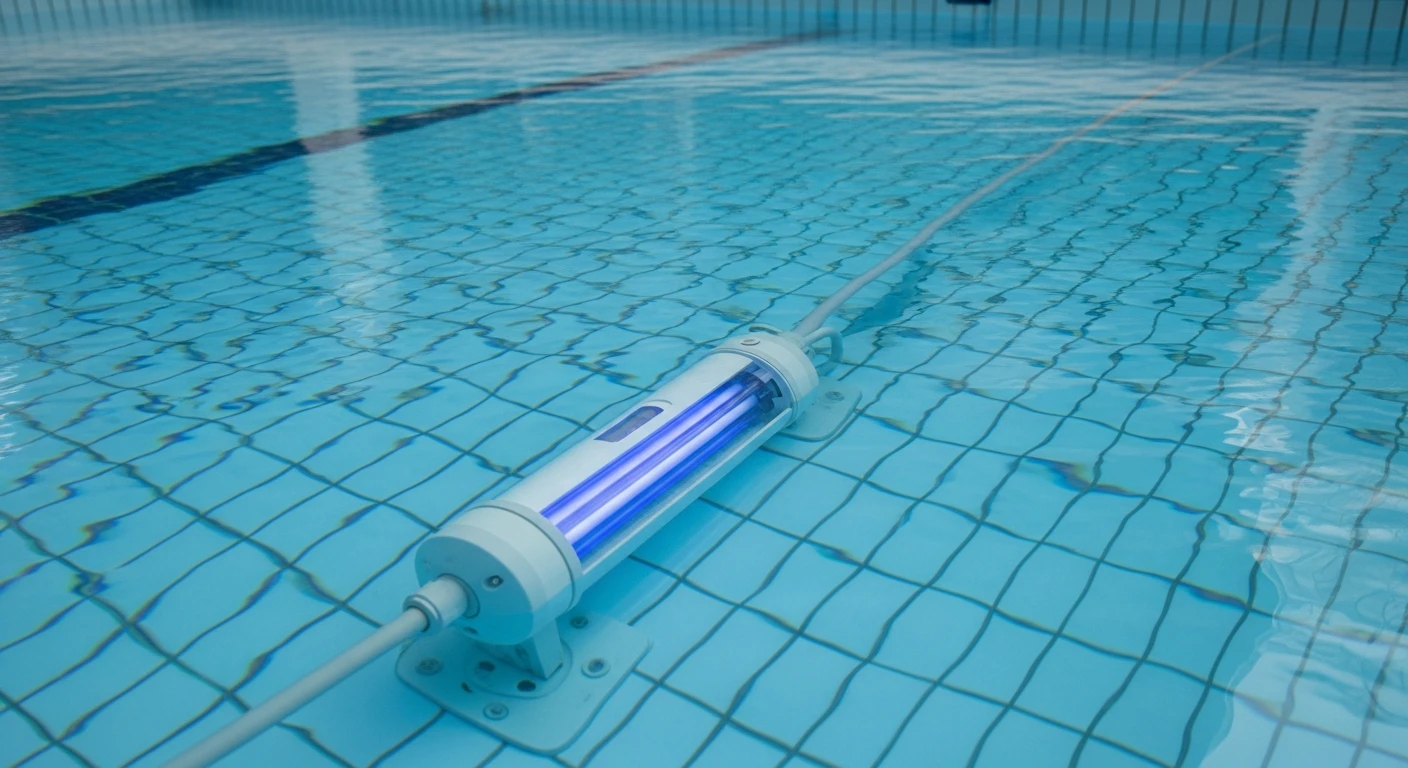
The single biggest point of failure I encounter is a fundamental mismatch between the pump's flow rate (GPM) and the UV sanitizer's rated capacity. A homeowner in a Snell Isle property once showed me a top-of-the-line UV system that was doing virtually nothing. The problem? His high-performance variable-speed pump, even on a medium setting, was pushing water past the UV lamp too quickly for effective germicidal exposure. The water wasn't in the chamber long enough to receive a lethal dose of UV-C light. My proprietary Flow-Matched Dosing Protocol starts not with the pool's gallonage, but with an audit of the circulation system's actual, measured flow rate. Manufacturers provide a maximum GPM, but they don't account for the head pressure of your specific plumbing, filter condition, or added features common in Pinellas homes, like waterfalls or in-floor cleaning systems. Ignoring this is the primary reason UV systems fail to deliver on their promise.Calculating True Germicidal Exposure and Sizing for the Pinellas Climate
True sanitation isn't about the light being on; it's about delivering a sufficient UV-C dosage (mJ/cm²) to eradicate pathogens like Cryptosporidium and Giardia, which are notoriously chlorine-resistant. This dosage is a direct function of light intensity and exposure time. Here in Pinellas, our hard water and high Total Dissolved Solids (TDS) create another hidden challenge: mineral scaling on the quartz sleeve that houses the UV lamp. Even a thin film of scale can cut UV-C output by over 50%, rendering the system ineffective. My analysis, therefore, involves three critical steps:- First, I use a flow meter to determine the system's operational GPM at the intended pump speed.
- Second, I select a UV unit whose operational sweet spot is at least 25% higher than that measured flow rate. This builds in a buffer for factors like a slightly dirty filter that can alter flow dynamics.
- Third, I factor in the local water hardness to establish a mandatory cleaning schedule for the quartz sleeve, which is often neglected in standard service plans.
Strategic Installation for Maximum Efficacy and Equipment Longevity
Placing the UV sanitizer in the plumbing line is not a matter of convenience; it is a critical decision that impacts both performance and the lifespan of other equipment. I've had to replace melted PVC components and damaged heater internals because a previous installer placed the UV unit in the wrong sequence. The correct implementation follows a non-negotiable order to protect the entire system. Here is my checklist for a flawless installation:- Filtration First: The UV unit must be installed after the filter. Sending unfiltered water through it will quickly foul the quartz sleeve and reduce its effectiveness.
- Heater Protection: If a heater is present, the UV sanitizer must be installed after the heater. The intense UV-C light can degrade the heater's internal plastic and rubber components over time.
- Chemical Injection Point Last: The UV unit must be installed before any chemical injection point (like a chlorinator or acid feeder). Placing it after would expose the sanitizer's components to highly concentrated chemicals. The rule is simple: the UV sanitizer should be the last piece of equipment the water passes through before returning to the pool.
- Vertical Installation Preferred: Whenever possible, I install the unit vertically with the inlet at the bottom. This helps purge any air from the chamber, ensuring the lamp is fully surrounded by water for proper cooling and performance.
Post-Installation Calibration: The Final 10%
Once the hardware is correctly installed, the job is only 90% done. The final, crucial step is recalibrating the pool's entire chemical profile. With a UV system actively destroying microorganisms and chloramines, the pool's chemistry behaves differently. The biggest adjustment is the target FAC level. For a typical pool in Pinellas County, I can often safely reduce the target FAC from 3.0 ppm to as low as 1.0 ppm, or even slightly less, depending on the bather load and presence of a screened-in lanai which reduces UV degradation of chlorine. I also adjust the cyanuric acid (CYA) levels. With less reliance on chlorine, a high CYA level becomes unnecessary and can even hinder the effectiveness of the lower chlorine residual. We transition from a "chlorine-heavy" sanitation model to a "UV-primary, chlorine-residual" model. This fine-tuning is what unlocks the system's full potential for comfort, clarity, and cost savings. Your UV system is running, but are you measuring its actual germicidal effectiveness, or just assuming the light is on?Written by

Tags
uv pool sanitizer
uv pool system
pool ultraviolet sanitizer
uv light pool sanitizer
UV Pool Sanitation in Pinellas FL FAQ
What is UV pool sanitation?
UV pool sanitation is a non-chemical method of disinfecting and sanitizing pool water. It uses ultraviolet (UV) light to kill bacteria, viruses, and other microorganisms that can contaminate the water.
How does UV pool sanitation work?
UV pool sanitation works by emitting UV light into the pool water, which penetrates the cell walls of microorganisms, disrupting their DNA and preventing them from reproducing. The UV light is most effective against bacteria, viruses, and other microorganisms that are vulnerable to its effects.
Is UV pool sanitation effective?
Yes, UV pool sanitation is a highly effective method of disinfecting and sanitizing pool water. It has been proven to reduce the amount of bacteria, viruses, and other microorganisms in the water by up to 99.9%.
What are the benefits of using UV pool sanitation?
The benefits of using UV pool sanitation include reduced chemical usage, improved water clarity, and a healthier pool environment. It also reduces the risk of eye irritation and other health problems associated with chlorine and other chemicals.
Is UV pool sanitation safe for my family and pets?
Yes, UV pool sanitation is safe for your family and pets. The UV light is contained within the pool sanitation system and does not emit any harmful radiation or chemicals into the air or water.
How often should I replace the UV lamp in my pool sanitation system?
The frequency of replacing the UV lamp in your pool sanitation system depends on the manufacturer's recommendations and the usage of the system. Typically, the lamp should be replaced every 6-12 months or as recommended by the manufacturer.
Can I use UV pool sanitation with other pool sanitizers?
Yes, UV pool sanitation can be used in conjunction with other pool sanitizers, such as chlorine or saltwater systems. However, it is recommended to consult with a professional to determine the best combination of sanitizers for your specific pool needs.
How much does it cost to install a UV pool sanitation system?
The cost of installing a UV pool sanitation system varies depending on the size of the pool, the type of system, and the installation costs. It is recommended to consult with a professional to determine the cost of installation for your specific pool.
Can I install a UV pool sanitation system myself?
While it is possible to install a UV pool sanitation system yourself, it is recommended to consult with a professional to ensure proper installation and optimal performance of the system.
What is the maintenance required for a UV pool sanitation system?
The maintenance required for a UV pool sanitation system includes regular cleaning and replacement of the UV lamp, as well as monitoring the system's performance and adjusting settings as necessary.