UV & Ozonation in Pinellas County: A Protocol for Eliminating Chlorine Byproducts and Mold Spores
As an engineer specializing in advanced purification systems, I’ve seen countless installations fail in Pinellas County not due to faulty equipment, but to a fundamental misunderstanding of our unique coastal environment. The combination of high humidity, intense solar radiation, and the specific chemical composition of our municipal water creates a perfect storm that generic, off-the-shelf solutions simply cannot handle. My focus is on configuring UV-C and ozone systems to target the specific contaminants we face daily, from the trihalomethanes (THMs) in St. Pete's water supply to the aggressive mold strains that thrive inside HVAC systems in waterfront homes from Clearwater to Tierra Verde. This isn’t about just installing a UV lamp or an ozonator; it's about a calibrated approach that considers the flow rate of your water, the CFM of your air handler, and the high organic load typical of our area. I once took over a project in a Dunedin home where a standard UV system was installed in the air handler. The homeowner still had allergy issues because the installer failed to account for the high latent heat load, which allowed condensation to form just past the lamp, creating a new breeding ground for microbes. It’s this level of environmental nuance that dictates success or failure.My Diagnostic Framework for Pinellas County Properties
My methodology begins not with a product catalog, but with a comprehensive environmental audit of the property. I learned the hard way that a system that works perfectly in a new build in the Carillon area will be ineffective in an older bungalow in Kenwood with original ductwork. The initial assessment is critical and non-negotiable. It involves quantifying the specific contaminant load, which is drastically different across the county. The primary mistake I see is treating air and water purification as separate issues. In Pinellas, they are deeply interconnected. The high chlorine content in our water off-gasses in showers, contributing to indoor air contaminants. Mold spores from a damp crawl space get pulled into the HVAC return. My proprietary diagnostic process, the "Integrated Contaminant Pathway Analysis," maps these interactions to create a single, unified purification strategy. It’s about tracing the problem to its source, whether it’s a poorly sealed air handler or elevated Total Organic Carbon (TOC) levels at the water main.Calibrating UV-C Dosage vs. Ozone Injection Rates
This is where the real engineering happens. It’s not enough to have UV and ozone; you need the right intensity and concentration for the job. For UV-C air purification, the key metric is microwatt-seconds per square centimeter (μW-s/cm²). In our humid climate, I aim for a dosage of at least 1,800 μW-s/cm² on the coil to prevent biofilm and mold formation, a figure 25% higher than standard recommendations for drier climates. This ensures a complete kill of the resilient mold species common to Florida. For water, the game is different. I focus on creating an Advanced Oxidation Process (AOP) by combining UV and ozone. The goal is to generate hydroxyl radicals, which are far more powerful oxidizers than ozone or chlorine alone. The critical adjustment is the ozone injection rate, measured in grams per hour (g/h), relative to the water's flow rate and TOC. For a typical single-family home in Pinellas, I’ve found the sweet spot to be a 0.5 to 0.8 g/h injection rate at the point-of-entry to effectively break down chloramines and other disinfection byproducts without creating excessive bromate.The Staged Implementation Protocol: From Water Main to Air Handler
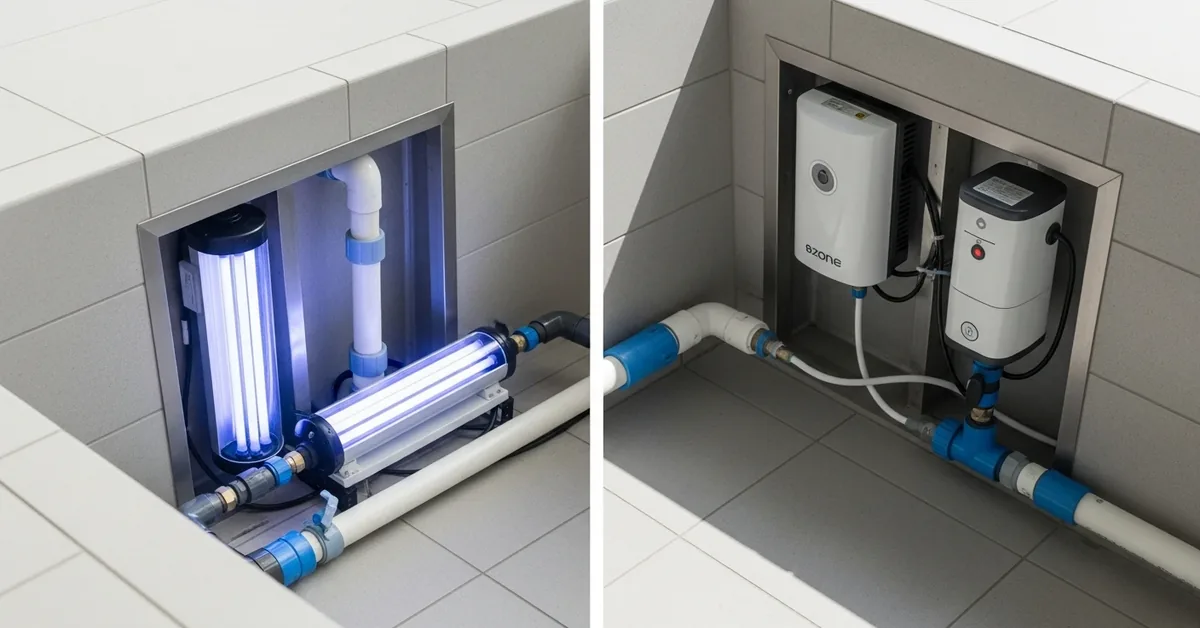
Executing the installation requires precision. My process is staged to ensure each component works in synergy, creating layers of protection.- Stage 1: Point-of-Entry (POE) Water System. This is the foundation. I install a self-cleaning particle filter first, then the ozone injection point, followed by a contact/degassing tank, and finally a UV-C chamber. This order is critical. Placing the UV chamber after the ozonation process is what creates the powerful AOP effect to neutralize contaminants that ozone alone cannot.
- Stage 2: HVAC In-Duct Air System. The UV-C lamp placement is the most common error I fix. It must be installed downstream of the A-coil and irradiate it completely. This not only cleans the air passing by but, more importantly, prevents the coil from ever becoming a source of biological growth—a rampant issue in our perpetually damp air handlers.
- Stage 3: Point-of-Use (POU) Polishers. For clients in areas with older infrastructure or those with specific health sensitivities, I may add a small POU system, like an under-sink reverse osmosis unit. This acts as a final firewall, but it’s only effective if the whole-house system has already done the heavy lifting.
Post-Installation Audits and Performance Benchmarking
My job isn't finished when the power is turned on. Verification is key to guaranteeing ROI and system efficacy. Within 30 days of installation, I conduct a follow-up audit. For water, this means sending samples to a certified lab to test for Total Coliform and THM levels, ensuring they are at or near non-detectable levels. For air, I use a calibrated air particle counter to measure the reduction in airborne particulates, specifically in the 0.3 to 0.5-micron range where many allergens and mold spores reside. A successful project delivers a reduction of at least 85% in this range. These KPIs provide tangible proof that the system is performing not just as promised, but as required by the unique challenges of living in Pinellas County. Given the fluctuating Total Organic Carbon levels in our municipal supply, have you calculated the precise ozone-to-UV ratio needed to achieve microbial inactivation without creating harmful disinfection byproducts in your own system?Written by

Tags
uv pools
swimming pool uv system
uv light pool sanitizer
ultraviolet pool system
UV and Ozonation Technology in Pinellas FL FAQ
Can I completely stop using chlorine if I install a UV or ozone system?
No, you cannot eliminate chlorine entirely, but you can significantly reduce its use by 50-80%. UV and ozone systems are powerful sanitizers that destroy contaminants as water passes through them, but they do not leave a lasting residual sanitizer in the main body of the pool. A low level of chlorine, typically 0.5-1.0 parts per million, is still required to act as a residual sanitizer, ensuring that any new bacteria or algae introduced by swimmers or debris are neutralized before they can multiply. Relying solely on UV or ozone would leave the pool water unprotected once it returns from the equipment pad.
My pool installer said ozone will damage my cover and equipment. Is that true?
This is a valid concern, but modern systems are designed to prevent it. High concentrations of ozone gas can indeed degrade certain materials, but properly installed systems use a degassing unit or a mixing chamber that ensures excess ozone is neutralized before the water returns to the pool. This process prevents harmful off-gassing that could damage a vinyl liner or a solar cover. When choosing a system, verify it includes an effective method for ozone destruction or containment, which is a critical feature often overlooked in cheaper, less-engineered units.
What's the real difference between a UV system and an ozonator? Do I need both?
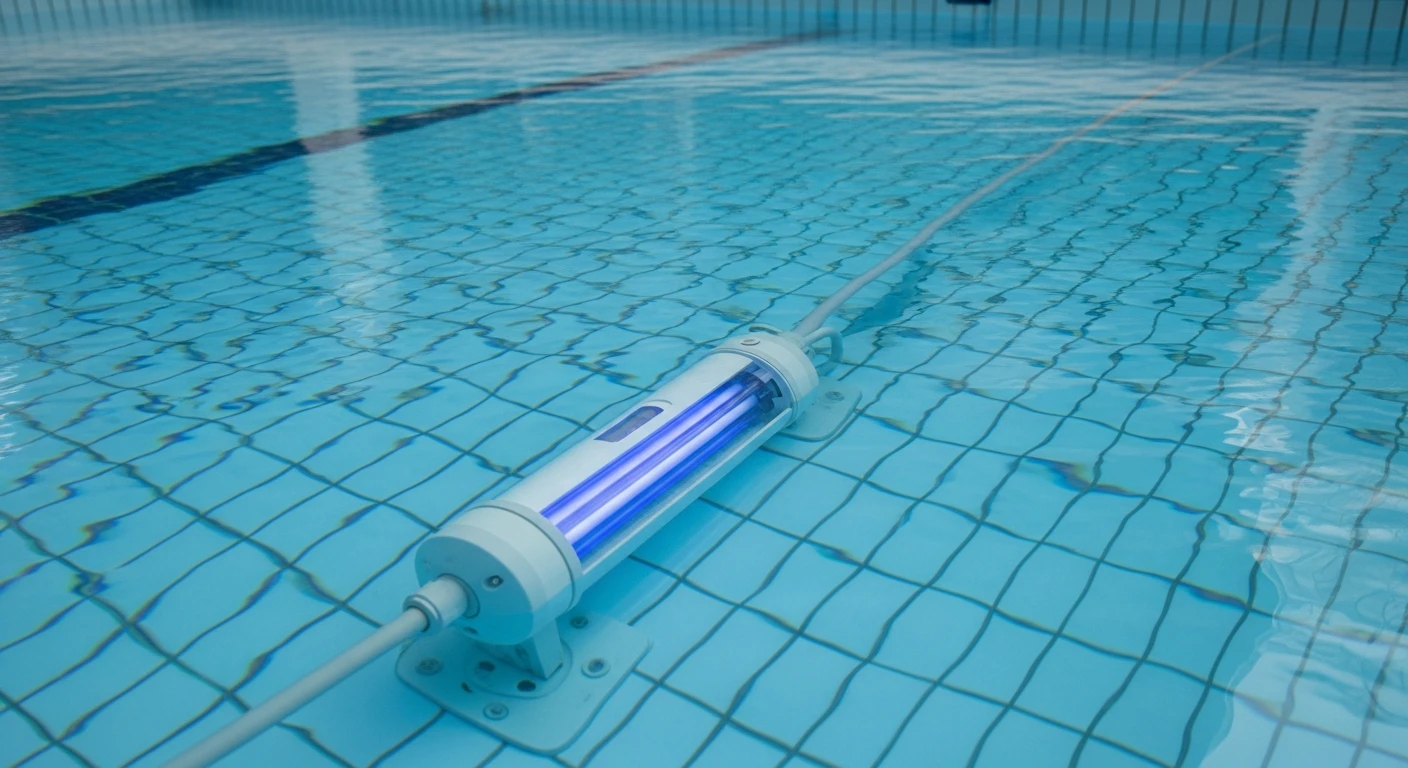
UV systems use ultraviolet light to inactivate microorganisms, while ozonators inject ozone gas to oxidize and destroy them. The key difference is that ozone also acts as a powerful oxidizer, breaking down non-living organic waste like lotions and oils, which improves water clarity. Combining them, often in a single unit, provides a multi-layered sanitation barrier. This dual approach is highly effective at destroying chloramines—the compounds responsible for the 'chlorine smell' and irritation—which neither system can eliminate as effectively on its own. While not strictly necessary, having both offers the most robust, low-chemical water treatment.
How often do I need to replace the bulb in my UV system or the chip in my ozonator?
UV lamps typically require replacement every 9,000 to 14,000 operating hours, which usually translates to every 12 to 24 months depending on usage. Ozone generators using corona discharge technology have components, like a chip or cartridge, that last from 2 to 5 years. It is critical to replace these on schedule, even if they still appear to be working. A UV bulb's germicidal effectiveness drops significantly after its rated lifespan, even though it still emits visible light, leaving your pool under-sanitized and vulnerable to outbreaks like black algae.
Will adding a UV or ozone system affect my pool's pH level?
Ozone systems can have a minor effect, tending to slightly raise the pool's pH over time. This is because the process of injecting and mixing ozone gas can cause some carbon dioxide to off-gas from the water, which reduces acidity. In contrast, a UV sterilizer has virtually no impact on water balance, as it is a physical process that does not add or remove any substances. In either case, the effect is gradual and easily managed with routine chemical testing and adjustments, ensuring you maintain the crucial pH range of 7.2 to 7.6 for bather comfort and equipment protection.
I have a salt chlorine generator. Is it redundant or even harmful to add UV or ozone?
It is not redundant; in fact, it creates a highly effective and synergistic system. A salt chlorine generator (SCG) produces chlorine, which provides the necessary residual sanitizer, while the UV or ozone unit handles the primary sanitation load and destroys chloramines. This combination allows you to run your salt cell at a much lower output setting, significantly extending its lifespan, which can be a costly replacement. The systems do not conflict; they complement each other by targeting different sanitation tasks, resulting in exceptionally clean water with a minimal chemical feel and reduced wear on your equipment.