UV Pool Sanitation in Polk County: A Protocol for Slashing Chlorine Demand by up to 80%
For years, I've serviced pools across Polk County, from the sprawling properties in South Lakeland to the tight-knit communities in Winter Haven. The most common complaint I hear is the endless battle against algae and the harsh smell of chlorine, especially during our relentlessly hot and humid summers. The mistake many owners make is viewing a UV sanitation system as a zero-chlorine solution. It's not. My approach treats UV as a powerful chlorine optimizer, specifically targeting and destroying chloramines—the irritating compounds responsible for the "pool smell" and red eyes—before they can build up. This isn't just about clearer water; it's about fundamentally altering your pool's chemistry. By using a properly sized and installed UV system, I've consistently been able to reduce the required free chlorine level down to as low as 0.5-1.0 ppm, a significant drop from the typical 2.0-4.0 ppm. This reduces chemical costs and dramatically improves the swimming experience, a critical factor for families who use their pools daily from April through October.My Diagnostic Framework for UV System Sizing
Before I even touch a pipe, I perform a diagnostic assessment that goes far beyond just the pool's gallonage. A 30,000-gallon pool in a screened lanai in a Bartow suburb has a completely different bioload than an unscreened pool of the same size near Lake Wales, which gets bombarded by sun and debris. My methodology focuses on calculating the required UV-C dosage based on the system's specific operational flow rate. The biggest error I see in the field is an undersized unit or one paired with an oversized, single-speed pump. This creates a high flow rate that rushes water past the UV bulb too quickly, drastically reducing the dwell time and rendering the sanitation almost useless. The goal is to achieve a specific millijoule-per-square-centimeter (mJ/cm²) exposure, and that requires a precise match between the UV unit's wattage and the water's flow in gallons per minute (GPM).The Physics of Effective Germicidal Irradiation
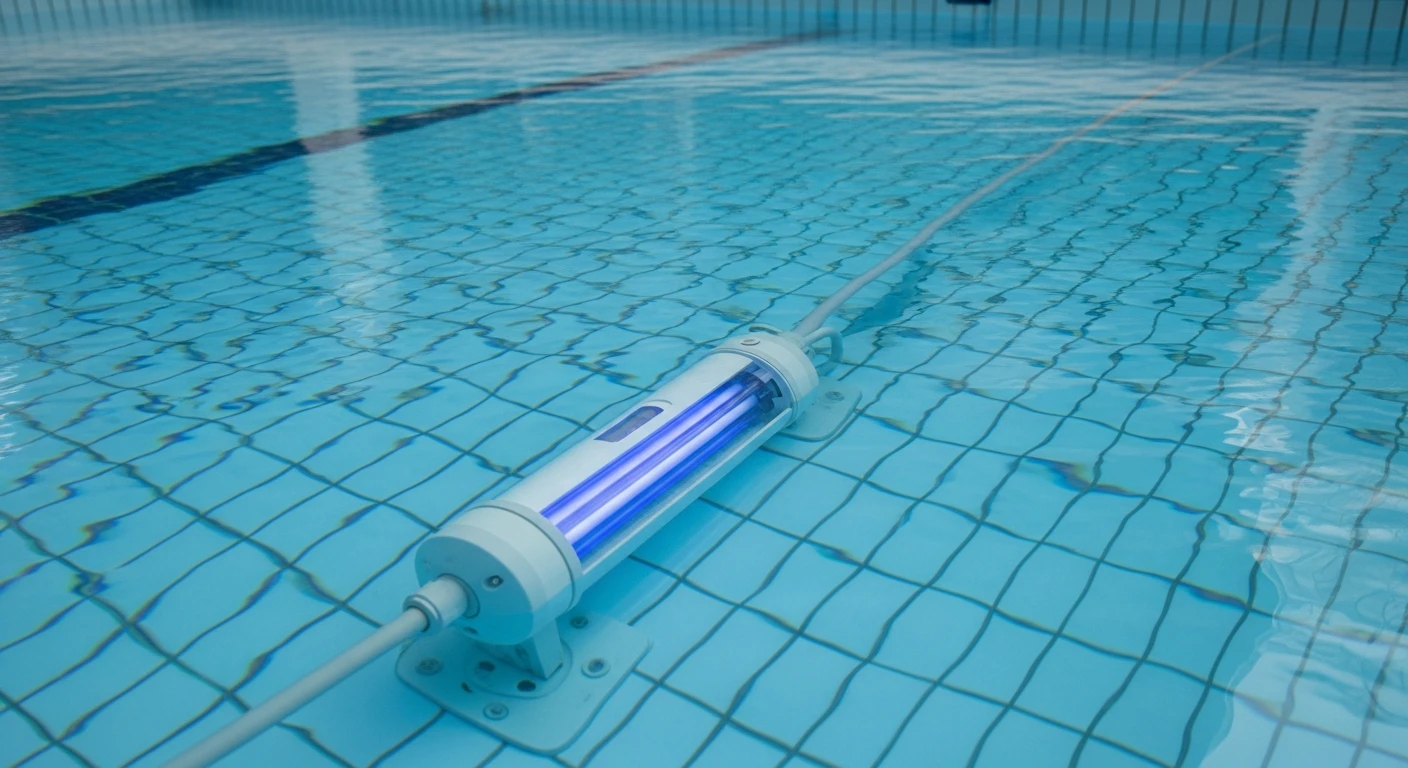
The magic happens at a specific wavelength: 254 nanometers (nm). This UV-C light penetrates the cell walls of microorganisms like algae, bacteria, and viruses, scrambling their DNA and preventing them from reproducing. However, this only works if the water is clear and the exposure is long enough. This is why the placement in the plumbing sequence is non-negotiable. I once had to correct a major installation where the UV unit was placed before the filter. The system's quartz sleeve—the clear tube that protects the bulb—was constantly coated in a film of unfiltered debris, completely blocking the UV-C rays. The owner was paying for electricity but getting zero germicidal benefit. The correct sequence is always: Pump -> Filter -> Heater (if any) -> UV Sanitizer -> Salt Cell/Chlorinator. This ensures the water passing through the UV chamber is as clear as possible, maximizing light penetration and germicidal effectiveness.Precise Installation Steps for Polk County Pools
Executing a flawless installation is about more than just PVC glue. It's a systematic process to ensure maximum efficacy and safety. Here are the critical steps I follow on every job:- System De-Pressurization: I begin by shutting off all power at the breaker. This includes the pump, heater, and any automation. I then open the filter's air relief valve to completely depressurize the system.
- Plumbing Integration: I identify the correct section of the return line, post-filter and post-heater. I make clean, square cuts to the PVC pipe and install the UV unit using union connectors. This is a critical detail for future maintenance, allowing for easy removal of the unit to clean the quartz sleeve or replace the bulb without re-cutting pipes.
- Electrical Hardwiring: The unit must be wired to a GFCI-protected circuit. I wire it to the load side of the main pump's timer or relay. This ensures the UV sanitizer only runs when the pump is circulating water, preventing overheating and extending bulb life.
- Flow Rate Verification: After the installation is complete and the system is running, I verify the flow rate. For clients with variable-speed pumps, a feature on most new builds in areas like Auburndale, I can fine-tune the pump's RPM to achieve the optimal GPM for the specific UV unit, ensuring we hit that target mJ/cm² dosage for a 99.9% kill rate on pathogens.
Post-Installation Calibration and Chemical Balancing
A UV system changes the game for chemical management. Immediately after installation, I don't reduce chlorine. Instead, I ensure the pool has a stable free chlorine reading to start. Over the next 7-10 days, as the UV system eliminates chloramines and controls microbial growth, the chlorine demand will naturally plummet. My calibration process involves weekly testing and gradual reduction of chlorine input. I monitor free chlorine (FC) and combined chlorine (CC). The goal is to maintain FC between 0.5 and 1.0 ppm while CC remains at or near zero. I also advise clients on the annual maintenance protocol: a thorough cleaning of the quartz sleeve to remove any potential calcium scaling—a common issue with Polk County's water hardness—and replacing the UV bulb after its rated 9,000-hour operational lifespan. Ignoring this single step will slowly and silently negate the system's entire benefit. Given your pool pump's GPM and current filter pressure, have you calculated the actual UV-C dosage your water is receiving, or are you just hoping for the best?Written by

Tags
uv pool sanitizer
uv pool system
pool ultraviolet sanitizer
uv light pool sanitizer
UV Pool Sanitation in Polk FL FAQ
What is UV pool sanitation?
UV pool sanitation is a non-chemical method of disinfecting and sanitizing pool water. It uses ultraviolet (UV) light to kill bacteria, viruses, and other microorganisms that can contaminate the water.
How does UV pool sanitation work?
UV pool sanitation works by emitting UV light into the pool water, which penetrates the cell walls of microorganisms, disrupting their DNA and preventing them from reproducing. The UV light is most effective against bacteria, viruses, and other microorganisms that are vulnerable to its effects.
Is UV pool sanitation effective?
Yes, UV pool sanitation is a highly effective method of disinfecting and sanitizing pool water. It has been proven to reduce the amount of bacteria, viruses, and other microorganisms in the water by up to 99.9%.
What are the benefits of using UV pool sanitation?
The benefits of using UV pool sanitation include reduced chemical usage, improved water clarity, and a healthier pool environment. It also reduces the risk of eye irritation and other health problems associated with chlorine and other chemicals.
Is UV pool sanitation safe for my family and pets?
Yes, UV pool sanitation is safe for your family and pets. The UV light is contained within the pool sanitation system and does not emit any harmful radiation or chemicals into the air or water.
How often should I replace the UV lamp in my pool sanitation system?
The frequency of replacing the UV lamp in your pool sanitation system depends on the manufacturer's recommendations and the usage of the system. Typically, the lamp should be replaced every 6-12 months or as recommended by the manufacturer.
Can I use UV pool sanitation with other pool sanitizers?
Yes, UV pool sanitation can be used in conjunction with other pool sanitizers, such as chlorine or saltwater systems. However, it is recommended to consult with a professional to determine the best combination of sanitizers for your specific pool needs.
How much does it cost to install a UV pool sanitation system?
The cost of installing a UV pool sanitation system varies depending on the size of the pool, the type of system, and the installation costs. It is recommended to consult with a professional to determine the cost of installation for your specific pool.
Can I install a UV pool sanitation system myself?
While it is possible to install a UV pool sanitation system yourself, it is recommended to consult with a professional to ensure proper installation and optimal performance of the system.
What is the maintenance required for a UV pool sanitation system?
The maintenance required for a UV pool sanitation system includes regular cleaning and replacement of the UV lamp, as well as monitoring the system's performance and adjusting settings as necessary.