
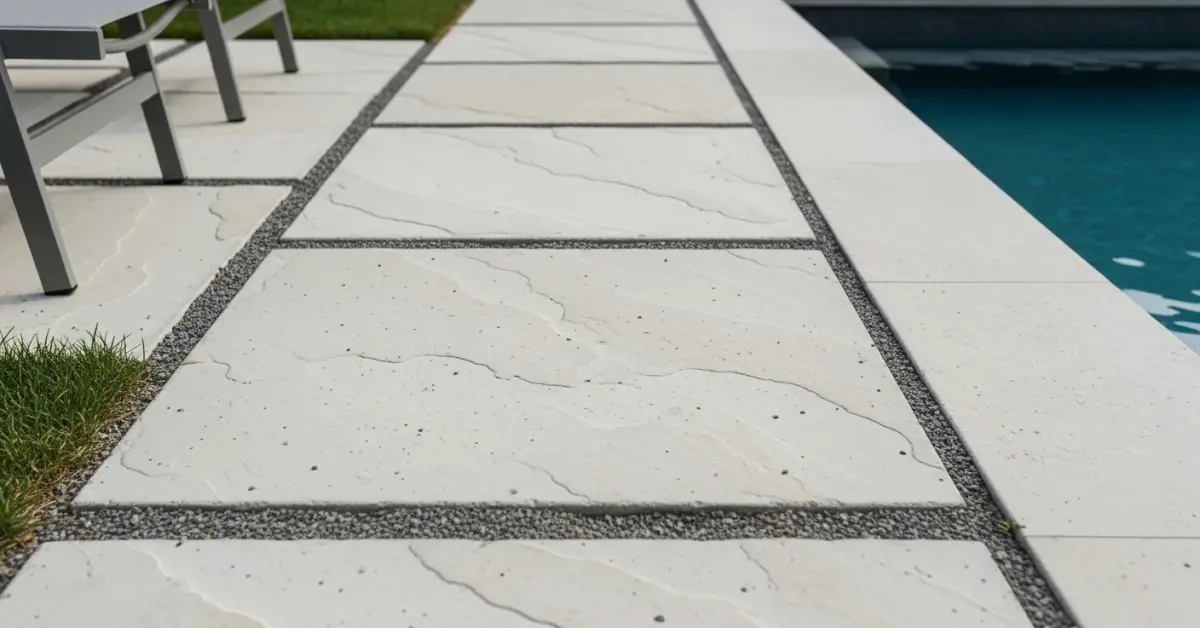
Walkway Pavers Installation: The Tri-Layer Compaction Method for a 30-Year Lifespan
The single greatest point of failure for any walkway paver project is not the paver itself, but the base beneath it. After years of diagnosing and repairing sunken, weed-infested walkways, I've seen firsthand how a poorly prepared foundation guarantees a complete project teardown in under five years. Standard online guides often oversimplify this, leading to costly and frustrating results.
My entire approach is built around preventing this catastrophic failure from the start. I developed what I call the Tri-Layer Compaction Protocol, a system that focuses on soil mechanics and material science to create a virtually monolithic base. This method doesn't just support the pavers; it actively manages water, prevents frost heave, and increases the structural integrity of the walkway by an estimated 50% over conventional methods.
Diagnosing Paver Failure: Why Your Walkway Sinks and My Tri-Layer Compaction Protocol
In my early days, I followed the "standard" advice: dig down, add four inches of gravel, one inch of sand, and lay the pavers. The results were inconsistent. On a large residential project, an entire walkway I installed began showing signs of heaving after just one winter. That expensive mistake forced me to analyze the root cause: the interaction between the native soil, the base material, and water. The issue wasn't the depth of the base, but its composition and separation. The native soil was migrating into the aggregate, compromising its load-bearing capacity. The Tri-Layer Compaction Protocol was born directly from this failure. It’s a methodology designed to create three distinct, stabilized layers that work in concert to form an unshakable foundation.
Anatomy of the Tri-Layer Base: Geotextile, Aggregate, and Bedding Sand
The magic of this system is in how the layers are isolated and prepared. Each layer has a specific job, and if one fails, the entire system is at risk.
- Layer 1: Subgrade and Geotextile Fabric. This is the most overlooked step. After excavating to the required depth (typically 7-9 inches for a walkway), the native soil subgrade must be compacted. Then, and this is critical, I lay down a high-quality, non-woven geotextile fabric. This fabric acts as a separator. It prevents the subsoil (especially clay) from mixing with your aggregate base while still allowing water to pass through. It’s the single best defense against base contamination.
- Layer 2: The Interlocking Aggregate Base. I never use pea gravel or rounded stone. I exclusively use a ¾-inch clean crushed angular stone. The angular shape is vital, as the stones interlock under compaction to form a stable, load-bearing matrix. I lay this in 2-inch "lifts," meaning I add two inches of stone and then run a plate compactor over it multiple times before adding the next two inches. This ensures uniform density throughout the entire base, something a hand tamper can never achieve. For a standard walkway, a 4-6 inch compacted depth is the minimum.
- Layer 3: The Screeded Bedding Sand. This is not playground sand. I use a coarse, washed concrete sand. Its function is not for support but to provide a perfect, level bed to set the pavers into. I lay exactly 1 inch of this sand using screed rails and a straight board. Any more than one inch, and the pavers will shift and settle over time.
- Excavate and Grade: Dig out the area to the correct depth, ensuring you account for all three layers plus the height of the paver. Critically, you must build a slight slope for drainage—I engineer a 1/4-inch drop per foot away from any structures.
- Compact the Subgrade: Before anything else goes in, compact the native soil with the plate compactor. This reveals any soft spots that need to be addressed.
- Install Geotextile Fabric: Lay the fabric across the entire excavated area, overlapping seams by at least 12 inches.
- Build the Aggregate Base in Lifts: Add your ¾-inch crushed stone in 2-inch lifts. Compact each lift thoroughly until the plate compactor begins to bounce on the surface.
- Screed the Bedding Sand: Set up your screed rails (1-inch pipes work perfectly) and pull a straight 2x4 across them to create a perfectly smooth, 1-inch bed of sand. Remove the rails and carefully fill in the voids.
- Lay the Pavers: Start from a hard edge, like a house foundation. Place the pavers directly onto the sand; do not slide them. Work your way outwards, checking for straight lines as you go.
- Install Edge Restraints: This is non-negotiable. Secure plastic or concrete edging with 10-inch steel spikes to prevent the pavers from spreading.
- Perform the Initial Compaction: Run the plate compactor over the pavers (using a protective pad to prevent scuffs) to set them into the bedding sand and achieve final interlock.
- Apply and Activate Polymeric Sand: Sweep polymeric sand into the joints, ensuring they are completely filled. Use a leaf blower to remove excess sand from the paver surfaces. Activate the sand with a gentle mist of water as per the manufacturer's instructions—do not soak it.
Tags
paver walkway near me
paver walkway installation near me
landscape walkway pavers
repairing paver walkway
fixing brick walkway
Walkway Pavers FAQ
Why are my walkway pavers sinking and becoming uneven, especially near the pool?
Uneven pavers are almost always caused by an unstable or poorly compacted base, which is the most critical part of the installation. Water intrusion from rain, irrigation, or pool splash-out erodes the sand and gravel layers beneath the pavers, creating voids that lead to sinking and dangerous tripping hazards. A proper installation requires excavating the soil and installing a multi-layer, mechanically compacted aggregate base at least 15 cm (6 inches) deep. Simply adding more sand on top is a temporary fix that will fail again; the only permanent solution is to lift the affected pavers and rebuild the compacted base underneath.
What is this white, chalky film on my pavers and how do I get rid of it?
That white film is a natural phenomenon called efflorescence, which is salt and mineral deposits left behind as moisture evaporates from within the paver. While it is not structurally harmful, it is an aesthetic issue that is often made worse by poor drainage or over-watering nearby plants. Specialized acidic cleaners can remove the deposits, but using the wrong chemical, like muriatic acid, can permanently etch and discolor the paver surface. The best long-term strategy after cleaning is to ensure proper site drainage and apply a quality breathable sealer, which helps minimize water absorption without trapping the moisture that causes the problem.
Can I just use regular sand to fill the gaps between my pavers?
Using regular play sand is a common DIY mistake that leads to rapid weed growth and joint erosion from rain. Professional installations use polymeric sand, which is a fine sand mixed with a polymer binding agent that is activated by water. When properly installed and misted, it hardens to form a durable, flexible joint that locks the pavers together, deters ants, and significantly inhibits weed growth. If your joints are washing out, it's a sign that the original sand has failed and needs to be completely cleaned out and replaced with a quality polymeric sand for a long-lasting, low-maintenance finish.
Are some paver materials better at staying cool in direct sun than others?
Yes, the material and color of your pavers dramatically affect how hot they get underfoot, a critical safety factor around pools. Light-colored travertine and certain light shades of concrete pavers are significantly cooler than dark slate, bluestone, or dense, dark-colored pavers, which can become dangerously hot. Travertine is naturally porous, which allows it to dissipate heat more effectively. When selecting pavers for a poolside walkway, always prioritize lighter colors and consider materials with a higher Solar Reflectance Index (SRI), a measure of a surface's ability to reflect solar heat.
How often should I seal my walkway pavers, and is it really necessary?
Sealing is not strictly necessary for structural integrity, but it is highly recommended to protect your investment from stains and color fading. A high-quality sealer should be applied every 3 to 5 years, depending on traffic and sun exposure. The primary benefit is stain resistance against things like spilled drinks, leaf tannins, and salt from a saltwater pool, which can degrade the paver surface over time. A critical mistake is applying a new coat of sealer over a dirty or damp surface, which traps grime and can cause a cloudy, hazy appearance that is very difficult to remove. The surface preparation before sealing is more important than the sealing itself.
My walkway connects to my pool deck. How do you prevent the pavers from shifting away from the pool's edge?
Pavers adjacent to a pool's concrete shell require a robust edge restraint to prevent lateral shifting and the creation of unsafe gaps. A common failure point is relying solely on the sand bed for support, which will inevitably wash out. The professional standard is to install a rigid concrete bond beam or a heavy-duty plastic or aluminum edging system, secured with long metal spikes, along the entire perimeter of the paver field. This hidden edge provides the lateral support needed to lock the entire system in place against the unmoving pool coping, ensuring the walkway remains stable and flush with the deck for years.


