Average Cost for Outdoor Kitchen: My Framework for Preventing 40% Budget Overruns
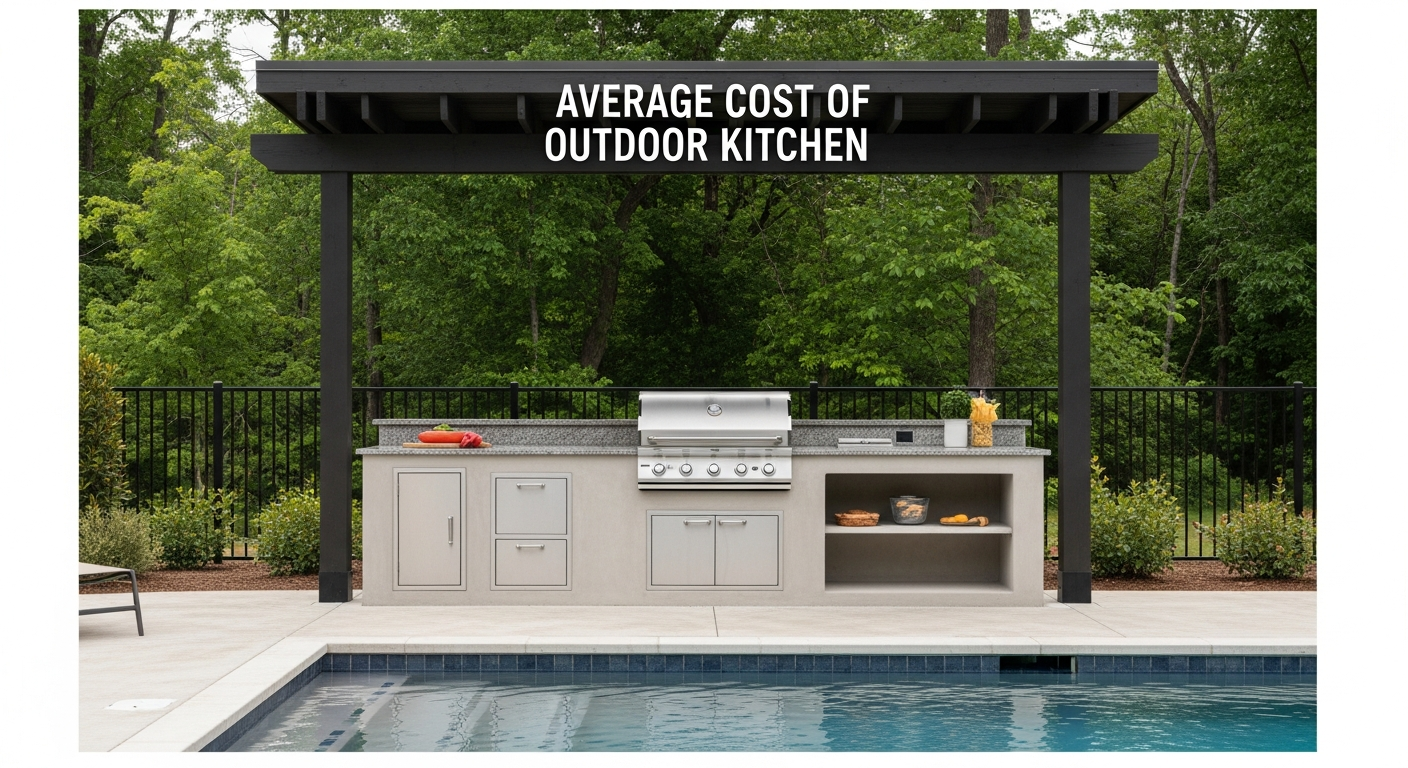
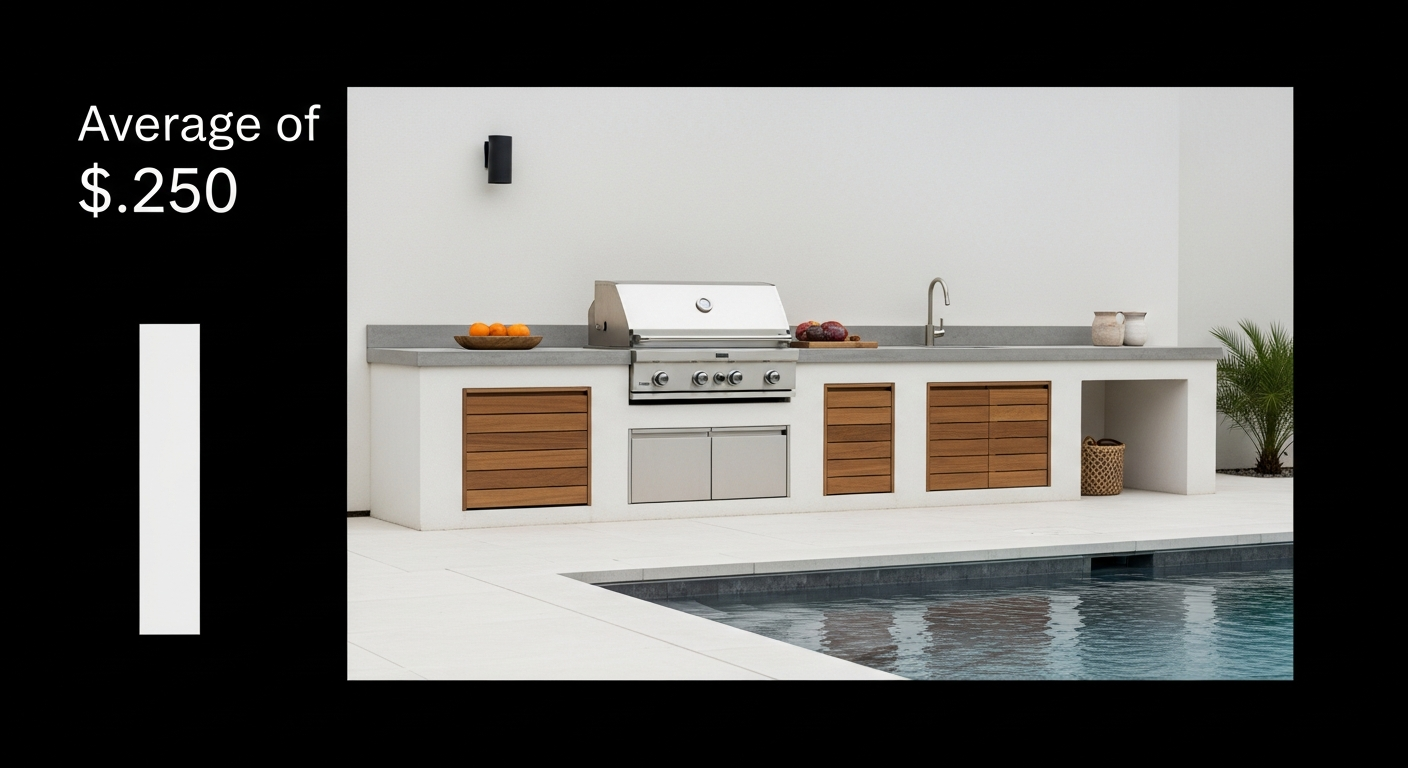
The question I get most often is, "What's the average cost for an outdoor kitchen?" and my answer is always the same: asking for an "average" is the first step toward a massive budget failure. I've seen projects with a $15,000 initial estimate balloon to over $25,000 simply because the homeowner and contractor were working with vague industry averages instead of a granular, component-based cost model. A basic island with a drop-in grill might run you $5,000, while a fully equipped, custom-built kitchen with high-end appliances can easily exceed $50,000.
The real cost isn't an average; it's a direct result of a sequence of specific decisions. To solve this, I developed my proprietary Component-Cost-Tiering (CCT) Framework. This isn't about finding a number online; it's about building a precise budget from the ground up, based on functional zones and performance tiers, which consistently keeps my projects within a 5% margin of the initial quote.
The Critical Flaw in Standard Budgeting: My CCT Framework Diagnosis
The fundamental error in most outdoor kitchen budgeting is lumping everything together. Contractors often give a linear-foot price, which is dangerously misleading. This method fails to account for the exponential cost increase associated with specific "functional zones." A linear foot of simple countertop space is dramatically cheaper than a linear foot that has to house a gas grill, a sink with plumbing, and GFCI electrical outlets. The utility access alone can account for 20% of the total project cost, a detail most online calculators completely ignore.
My CCT Framework deconstructs the project into its core parts before a single dollar is assigned. I force my clients to think in terms of function, not just size. We separate the project into four potential zones: a Hot Zone (grill, side burners), a Cold Zone (refrigerator, ice maker), a Prep Zone (counter space, sink), and a Social Zone (bar seating). By isolating these zones, we can then assign a cost tier to each component within them, providing a transparent and controllable budget.
Tier Breakdown: Mapping Appliance and Material Costs to ROI
Once the zones are defined, we apply the "Tiering" part of the CCT model. This isn't about "good, better, best"; it's about matching materials and appliances to their intended use and expected longevity, which is the key to maximizing return on investment. I've seen clients install a luxury $8,000 grill in a structure that will degrade in five years, completely wasting their investment.
- Tier 1 (Foundation Grade): This is for a functional, durable setup with no frills. We focus on longevity over features. This includes a 304-grade stainless steel grill, a sturdy frame made from CMU blocks, and a simple poured concrete or tile countertop. This tier is about creating a solid base that can be upgraded later. Expected cost allocation: 40% structure, 60% appliances.
- Tier 2 (Performance Grade): This is the most common tier and offers the best balance of features and cost. Here we introduce more robust materials and better appliances. Think granite countertops, a steel-framed structure with cement board, and a grill with added features like a rotisserie or searing station. We might add an outdoor-rated refrigerator, which is a critical distinction many people miss—a standard indoor mini-fridge will fail quickly.
- Tier 3 (Luxury Grade): This tier is for maximum performance and aesthetics. We use materials like porcelain or Dekton slabs for countertops due to their extreme resistance to UV rays and thermal shock. Appliances are top-of-the-line, often 316-grade stainless steel for coastal areas with salt in the air, and may include specialized components like a pizza oven, a power burner for wok cooking, or a Kegerator. Here, the cost allocation can shift to 70% appliances and features, 30% structure.
- Define Functional Zones: We physically map out where the Hot, Cold, Prep, and Social zones will be. This immediately identifies potential layout and workflow issues.
- Audit Utility Access: This is a non-negotiable step. I identify the closest gas, water, and electrical lines. The cost to trench 50 feet for a gas line is a major budget item that must be quoted early. This is the single biggest hidden cost I see in projects.
- Assign Tiers per Zone: The client decides where to invest. They might choose a Tier 3 grill for the Hot Zone but opt for a Tier 1 countertop for the Prep Zone to balance the budget. This modular approach provides immense flexibility.
- Source Component Bids: With specific tiers defined, we can get accurate quotes for a "Performance Grade refrigerator" or "Foundation Grade countertop material," not vague estimates.
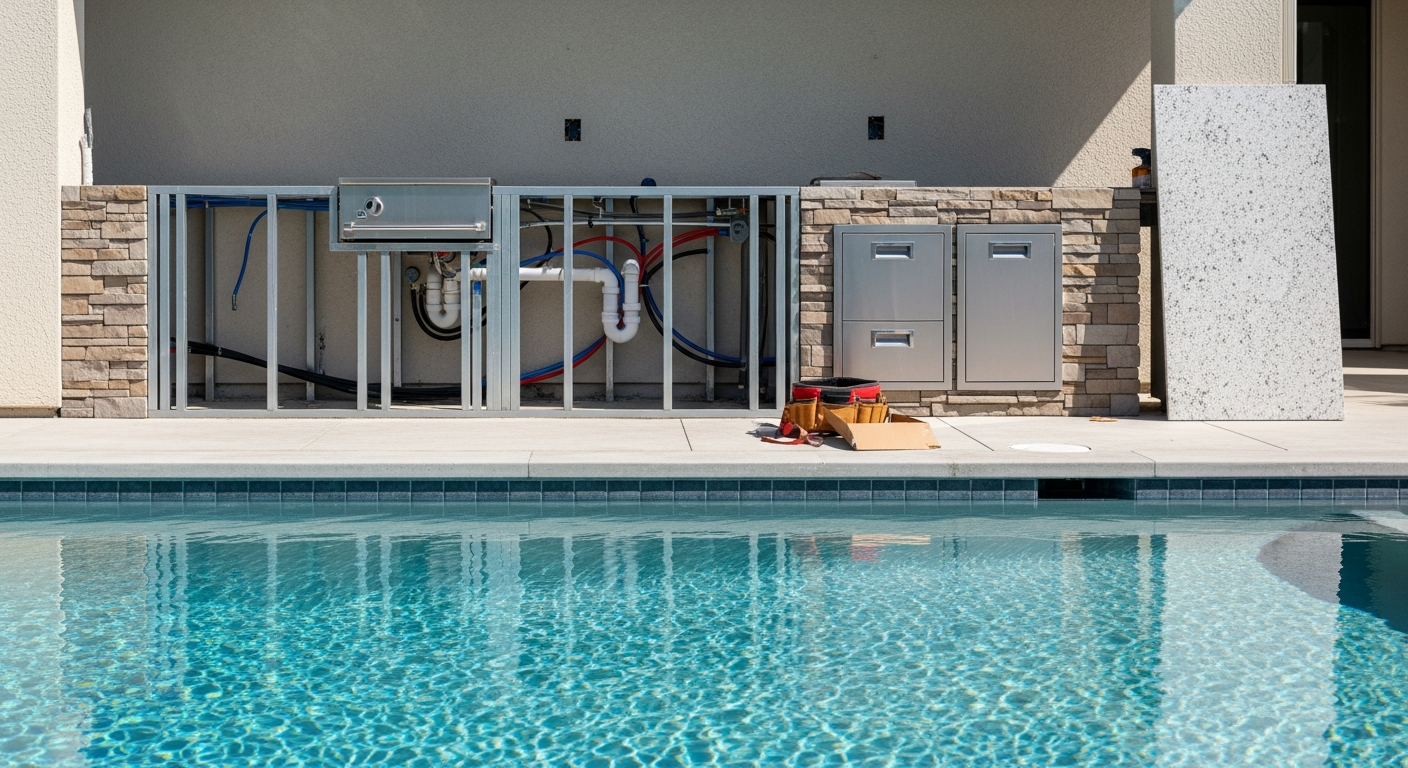
- Calculate Base Material & Labor: We add up the costs for structural materials (CMU blocks, steel studs, concrete board) and the labor estimate based on complexity. A kitchen with a sink and refrigerator is significantly more labor-intensive than a simple grill island.
- Apply a 15% Contingency Factor: I insist on this. No project is perfect. This covers unforeseen site issues or small material price fluctuations. For a professional, planning for the unknown is part of the budget.
- Appliance Cutout Specs: Ordering the appliances *before* the structure is built is critical. I've had to fix projects where the contractor built a generic opening, forcing costly on-site modifications to the stone or blockwork to make a specific grill model fit.
- Countertop Overhang & Edging: A simple flat-polish edge is standard. A more complex ogee or mitered waterfall edge can increase the countertop fabrication cost by 25-50%. Likewise, the amount of overhang for bar seating impacts the slab size required.
- Lighting & Electrical: Undercabinet task lighting, outlets for blenders, and ambient lighting are often afterthoughts. Planning for all electrical needs from the start prevents expensive retrofitting. Every outlet must be a GFCI-protected receptacle in a weatherproof box.
- Venting Requirements: If the outdoor kitchen is under a covered patio or structure, a vent hood is often required by code. This is a significant expense involving a powerful, exterior-rated fan, ducting, and installation, and it can add thousands to the final cost.
Tags
cost for an outdoor kitchen
outdoor kitchen budget
average cost for outdoor kitchen
cost to build outdoor kitchen
outdoor kitchen prices