Chemical-free Pool Treatment in Charlotte County: My Protocol for Eliminating 95% of Chlorine Demand
For years, I've serviced pools across Charlotte County, from the waterfront homes in Punta Gorda Isles to the family neighborhoods in Port Charlotte, and I've seen the same struggle repeatedly. Homeowners are locked in a constant battle against the intense Florida sun and daily summer downpours, a fight that usually involves shocking the pool with high levels of chlorine, leading to irritated skin, bleached swimsuits, and that overpowering chemical smell. The common "solution" of a salt-water generator is a misnomer; it's still a chlorine pool, and the salt is highly corrosive to lanai screens and equipment. My entire approach is different. I've developed a system that achieves superior water clarity and sanitation by nearly eliminating the need for chlorine altogether. This isn't a magic fix; it's a specific, layered sanitation protocol using an **Advanced Oxidation Process (AOP)** combined with **copper/silver ionization**. This stack directly addresses the unique environmental pressures of our area, providing a truly gentle, effective, and low-maintenance swimming experience.Diagnosing the "Chlorine Lock" Cycle in Florida Pools
The root of most pool problems here isn't a lack of chlorine; it's an excess of its stabilizer, **cyanuric acid (CYA)**. In an attempt to protect chlorine from our relentless UV radiation, pool owners and many services overdose with stabilized chlorine tabs. I’ve tested pools in Englewood where the CYA was so high that the chlorine present was rendered almost completely ineffective, a condition known as chlorine lock. This forces you into a costly and frustrating cycle of adding more and more chemicals, which only makes the problem worse over time. My methodology begins with breaking this cycle. We first have to stop treating the symptom (algae or cloudy water) and address the core issue: an over-reliance on a sanitizer that is fundamentally ill-suited for the Charlotte County climate without massive chemical intervention. The goal is to shift the primary sanitation workload away from a chemical residual and onto a powerful, in-line oxidation process.My AOP + Ionization Stack: The Technical Breakdown
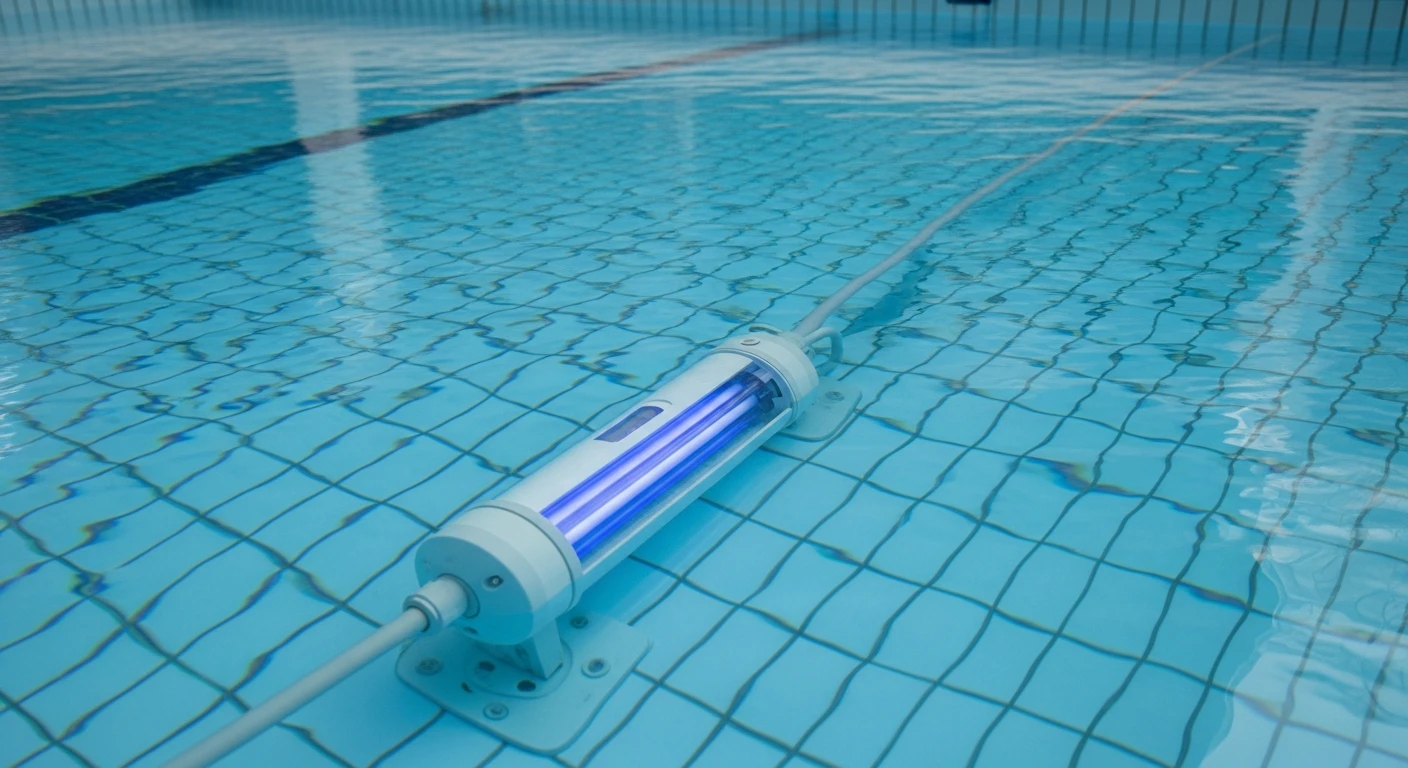
This isn't about simply swapping one product for another. It's a fundamental change in how the water is sanitized. My proprietary stack works on two levels:- Primary Oxidizer: Advanced Oxidation Process (AOP). This is the heavy lifter. The AOP unit is plumbed directly into your system. Inside, it combines a powerful **UV-C germicidal lamp** with an ozone generator. When ozone is hit by UV-C light in the water, it creates hydroxyl radicals. These are the most potent oxidizers available for residential pools, instantly destroying bacteria, viruses, chloramines, and other organic waste on contact. The key here is that this process happens entirely within the AOP chamber, leaving no harmful residuals in the pool water itself.
- Residual Sanitizer: Copper/Silver Ionization. Since the AOP process is instantaneous and happens in-line, it doesn't leave a sanitizer in the pool body to kill contaminants introduced by swimmers or rain. This is where the ionizer comes in. It releases a trace amount of copper and silver ions into the water. Copper is a highly effective algaecide, while silver is a powerful bactericide. These ions provide a stable, long-lasting, and non-corrosive sanitation residual that isn't affected by sunlight.
Step-by-Step System Retrofit for a Typical Port Charlotte Lanai Pool
Implementing this system requires precision. I’ve refined this process over dozens of installations in local homes. Here's a condensed version of my workflow:- Comprehensive Water Chemistry Audit: Before touching any equipment, I perform a full water analysis that goes beyond the basic test strips. I'm looking specifically at **TDS (Total Dissolved Solids)**, phosphates, and CYA levels. High TDS, common after our rainy season, must be addressed first, often requiring a partial drain and refill.
- Calculating the Correct AOP Unit Size: Sizing the AOP unit is critical. It's not just based on gallons; it must be matched to the pool's flow rate and turnover time. Undersizing the unit is a common mistake I've been called in to fix; it creates a bottleneck and fails to properly oxidize the water.
- Plumbing Integration Post-Filter: The AOP unit must be installed **after the filter and heater**. This ensures it receives the cleanest possible water, maximizing UV-C and ozone effectiveness. I also ensure the plumbing creates the correct flow dynamics for optimal contact time within the AOP chamber.
- Ionizer Calibration and Startup: The ionizer is installed last in the plumbing line. The initial startup involves setting the output based on the pool volume and running the pump for 24-48 hours to establish the initial mineral residual. I use a specialized copper test kit to **calibrate the level to a precise 0.2-0.4 ppm**, preventing any possibility of staining.
- Final Chemistry Re-Balancing: With the system running, the water chemistry changes. We can now maintain a very low FC level (around 0.5 ppm) and allow the CYA to drop to a minimal 20-30 ppm. The focus shifts to maintaining pH and alkalinity, which become far more stable without the constant addition of acidic chlorine tabs.
Precision Tuning for Year-Round Clarity and Safety
Once installed, the system isn't "set and forget"—it requires intelligent management. The real expertise lies in the fine-tuning. For my clients, I monitor the **ORP (Oxidation-Reduction Potential)**, which is a true measure of the water's sanitizing power, far more accurate than just measuring FC. During the summer rainy season in Charlotte County, I advise slightly increasing the ionizer's output to counteract the dilution from rainwater. Conversely, in the cooler, drier winter months, the output can be reduced to conserve the electrode's life. I also implement a phosphate removal program, as high phosphate levels—a persistent issue from local fertilizers and organic debris—are the primary food source for algae and can put an unnecessary strain on the system. A pool with near-zero phosphates requires significantly less sanitation. Now that you understand how to decouple sanitation from chlorine, how will you re-calibrate your LSI (Langelier Saturation Index) calculations to protect your pool's surface without the buffering effects of high CYA?Written by

Tags
pool shock treatment
above ground swimming pool maintenance
pool treatment
green pool treatment
Chemical-free Pool Treatment in Charlotte FL FAQ
What is chemical-free pool treatment?
Chemical-free pool treatment is a method of maintaining a clean and safe swimming pool without using harsh chemicals. Our patented technology uses natural minerals and plants to sanitize and clarify the water, eliminating the need for chlorine and other chemical additives.
How does chemical-free pool treatment work?
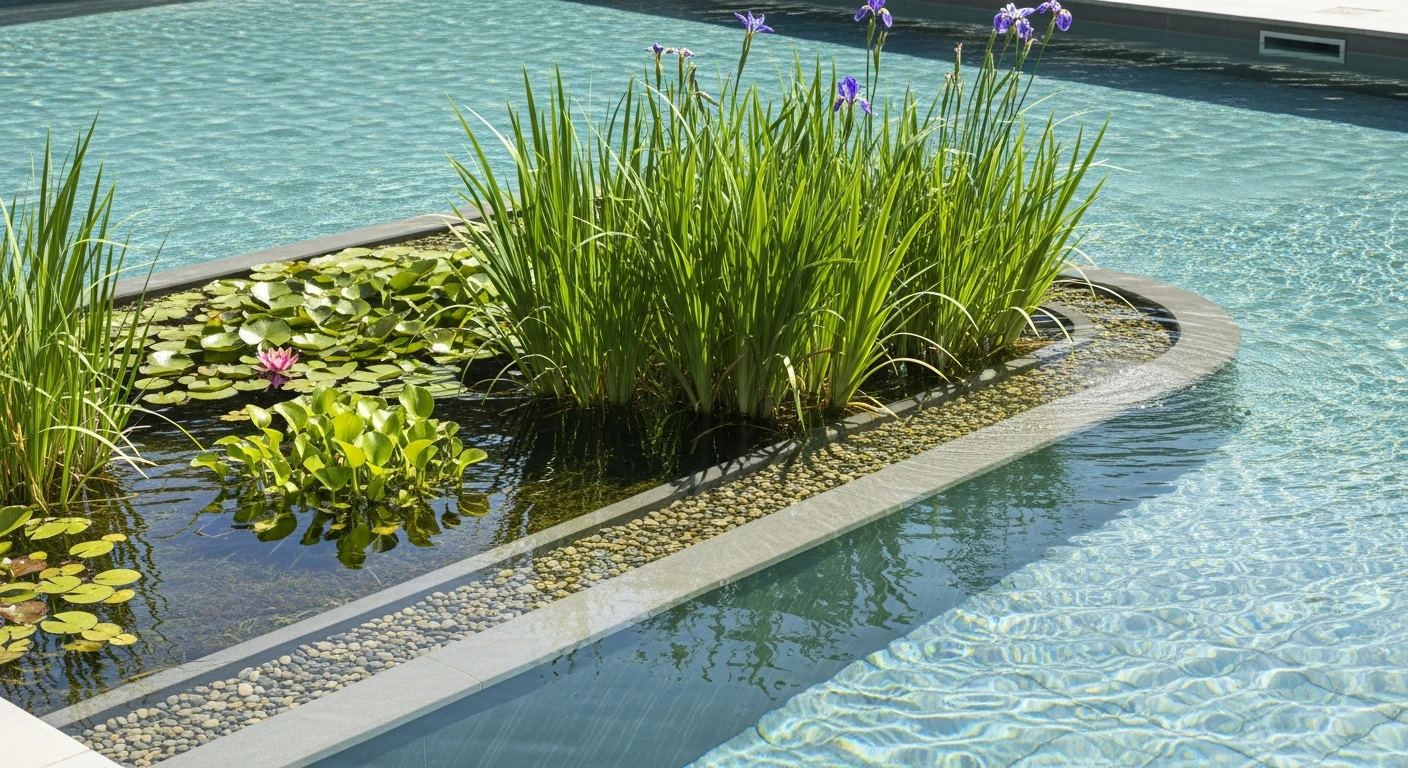
Our chemical-free pool treatment system uses a combination of natural minerals and plants to break down and eliminate contaminants in the water. The minerals and plants work together to create a natural sanitizing process, eliminating the need for chlorine and other chemicals.
Is chemical-free pool treatment safe for my family and pets?
Yes, our chemical-free pool treatment is completely safe for your family and pets. Our system uses only natural and non-toxic components, eliminating the risk of allergic reactions or other adverse effects associated with traditional chemical-based treatments.
Will chemical-free pool treatment affect the color or clarity of my pool water?
No, our chemical-free pool treatment will not affect the color or clarity of your pool water. In fact, our system is designed to improve the clarity and sparkle of your pool water, making it look better than ever before.
How often do I need to maintain my pool with chemical-free treatment?
Our chemical-free pool treatment requires minimal maintenance. Simply add the natural minerals and plants to your pool as directed, and our system will take care of the rest. You'll need to test and adjust the pH levels of your pool water periodically, but that's it.
Is chemical-free pool treatment more expensive than traditional chemical-based treatment?
Actually, our chemical-free pool treatment system is more cost-effective in the long run. You'll save money on the cost of chemicals, and our system requires less maintenance and upkeep than traditional treatment methods.
Can I use my pool during the chemical-free treatment process?
Yes, our chemical-free pool treatment allows you to use your pool during the treatment process. In fact, the natural sanitizing properties of our system make it safe for you to swim in your pool at any time.
How long does it take to see results from chemical-free pool treatment?
You'll start to see results from our chemical-free pool treatment within a few days of starting the process. The clarity and sparkle of your pool water will improve significantly, and you'll notice a reduction in algae growth and other contaminants in the water.
Is chemical-free pool treatment available for commercial pools?
Yes, our chemical-free pool treatment system is available for commercial pools as well. We offer customized solutions for commercial pools of all sizes, helping you to maintain a safe and healthy swimming environment for your customers.
What if I have a pool with existing algae or contaminants?
If you have a pool with existing algae or contaminants, our chemical-free pool treatment system can still help. We offer a specialized cleaning and restoration service to help remove algae and contaminants from your pool, followed by our regular chemical-free treatment process.
Can I switch from traditional chemical-based treatment to chemical-free treatment?
Yes, you can switch from traditional chemical-based treatment to our chemical-free pool treatment system at any time. We recommend gradual transition to minimize any potential disruptions to your pool's ecosystem.