UV Pool Sanitation in Charlotte County: My Protocol for 99.9% Chloramine Neutralization and Reduced Chemical Load
As a pool systems specialist focusing on the unique challenges here in Charlotte County, I’ve seen countless homeowners in Port Charlotte and Punta Gorda fight a losing battle against algae and that harsh "chlorine smell." The root cause is almost never the amount of chlorine you're using; it's the buildup of chloramines—the nasty byproducts of chlorine reacting with sweat, oils, and other organics. Our relentless sun and humidity from May through October only accelerate this problem, forcing a cycle of shocking the pool and dealing with irritating water. My entire approach shifts the focus from simply adding more chemicals to eradicating the contaminants at a microbial level. A correctly sized and installed UV sanitation system doesn't just supplement chlorine; it fundamentally changes your water chemistry for the better. It directly targets and destroys the DNA of algae spores and bacteria, but its most immediate impact is the breakdown of chloramines. This single action eliminates the chemical odor and eye irritation, and it allows you to reduce your Free Chlorine (FC) levels by as much as 70%, creating a healthier swimming environment that is far gentler on your pool equipment and surfaces.My Diagnostic Framework for Charlotte County Pools
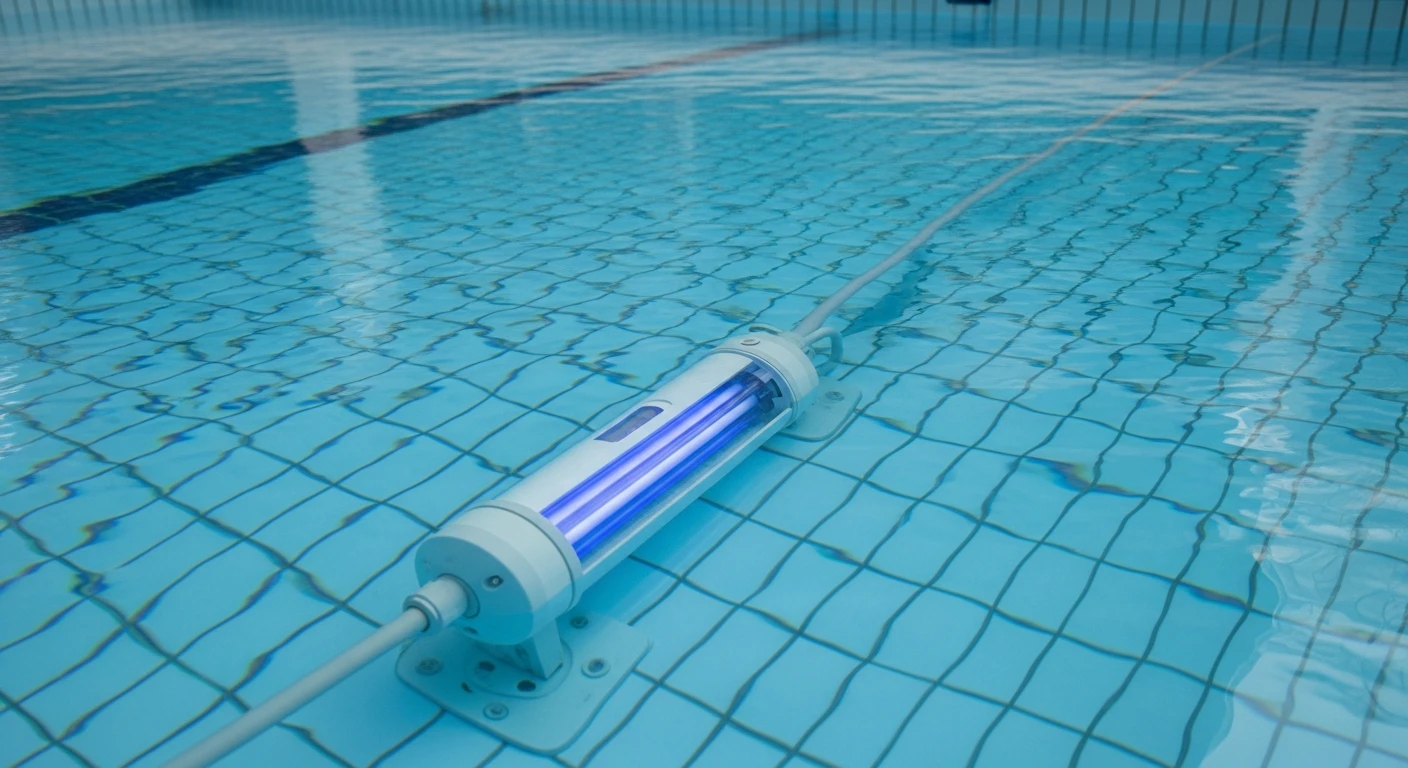
Before I even consider a UV unit, I perform what I call a Sanitation Burden Audit. A pool in a canal-front Punta Gorda home with high sun exposure and frequent use has a completely different burden than a shaded, screened-in pool in a quieter Deep Creek neighborhood. My audit doesn't just look at gallons; it quantifies the specific environmental pressures. I’ve seen expensive, oversized UV systems fail because the installer didn't account for the high Total Dissolved Solids (TDS) common in our municipal water, which can physically cloud the quartz sleeve and reduce UV penetration. My methodology is built on a core principle: the UV system must be matched to the pool's turnover rate, not just its total volume. A common mistake I often have to correct is installing a UV sanitizer on a system with a variable-speed pump running at a low, energy-saving GPM (Gallons Per Minute). If the flow rate is too slow or too fast for the UV unit's specifications, the water's dwell time inside the reaction chamber is compromised, rendering the sanitation nearly useless. You're essentially just running water past a pretty blue light.Decoding UV-C Efficacy: Flow Rate, Lamp Sizing, and Water Clarity
To truly achieve microbial destruction, the system must deliver a sufficient dose of UV-C light, measured in millijoules per square centimeter (mJ/cm²). The industry standard for disinfection is a minimum dose of 30 mJ/cm². Achieving this isn't as simple as buying a unit off the shelf. The critical variable is UVT (Ultraviolet Transmittance). Perfectly clear water might have 95% UVT, but in a real-world Charlotte County pool, sunscreen residue, high calcium hardness, and microscopic debris can drop UVT to 85% or lower. My protocol involves sizing the UV lamp wattage to compensate for a worst-case scenario UVT of 80%. This ensures the system delivers a lethal dose even on days when the water isn't perfectly polished. I insist on a high-output, low-pressure lamp, which provides the optimal germicidal wavelength of 254 nanometers without a massive energy draw.Step-by-Step UV System Installation for Peak Performance
Proper installation is non-negotiable for system efficacy and longevity. I follow a strict sequence to ensure every component works in harmony. This is my field-tested checklist for a flawless integration.- System Analysis: First, I confirm the existing pump's actual GPM at the client's typical operating speed. I use a flow meter for this; guesswork is a recipe for failure. This GPM figure is the master key to selecting the right UV unit.
- Strategic Placement: The UV sanitizer must be the last piece of equipment the water passes through before returning to the pool. The correct order is always Pump -> Filter -> Heater (if any) -> UV Sanitizer -> Return lines. Installing it before the filter is a catastrophic error I've seen firsthand; debris will coat the quartz sleeve, blocking the UV light entirely within days.
- Plumbing and Bypass: I always install a bypass loop with three-way valves. This allows for safe servicing of the UV unit (like changing the bulb or cleaning the sleeve) without shutting down the entire pool circulation system. It also allows for precise flow control to dial in the perfect dwell time.
- Electrical Integrity: The unit must be hardwired and properly grounded according to electrical code. I ensure it's connected to the pump's timer or automation system so it only runs when the water is circulating. Leaving a UV lamp on with no water flow will cause it to overheat and fail prematurely.
Post-Installation Calibration: Fine-Tuning for the Florida Climate
The job isn't done after the last pipe is glued. The first 48 hours are crucial for re-balancing the water chemistry. With the UV system now destroying the majority of contaminants, the pool's chlorine demand will plummet. My final calibration process involves slowly lowering the Free Chlorine (FC) level to a residual target of 1.0 to 1.5 ppm. This is enough to provide a sanitizing buffer in the pool water itself while the UV unit does the heavy lifting in the circulation system. Furthermore, I establish a quarterly maintenance schedule with the homeowner to clean the quartz sleeve. In our high-calcium environment, a thin layer of scale can form that is invisible to the naked eye but completely blocks UV-C radiation. A simple wipe-down with a mild acid solution restores its clarity and the system's full power. Are you still fighting your pool's sanitation based on chlorine levels alone, or are you ready to control its Oxidation-Reduction Potential (ORP) for true water purity?Written by

Tags
uv pool sanitizer
uv pool system
pool ultraviolet sanitizer
uv light pool sanitizer
UV Pool Sanitation in Charlotte FL FAQ
What is UV pool sanitation?
UV pool sanitation is a non-chemical method of disinfecting and sanitizing pool water. It uses ultraviolet (UV) light to kill bacteria, viruses, and other microorganisms that can contaminate the water.
How does UV pool sanitation work?
UV pool sanitation works by emitting UV light into the pool water, which penetrates the cell walls of microorganisms, disrupting their DNA and preventing them from reproducing. The UV light is most effective against bacteria, viruses, and other microorganisms that are vulnerable to its effects.
Is UV pool sanitation effective?
Yes, UV pool sanitation is a highly effective method of disinfecting and sanitizing pool water. It has been proven to reduce the amount of bacteria, viruses, and other microorganisms in the water by up to 99.9%.
What are the benefits of using UV pool sanitation?
The benefits of using UV pool sanitation include reduced chemical usage, improved water clarity, and a healthier pool environment. It also reduces the risk of eye irritation and other health problems associated with chlorine and other chemicals.
Is UV pool sanitation safe for my family and pets?
Yes, UV pool sanitation is safe for your family and pets. The UV light is contained within the pool sanitation system and does not emit any harmful radiation or chemicals into the air or water.
How often should I replace the UV lamp in my pool sanitation system?
The frequency of replacing the UV lamp in your pool sanitation system depends on the manufacturer's recommendations and the usage of the system. Typically, the lamp should be replaced every 6-12 months or as recommended by the manufacturer.
Can I use UV pool sanitation with other pool sanitizers?
Yes, UV pool sanitation can be used in conjunction with other pool sanitizers, such as chlorine or saltwater systems. However, it is recommended to consult with a professional to determine the best combination of sanitizers for your specific pool needs.
How much does it cost to install a UV pool sanitation system?
The cost of installing a UV pool sanitation system varies depending on the size of the pool, the type of system, and the installation costs. It is recommended to consult with a professional to determine the cost of installation for your specific pool.
Can I install a UV pool sanitation system myself?
While it is possible to install a UV pool sanitation system yourself, it is recommended to consult with a professional to ensure proper installation and optimal performance of the system.
What is the maintenance required for a UV pool sanitation system?
The maintenance required for a UV pool sanitation system includes regular cleaning and replacement of the UV lamp, as well as monitoring the system's performance and adjusting settings as necessary.