Chemical-free Pool Treatment: My Protocol for a 30% Reduction in Annual Maintenance Costs
As a pool system specialist here in Lake County, I've seen the same frustrating cycle play out from the sprawling backyards in Clermont to the lakeside properties in Mount Dora. Homeowners are tired of the constant chlorine battle, the chemical smell, the irritated skin, and the recurring algae blooms that our humid, sun-drenched climate fuels. The common "solution" is often a salt system, but I have to be direct: a saltwater pool is a chlorine pool. It simply generates chlorine on-site. My approach is fundamentally different. I've spent years refining a multi-layered sanitization process that eliminates the need for chlorine as the primary sanitizer, leading to water that is not only safer but also significantly easier to maintain. This isn't about simply swapping one chemical for another; it's about re-engineering the pool's entire ecosystem. I developed this after a particularly challenging project on a large pool in Leesburg that was constantly fighting black algae due to runoff from a nearby golf course. The owner was spending a fortune on algaecides and shock treatments with minimal results. That's when I codified my methodology.My Diagnostic Framework for Lake County's Challenging Water Chemistry
Before I even touch a piece of equipment, my process begins with a comprehensive water and system analysis that goes far beyond the typical pool store test strip. Most pool issues I encounter aren't just about sanitization; they are a symptom of a deeper imbalance, often exacerbated by our local environment. The hard water from the Floridan aquifer, high in calcium and other dissolved solids, is a major factor that many standard treatments ignore. My proprietary diagnostic starts with identifying the pool's "sanitization load." This involves measuring not just pH and alkalinity, but also the levels of `phosphates`—the primary food for algae, often introduced through lawn fertilizers—and the `Total Dissolved Solids (TDS)`. In Lake County, it's not uncommon for me to find phosphate levels above 500 ppb (parts per billion) where they should be near zero. Ignoring this is like trying to put out a fire while someone is still adding fuel. My methodology is built on starving the algae first, then destroying any remaining contaminants.Beyond Saltwater: Understanding AOP as the Core Sanitizer
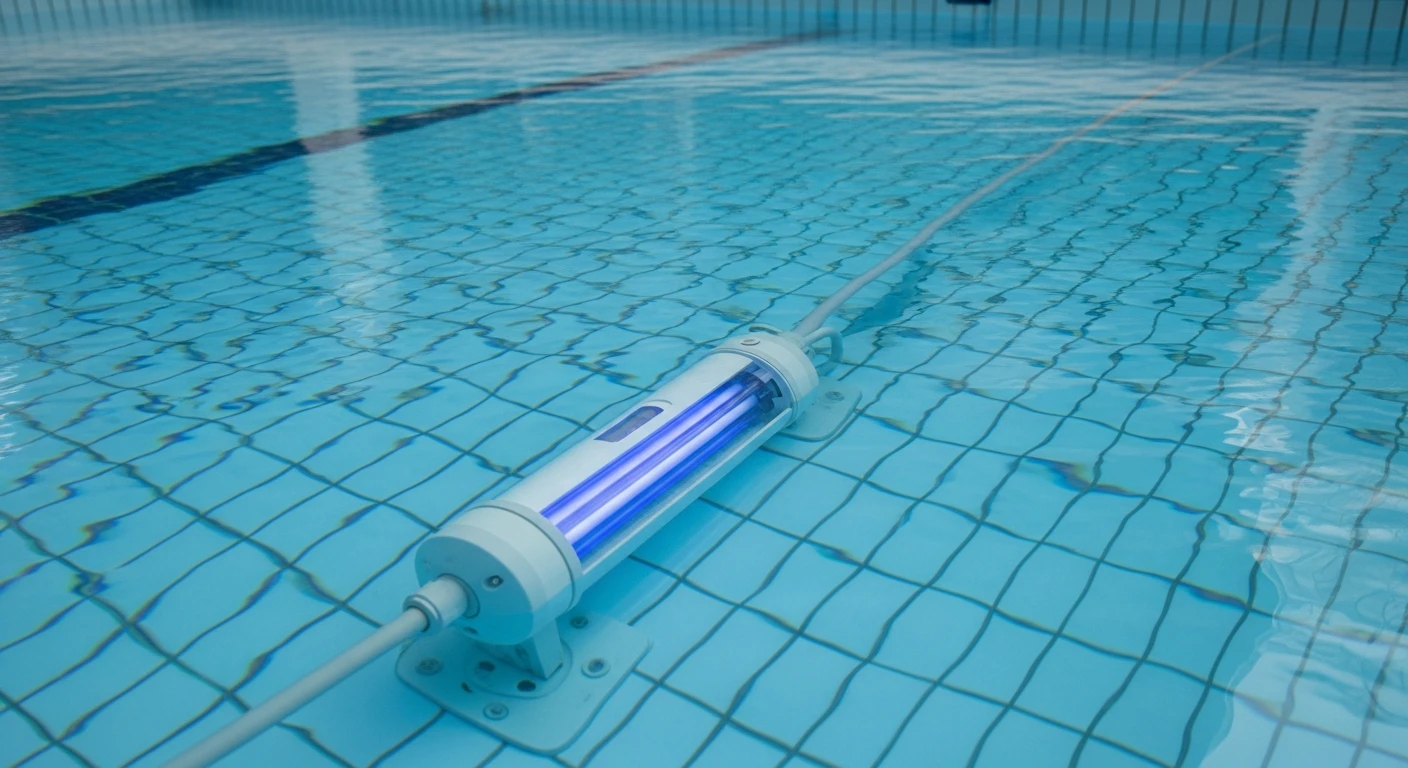
The heart of my chemical-free protocol is a system known as `Advanced Oxidation Process (AOP)`. This is where the real technical advantage lies. AOP works by combining two powerful sanitizers: a high-concentration ozone (O3) generator and a high-intensity UV-C sterilizer lamp. When ozone-injected water passes through the UV light, a chemical reaction creates `hydroxyl radicals`. These hydroxyl radicals are the most powerful oxidizing agents available for residential pool water, far more effective than chlorine. They destroy viruses, bacteria, and organic waste almost instantly and then revert back to oxygen and water, leaving no harmful byproducts. This is a critical distinction from salt systems, which produce sodium hypochlorite (chlorine) and can lead to a buildup of chloramines—the compounds responsible for the "chlorine smell" and irritation. With an AOP system, the water's `Oxidation-Reduction Potential (ORP)`, a key measure of its ability to self-clean, is maintained at a consistently high level, something chlorine struggles to do under the intense Florida sun.Implementing the Triple-Barrier System: A Step-by-Step Breakdown
Once the diagnostics are complete, the implementation focuses on creating three layers of protection: superior filtration, primary AOP sanitization, and residual control. It’s a systematic upgrade that ensures every gallon of water is continuously purified.- Step 1: Mechanical Filtration Audit: I start by ensuring the existing pump and filter are adequate. The goal is a minimum `turnover rate` of twice per day. For many older pools, this means upgrading to a variable-speed pump and a cartridge filter with a higher surface area to capture finer particles.
- Step 2: Phosphate Removal: I administer a commercial-grade phosphate remover to bring levels down below 100 ppb. This is a `critical non-negotiable step` before installing any new equipment.
- Step 3: AOP Unit Integration: The AOP system is plumbed in-line after the filter and heater. I install a `venturi injector` to draw ozone gas into the water line efficiently before it enters the UV chamber. Proper placement is key for maximizing hydroxyl radical production.
- Step 4: Establishing a Residual Sanitizer: While AOP is incredibly powerful, it works within the plumbing system. To handle contaminants introduced directly into the pool (like sunscreen or leaves), I use a supplemental copper ionization system. This releases a trace, undetectable level of mineral ions that provides a safe, stable, and long-lasting residual sanitizer in the water itself.
Fine-Tuning for Peak Performance and Water Clarity
A chemical-free system isn't "no-maintenance," it's "low-maintenance" and "predictable-maintenance." The final phase is about calibration and establishing new water quality benchmarks. The single most important adjustment is eliminating `cyanuric acid (CYA)`, also known as stabilizer. In a chlorine pool, CYA protects chlorine from the sun; in an AOP pool, it's completely unnecessary and can interfere with the system's effectiveness. The target CYA level should be `zero`. We then calibrate the system to maintain an ORP reading between 650-750 mV. The result is water that has a distinct "polished" look—a level of clarity that heavily chlorinated pools can rarely achieve. The only regular maintenance is cleaning the filter, checking mineral levels, and using a small dose of a `non-chlorine shock` (potassium monopersulfate) after heavy use or a major rainstorm to break down organic waste. This replaces the weekly routine of lugging heavy chlorine buckets and constantly adjusting pH. So, instead of asking if you're using enough chlorine to keep your pool clean, have you considered how you're managing your water's hydroxyl radical production to eliminate contaminants at the molecular level?Written by

Tags
pool shock treatment
above ground swimming pool maintenance
pool treatment
green pool treatment
Chemical-free Pool Treatment in Lake FL FAQ
What is chemical-free pool treatment?
Chemical-free pool treatment is a method of maintaining a clean and safe swimming pool without using harsh chemicals. Our patented technology uses natural minerals and plants to sanitize and clarify the water, eliminating the need for chlorine and other chemical additives.
How does chemical-free pool treatment work?
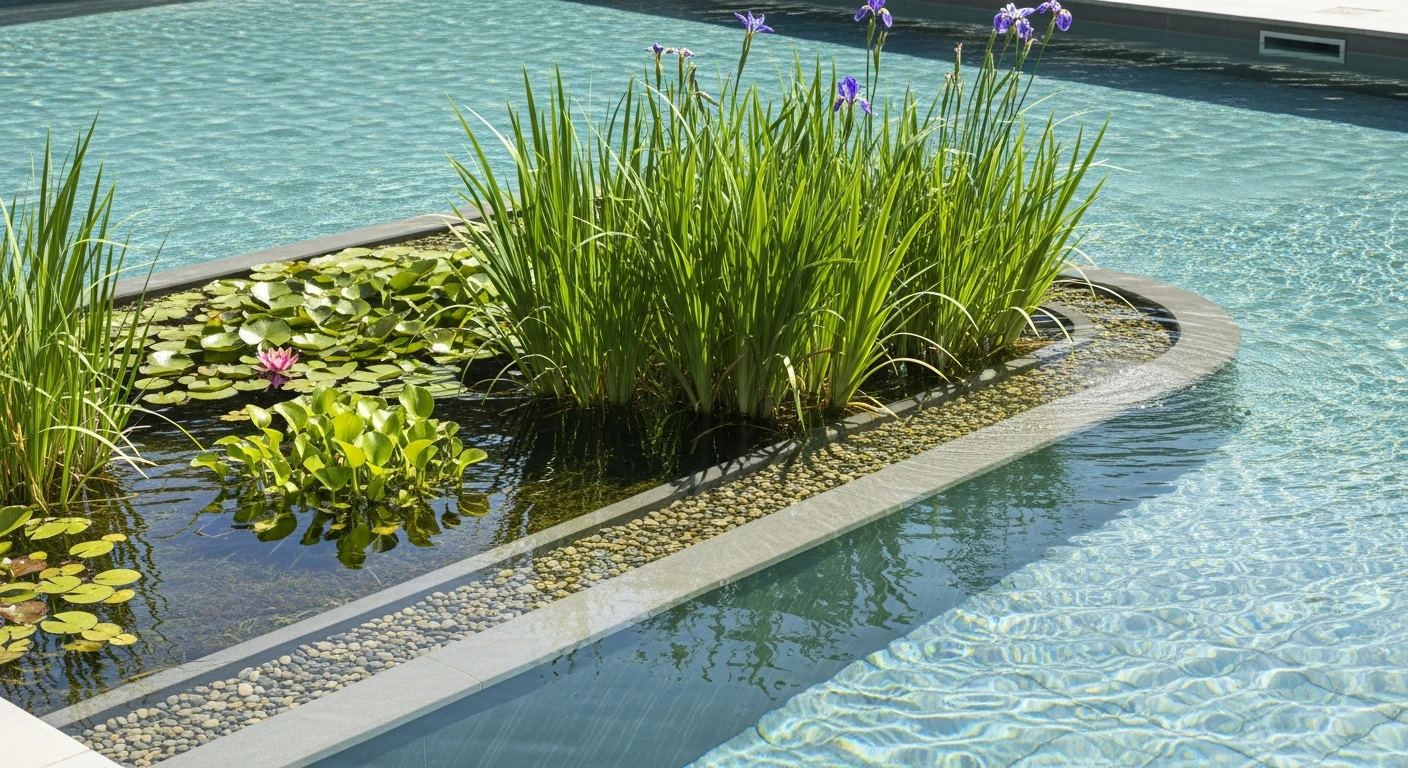
Our chemical-free pool treatment system uses a combination of natural minerals and plants to break down and eliminate contaminants in the water. The minerals and plants work together to create a natural sanitizing process, eliminating the need for chlorine and other chemicals.
Is chemical-free pool treatment safe for my family and pets?
Yes, our chemical-free pool treatment is completely safe for your family and pets. Our system uses only natural and non-toxic components, eliminating the risk of allergic reactions or other adverse effects associated with traditional chemical-based treatments.
Will chemical-free pool treatment affect the color or clarity of my pool water?
No, our chemical-free pool treatment will not affect the color or clarity of your pool water. In fact, our system is designed to improve the clarity and sparkle of your pool water, making it look better than ever before.
How often do I need to maintain my pool with chemical-free treatment?
Our chemical-free pool treatment requires minimal maintenance. Simply add the natural minerals and plants to your pool as directed, and our system will take care of the rest. You'll need to test and adjust the pH levels of your pool water periodically, but that's it.
Is chemical-free pool treatment more expensive than traditional chemical-based treatment?
Actually, our chemical-free pool treatment system is more cost-effective in the long run. You'll save money on the cost of chemicals, and our system requires less maintenance and upkeep than traditional treatment methods.
Can I use my pool during the chemical-free treatment process?
Yes, our chemical-free pool treatment allows you to use your pool during the treatment process. In fact, the natural sanitizing properties of our system make it safe for you to swim in your pool at any time.
How long does it take to see results from chemical-free pool treatment?
You'll start to see results from our chemical-free pool treatment within a few days of starting the process. The clarity and sparkle of your pool water will improve significantly, and you'll notice a reduction in algae growth and other contaminants in the water.
Is chemical-free pool treatment available for commercial pools?
Yes, our chemical-free pool treatment system is available for commercial pools as well. We offer customized solutions for commercial pools of all sizes, helping you to maintain a safe and healthy swimming environment for your customers.
What if I have a pool with existing algae or contaminants?
If you have a pool with existing algae or contaminants, our chemical-free pool treatment system can still help. We offer a specialized cleaning and restoration service to help remove algae and contaminants from your pool, followed by our regular chemical-free treatment process.
Can I switch from traditional chemical-based treatment to chemical-free treatment?
Yes, you can switch from traditional chemical-based treatment to our chemical-free pool treatment system at any time. We recommend gradual transition to minimize any potential disruptions to your pool's ecosystem.