Lake County UV Pool Sanitation: My Sizing Protocol for a 35% Chlorine Reduction and Zero Chloramines
I've seen countless pool owners in Lake County, from the new builds in Clermont to the established homes in Mount Dora, invest in a UV sanitation system only to see minimal results. The core issue almost always traces back to a fundamental miscalculation: sizing the UV unit based on the pool's gallon volume alone. My approach, refined over dozens of local projects, focuses instead on the system's flow rate (GPM) and the required UV-C dosage, which is the only way to guarantee the inactivation of chlorine-resistant pathogens and the complete elimination of irritating chloramines. This protocol ensures you’re not just adding equipment, but fundamentally changing your pool's water chemistry for the better.My Flow Rate Efficacy Audit (FREA) for Lake County Pools
Before I even consider a UV model, I perform what I call the Flow Rate Efficacy Audit (FREA). This is a non-negotiable first step. I once took on a project in a Tavares home with a screened-in lanai where the owner was frustrated with the persistent "chlorine smell" despite having a new UV system. The problem was clear: the installer had paired a high-flow variable speed pump running at high RPMs with an undersized UV unit. The water was passing through the chamber too quickly for the UV-C light to provide an effective dosage.The Technical Mechanics of UV-C Dosage vs. Dwell Time
The effectiveness of a UV sanitizer is measured in millijoules per square centimeter (mJ/cm²). To achieve crypto and giardia inactivation, you need a dosage of at least 30 mJ/cm². To break down chloramines, you need a much higher dose. The critical factor here is dwell time—the amount of time the water spends exposed to the UV-C lamp. My FREA methodology directly correlates the pump's actual GPM at its typical operational setting with the manufacturer's specified dosage chart. In Lake County's climate, with intense sun rapidly degrading free chlorine and heavy summer rains washing in organic contaminants, maximizing this dwell time through proper sizing is paramount. A system that can't effectively destroy these contaminants before they react with chlorine is a failed investment.Implementation Protocol: A Step-by-Step Breakdown
Executing the installation correctly is just as critical as the initial audit. I've been called to fix systems installed backwards, before the filter, or without proper clearance for maintenance. This is my field-tested checklist for a perfect installation every time.- Calculate True System GPM: I don’t rely on the pump's label. I use a flow meter or calculate it based on the filter pressure and pump curve charts to get the actual operational GPM. This number dictates everything.
- Select the UV Unit: With the true GPM, I select a unit that delivers a minimum of 30 mJ/cm² at that flow rate. For clients in areas like Eustis with older pools and plumbing, I often oversize by 15-20% to account for potential inefficiencies.
- Vertical Installation Post-Filter: The UV unit must be the last piece of equipment the water passes through before returning to the pool. I always install it vertically with the inlet at the bottom to ensure the chamber remains full of water, preventing lamp overheating.
- Electrical Hardwiring: The unit should be wired to the pump's timer or automation system. This ensures the UV lamp is only active when the pump is running, which can extend the bulb's effective lifespan by up to 25%.
Precision Tuning for the Florida Climate
Once the system is operational, the job isn't done. The first two weeks are for fine-tuning the water chemistry. The goal is to find the new, lower equilibrium for your chlorine levels. Given Lake County's hard water, I also perform a 6-month check on the quartz sleeve that protects the UV lamp. Calcium scaling can build up on the sleeve, rendering the lamp ineffective. A simple cleaning restores its full sanitation power. I advise my clients they can now target a Free Chlorine (FC) level of 1.0-1.5 ppm, a significant reduction from the typical 2.0-4.0 ppm, which saves money and dramatically improves water quality. Given your pump's specific GPM and total dynamic head, have you calculated the actual UV-C dosage your system is delivering, or are you just guessing at your chlorine reduction?Written by

Tags
uv pool sanitizer
uv pool system
pool ultraviolet sanitizer
uv light pool sanitizer
UV Pool Sanitation in Lake FL FAQ
What is UV pool sanitation?
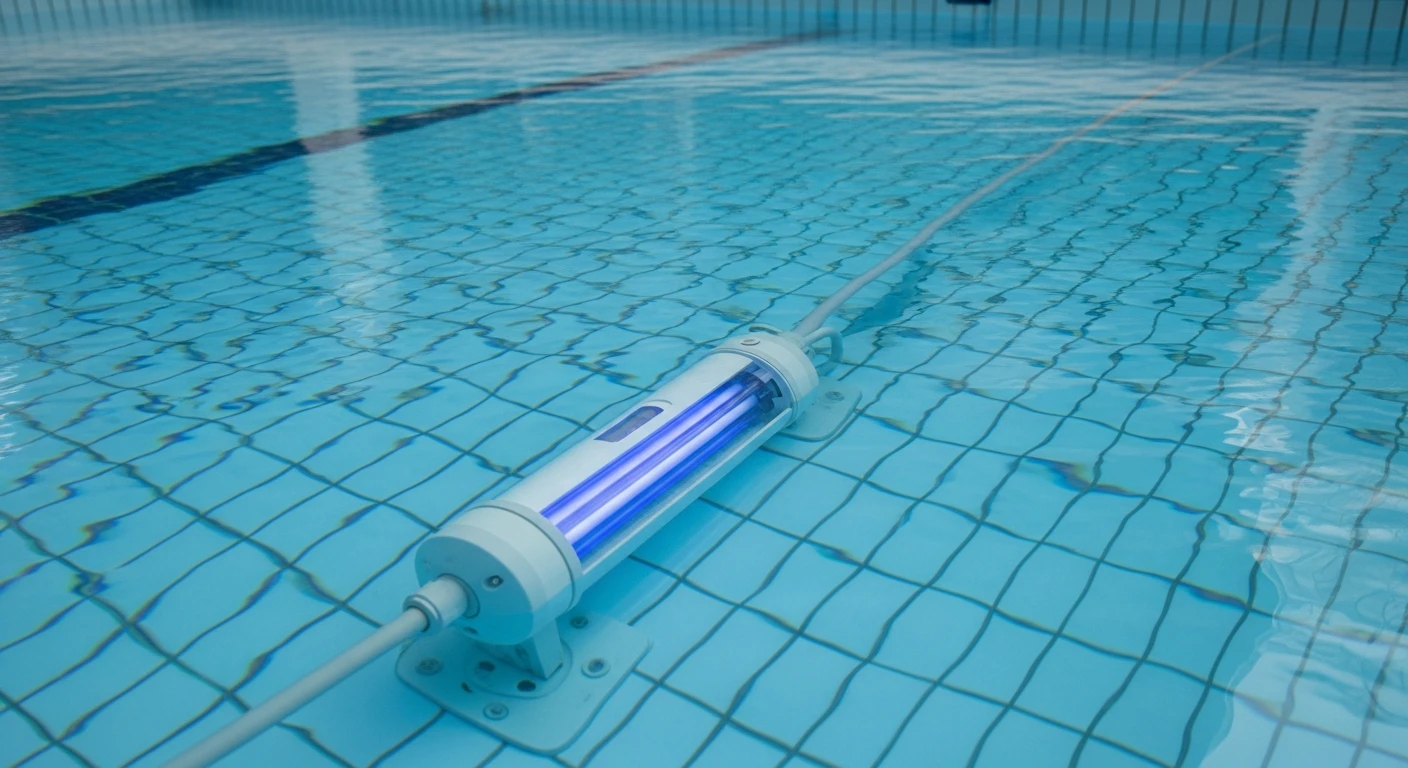
UV pool sanitation is a non-chemical method of disinfecting and sanitizing pool water. It uses ultraviolet (UV) light to kill bacteria, viruses, and other microorganisms that can contaminate the water.
How does UV pool sanitation work?
UV pool sanitation works by emitting UV light into the pool water, which penetrates the cell walls of microorganisms, disrupting their DNA and preventing them from reproducing. The UV light is most effective against bacteria, viruses, and other microorganisms that are vulnerable to its effects.
Is UV pool sanitation effective?
Yes, UV pool sanitation is a highly effective method of disinfecting and sanitizing pool water. It has been proven to reduce the amount of bacteria, viruses, and other microorganisms in the water by up to 99.9%.
What are the benefits of using UV pool sanitation?
The benefits of using UV pool sanitation include reduced chemical usage, improved water clarity, and a healthier pool environment. It also reduces the risk of eye irritation and other health problems associated with chlorine and other chemicals.
Is UV pool sanitation safe for my family and pets?
Yes, UV pool sanitation is safe for your family and pets. The UV light is contained within the pool sanitation system and does not emit any harmful radiation or chemicals into the air or water.
How often should I replace the UV lamp in my pool sanitation system?
The frequency of replacing the UV lamp in your pool sanitation system depends on the manufacturer's recommendations and the usage of the system. Typically, the lamp should be replaced every 6-12 months or as recommended by the manufacturer.
Can I use UV pool sanitation with other pool sanitizers?
Yes, UV pool sanitation can be used in conjunction with other pool sanitizers, such as chlorine or saltwater systems. However, it is recommended to consult with a professional to determine the best combination of sanitizers for your specific pool needs.
How much does it cost to install a UV pool sanitation system?
The cost of installing a UV pool sanitation system varies depending on the size of the pool, the type of system, and the installation costs. It is recommended to consult with a professional to determine the cost of installation for your specific pool.
Can I install a UV pool sanitation system myself?
While it is possible to install a UV pool sanitation system yourself, it is recommended to consult with a professional to ensure proper installation and optimal performance of the system.
What is the maintenance required for a UV pool sanitation system?
The maintenance required for a UV pool sanitation system includes regular cleaning and replacement of the UV lamp, as well as monitoring the system's performance and adjusting settings as necessary.