Chemical-free Pool Treatment: My AOP Framework for Thwarting Manatee County Algae Blooms
As a pool systems specialist here in Manatee County, I've seen the same struggle from homeowners in Lakewood Ranch to the waterfront properties on Anna Maria Island: the endless battle against algae and the cloying smell of chlorine under the intense Florida sun. The common advice is to switch to a salt system, but let me be direct: a salt system is a chlorine system. It simply generates chlorine on-site. The real goal, a truly pristine and non-irritating pool, requires a more advanced approach that I've refined over years of working with our unique local climate. My breakthrough came after a particularly challenging project on a large, unscreened pool in Parrish where the summer rains were constantly diluting the water and triggering explosive algae growth, overwhelming a brand-new salt system. This forced me to abandon conventional methods and develop a framework based on **Advanced Oxidation Process (AOP)**, a system that physically destroys contaminants rather than just chemically neutralizing them. This is the only method I've found that delivers consistently clear, safe, and genuinely low-chemical water year-round, from the heat of August to the mild winters.My Diagnostic Protocol for High-Humidity Pool Environments
Before I even consider equipment, my first step is a site-specific analysis I call the **"Manatee Environmental Load Calculation."** Standard pool calculations are based almost entirely on gallonage. This is a critical error in our region. My methodology focuses on the external stressors that plague pools from Bradenton to Ellenton. I've seen perfectly good equipment fail because it wasn't sized to handle the reality of our subtropical environment. My protocol quantifies three key factors:- Solar Exposure Index: I assess the number of direct sunlight hours. An unscreened pool facing south gets a higher index value, as the UV rays actively break down any residual sanitizers like chlorine, rendering them useless in peak afternoon sun.
- Rainfall Dilution Factor: Based on the pool's surface area and lack of a screen enclosure, I calculate how much a typical 2-inch summer downpour will impact water chemistry, specifically alkalinity and pH, which are the foundation of water balance.
- Bather & Debris Load: A family pool in a leafy neighborhood like River Club has a vastly different organic load (suntan lotions, leaves, pollen) than a small plunge pool used by two adults on Longboat Key. This load dictates the required oxidation power.
Advanced Oxidation Process (AOP): The Technical Breakdown
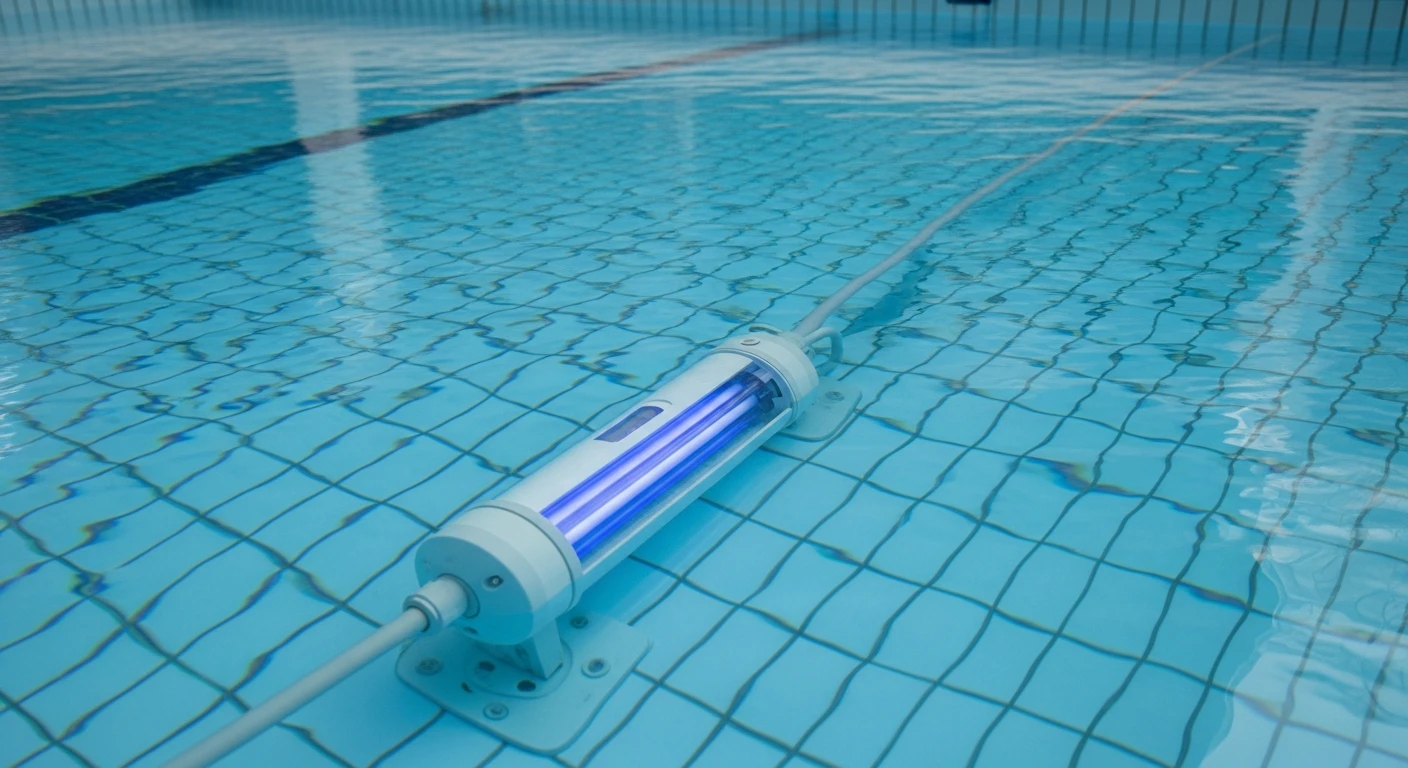
Here is the technical insight that most pool companies either don't understand or don't explain. AOP is not a single product; it's a synergistic reaction. My preferred configuration combines two processes within a single chamber: a high-intensity **UV-C germicidal lamp** and an **Ozone (O3) generator**. As water passes through the unit, the UV light reacts with the ozone gas to create something incredibly powerful: hydroxyl radicals (•OH). These hydroxyl radicals are the most potent oxidizers available for residential pool treatment, far more effective and faster-acting than chlorine or ozone alone. They instantly destroy and eliminate organic and inorganic contaminants, including bacteria, viruses, algae spores, and chloramines (the source of "chlorine smell" and irritation), breaking them down into harmless byproducts like carbon dioxide and water. This is a process of physical destruction, achieving a 99.9% kill rate on pathogens in a single pass. The water returning to the pool is not just sanitized; it's purified on a molecular level.AOP System Sizing and Installation Blueprint for Local Pools
Proper implementation is everything. Installing an undersized AOP unit is a complete waste of money, a mistake I learned to correct early in my career. My installation blueprint is built around ensuring the entire volume of pool water passes through the AOP chamber at the correct frequency. Here is my core checklist for a successful AOP integration:- Calculate the Exact Turnover Rate: For Manatee County's high-load environment, I mandate a minimum of two full turnovers in a 24-hour period. For a 15,000-gallon pool, this means a flow rate of at least 21 gallons per minute (15,000 x 2 / 1440 minutes).
- Select the AOP Unit Based on Flow Rate, Not Just Gallons: The manufacturer's "up to X gallons" rating is a marketing number. I select a unit rated for the target flow rate calculated in the previous step to ensure adequate contact time within the reaction chamber.
- Install Post-Filtration, Pre-Heater: The AOP unit must be installed in the plumbing line after the filter to ensure it receives clean water, and before any heater to prevent damage to the heater's internal components from the small amount of residual ozone. This is a non-negotiable installation standard.
- Establish a Baseline Water Balance: Before activating the AOP system, I perform a full chemical balance, targeting an alkalinity of 80-120 ppm and a pH of 7.4-7.6. The system maintains clarity, but it cannot invent alkalinity. Starting with a balanced pool is critical.
Post-Installation Calibration: Fine-Tuning for Florida's Rainy Season
My job isn't done after the installation. The first few weeks, and especially during the first major summer storm, are for fine-tuning. AOP is a point-of-contact sanitizer, meaning it purifies the water that passes through it. While it drastically reduces the need for chemicals, it doesn't provide a measurable residual sanitizer in the pool itself. For ultimate safety and to prevent any potential algae bloom during periods of heavy use or monsoonal rain, I integrate a secondary, minimal residual sanitizer. This is typically an **ionic mineral system** (using copper and silver ions) or a tiny amount of liquid chlorine, often less than 5% of what a traditional pool would use. The key is monitoring the pool's **Oxidation-Reduction Potential (ORP)**, a true measure of water's ability to sanitize itself. With AOP, we can maintain a high, safe ORP with a barely detectable level of traditional chemicals, giving my clients the chemical-free experience they desire without compromising on safety. Now that you understand the power of hydroxyl radicals, how are you currently measuring your pool's true Oxidation-Reduction Potential (ORP) to quantify its sanitization effectiveness?Written by

Tags
pool shock treatment
above ground swimming pool maintenance
pool treatment
green pool treatment
Chemical-free Pool Treatment in Manatee FL FAQ
What is chemical-free pool treatment?
Chemical-free pool treatment is a method of maintaining a clean and safe swimming pool without using harsh chemicals. Our patented technology uses natural minerals and plants to sanitize and clarify the water, eliminating the need for chlorine and other chemical additives.
How does chemical-free pool treatment work?
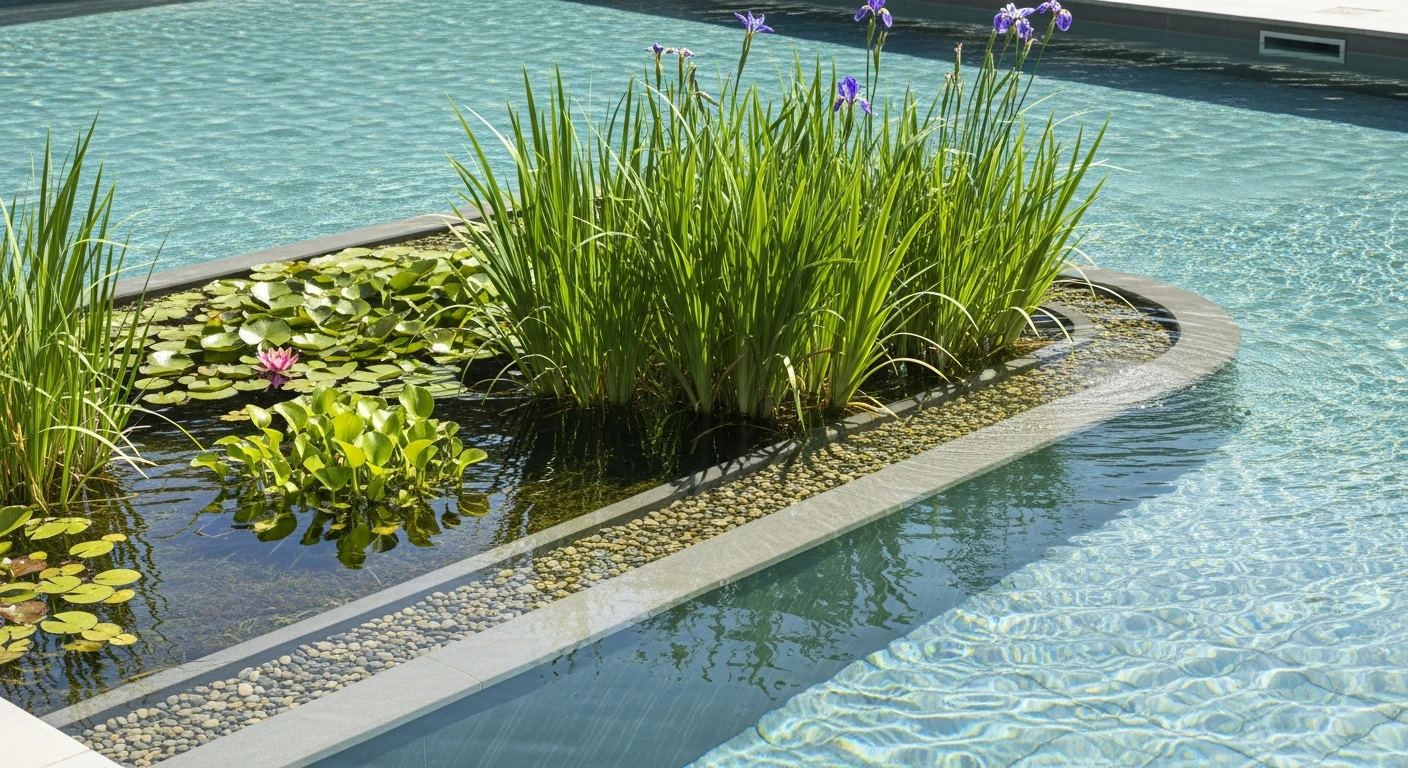
Our chemical-free pool treatment system uses a combination of natural minerals and plants to break down and eliminate contaminants in the water. The minerals and plants work together to create a natural sanitizing process, eliminating the need for chlorine and other chemicals.
Is chemical-free pool treatment safe for my family and pets?
Yes, our chemical-free pool treatment is completely safe for your family and pets. Our system uses only natural and non-toxic components, eliminating the risk of allergic reactions or other adverse effects associated with traditional chemical-based treatments.
Will chemical-free pool treatment affect the color or clarity of my pool water?
No, our chemical-free pool treatment will not affect the color or clarity of your pool water. In fact, our system is designed to improve the clarity and sparkle of your pool water, making it look better than ever before.
How often do I need to maintain my pool with chemical-free treatment?
Our chemical-free pool treatment requires minimal maintenance. Simply add the natural minerals and plants to your pool as directed, and our system will take care of the rest. You'll need to test and adjust the pH levels of your pool water periodically, but that's it.
Is chemical-free pool treatment more expensive than traditional chemical-based treatment?
Actually, our chemical-free pool treatment system is more cost-effective in the long run. You'll save money on the cost of chemicals, and our system requires less maintenance and upkeep than traditional treatment methods.
Can I use my pool during the chemical-free treatment process?
Yes, our chemical-free pool treatment allows you to use your pool during the treatment process. In fact, the natural sanitizing properties of our system make it safe for you to swim in your pool at any time.
How long does it take to see results from chemical-free pool treatment?
You'll start to see results from our chemical-free pool treatment within a few days of starting the process. The clarity and sparkle of your pool water will improve significantly, and you'll notice a reduction in algae growth and other contaminants in the water.
Is chemical-free pool treatment available for commercial pools?
Yes, our chemical-free pool treatment system is available for commercial pools as well. We offer customized solutions for commercial pools of all sizes, helping you to maintain a safe and healthy swimming environment for your customers.
What if I have a pool with existing algae or contaminants?
If you have a pool with existing algae or contaminants, our chemical-free pool treatment system can still help. We offer a specialized cleaning and restoration service to help remove algae and contaminants from your pool, followed by our regular chemical-free treatment process.
Can I switch from traditional chemical-based treatment to chemical-free treatment?
Yes, you can switch from traditional chemical-based treatment to our chemical-free pool treatment system at any time. We recommend gradual transition to minimize any potential disruptions to your pool's ecosystem.