Chemical-free Pool Treatment in Seminole County: My Blueprint for Defeating Algae and Slashing Maintenance by 75%
For years, I've seen Seminole County pool owners fight the same losing battle: dumping gallons of chlorine and shock into their pools, especially after our daily summer thunderstorms, only to see algae bloom again. The high UV index in areas from Lake Mary to Sanford degrades chlorine in a matter of hours, and the organic debris from the beautiful oak and pine trees in Longwood and Casselberry creates a constant, high chemical demand. My solution isn't just about replacing chlorine; it's a complete system recalibration designed specifically for our local environment. It's an integrated approach using Advanced Oxidation Process (AOP) that creates water purer than anything chemicals can achieve. This method moves beyond basic salt systems, which still produce chlorine, and outdated ionizers. I focus on creating an environment where contaminants are destroyed on a molecular level, drastically reducing the need for any chemical intervention. The core principle is achieving a consistently high Oxidation-Reduction Potential (ORP), a metric most pool services ignore, but which is the true measure of water sanitation. This blueprint provides a sustainable, clear pool, even through the intense pollen season of Winter Springs.My Diagnostic Framework for Seminole County Pools
Before I recommend any equipment, my first step is a comprehensive water and environmental analysis that is unique to my process. The water coming into homes in Altamonte Springs has a different mineral profile than water in Oviedo, and this matters. My methodology hinges on diagnosing the total oxidant demand of the specific pool environment. I learned the hard way on a project near Lake Jesup that simply installing a powerful ozonator wasn't enough; the sheer volume of pollen and tannins from surrounding vegetation overwhelmed it within days. My proprietary diagnostic consists of three phases:- Environmental Load Assessment: I analyze the surrounding foliage, sun exposure (which is intense and direct in many newer developments), and the impact of the ubiquitous screened lanais, which can surprisingly increase humidity and foster specific types of algae.
- Source Water Chemistry Profile: I test for phosphates, TDS (Total Dissolved Solids), and water hardness. High phosphates, a common issue in our area due to fertilizer runoff, are a primary food source for algae and must be addressed first.
- System Hydraulic Audit: I calculate the pool's precise turnover rate. I found that over 50% of pools in the area have pumps and filters that are incorrectly sized, preventing any advanced sanitation system from working effectively.
The Core Failure Point: Why Single-System Solutions Fail in Florida's Climate
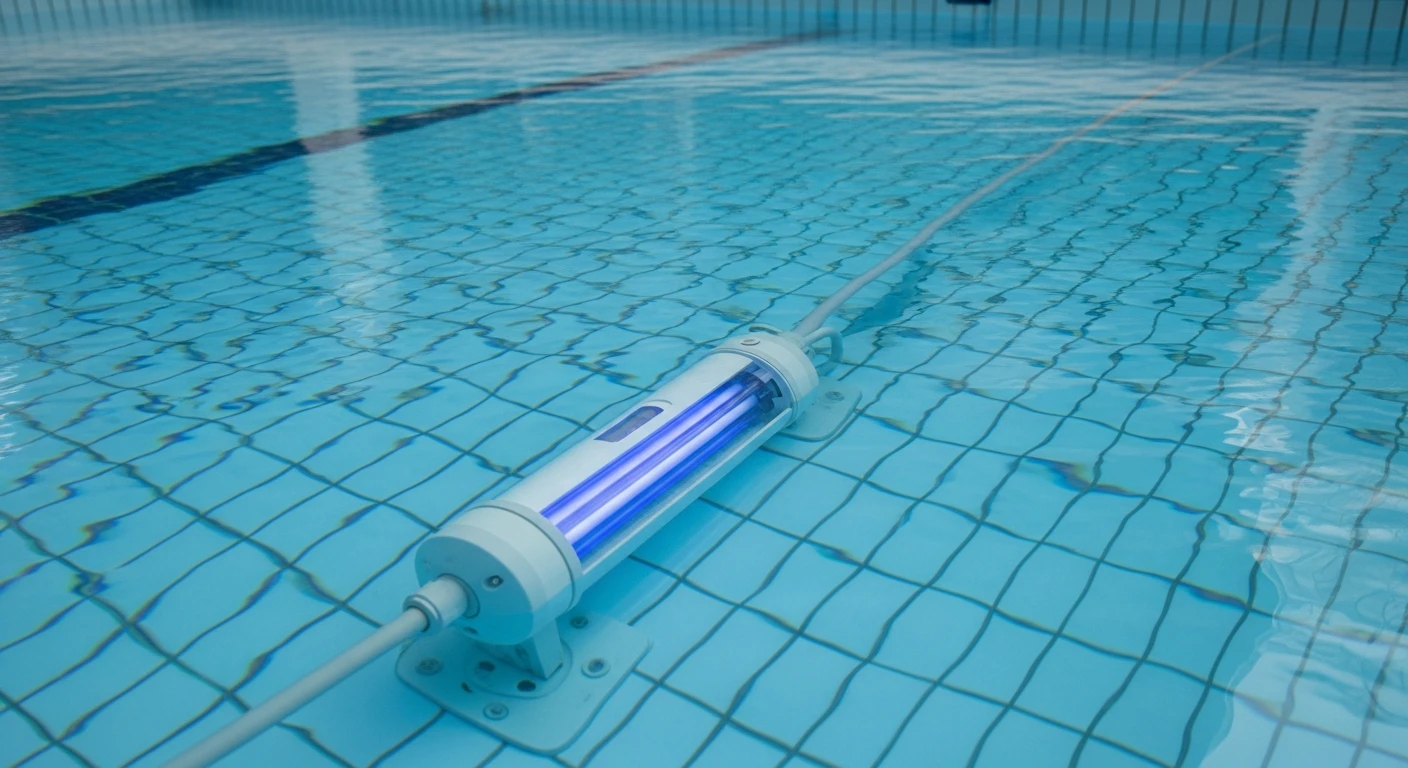
The most common mistake I correct is reliance on a single technology. A standalone ozonator or a simple UV system cannot handle the shock of a Seminole County downpour, which introduces nitrogen, spores, and other contaminants that instantly consume sanitizing agents. The real technical breakthrough is combining two processes to create something far more powerful: hydroxyl radicals. This is the heart of an Advanced Oxidation Process (AOP) system. Inside a single chamber, powerful UV-C lamps bombard ozone (O3) gas. This reaction breaks the ozone apart and combines it with water (H2O) to form hydroxyl radicals (•OH). These are the most powerful oxidizing agents available for pool water treatment, destroying contaminants thousands of times faster than chlorine without any harmful byproducts. A client in Heathrow had a persistent problem with chloramines (the source of "chlorine smell" and irritation) from their salt system. An AOP unit completely eliminated the issue in 48 hours because it destroys the root cause—partially oxidized organic waste.Implementing the Ozone/AOP Synergy System: A Step-by-Step Breakdown
Proper implementation is not just about plumbing in a new device; it's about creating a harmonious system where filtration and sanitation work in tandem. My installation protocol is meticulous to ensure a minimum ORP reading of 650mV is maintained, the level at which pathogens are instantly inactivated.- Upgrade Filtration First: I always start here. I replace standard sand filters with high-capacity cartridge filters capable of trapping particles down to 20 microns. This removes the microscopic debris that AOP breaks down, preventing cloudy water.
- Install a Corona Discharge Ozonator: I exclusively use corona discharge (CD) ozone generators, not UV-based ones. CD units are more potent and are not degraded by Florida's high humidity, a critical detail for equipment longevity.
- Plumb the AOP Unit Post-Filter: The AOP unit must be installed after the filter and heater. This ensures it receives the cleanest possible water, maximizing the efficiency of the UV-C lamps and ozone reaction.
- Integrate a Mazzei Injector: A venturi injector, like a Mazzei injector, is non-negotiable. It uses water pressure to create a powerful vacuum that pulls the maximum amount of ozone gas into the water stream, ensuring proper saturation before it enters the AOP chamber.
- Automate with an ORP Controller: The final step is installing an ORP controller. This device continuously measures the water's sanitation level and activates the AOP system only when needed, which can reduce pump run times and extend the life of the UV lamps by up to 30%.
Precision Tuning and Long-Term Performance Standards
Once installed, the system requires precise calibration. This is not a "set it and forget it" installation. The first week is critical for dialing in the system to the pool's specific bather load and environmental challenges. My quality standard is not just clear water, but water that feels soft and has no detectable odor. The key adjustment is calibrating the ORP controller's setpoint. I typically start at 650mV and adjust upward based on weekly water tests. I also perform a crucial phosphate removal treatment at startup. Without this, even the best AOP system will struggle against algae. I also advise clients on adjusting pump run times; an AOP-treated pool often requires at least two full turnovers per day to ensure all the water passes through the sanitation cycle. The goal is to maintain a low, stable level of a residual sanitizer, like a small 3-inch chlorine tablet, which acts purely as a backup and will last for months instead of days. With the system fine-tuned, are you confident your current pool maintenance approach is actually measuring and controlling sanitation, or is it just reacting to problems after they appear?Written by

Tags
pool shock treatment
above ground swimming pool maintenance
pool treatment
green pool treatment
Chemical-free Pool Treatment in Seminole FL FAQ
What is chemical-free pool treatment?
Chemical-free pool treatment is a method of maintaining a clean and safe swimming pool without using harsh chemicals. Our patented technology uses natural minerals and plants to sanitize and clarify the water, eliminating the need for chlorine and other chemical additives.
How does chemical-free pool treatment work?
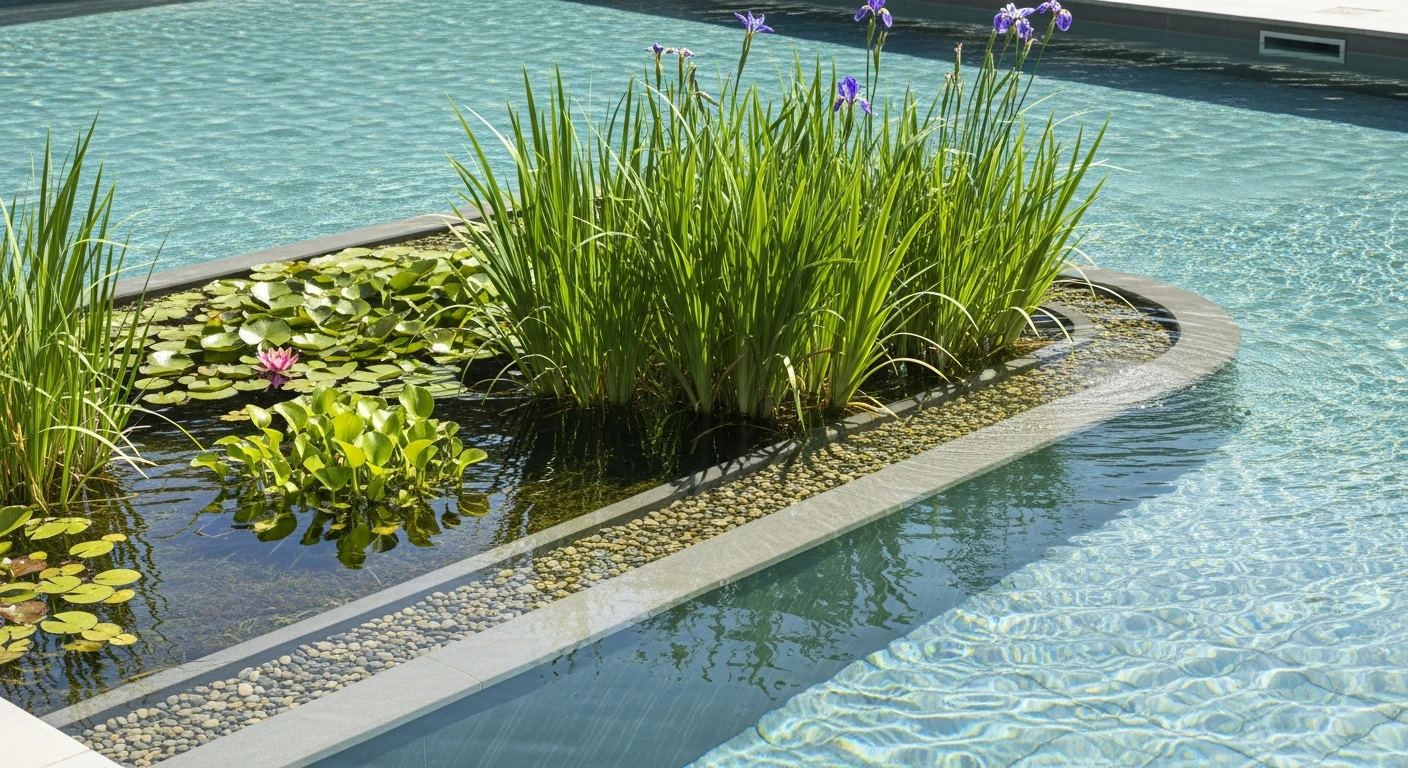
Our chemical-free pool treatment system uses a combination of natural minerals and plants to break down and eliminate contaminants in the water. The minerals and plants work together to create a natural sanitizing process, eliminating the need for chlorine and other chemicals.
Is chemical-free pool treatment safe for my family and pets?
Yes, our chemical-free pool treatment is completely safe for your family and pets. Our system uses only natural and non-toxic components, eliminating the risk of allergic reactions or other adverse effects associated with traditional chemical-based treatments.
Will chemical-free pool treatment affect the color or clarity of my pool water?
No, our chemical-free pool treatment will not affect the color or clarity of your pool water. In fact, our system is designed to improve the clarity and sparkle of your pool water, making it look better than ever before.
How often do I need to maintain my pool with chemical-free treatment?
Our chemical-free pool treatment requires minimal maintenance. Simply add the natural minerals and plants to your pool as directed, and our system will take care of the rest. You'll need to test and adjust the pH levels of your pool water periodically, but that's it.
Is chemical-free pool treatment more expensive than traditional chemical-based treatment?
Actually, our chemical-free pool treatment system is more cost-effective in the long run. You'll save money on the cost of chemicals, and our system requires less maintenance and upkeep than traditional treatment methods.
Can I use my pool during the chemical-free treatment process?
Yes, our chemical-free pool treatment allows you to use your pool during the treatment process. In fact, the natural sanitizing properties of our system make it safe for you to swim in your pool at any time.
How long does it take to see results from chemical-free pool treatment?
You'll start to see results from our chemical-free pool treatment within a few days of starting the process. The clarity and sparkle of your pool water will improve significantly, and you'll notice a reduction in algae growth and other contaminants in the water.
Is chemical-free pool treatment available for commercial pools?
Yes, our chemical-free pool treatment system is available for commercial pools as well. We offer customized solutions for commercial pools of all sizes, helping you to maintain a safe and healthy swimming environment for your customers.
What if I have a pool with existing algae or contaminants?
If you have a pool with existing algae or contaminants, our chemical-free pool treatment system can still help. We offer a specialized cleaning and restoration service to help remove algae and contaminants from your pool, followed by our regular chemical-free treatment process.
Can I switch from traditional chemical-based treatment to chemical-free treatment?
Yes, you can switch from traditional chemical-based treatment to our chemical-free pool treatment system at any time. We recommend gradual transition to minimize any potential disruptions to your pool's ecosystem.