UV and Ozonation in Seminole County: My Protocol for Eliminating 99.9% of Chloramine Odor
I’ll never forget a project I handled on a property near the Wekiva River basin in Seminole County. The client had a beautiful, modern home in Longwood, but their pool was a constant source of frustration. Despite meticulous chemical balancing, the air in their lanai was thick with that distinct, irritating "pool smell" – a clear sign of chloramines. Their pool service company kept recommending more chlorine, a classic case of treating the symptom, not the cause. This is precisely the scenario where I deploy my specialized approach to combined UV and ozonation, a method I’ve refined over years of tackling Florida’s unique water and air quality challenges. My work has shown me that standard, off-the-shelf UV or ozone systems often fail here. The high humidity, intense sun, and significant organic load from local foliage demand a more robust and intelligently integrated solution. The goal isn't just to sanitize water; it's to achieve an advanced oxidation process (AOP) that fundamentally changes the water chemistry, resulting in a massive reduction in chemical demand—often by as much as 80%—and the complete eradication of chloramine byproducts.My Synergistic Oxidation Protocol (SOP) Diagnosis
Before I even consider a piece of hardware, I perform a diagnostic that goes far beyond a standard water test strip. My methodology is built on understanding the specific contaminant load, not just the water volume. For a client in a newer Lake Mary development with city water, the challenges are different from a home in rural Geneva on a well. I once identified that a system failed because the installer never accounted for the high Total Dissolved Solids (TDS) in the client's well water, which was essentially creating a shield that protected microorganisms from the UV-C light. My protocol focuses on three key non-standard metrics:- Total Organic Carbon (TOC): This tells me the true load of sweat, lotions, and plant debris. High TOC is a precursor to chloramine formation and a major drain on sanitizer effectiveness.
- Water Turbidity (NTU): I measure this to determine how effectively UV light will penetrate the water. Even seemingly clear water can have high turbidity, reducing a UV system's germicidal efficacy by over 30%.
- Oxidation-Reduction Potential (ORP): I take a baseline reading. This is the true measure of the water's ability to sanitize itself. The goal is to elevate and stabilize this metric, not just dump in more chemicals.
Calibrating UV Wavelengths and Ozone Saturation
This is where the real technical detail comes in. Not all UV is the same. My system design specifies a dual-spectrum approach. I use a primary chamber with a lamp emitting at 254 nanometers (nm), the peak wavelength for germicidal inactivation of pathogens like Cryptosporidium. But crucially, I pair this with a secondary system or a dual-lamp unit that also produces UV at 185 nm. This lower wavelength reacts with oxygen molecules in the water to generate ozone directly. This creates a powerful AOP right inside the reaction chamber. For the ozonation component, the biggest mistake I see is improper injection. Simply bubbling ozone into the return line is incredibly inefficient. I insist on a Venturi injector installed directly after the pump. This uses negative pressure to draw in the ozone gas, creating millions of micro-bubbles and dramatically increasing the gas-to-liquid transfer rate. The goal is to achieve a specific CT value (Concentration x Time), which is the measure of contact time needed to inactivate specific contaminants. Without the Venturi, you're just venting expensive ozone gas into the atmosphere.Step-by-Step Implementation for Seminole County Homes
For a typical single-family home in a neighborhood like Sanford or Oviedo with a screened-in pool, my implementation process is methodical and focuses on maximizing synergy between the components.- Pre-Filtration Audit: I start at the filter. A cartridge or DE filter is preferred over sand for this application because they filter finer particles, lowering turbidity and allowing the UV system to perform at peak efficiency. I will reject a project if the existing filtration is inadequate.
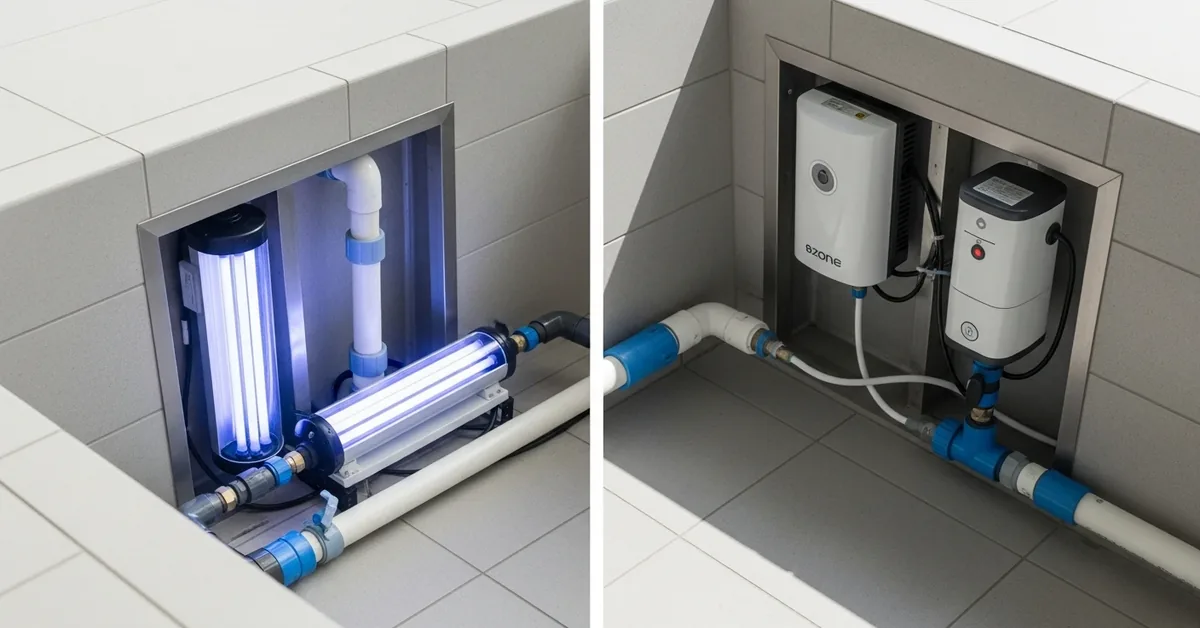
- Ozonator Sizing and Placement: I size the ozonator based on the TOC reading, not just pool gallonage. The Venturi injector is placed on the main return line, immediately after the pump and heater (if present) but before the filter. This uses the filter tank itself as a massive contact/mixing chamber.
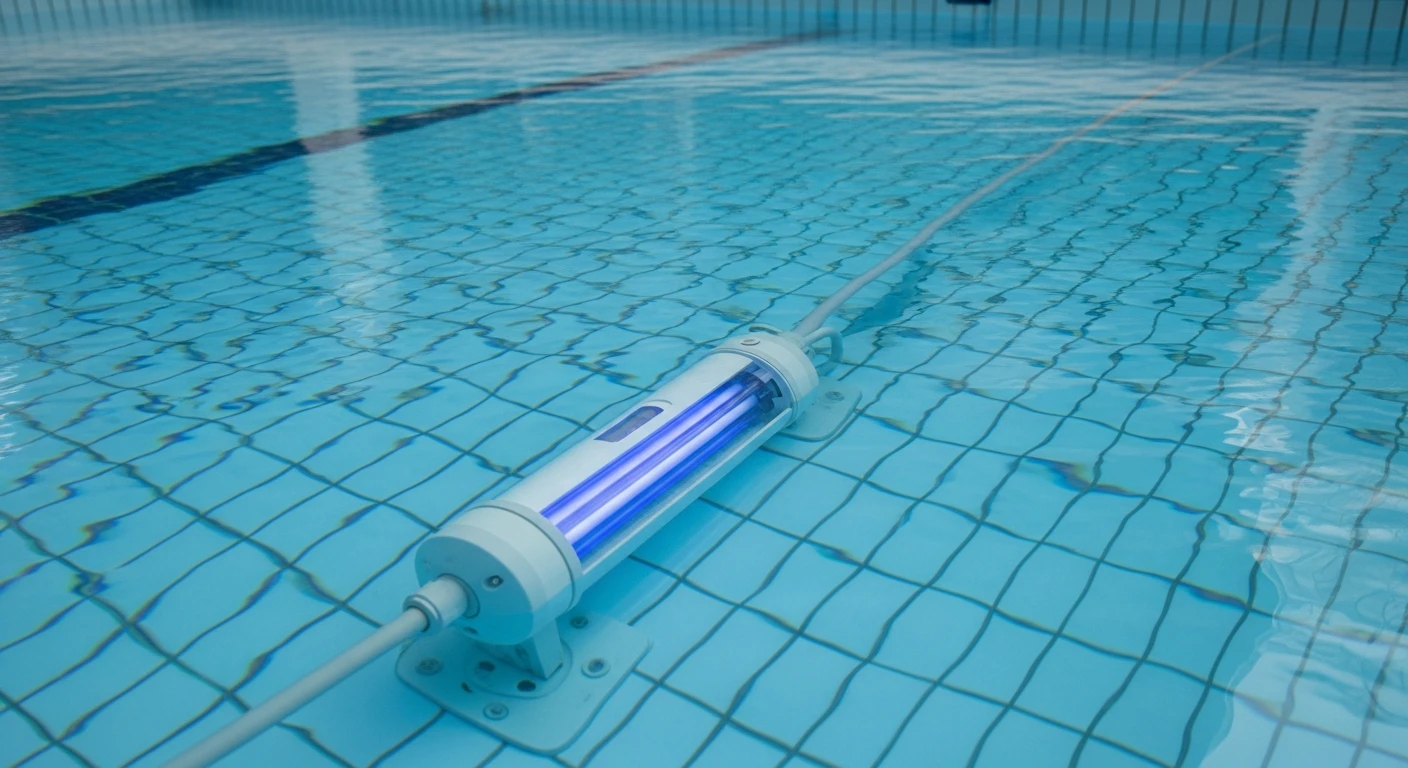
- UV Chamber Installation: The UV sterilizer is always the final component in the plumbing line before the water returns to the pool. This ensures the water has been filtered and treated with ozone, allowing the UV to act as a final, powerful polisher, destroying any remaining bacteria, viruses, and, most importantly, the ozone residual itself.
- ORP Controller Integration: This is the brain. I integrate an ORP controller that constantly measures the water's sanitation potential. This controller is then wired to the ozonator. Instead of running 24/7, the ozonator only activates when the ORP level drops below a preset threshold (e.g., 650 millivolts), preventing over-oxidation and saving energy.
Precision Tuning and Long-Term Performance Metrics
After installation, the job isn't done. The first week is critical for tuning. I will adjust the ozonator's output and the ORP controller's setpoints to find the perfect equilibrium for that specific property. The goal is a stable ORP reading between 650mV and 750mV and a free chlorine level that can be maintained at a very low 0.5 ppm. A critical point I stress to homeowners is maintenance. A UV lamp that is still lit is not necessarily effective. The 254 nm germicidal wavelength output degrades over time. I mandate an annual lamp replacement, regardless of appearance. For the ozonator, I check the corona discharge unit or UV bulb annually to ensure it's clean and operating within spec. Neglecting this turns a high-performance system into an expensive and ineffective piece of plumbing. Are you still measuring your water's health by just its chlorine level, or are you prepared to measure and control its actual ability to stay clean?Written by

Tags
uv pools
swimming pool uv system
uv light pool sanitizer
ultraviolet pool system
UV and Ozonation Technology in Seminole FL FAQ
Can I completely stop using chlorine if I install a UV or ozone system?
No, you cannot eliminate chlorine entirely, but you can significantly reduce its use by 50-80%. UV and ozone systems are powerful sanitizers that destroy contaminants as water passes through them, but they do not leave a lasting residual sanitizer in the main body of the pool. A low level of chlorine, typically 0.5-1.0 parts per million, is still required to act as a residual sanitizer, ensuring that any new bacteria or algae introduced by swimmers or debris are neutralized before they can multiply. Relying solely on UV or ozone would leave the pool water unprotected once it returns from the equipment pad.
My pool installer said ozone will damage my cover and equipment. Is that true?
This is a valid concern, but modern systems are designed to prevent it. High concentrations of ozone gas can indeed degrade certain materials, but properly installed systems use a degassing unit or a mixing chamber that ensures excess ozone is neutralized before the water returns to the pool. This process prevents harmful off-gassing that could damage a vinyl liner or a solar cover. When choosing a system, verify it includes an effective method for ozone destruction or containment, which is a critical feature often overlooked in cheaper, less-engineered units.
What's the real difference between a UV system and an ozonator? Do I need both?
UV systems use ultraviolet light to inactivate microorganisms, while ozonators inject ozone gas to oxidize and destroy them. The key difference is that ozone also acts as a powerful oxidizer, breaking down non-living organic waste like lotions and oils, which improves water clarity. Combining them, often in a single unit, provides a multi-layered sanitation barrier. This dual approach is highly effective at destroying chloramines—the compounds responsible for the 'chlorine smell' and irritation—which neither system can eliminate as effectively on its own. While not strictly necessary, having both offers the most robust, low-chemical water treatment.
How often do I need to replace the bulb in my UV system or the chip in my ozonator?
UV lamps typically require replacement every 9,000 to 14,000 operating hours, which usually translates to every 12 to 24 months depending on usage. Ozone generators using corona discharge technology have components, like a chip or cartridge, that last from 2 to 5 years. It is critical to replace these on schedule, even if they still appear to be working. A UV bulb's germicidal effectiveness drops significantly after its rated lifespan, even though it still emits visible light, leaving your pool under-sanitized and vulnerable to outbreaks like black algae.
Will adding a UV or ozone system affect my pool's pH level?
Ozone systems can have a minor effect, tending to slightly raise the pool's pH over time. This is because the process of injecting and mixing ozone gas can cause some carbon dioxide to off-gas from the water, which reduces acidity. In contrast, a UV sterilizer has virtually no impact on water balance, as it is a physical process that does not add or remove any substances. In either case, the effect is gradual and easily managed with routine chemical testing and adjustments, ensuring you maintain the crucial pH range of 7.2 to 7.6 for bather comfort and equipment protection.
I have a salt chlorine generator. Is it redundant or even harmful to add UV or ozone?
It is not redundant; in fact, it creates a highly effective and synergistic system. A salt chlorine generator (SCG) produces chlorine, which provides the necessary residual sanitizer, while the UV or ozone unit handles the primary sanitation load and destroys chloramines. This combination allows you to run your salt cell at a much lower output setting, significantly extending its lifespan, which can be a costly replacement. The systems do not conflict; they complement each other by targeting different sanitation tasks, resulting in exceptionally clean water with a minimal chemical feel and reduced wear on your equipment.