UV Pool Sanitation in Seminole County: A Protocol for 70% Chloramine Reduction and Stable Water Chemistry
As a pool system specialist operating across Seminole County, from the larger residential lots in Lake Mary to the classic pools in Sanford, I’ve seen firsthand how our intense Florida sun and humid climate wreak havoc on traditional chlorine-based sanitation. The constant battle is against chloramines—the irritating, foul-smelling compounds formed when chlorine reacts with sweat and organic matter. Many pool owners find themselves in a costly cycle of "shocking" the pool, only for the problem to return within days. My approach sidesteps this endless chemical warfare. The goal isn't to eliminate chlorine but to make it hyper-efficient. By integrating a correctly sized UV sanitation system, I can consistently achieve a 70-80% reduction in chloramine levels. This creates water that is not only safer but also feels softer and requires significantly less chemical maintenance, a crucial benefit during our long, nine-month swim season.The Pre-Installation Audit: My Flow Rate Resonance Method
The single biggest mistake I see in UV installations is sizing the unit based on the pool's gallon volume alone. This is a flawed metric. The true efficacy of a UV system is determined by the water's exposure time as it passes the lamp. A high-flow pump can push water through the UV chamber so quickly that pathogens aren't fully irradiated. My proprietary Flow Rate Resonance Method ensures the UV unit's optimal GPM (gallons per minute) range is perfectly matched to the pump's actual operational output. I start by taking a pressure reading at the filter and using a pump performance curve chart to determine the system's true GPM. This is critical for homes in areas like Longwood with variable-speed pumps, which often run at lower, energy-saving speeds. A UV system sized for the pump's max GPM will be ineffective for 90% of its runtime. I identified this exact issue in a large community pool project in Altamonte Springs, where an expensive, oversized UV unit was performing at less than 30% efficiency because it was mismatched with the pump's daily low-speed cycle.Sizing Beyond Volume: UV Dosage and Contaminant Load
Once I have the precise flow rate, I focus on the required UV dosage, measured in millijoules per square centimeter (mJ/cm²). The industry standard for inactivating pathogens like Giardia and Cryptosporidium is around 30 mJ/cm². However, for the high contaminant load we experience in Seminole County—driven by heavy pollen, afternoon rain washing debris into the pool, and high bather loads—I specify systems that can deliver a sustained dose of 40-50 mJ/cm² at the target flow rate. This higher dosage provides a crucial buffer, ensuring the system remains effective even when water clarity is temporarily reduced after a thunderstorm. It aggressively breaks down not just microorganisms but also the molecular bonds of chloramines, suntan lotions, and other organic compounds, which is the key to achieving that crystal-clear water and eliminating the "chlorine smell" for good.Field Implementation Protocol for Seminole County Pools
Proper installation is non-negotiable and follows a strict sequence to maximize performance and safety. My protocol is designed for durability against our local climate conditions.- System Depressurization: The process always begins by shutting down the pump at the breaker and releasing all pressure from the system via the filter's air relief valve.
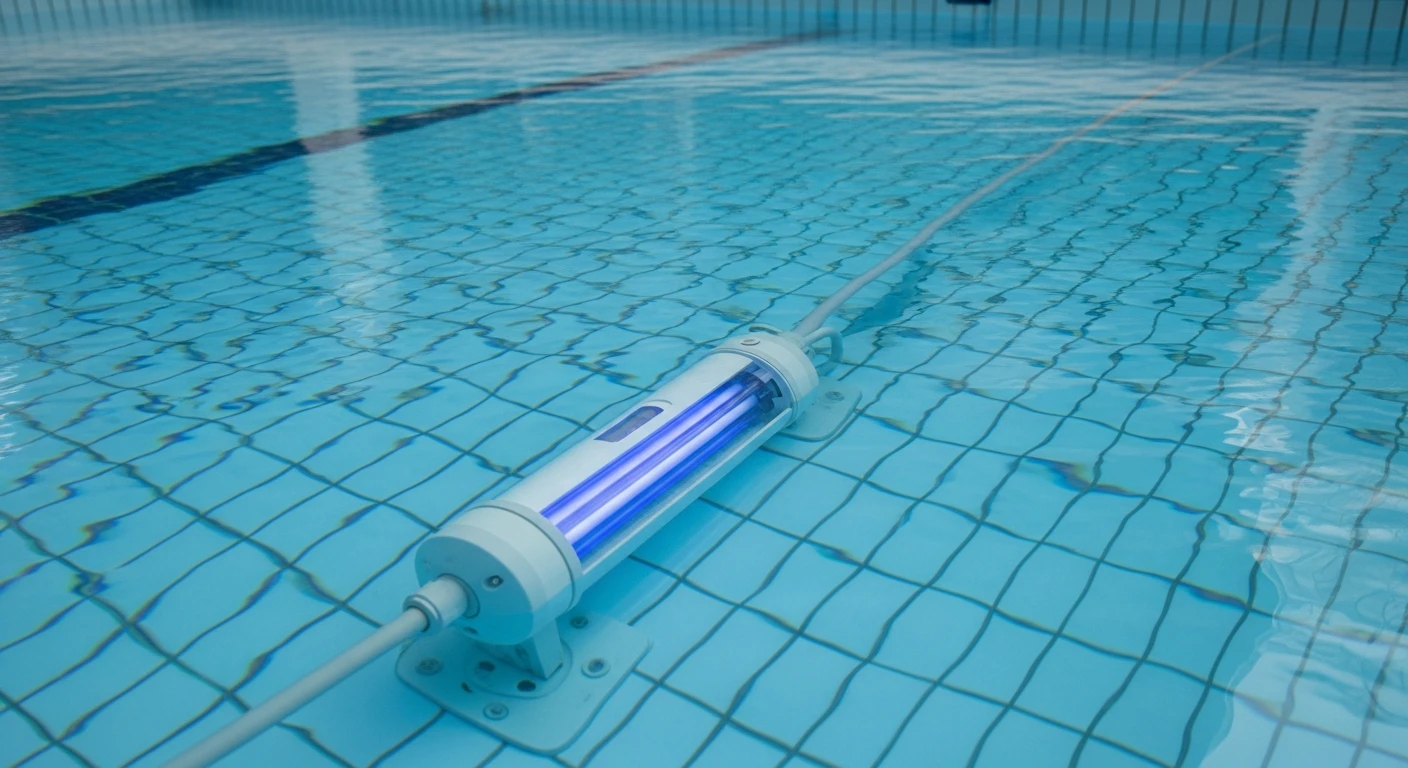
- Critical Placement: The UV unit must be installed as the last component in the plumbing line before the water returns to the pool. It should be placed *after* the filter and heater. Placing it before the filter would allow debris to coat the quartz sleeve, rendering the UV lamp useless.
- Plumbing and Assembly: I use heavy-duty PVC pipe and install union connectors on both sides of the UV unit. This is a small but vital detail that allows for easy removal of the unit for bulb replacement or service without having to cut the plumbing.
- Electrical Safeguards: The unit is wired to a dedicated, properly grounded GFCI-protected circuit. I always ensure the wiring is shielded from direct sun and moisture to prevent degradation, a common failure point in Florida installations.
- Initial Burn-in and Re-balancing: After installation, I run the system for a full 24-hour cycle. I then perform a complete water chemistry test. The UV system will immediately reduce chlorine demand, so the output of salt-chlorine generators or chemical feeders must be recalibrated downwards.
Post-Installation Calibration: The Chloramine Threshold Test
The job isn't done after the unit is switched on. I validate every installation with my Chloramine Threshold Test. This involves using a professional-grade test kit to measure both Free Chlorine (FC) and Total Chlorine (TC). The difference between these two values is your level of Combined Chlorine (CC), which are the chloramines. My benchmark for a successful installation is a consistent Combined Chlorine reading below 0.2 ppm (parts per million). If the reading is higher, I analyze the system's runtime and flow rate to make micro-adjustments. This ensures the client sees a quantifiable improvement in water quality, not just an anecdotal one. This final calibration is what separates a standard installation from a professionally optimized sanitation system. Your pool pump is running, but is your sanitation system truly optimized for the intense Seminole County climate, or is it just masking problems with more chemicals?Written by

Tags
uv pool sanitizer
uv pool system
pool ultraviolet sanitizer
uv light pool sanitizer
UV Pool Sanitation in Seminole FL FAQ
What is UV pool sanitation?
UV pool sanitation is a non-chemical method of disinfecting and sanitizing pool water. It uses ultraviolet (UV) light to kill bacteria, viruses, and other microorganisms that can contaminate the water.
How does UV pool sanitation work?
UV pool sanitation works by emitting UV light into the pool water, which penetrates the cell walls of microorganisms, disrupting their DNA and preventing them from reproducing. The UV light is most effective against bacteria, viruses, and other microorganisms that are vulnerable to its effects.
Is UV pool sanitation effective?
Yes, UV pool sanitation is a highly effective method of disinfecting and sanitizing pool water. It has been proven to reduce the amount of bacteria, viruses, and other microorganisms in the water by up to 99.9%.
What are the benefits of using UV pool sanitation?
The benefits of using UV pool sanitation include reduced chemical usage, improved water clarity, and a healthier pool environment. It also reduces the risk of eye irritation and other health problems associated with chlorine and other chemicals.
Is UV pool sanitation safe for my family and pets?
Yes, UV pool sanitation is safe for your family and pets. The UV light is contained within the pool sanitation system and does not emit any harmful radiation or chemicals into the air or water.
How often should I replace the UV lamp in my pool sanitation system?
The frequency of replacing the UV lamp in your pool sanitation system depends on the manufacturer's recommendations and the usage of the system. Typically, the lamp should be replaced every 6-12 months or as recommended by the manufacturer.
Can I use UV pool sanitation with other pool sanitizers?
Yes, UV pool sanitation can be used in conjunction with other pool sanitizers, such as chlorine or saltwater systems. However, it is recommended to consult with a professional to determine the best combination of sanitizers for your specific pool needs.
How much does it cost to install a UV pool sanitation system?
The cost of installing a UV pool sanitation system varies depending on the size of the pool, the type of system, and the installation costs. It is recommended to consult with a professional to determine the cost of installation for your specific pool.
Can I install a UV pool sanitation system myself?
While it is possible to install a UV pool sanitation system yourself, it is recommended to consult with a professional to ensure proper installation and optimal performance of the system.
What is the maintenance required for a UV pool sanitation system?
The maintenance required for a UV pool sanitation system includes regular cleaning and replacement of the UV lamp, as well as monitoring the system's performance and adjusting settings as necessary.