Cleaning Brick Pavers With Pressure Washer: My Protocol to Prevent Joint Damage & Extend Lifespan by 30%
Most guides on pressure washing brick pavers focus on PSI. They're fundamentally wrong. After years of restoring hardscapes, I’ve seen the real damage isn't from etching the brick surface; it's from blasting out the jointing sand. This single mistake destabilizes the entire interlocking system, leading to wobbly pavers, weed growth, and costly repairs. The common high-pressure approach is a critical failure.
My methodology prioritizes structural integrity over brute force. It's a system built around a calibrated water flow (GPM) and precise nozzle control, not just raw power. This protocol ensures a deep clean that removes years of grime, moss, and efflorescence without compromising the sand-set foundation that keeps your pavers locked in place. It’s the difference between a clean surface and a truly restored, stable hardscape.
My Diagnostic Protocol for Paver Integrity
Before a single drop of water hits the pavers, I perform a mandatory diagnostic. I’ve been called to fix too many projects where a "professional" cleaner used a 4,000 PSI machine with a 15-degree tip, effectively destroying the paver joints and scoring the brick faces. My first step is always assessment to prevent this. I check for three things: the type of stain (organic, oil, or mineral), the condition of the jointing sand, and any pre-existing sealant. This initial analysis dictates the entire cleaning strategy. My core philosophy is the Low-PSI, High-Flow Method. It uses water volume to do the heavy lifting, gently lifting dirt away rather than aggressively blasting it out.
Calibrating PSI, GPM, and Nozzle Selection
This is where the technical work begins and where most DIY attempts fail. The machine's specifications are a starting point, not the rule. A pressure washer rated for 3,000 PSI can be dialed back or controlled with nozzle choice.
For most residential brick pavers, I never exceed 1,600 PSI. The real hero is the Gallons Per Minute (GPM); a higher GPM provides superior rinsing power without destructive force. I aim for a machine with at least 2.5 GPM.
Nozzle selection is non-negotiable:
- Red (0-degree): Never use this on brick pavers. It will permanently etch the surface. I throw this nozzle away.
- Yellow (15-degree): Too aggressive for general cleaning. Only for targeted, severe stain removal from a safe distance.
- Green (25-degree): A common choice, but I find it still has the potential to dislodge excessive sand if you get too close.
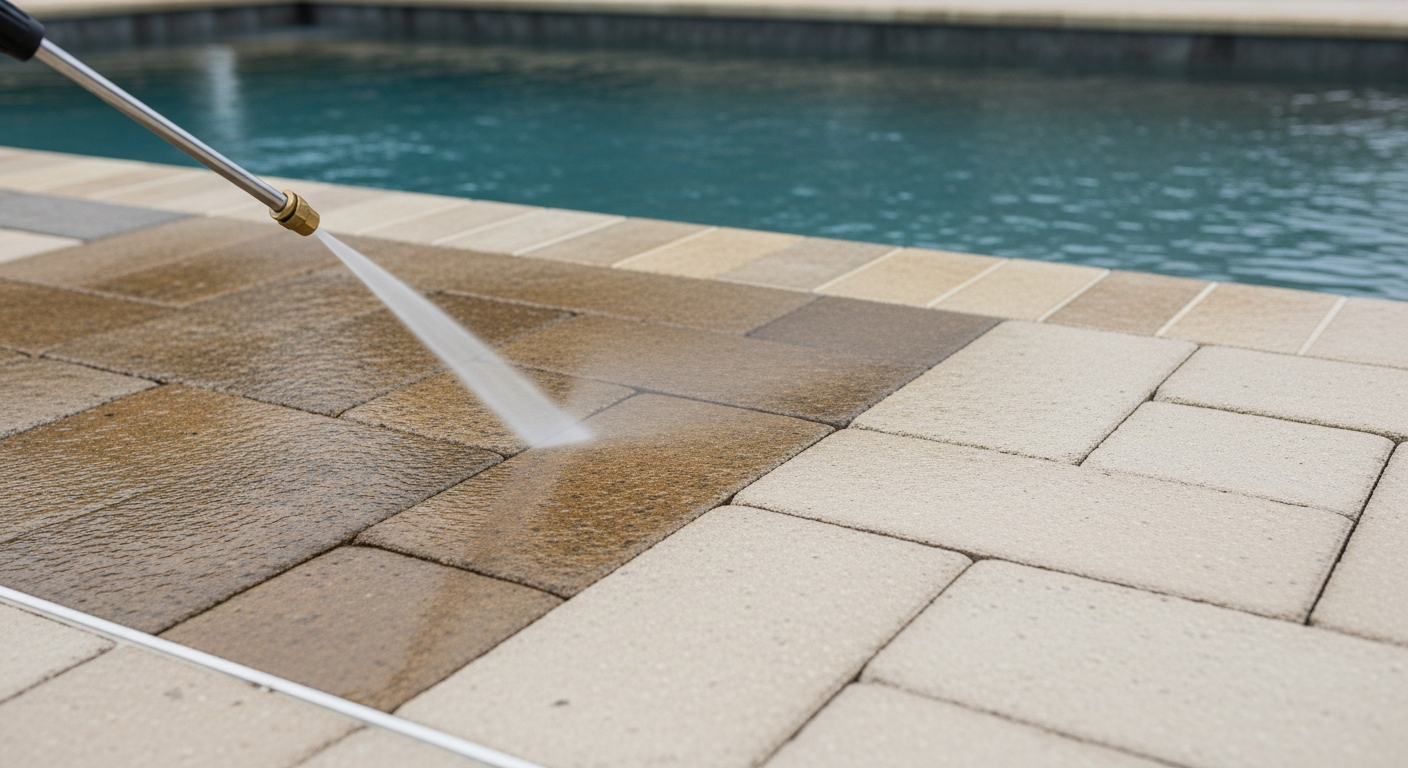
- White (40-degree): This is my primary workhorse. It provides a wide, safe spray pattern that cleans effectively without gouging the joints.
- Turbo Nozzle: An expert-level tool. It spins a 0-degree stream in a cone pattern. It cleans quickly but requires constant motion and a precise distance to avoid creating circular etch marks. I only use this for heavily soiled, unsealed commercial projects.
- Sweep: The initial dry preparation. I use a stiff-bristle broom to remove all loose debris, leaves, and surface-level dirt. This prevents turning loose dirt into mud that gets pushed deeper into the paver pores.
- Soak & Treat: I pre-soak the entire surface with water. A dry paver will absorb cleaning chemicals, leading to discoloration. After soaking, I apply a paver-safe, oxygenated bleach-based cleaner for organic stains (moss, algae). I let it dwell for 10-15 minutes, but never let it dry on the surface.
- Spray: This is the pressure washing phase. I begin with the 40-degree (white) nozzle, keeping the wand tip at least 12 inches from the surface. I work at a consistent, sweeping angle (around 30 degrees to the ground) to push dirt and debris off the paver field, not down into the joints. I move systematically from the highest point to the lowest to manage water runoff.
- Sand: This is the most critical post-cleaning step. After the pavers are 100% bone dry (this can take 24-48 hours), I refill the joints. I exclusively use polymeric sand. Unlike regular sand, it contains polymers that harden when activated with a light mist of water, locking the pavers together and creating a powerful weed and insect barrier. I sweep the sand into the joints until they are completely full.
- Seal: The final step for long-term protection. Applying a quality penetrating sealer prevents future staining, protects against UV fading, and makes future cleaning significantly easier. This step alone can add a 25-30% increase in the paver's aesthetic lifespan.
Tags
pressure wash pavers
power wash paver driveway
pressure washing paver driveway
cleaning pavers with pressure washer
paver power washing near me