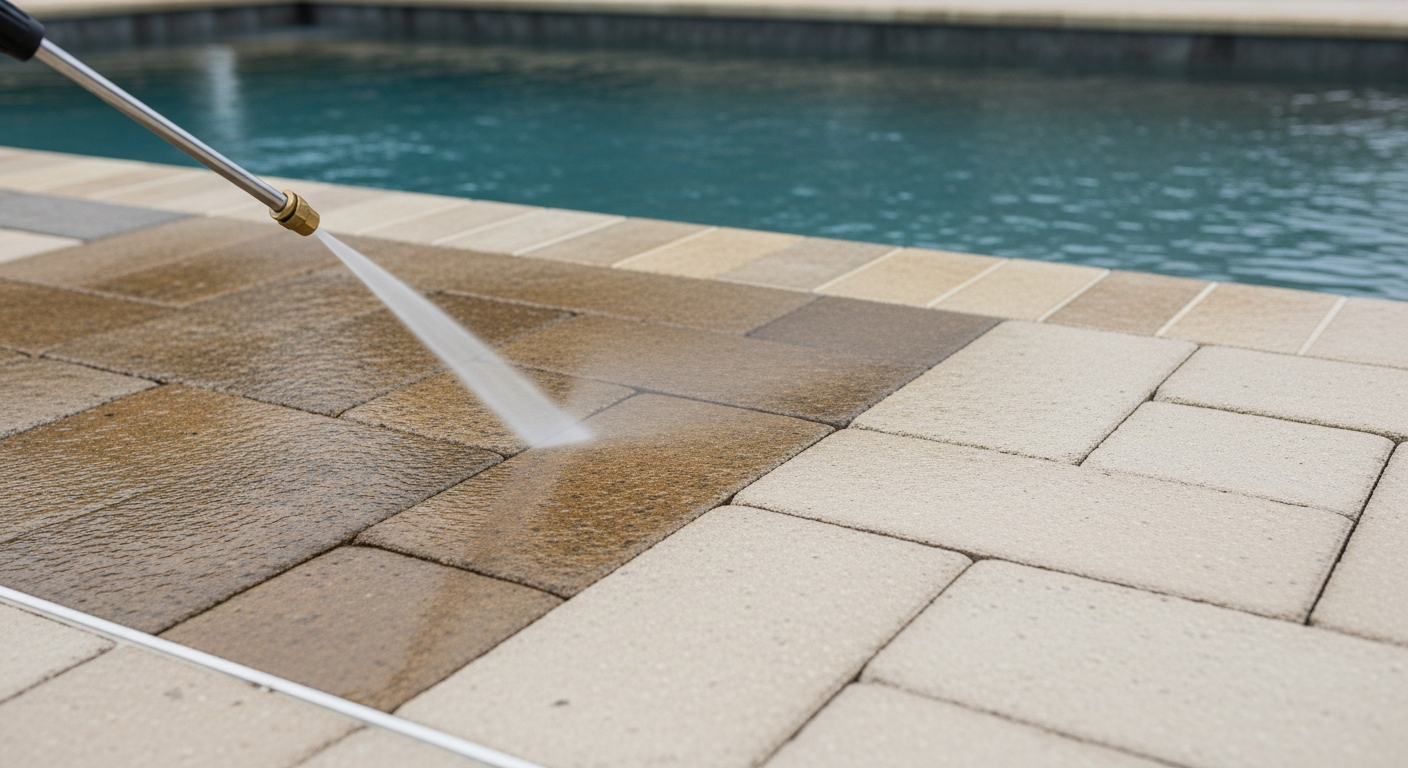
Cleaning Pavers With Pressure Washer: My Protocol to Prevent Sub-Base Damage and Joint Failure
You can absolutely pressure wash pavers, but the single most critical factor isn't the power of your machine—it's the preservation of the bedding sand and joint structure beneath the surface. I’ve seen countless pristine patios ruined not by dirt, but by an aggressive washing technique that erodes this foundational layer, leading to shifting, uneven pavers within a single season. The goal is not to blast the surface clean, but to lift contaminants without compromising the interlocking system.
My entire methodology is built around this principle: protect the sub-base at all costs. Forget about maximum PSI; we're focused on a calculated combination of pressure, angle, and nozzle selection. This approach not only cleans effectively but can increase the structural lifespan of your paved area by an estimated 25% by avoiding the need for premature re-leveling.
My PSI-Angle Matrix Protocol: A Pre-Wash Diagnostic
Before I even connect a hose, I perform a diagnostic based on what I call the **PSI-Angle Matrix**. This isn't just about looking at the dirt; it's about understanding the system you're about to put under intense stress. I developed this after a major commercial project where a crew using a "one-size-fits-all" high-pressure approach inadvertently caused thousands of dollars in paver subsidence damage. My protocol analyzes three core variables: paver material, stain type, and current joint integrity. This initial assessment dictates the entire cleaning strategy and prevents the catastrophic failure I witnessed.
Calibrating Pressure, Nozzle, and Technique for Paver Integrity
The success of the wash is determined in this calibration phase. My baseline for concrete pavers is a pressure setting between 1200-1600 PSI and a flow rate of at least 2.0 GPM (Gallons Per Minute). Pushing beyond 2000 PSI on most residential pavers doesn't just clean faster; it begins to etch the surface, creating a rougher texture that holds more dirt in the future.
- Nozzle Selection: I exclusively use a 40-degree (white) nozzle for the main cleaning. It provides a wide, fan-like spray that cleans without the destructive, concentrated force of narrower-degree tips. The 25-degree (green) nozzle is reserved only for spot-treating stubborn oil stains from a safe distance. The 0-degree (red) nozzle should never, under any circumstances, be used on pavers.
- The Critical Angle: I maintain a consistent 30 to 45-degree angle between the wand and the paver surface. A perpendicular, 90-degree angle acts like a jackhammer, blasting sand out from the joints. My angled approach uses the water flow to sweep dirt off the surface, not excavate the foundation.
- The Surface Cleaner Attachment: For large, flat areas, my go-to tool is a 15-inch surface cleaner attachment. This accessory is a game-changer. It maintains a perfect, consistent distance and angle from the surface, completely eliminating the risk of "tiger striping" or wand marks and guaranteeing a uniform finish.
- Site Preparation: Clear all furniture and sweep away all loose debris. Thoroughly rinse adjacent walls and vegetation and, if possible, pre-soak the entire paver surface with a garden hose. A saturated surface prevents cleaning agents from drying too quickly.
- Apply a Paver-Specific Cleaner: If dealing with organic stains like algae or mildew, I apply a dedicated, pH-neutral paver cleaner. I let it dwell for 10-15 minutes but never allow it to dry on the surface.
- The Main Wash (Applying the Matrix): Starting at the highest point and working downwards, I clean in a single, methodical direction. I keep the wand moving in a consistent sweeping motion, overlapping each pass by about 30% to avoid streaks. My working distance is always 10-12 inches from the surface.
- The Comprehensive Rinse: After the wash, I switch to a very low-pressure rinse or use the garden hose to guide all dislodged dirt and cleaning residue completely off the paved area. Pooling dirty water is a primary cause of streaking.
- The Curing Phase: This is non-negotiable. The pavers and, more importantly, the joint gaps must be allowed to dry completely. This takes a minimum of 24 to 48 hours in good weather. Trapping moisture under new sand is a recipe for failure.
- Re-sanding with Polymeric Sand: I only use polymeric sand. Regular joint sand will wash out in the next rainstorm. I sweep the polymeric sand into the dry joints until they are completely full. I then use a leaf blower on a light setting to blow excess sand off the paver surfaces before activating it.
- Activate the Polymer: Using a hose nozzle set to a fine "mist" or "shower" setting, I gently wet the surface. This light mist activates the polymers in the sand, which will harden to form a firm, flexible joint that resists weeds and erosion. This step is what "locks in" the structural integrity of the cleaning job.
Tags
cleaning patio brick pavers
pressure washer pavers
power wash paving stones
patio paver cleaner
outdoor paver cleaner