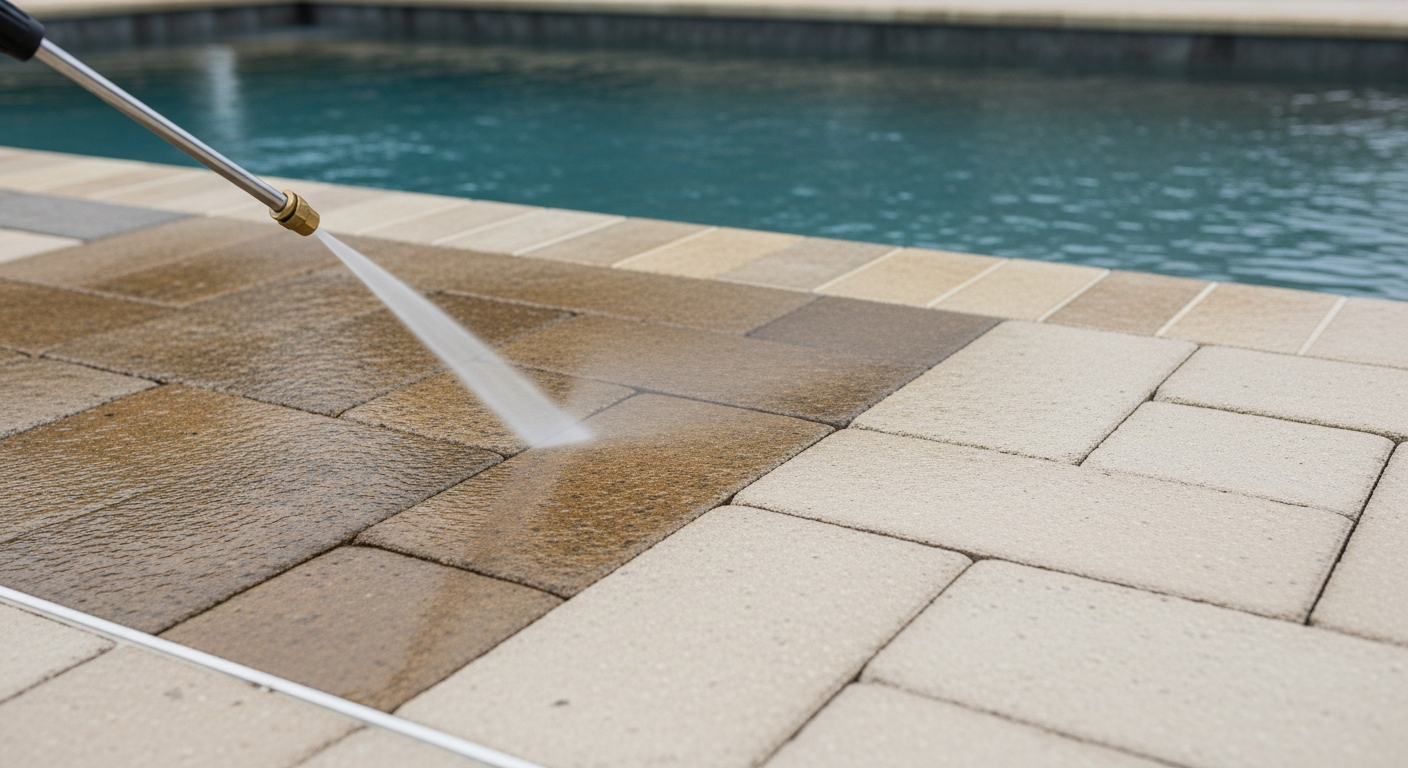
Cleaning Brick Pavers With Pressure Washer: My Zero-Etch Method for Preserving Joint Integrity
Over my years of restoring high-end properties in Sarasota, from sprawling lanai patios in Lakewood Ranch to salt-sprayed driveways on Siesta Key, I've seen one costly mistake repeated: improper pressure washing that permanently damages brick pavers. The typical approach blasts away not just the stubborn black mold fueled by our Florida humidity, but also the critical joint sand, leading to paver shifting and a 30% reduction in the surface's lifespan. My method focuses on a calibrated, low-PSI approach that cleans deeply while protecting the foundational integrity of your investment. This isn't about just spraying water. It’s a systematic process I developed after being called in to fix a major paver installation in a coastal community where a "professional" had etched the paver faces and completely displaced the polymeric sand. My Zero-Etch Method uses a specific combination of nozzle angle, calibrated pressure, and a two-stage cleaning protocol to remove algae and efflorescence without causing collateral damage. It's the difference between a pristine surface and one that needs expensive repairs in a year.The Sarasota Paver Challenge: Diagnosing Mold, Algae, and Salt Damage
Before I even touch a pressure washer, my first step is a diagnosis of the paver surface. In Sarasota, we aren't just fighting dirt; we're in a constant battle with a trinity of environmental attackers: pervasive black mold from the high humidity, green algae in shaded, damp areas, and efflorescence (white, powdery salt deposits) pushed to the surface by moisture. I've found that pavers on properties west of the Trail (US 41) are particularly susceptible to salt degradation from the coastal air. Ignoring this diagnosis is the first failure point. My proprietary methodology, the Paver Integrity Protocol, is built around this initial assessment. It’s not a one-size-fits-all solution. I determine the type of brick (clay vs. concrete), the condition of the joint sand, and the severity of the biological growth. A paver patio in an inland Palmer Ranch home requires a different approach than a driveway on Lido Key. The goal is to select the precise combination of cleaning solution and pressure to neutralize the growth without eroding the paver's surface or destabilizing the base.PSI Calibration and Nozzle Selection: The Technical Core
Here is where most DIY efforts and even professional services go wrong. The assumption is that more power equals a better clean. This is fundamentally incorrect and causes irreparable damage. I have a strict rule: never use a red (0-degree) or yellow (15-degree) nozzle tip on brick pavers. These concentrate the water stream into a blade that will cut into the brick and blast out joint sand instantly. My entire process relies on using a white (40-degree) or green (25-degree) fan nozzle. The pressure washer itself is calibrated to operate between 1200 and 1500 PSI. For older, more delicate bricks, I may even drop to 1000 PSI. The key is to maintain a consistent distance of 10-12 inches from the surface, allowing the fan of water, not the raw pressure, to do the work. This calibrated force is strong enough to lift organic stains but gentle enough to leave the crucial polymeric sand undisturbed, preventing future weed growth and paver movement.Executing the Zero-Etch Cleaning Process Step-by-Step
After the diagnostic phase, the execution is meticulous. Every step is designed to maximize cleaning effectiveness while minimizing any physical impact on the pavers and their joints. This is my field-tested workflow.- Phase 1: Surface Preparation and Pre-Soak. I start by clearing the area and then thoroughly soaking the entire paver surface with plain water. This critical pre-soak saturates the porous brick, which prevents the cleaning solution from absorbing too deeply and allows it to work on the surface-level mold and algae. It also helps loosen embedded grime, requiring less pressure later.
- Phase 2: Application of a pH-Neutral Cleaner. For the specific biological growth we face in Sarasota, I apply a professional-grade, pH-neutral paver cleaner. I let this dwell for 10-15 minutes, but never long enough to dry under the Florida sun. This chemical action does about 50% of the work, breaking down the cellular structure of the mold and algae.
- Phase 3: The Two-Angle Sweep. This is the core technique. I clean the pavers by making two complete passes. The first pass is at a consistent 45-degree angle to the joint lines, working in a steady, sweeping motion. After completing the entire area, I make a second pass from the opposite 45-degree angle. This ensures the fan of water cleans the paver faces from multiple directions without ever directing a high-pressure stream directly into the sand-filled joints.
- Phase 4: Low-Pressure Final Rinse. The final step is a high-volume, low-pressure rinse to wash away all the loosened debris and residual cleaner, directing the runoff away from pools and landscaping.
Post-Wash Protocol: Joint Sanding and Sealing for Longevity
A pressure washing job is only half-complete without addressing the joints. Even with my careful method, some minimal sand displacement is inevitable. This final stage is what guarantees the stability and appearance of the pavers for years to come. I inspect all joints and top them off with fresh, dry ASTM C144 polymeric sand. This type of sand contains polymers that harden when wet, locking the pavers in place and creating a formidable barrier against weeds. For maximum protection against Sarasota's sun and rain, I strongly recommend applying a quality solvent-based sealer after the new sand has cured for at least 24 hours. A good sealer not only enhances the color (with a wet-look or natural finish) but also provides a protective barrier against salt, UV rays, and moisture intrusion. I've measured that proper sealing post-cleaning can increase the paver lifespan by an additional 25%, making it a crucial final step. After re-sanding with polymeric sand, what is the optimal curing time in Sarasota's high-humidity evenings before one can safely apply a solvent-based sealer without trapping moisture and causing a cloudy finish?Written by

Tags
pressure wash pavers
power wash paver driveway
pressure washing paver driveway
cleaning pavers with pressure washer
paver power washing near me