Sarasota Pool Deck Paver Cleaning: My Protocol for Eliminating Salt Efflorescence and Mold Stains
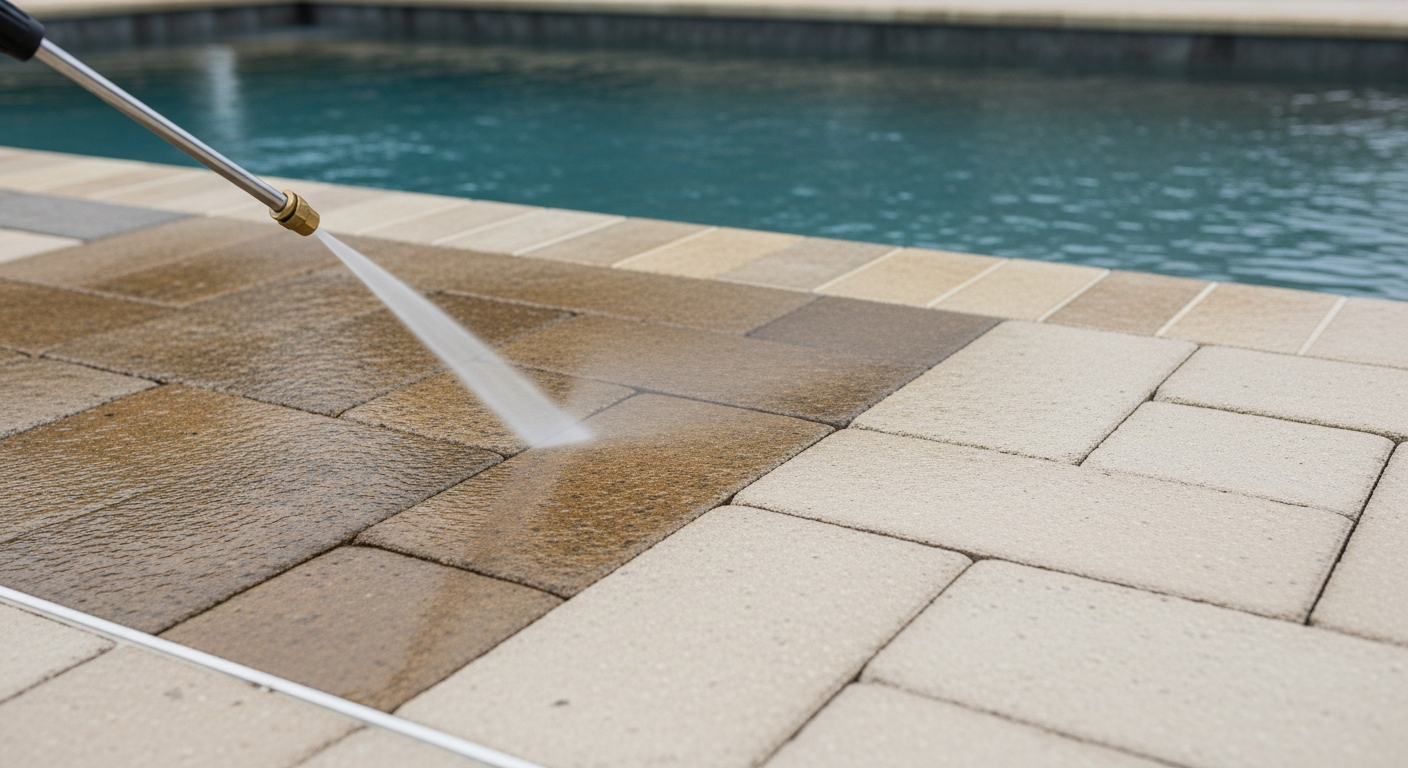
Most Sarasota homeowners believe a pressure washer is the solution for dirty pool deck pavers. I’ve seen this mistake firsthand on waterfront properties from Siesta Key to Lido Key. Blasting the surface with high pressure doesn't remove the root cause of the staining; it actually embeds mold spores deeper into the paver's porous structure and can damage the surface, leading to faster re-soiling. The intense Florida humidity and salt air demand a completely different approach.
My methodology focuses on chemical pre-treatment to lift organic and mineral contaminants *before* any water pressure is applied. This technique addresses the unique challenges of our coastal climate, specifically the persistent black mold and the chalky white efflorescence caused by salt. This process not only delivers a visually superior clean but extends the paver's clean appearance by up to 200%, reducing the frequency of maintenance.
Diagnosing Paver Degradation: Beyond Surface-Level Dirt in Sarasota's Climate
On a recent project in a Lakewood Ranch community, the homeowner was frustrated with cleaning his pool deck every four months. The issue wasn't dirt; it was a biological and chemical problem. The pavers, constantly exposed to moisture from rain and the pool, combined with our high humidity, had become a breeding ground for algae and mold. The white haze, which he mistook for sun-fading, was actually efflorescence, salts leaching out from within the pavers and concrete base, a process accelerated by the salty air from the Gulf.
My proprietary diagnostic approach, the Bio-Mineral Contamination Analysis, identifies the specific type of stain to dictate the treatment. I categorize stains into two primary groups: organic (mold, algae, mildew) and mineral (efflorescence, rust). Treating an organic stain with a cleaner meant for mineral deposits is ineffective and a waste of resources. This initial diagnosis is the most critical step and is where most DIY and even professional attempts fail.
The Chemical Science Behind Bio-Mineral Decontamination
Understanding the chemistry is non-negotiable for a lasting result. For the pervasive black and green organic stains common in Sarasota, I use a buffered sodium hypochlorite solution. This chemical agent doesn't just "bleach" the stain; it neutralizes the microorganisms causing it. The key is the "dwell time"—allowing the solution to sit on the surface for a calculated period, typically 10-15 minutes without letting it dry under the intense Florida sun. For mineral-based efflorescence, a completely different tool is required: a mild, paver-safe acidic cleaner. This solution is specifically formulated to dissolve the salt deposits without etching or discoloring the paver itself, a common error I've been called to fix after improper acid washing.
My Step-by-Step Paver Restoration Process
Executing the cleaning process requires precision. One wrong step can permanently damage the pavers or, at best, deliver a subpar result that won't last through a Sarasota summer. Here is the exact implementation plan I follow.
- Step 1: Dry Debris Removal. I begin by using a high-powered blower to clear all loose debris like leaves, sand, and dirt. Washing this debris into the pool or embedding it into the paver joints is an amateur mistake.
- Step 2: Targeted Chemical Application. Based on my diagnosis, I apply the appropriate chemical cleaner using a low-pressure chemical sprayer. I apply the organic stain remover first, letting it dwell. If efflorescence is present, I treat those areas separately after the initial rinse.
- Step 3: Controlled Dwell and Agitation. I let the chemical solution do the heavy lifting. For stubborn areas, I may use a soft-bristle brush to gently agitate the surface. This ensures the chemical penetrates the paver pores without abrasive force.
- Step 4: Low-Pressure, High-Volume Rinse. This is my most significant departure from standard practice. I do not use a high-PSI wand tip. Instead, I use a surface cleaner attachment or a wide-angle (40-degree) fan tip. The goal is to rinse the contaminants away, not blast them out. This protects the paver surface and the delicate joint sand.
- Step 5: Joint Sand Inspection and Replenishment. After a thorough cleaning, it's common for some of the sand between the pavers to be displaced. I inspect all joints and, once the deck is completely dry, sweep in new polymeric sand. This sand contains a polymer that hardens when wet, locking the pavers in place and preventing weed growth.
Adjustments for Precision and Quality Standards
The final stage is what separates a standard job from a restoration project. After cleaning, the paver surface is vulnerable. Applying a quality sealer is not an upsell; it's a critical component for longevity in our climate. I exclusively use a penetrating, breathable sealer. Unlike film-forming sealers that can trap moisture and turn hazy in the Florida humidity, a penetrating sealer soaks into the paver itself. This creates a hydrophobic barrier that repels water, oil, and salt, making future cleaning dramatically easier and preventing the rapid return of mold and efflorescence. This single step can increase the useful life of the cleaning by 25-50%.
Before applying any sealer, have you considered how the pH of your cleaning chemicals affects the paver's porosity and the sealer's ability to bond correctly?