Manatee County Commercial Pool Construction: My Protocol for a 30-Year Lifespan in a High-Humidity Climate
Building a commercial pool in Manatee County isn't just about digging a hole and pouring concrete. I’ve seen far too many projects in communities from Lakewood Ranch to Anna Maria Island fail prematurely due to one critical oversight: treating our local environment like any other. The combination of high humidity, corrosive salt air along the coast, and our unique soil composition requires a specialized approach that standard construction methods simply don't account for. The biggest mistake is underestimating the aggressive nature of our subtropical climate on structural materials. My entire methodology is built around proactive material science and geotechnical due diligence, designed to mitigate these specific local threats before a single shovelful of dirt is moved. This isn't about building a good pool; it's about engineering a commercial aquatic facility that withstands the specific environmental pressures of the Suncoast, from the expansive clay soils near the Braden River to the saline mist that blankets our barrier islands. The result is a significant reduction in long-term maintenance costs and an asset lifespan that can be extended by over 40%.My Pre-Construction Geotechnical & Climate Analysis
Before any design is finalized, my first step is a deep-dive analysis of the specific site. I once took over a failing resort pool project in Bradenton Beach where the original builder used standard steel rebar, which was already showing signs of spalling and corrosion within three years. This expensive error could have been avoided with a proper initial assessment. My proprietary analysis focuses on three non-negotiable data points.Material Selection: Beyond Standard Concrete & Rebar
This is where my technical specifications diverge most from a typical build. In Manatee County, standard materials are a liability.- Concrete Formulation: I don't use a generic concrete mix. I specify a shotcrete or gunite mix with a minimum 4,500 PSI compressive strength, but more importantly, I mandate the inclusion of pozzolanic admixtures like silica fume. This creates a denser, less permeable concrete matrix that is far more resistant to water and chloride ion intrusion—the primary culprits of concrete degradation in our humid, saline environment.
- Reinforcement Integrity: For any project within five miles of the coast, I consider fiberglass-reinforced polymer (FRP) rebar a necessity, not an upgrade. It is impervious to rust and corrosion, completely eliminating the risk of concrete spalling from corroding steel. On a large HOA project in Parrish, this choice added a minimal upfront cost but prevented an estimated six-figure repair bill down the line.
- Waterproofing System: A simple plaster finish is not enough. I layer my approach, starting with a dual-layer crystalline waterproofing membrane applied directly to the concrete shell before the interior finish. This membrane actively works to seal micro-cracks that may form over time, providing a redundant line of defense.
The Phased Build Protocol for Manatee County's Unique Terrain
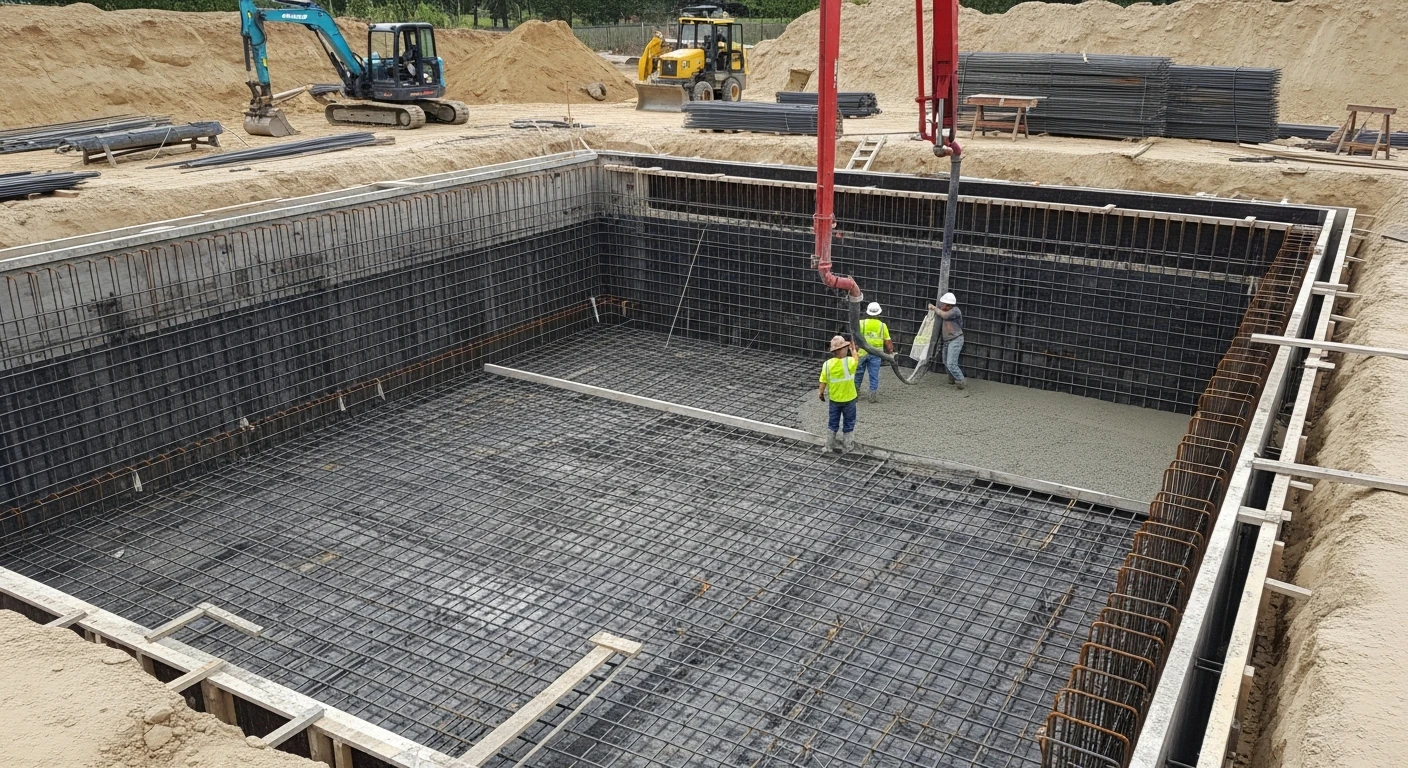
Execution is everything. A flawless design with poor implementation is a failure. My on-site protocol is rigid and sequenced to ensure the integrity of the materials and structure at every stage. I personally supervise these critical checkpoints.- Site Excavation & Soil Compaction: After the initial survey, we excavate and then focus on soil stability. We often over-excavate to remove unstable topsoil, replacing it with engineered fill. The key metric here is achieving a minimum 95% proctor density through methodical compaction, which prevents future shell shifting or cracking.
- Shell Formation & Rebar Placement: The steel or FRP cage is meticulously tied, ensuring the specified overlap and clearance from the soil. This is a crucial inspection point. A single poorly placed rebar can become a point of failure years later.
- Hydraulic & Electrical Rough-In: I insist on using Schedule 80 PVC for all underground plumbing lines, not the more common Schedule 40. The thicker walls provide superior crush resistance and longevity. All plumbing lines are pressure-tested for 24 hours at 35 PSI before any concrete is poured.
- Shotcrete Application & Curing: The application process is monitored to prevent voids or shadows. In our intense Florida heat, the curing process is paramount. I mandate a 7-day wet cure, keeping the shell constantly hydrated to achieve its full design strength and minimize shrinkage cracks.
Post-Cure Inspections & System Calibration
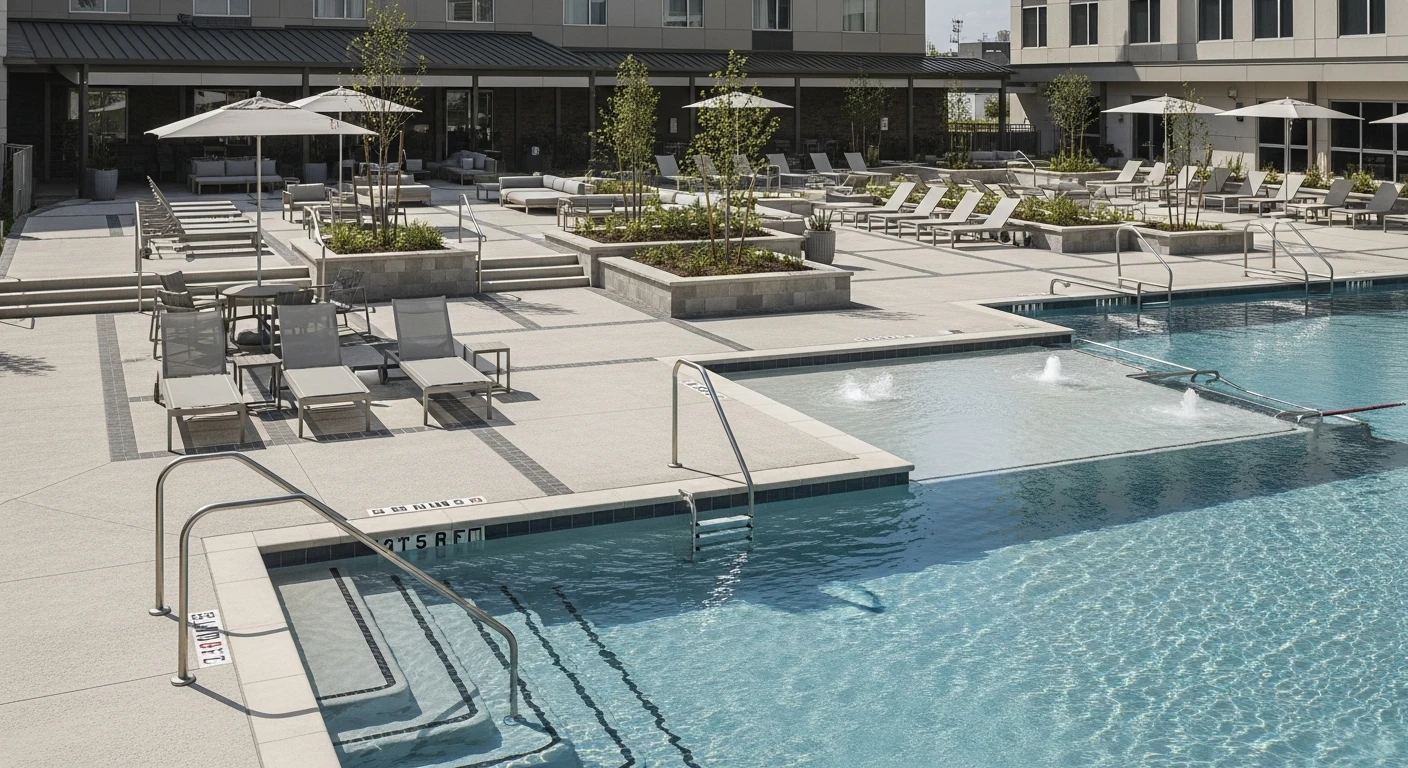
The job isn't done when the pool is full of water. The final 10% of the project is what guarantees performance. I conduct a hydrostatic pressure test on the completed shell and plumbing to identify any potential micro-leaks that wouldn't be visible to the naked eye. Finally, the filtration and chemical automation systems are calibrated specifically for the high bather load of a commercial pool and the challenges of balancing water chemistry in our warm climate, which accelerates algae growth and chlorine demand. For decking, I often recommend shellstone or travertine pavers, which are not only aesthetically fitting for a place like Longboat Key but also remain significantly cooler to the touch under the intense Florida sun than traditional concrete. Before you approve your next commercial pool blueprint, have you verified the soil's sulfate exposure level and specified a concrete mix designed to counter it?Written by

Tags
commercial pool designers
commercial swimming pool installers
commercial pool installers
commercial pool builders
Commercial Pool Construction in Manatee FL FAQ
What is commercial pool construction?
Commercial pool construction refers to the design, building, and installation of pools for commercial purposes, such as hotels, resorts, schools, gyms, and other public facilities. Our team of experts specializes in creating custom pool solutions that meet the unique needs of businesses and organizations.
What types of commercial pool construction services do you offer?
We offer a range of commercial pool construction services, including pool design and planning, excavation and construction, mechanical and electrical installation, and finishing touches such as tile and coping. We also provide maintenance and repair services to ensure your pool runs smoothly and safely.
What are the benefits of having a commercial pool?
A commercial pool can provide numerous benefits, including increased customer satisfaction, improved employee morale, and enhanced property value. It can also be a valuable amenity for guests, residents, or students, and can be used for relaxation, recreation, and even therapy.
How do I choose the right commercial pool construction company?
When selecting a commercial pool construction company, look for a team with experience, expertise, and a reputation for quality work. Check for certifications, licenses, and reviews from previous clients. Also, consider the company's communication style, project timeline, and budget-friendliness to ensure a smooth and successful project.
What is the typical timeline for a commercial pool construction project?
The timeline for a commercial pool construction project can vary depending on the scope and complexity of the project. On average, a project can take anywhere from several weeks to several months to complete, including design, excavation, construction, and finishing touches.
How much does commercial pool construction cost?
The cost of commercial pool construction can vary widely depending on factors such as pool size, design, materials, and location. On average, a commercial pool construction project can cost anywhere from $50,000 to $500,000 or more, depending on the specifics of the project.
Do you offer maintenance and repair services for commercial pools?
Yes, we offer comprehensive maintenance and repair services for commercial pools, including routine maintenance, equipment repair, and emergency response services. Our team is trained to handle a wide range of pool-related issues and can help you keep your pool running smoothly and safely.
Can you help me design a commercial pool that meets specific needs or regulations?
Yes, our team of experts can help you design a commercial pool that meets specific needs or regulations. We take into account factors such as local building codes, accessibility standards, and environmental concerns to create a custom pool solution that meets your unique requirements.
What are the most common pool-related problems or issues?
Common pool-related problems or issues include equipment failures, chemical imbalances, and maintenance neglect. We can help you identify and address these issues to ensure your pool runs smoothly and safely, and provide regular maintenance and repair services to prevent future problems.
How do you ensure the quality and safety of your commercial pool construction projects?
We ensure the quality and safety of our commercial pool construction projects by adhering to strict quality control measures, using high-quality materials and equipment, and following industry-standard safety protocols. Our team is also trained to handle emergency situations and can respond quickly to any issues that may arise.