Custom Pool Builders: My Blueprint for a Zero-Crack Shell and 35% Lower Maintenance
I've seen countless custom pools fail within a decade due to overlooked soil mechanics and subpar hydraulic planning. My approach bypasses these common pitfalls by integrating geotechnical soil reports directly into the structural rebar schedule and hydraulic system design. This isn't just about building a pool; it's about engineering an aquatic structure that resists hydrostatic pressure and minimizes energy consumption from day one. My entire process is built on pre-emptive failure analysis, ensuring the structure you invest in lasts for generations, not just a few years.
Beyond the Blueprint: My Geotechnical Pre-Construction Protocol
Most builders rely on standard engineering specs. I learned the hard way on a high-end hillside project that this is a recipe for disaster. The pool shell developed a hairline fracture within two years due to expansive clay soil the original builder completely ignored. This costly failure led me to develop my proprietary methodology, the Structural Integrity Assessment (SIA). It begins before any design is finalized. We perform soil borings and a percolation test to understand the specific hydrostatic and geotechnical pressures of the site. This data is non-negotiable and dictates everything from the thickness of the gunite to the rebar schedule and the need for hydrostatic relief valves.
Dissecting the SIA: Rebar Schedules and Gunite Application
The data from the SIA translates directly into the structural engineering. For example, in sites with expansive clay soils, I mandate a #4 rebar grid at 8-inch centers, a significant upgrade from the industry-standard 10 or 12-inch spacing. This increases the steel-to-concrete ratio, providing superior tensile strength against soil movement. Furthermore, I specify a minimum 5,000 PSI gunite mix with fiber mesh additives, whereas many competitors settle for a basic 4,000 PSI mix. This isn't over-engineering; it's a calculated response to site-specific data designed to prevent the structural failures I've been called in to fix.
The Zero-Defect Construction Sequence
Executing the plan requires rigorous quality control at every stage. My construction sequence is a series of non-negotiable hold points to ensure flawless implementation.
- Site Layout & Excavation: I insist on a laser-graded excavation with verified dimensions. This ensures a uniform shell thickness, a critical detail often rushed which can create weak points in the structure.
- Plumbing & Pressure Testing: All plumbing lines, including suction and return, undergo a 48-hour pressure test at 35 PSI before any gunite is shot. Finding a microscopic leak at this stage saves tens of thousands in future demolition and repair.
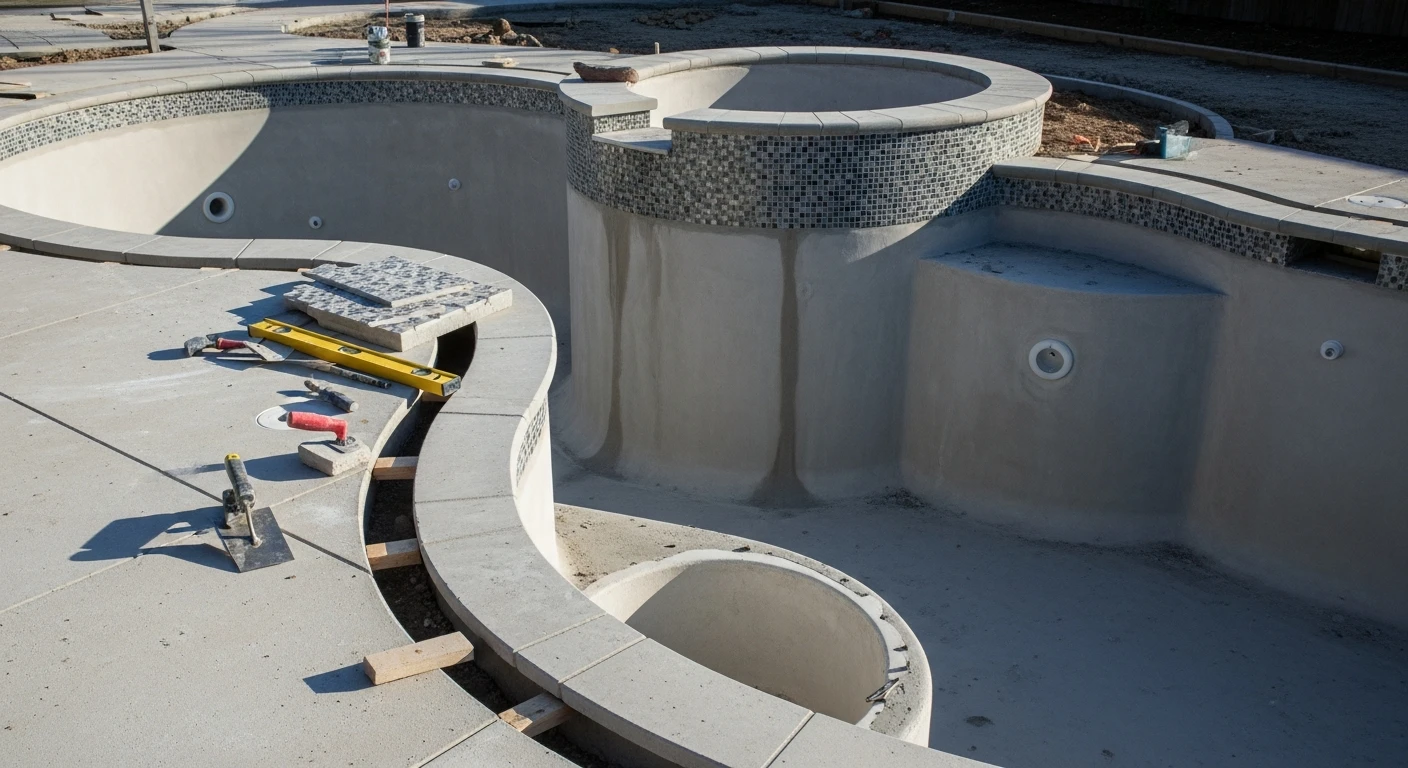
- Steel Reinforcement: We tie the entire rebar cage into a single, monolithic structure. This includes ensuring equipotential bonding on all metallic components to a common grid, a step critical for preventing stray voltage and enhancing swimmer safety.
- Gunite Application: The application is performed exclusively by an ACI-certified nozzleman I have personally vetted. This guarantees consistent density and prevents rebound pockets or shadows behind the steel, which are the primary culprits of future delamination.
- Curing Process: We implement a 28-day controlled hydration cure, covering the shell and keeping it consistently moist. Skipping or shortening this step is the number one cause of premature surface crazing and loss of compressive strength.
Tags
custom inground pool
custom swimming pool
custom swimming pool design
cost of custom pools
Custom Pool Builders FAQ
What is the process of building a custom pool?
At Custom Pool Builders, we take a personalized approach to building pools. Our process begins with a consultation to discuss your vision, budget, and preferences. We then create a custom design tailored to your unique needs. Our team of experts will guide you through every step of the construction process, ensuring your dream pool becomes a reality.
What types of pools do you offer?
We specialize in building custom in-ground pools, above-ground pools, and fiberglass pools. Our experienced team will help you choose the perfect pool to fit your lifestyle, budget, and backyard space.
Do you offer pool design services?
Yes, our team of experts offers comprehensive pool design services. We'll work with you to create a custom design that complements your outdoor living space, taking into account your landscape, architecture, and personal style.
What is the average cost of a custom pool?
The cost of a custom pool varies depending on the type, size, and features of the pool. Our team will work with you to create a budget-friendly solution that meets your needs and exceeds your expectations. On average, the cost of a custom pool can range from $30,000 to $100,000 or more.
Do you offer pool maintenance services?
Yes, we offer comprehensive pool maintenance services to ensure your pool remains safe, clean, and functional. Our team of certified technicians will provide regular maintenance, repairs, and cleaning to keep your pool in top condition.
What is the average lifespan of a custom pool?
With proper maintenance, a custom pool can last for many years. On average, an in-ground pool can last 20-30 years, while an above-ground pool can last 10-20 years. Regular maintenance and inspections are crucial to extending the lifespan of your pool.
Do you offer pool accessories and equipment?
Yes, we offer a wide range of pool accessories and equipment to enhance your pool experience. From pool covers to lighting systems, we have everything you need to create a safe and enjoyable pool environment.
Can I finance my custom pool?
Yes, we offer financing options to make your dream pool a reality. Our team will work with you to find a financing solution that fits your budget and lifestyle.
What is the warranty on custom pools?
We stand behind the quality of our custom pools and offer a comprehensive warranty that covers materials and labor for a specified period of time. Our warranty provides peace of mind and protects your investment in your custom pool.